Kirjojen hintavertailu. Mukana 12 595 353 kirjaa ja 12 kauppaa.

Kirjailija

Ronald L. Numbers

Kirjat ja teokset yhdessä paikassa: 11 kirjaa, julkaisuja vuosilta 1982-2011, suosituimpien joukossa Biology and Ideology from Descartes to Dawkins. Vertaile teosten hintoja ja tarkista saatavuus suomalaisista kirjakaupoista.

Mukana myös kirjoitusasut: Ronald L Numbers

11 kirjaa

Kirjojen julkaisuhaarukka 1982-2011.

Wrestling with Nature – From Omens to Science

Wrestling with Nature – From Omens to Science

Peter Harrison; Ronald Numbers; Michael Shank; Ronald L. Numbers; Michael H. Shank

University of Chicago Press
2011
nidottu
When and where did science begin? Historians have offered different answers to these questions, some pointing to Babylonian observational astronomy, some to the speculations of natural philosophers of ancient Greece. Others have opted for early modern Europe, which saw the triumph of Copernicanism and the birth of experimental science, while yet another view is that the appearance of science was postponed until the nineteenth century. Rather than posit a modern definition of science and search for evidence of it in the past, the contributors to "Wrestling with Nature" examine how students of nature themselves, in various cultures and periods of history, have understood and represented their work. The aim of each chapter is to explain the content, goals, methods, practices, and institutions associated with the investigation of nature and to articulate the strengths, limitations, and boundaries of these efforts from the perspective of the researchers themselves. With contributions from experts representing different historical periods and different disciplinary specializations, this volume offers a fresh perspective on the history of science and on what it meant, in other times and places, to wrestle with nature.

Wrestling with Nature

Wrestling with Nature

Peter Harrison; Ronald Numbers; Michael Shank; Ronald L. Numbers; Michael H. Shank

University of Chicago Press
2011
sidottu
When and where did science begin? Historians have offered different answers to these questions, some pointing to Babylonian observational astronomy, some to the speculations of natural philosophers of ancient Greece. Others have opted for early modern Europe, which saw the triumph of Copernicanism and the birth of experimental science, while yet another view is that the appearance of science was postponed until the nineteenth century. Rather than posit a modern definition of science and search for evidence of it in the past, the contributors to "Wrestling with Nature" examine how students of nature themselves, in various cultures and periods of history, have understood and represented their work. The aim of each chapter is to explain the content, goals, methods, practices, and institutions associated with the investigation of nature and to articulate the strengths, limitations, and boundaries of these efforts from the perspective of the researchers themselves. With contributions from experts representing different historical periods and different disciplinary specializations, this volume offers a fresh perspective on the history of science and on what it meant, in other times and places, to wrestle with nature.

Biology and Ideology from Descartes to Dawkins

Biology and Ideology from Descartes to Dawkins

Denis R. Alexander; Ronald L Numbers; Ronald L. Numbers

University of Chicago Press
2010
nidottu
Over the course of human history, the sciences, and biology in particular, have often been manipulated to cause immense human suffering. For example, biology has been used to justify eugenic programs, forced sterilization, human experimentation, and death camps, all in an attempt to support notions of racial superiority. By investigating the past, the contributors to "Biology and Ideology from Descartes to Dawkins" hope to better prepare us to discern ideological abuse of science when it occurs in the future. Denis R. Alexander and Ronald L. Numbers bring together fourteen experts to examine the varied ways science has been used and abused for nonscientific purposes from the fifteenth century to the present day. Featuring an essay on eugenics from Edward J. Larson and an examination of the progress of evolution by Michael Ruse, "Biology and Ideology" examines uses both benign and sinister, ultimately reminding us that ideological extrapolation continues today. An accessible survey, this collection will enlighten historians of science, their students, practicing scientists, and anyone interested in the relationship between science and culture.
Biology and Ideology from Descartes to Dawkins

Biology and Ideology from Descartes to Dawkins

Denis R. Alexander; Ronald L Numbers; Ronald L. Numbers

University of Chicago Press
2010
sidottu
Over the course of human history, the sciences, and biology in particular, have often been manipulated to cause immense human suffering. For example, biology has been used to justify eugenic programs, forced sterilization, human experimentation, and death camps, all in an attempt to support notions of racial superiority. By investigating the past, the contributors to "Biology and Ideology from Descartes to Dawkins" hope to better prepare us to discern ideological abuse of science when it occurs in the future. Denis R. Alexander and Ronald L. Numbers bring together fourteen experts to examine the varied ways science has been used and abused for nonscientific purposes from the fifteenth century to the present day. Featuring an essay on eugenics from Edward J. Larson and an examination of the progress of evolution by Michael Ruse, "Biology and Ideology" examines uses both benign and sinister, ultimately reminding us that ideological extrapolation continues today. An accessible survey, this collection will enlighten historians of science, their students, practicing scientists, and anyone interested in the relationship between science and culture.
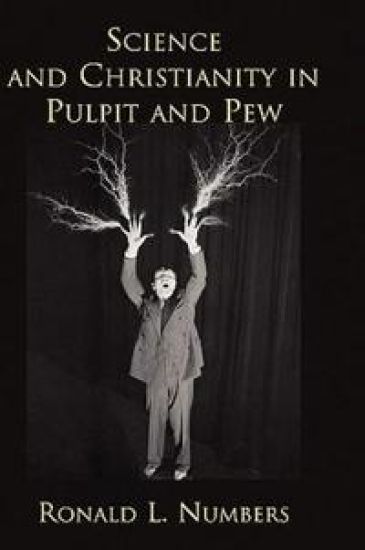
Science and Christianity in Pulpit and Pew

Science and Christianity in Pulpit and Pew

Ronald L. Numbers

Oxford University Press Inc
2007
sidottu
As past president of both the History of Science Society and the American Society of Church History, Ronald L. Numbers is uniquely qualified to assess the historical relations between science and Christianity. In this collection of his most recent essays, he moves beyond the clichés of conflict and harmony to explore the tangled web of historical interactions involving scientific and religious beliefs. In his lead essay he offers an unprecedented overview of the history of science and Christianity from the perspective of the ordinary people who filled the pews of churchesor loitered around outside. Unlike the elite scientists and theologians on whom most historians have focused, these vulgar Christians cared little about the discoveries of Copernicus, Newton, and Einstein. Instead, they worried about the causes of the diseases and disasters that directly affected their lives and about scientists preposterous attempts to trace human ancestry back to apes. Far from dismissing opinion-makers in the pulpit, Numbers closely looks at two the most influential Protestant theologians in nineteenth-century America: Charles Hodge and William Henry Green. Hodge, after decades of struggling to harmonize Gods two revelationsin nature and in the Biblein the end famously described Darwinism as atheism. Green, on the basis of his careful biblical studies, concluded that Ussher's chronology was unreliable, thus opening the door for Christian anthropologists to accommodate the subsequent discovery of human antiquity. In Science without God Numbers traces the millennia-long history of so-called methodological naturalism, the commitment to explaining the natural world without appeals to the supernatural. By the early nineteenth century this practice was becoming the defining characteristic of science; in the late twentieth century it became the central point of attack in the audacious attempt of intelligent designers to redefine science. Numbers ends his reassessment by arguing that although science has markedly changed the world we live in, it has contributed less to secularizing it than many have claimed. Taken together, these accessible and authoritative essays form a perfect introduction to Christian attitudes towards science since the 17th century.
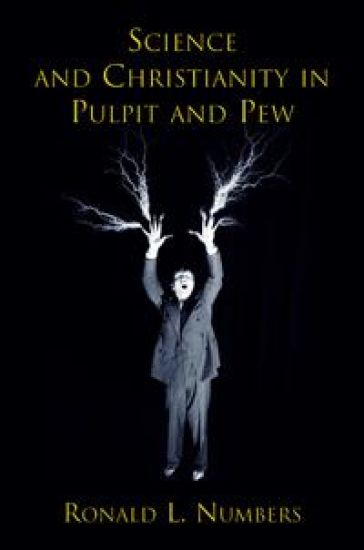
Science and Christianity in Pulpit and Pew

Science and Christianity in Pulpit and Pew

Ronald L. Numbers

Oxford University Press Inc
2007
nidottu
Ronald Numbers is one of the best known scholars of the relationship between science and religion. In this volume he collects seven of his published papers focusing on Christianity and science. The essays address broad topics such as the popularization of scientific ideas, secularization, and the development of the naturalistic worldview. One essay considers the writings of Charles Hodge, the most influential American Protestant theologian of the 19th century, revealing for the first time the central role that science played in his theology. Another deals with the demise of Bishop Ussher's "young earth" cosmology, especially among evangelical Christians. Taken together, these accessible and authoritative essays form a perfect introduction to Christian attitudes towards science since the 17th century.
The Creationists

The Creationists

Ronald L. Numbers

Harvard University Press
2006
nidottu
In light of the embattled status of evolutionary theory, particularly as "intelligent design" makes headway against Darwinism in the schools and in the courts, this now classic account of the roots of creationism assumes new relevance. Expanded and updated to account for the appeal of intelligent design and the global spread of creationism, The Creationists offers a thorough, clear, and balanced overview of the arguments and figures at the heart of the debate. Praised by both creationists and evolutionists for its comprehensiveness, the book meticulously traces the dramatic shift among Christian fundamentalists from acceptance of the earth's antiquity to the insistence of present-day scientific creationists that most fossils date back to Noah's flood and its aftermath. Focusing especially on the rise of this "flood geology," Ronald L. Numbers chronicles the remarkable resurgence of antievolutionism since the 1960s, as well as the creationist movement's tangled religious roots in the theologies of late-nineteenth- and early-twentieth-century Baptists, Presbyterians, Lutherans, and Adventists, among others. His book offers valuable insight into the origins of various "creation science" think tanks and the people behind them. It also goes a long way toward explaining how creationism, until recently viewed as a "peculiarly American" phenomenon, has quietly but dynamically spread internationally--and found its expression outside Christianity in Judaism and Islam.
Darwinism Comes to America

Darwinism Comes to America

Ronald L. Numbers

Harvard University Press
1998
nidottu
In 1997, even as Pope John Paul II was conceding that evolution was "more than just a theory," local school boards and state legislatures were still wrangling over the teaching of origins--and nearly half of all Americans polled believed in the recent special creation of the first humans. Why do so many Americans still resist the ideas laid out by Darwin in On the Origin of Species? Focusing on crucial aspects of the history of Darwinism in America, Ronald Numbers gets to the heart of this question. Judiciously assessing the facts, Numbers refutes a host of widespread misconceptions: about the impact of Darwin's work on the religious ideas of scientists, about the character of the issues that exercised scientists of the immediate post-Darwin generation, about the Scopes trial of 1925 and its consequences for American schools, and about the regional and denominational distribution of pro- and anti-evolutionary sentiments. Displaying the expertise that has made Numbers one of the most respected historians of his generation, Darwinism Comes to America provides a much-needed historical perspective on today's quarrels about creationism and evolution--and illuminates the specifically American nature of this struggle.
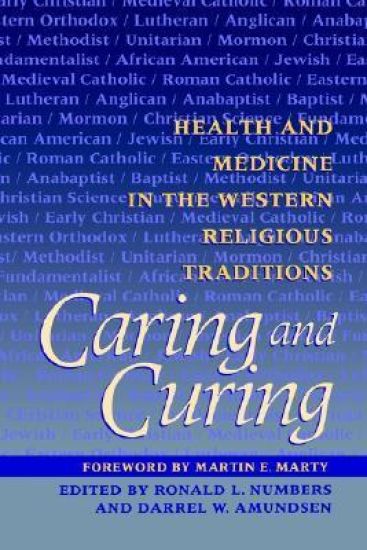
Caring and Curing

Caring and Curing

Ronald L. Numbers; Darrel W. Amundsen; Martin E. Marty

Johns Hopkins University Press
1998
pokkari
Most religious traditions have a rich, if largely forgotten, heritage of involvement in medical issues of life, death, and health. Religious values influence our behavior and attitudes toward sickness, sexuality, and lifestyle, to say nothing of more controversial subjects such as abortion and euthanasia. The essays in this important book illuminate the history of health and medicine within the Judeo-Christian tradition. Bringing together 20 original articles by expert scholars in the fields of the history of religion and the history of medicine, Caring and Curing provides a fascinating and enlightening overview of how religious values have come to affect the practice of medicine and medical care.