
Kirjailija
Ronald Macdonald
Kirjat ja teokset yhdessä paikassa: 21 kirjaa, julkaisuja vuosilta 1999-2025, suosituimpien joukossa The Sword of The King. Vertaile teosten hintoja ja tarkista saatavuus suomalaisista kirjakaupoista.
21 kirjaa
Kirjojen julkaisuhaarukka 1999-2025.



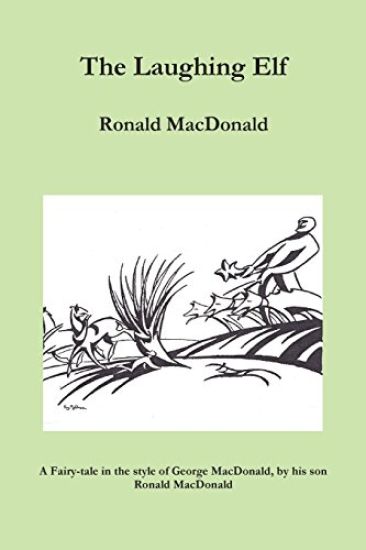
Praise for The Laughing Elf: "A work of genius, bringing with it what Walter Pater calls 'a strange new beauty.' . . . it is going to last, is this book of fairy tales strung on a string as it were. The author is Ronald MacDonald, a son of that George MacDonald whose name is one still to conjure with" ---Henry Savage Published by Nodens Books.

Are foreign exchange markets efficient? Are fundamentals important for predicting exchange rate movements? What is the signal-to-ratio of high frequency exchange rate changes? Is it possible to define a measure of the equilibrium exchange rate that is useful from an assessment perspective? The book is a selective survey of current thinking on key topics in exchange rate economics, supplemented throughout by new empirical evidence. The focus is on the use of advanced econometric tools to find answers to these and other questions which are important to practitioners, policy-makers and academic economists. In addition, the book addresses more technical econometric considerations such as the importance of the choice between single-equation and system-wide approaches to modelling the exchange rate, and the reduced form versus structural equation problems. Readers will gain both a comprehensive overview of the way macroeconomists approach exchange rate modelling, and an understanding of how advanced techniques can help them explain and predict the behavior of this crucial economic variable.
This authoritative book comprises key papers written on exchange rate economics by the eminent scholar Ronald MacDonald.Each of the highly focused chapters discusses the important issues that his research has pursued in this area. The papers are organised under four headings: monetary fundamentals and exchange rate forecasting; equilibrium exchange rate; expectations formation news and risk; and the economics of fixed exchange rates and credibility issues. Among the key findings, Ronald MacDonald concludes that it is possible to successfully forecast currencies in an out of sample context using macroeconomic fundamentals. Additionally, from a practitioner's perspective, well-founded and useful measures of an equilibrium exchange rate can be calculated once violations of the purchasing power parity concept are recognised.This essential book contains a number of academic orientated papers that postgraduate students and academics will find invaluable for their research. Practitioners in the financial sector will also be extremely interested in the chapters on exchange rate forecasting and issues relating to equilibrium exchange rates.
The Political Economy of Financing Scottish Government
C. Paul Hallwood; Ronald MacDonald
Edward Elgar Publishing Ltd
2009
sidottu
Fiscal autonomy could raise economic growth and efficiency in Scotland, benefiting both Scotland and the rest of the United Kingdom. C. Paul Hallwood and Ronald MacDonald discuss how other reform proposals, which amount to cutting Scotland's block grant, would not be seen as legitimate by Scottish voters, and would be unlikely to reduce the burden on the Westminster budget. The authors demonstrate how public finances can be organized to minimize the price of tranquillity in multi-regional states. Advances proposed in the 'new fiscal federalism' literature are used to explain why fiscal autonomy would be a superior system compared to the present block grant system and fiscal federalism, whereby Scotland would be granted limited tax powers. Their extensive review of recent econometric studies finds that tax devolution in other countries has been largely successful.

They Own It All (Including You)!: By Means of Toxic Currency
Robert Rowen; Ronald MacDonald
Booksurge Publishing
2009
nidottu
This book proves, in simple easy language, that we are living in a "Matrix". Behind a fraudulent and corrupt "monetary" system lies a hidden creditor. This book proves that this creditor is actually the puppeteer of an insolvent government and hidden master of all American citizens and courts. The creditor has deviously devised a monetary system based on exchange of debt owned and or liened by the creditor. As one may not see one specific tree in the forest, one does not see a hidden mark (lien) on every transaction he makes, until that specific mark is actually pointed out. Then it becomes visible for all time. "They Own It All" proves that we all have become subject to a devious scheme for our daily transactions. The book reveals the common denominator for the economic implosion, loss of unalienable rights, rise of government tyranny, and how the servant (government) became the master, though itself serving a well hidden higher master. By making the invisible (toxic and liened currency) visible the Reader is empowered to remedy a collapsing society with solid steps to create a new order for the People, not the government and its hidden puppeteers.


First published in 2007. Exchange Rate Economics: Theories and Evidence is the second edition of Floating Exchange Rates: Theories and Evidence, and builds on the successful content and structure of the previous edition, but has been comprehensively updated and expanded to include additional literature on the determination of both fixed and floating exchange rates. Core topics covered include: • the purchasing power parity hypothesis and the PPP puzzle; • the monetary and portfolio-balance approaches to exchange rates; • the new open economy macroeconomics approach to exchange rates; and • the determination of exchange rates in target zone models and speculative attack models. Exchange Rate Economics: Theories and Evidence also includes extensive discussion of recent econometric work on exchange rates with a particular focus on equilibrium exchange rates and measuring exchange rate misalignment, as well as discussion on the non-fundamentals-based approaches to exchange rate behaviour, such as the market microstructure approach. The book will appeal to academics and postgraduate students with an interest in all aspects of international finance and will also be of interest to practitioners concerned with issues relating to equilibrium exchange rates and the forecastability of currencies in terms of macroeconomic fundamentals.
First published in 2007. Exchange Rate Economics: Theories and Evidence is the second edition of Floating Exchange Rates: Theories and Evidence, and builds on the successful content and structure of the previous edition, but has been comprehensively updated and expanded to include additional literature on the determination of both fixed and floating exchange rates. Core topics covered include: • the purchasing power parity hypothesis and the PPP puzzle; • the monetary and portfolio-balance approaches to exchange rates; • the new open economy macroeconomics approach to exchange rates; and • the determination of exchange rates in target zone models and speculative attack models. Exchange Rate Economics: Theories and Evidence also includes extensive discussion of recent econometric work on exchange rates with a particular focus on equilibrium exchange rates and measuring exchange rate misalignment, as well as discussion on the non-fundamentals-based approaches to exchange rate behaviour, such as the market microstructure approach. The book will appeal to academics and postgraduate students with an interest in all aspects of international finance and will also be of interest to practitioners concerned with issues relating to equilibrium exchange rates and the forecastability of currencies in terms of macroeconomic fundamentals.
International Money and Finance
C. Paul Hallwood; Ronald MacDonald
JOHN WILEY AND SONS LTD
2000
nidottu
International Money and Finance, Third Edition, is an invaluable resource for advanced undergraduates and postgraduates studying International Economy and Finance.