Kirjojen hintavertailu. Mukana 12 595 353 kirjaa ja 12 kauppaa.

Kirjailija

Ronald R. Lee

Kirjat ja teokset yhdessä paikassa: 4 kirjaa, julkaisuja vuosilta 1991-2015, suosituimpien joukossa Psychotherapy After Kohut. Vertaile teosten hintoja ja tarkista saatavuus suomalaisista kirjakaupoista.

4 kirjaa

Kirjojen julkaisuhaarukka 1991-2015.

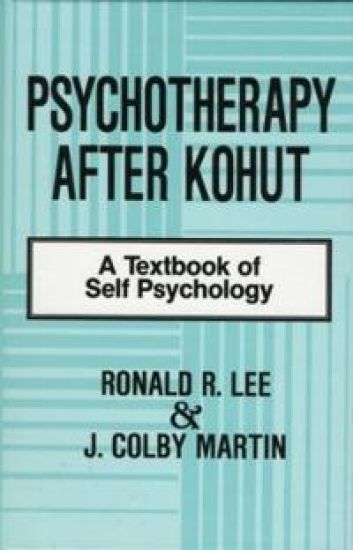
Psychotherapy After Kohut

Psychotherapy After Kohut

Ronald R. Lee; J. Colby Martin

Routledge
2015
nidottu
Hailed as "a superb textbook aimed at introducing psychoanalytic self psychology to students of psychotherapy" (Robert D. Stolorow), Psychotherapy After Kohut is unique in its grasp of the theoretical, clinical, and historical grounds of the emergence of this new psychotherapy paradigm. Lee and Martin acknowledge self psychology's roots in Freud's pioneering clinical discoveries and go on to document its specific indebtedness to the work of Sandor Ferenczi and British object relations theory. Proceeding to readable, scholarly expositions of the principal concepts introduced by Heinz Kohut, the founder of self psychology, they skillfully explore the further blossoming of the paradigm in the decade following Kohut's death. In tracing the trajectory of self psychology after Kohut, Lee and Martin pay special attention to the impact of contemporary infancy research, intersubjectivity theory, and recent empirical and clinical findings about affect development and the meaning and treatment of trauma.
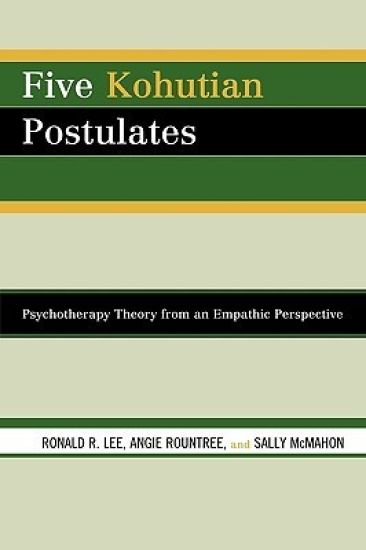
Five Kohutian Postulates

Five Kohutian Postulates

Ronald R. Lee; Angie Rountree; Sally McMahon

Jason Aronson Inc. Publishers
2010
nidottu
In comparison with the traditional notion of science as generalizable and predictive knowledge, Five Kohutian Postulates presents psychotherapy as a science of the unique. It uses the philosopher Imre Lakatos' emphasis on research programs that organize around a central postulate and auxiliary postulates to explicate Heinz Kohut's 'self-psychology.' Kohut's psychotherapy theory entails four auxiliary postulates that are interlinked to the central postulate of empathic understanding, and to each other. The main chapters illustrate how these postulates function as orienting stars in theoretical space to foster a firm psychotherapeutic identity, and to concurrently foster the inclusion of complementary ideas from other psychotherapy theories. These chapters also reveal how self-psychology exemplifies Lakatos's idea that the most valuable scientific theory is regenerative. The last chapter points to the need for post-modern psychoanalytic psychotherapy to take seriously the idea of a professional commitment to the patient.
Five Kohutian Postulates

Five Kohutian Postulates

Ronald R. Lee; Angie Rountree; Sally McMahon

Jason Aronson Inc. Publishers
2008
sidottu
In comparison with the traditional notion of science as generalizable and predictive knowledge, Five Kohutian Postulates presents psychotherapy as a science of the unique. It uses the philosopher Imre Lakatos' emphasis on research programs that organize around a central postulate and auxiliary postulates to explicate Heinz Kohut's "self-psychology." Kohut's psychotherapy theory entails four auxiliary postulates that are interlinked to the central postulate of empathic understanding, and to each other. The main chapters illustrate how these postulates function as orienting stars in theoretical space to foster a firm psychotherapeutic identity, and to concurrently foster the inclusion of complementary ideas from other psychotherapy theories. These chapters also reveal how self-psychology exemplifies Lakatos's idea that the most valuable scientific theory is regenerative. The last chapter points to the need for post-modern psychoanalytic psychotherapy to take seriously the idea of a professional commitment to the patient.
Psychotherapy After Kohut

Psychotherapy After Kohut

Ronald R. Lee; J. Colby Martin

Analytic Press,U.S.
1991
sidottu
Hailed as "a superb textbook aimed at introducing psychoanalytic self psychology to students of psychotherapy" (Robert D. Stolorow), Psychotherapy After Kohut is unique in its grasp of the theoretical, clinical, and historical grounds of the emergence of this new psychotherapy paradigm. Lee and Martin acknowledge self psychology's roots in Freud's pioneering clinical discoveries and go on to document its specific indebtedness to the work of Sandor Ferenczi and British object relations theory. Proceeding to readable, scholarly expositions of the principal concepts introduced by Heinz Kohut, the founder of self psychology, they skillfully explore the further blossoming of the paradigm in the decade following Kohut's death. In tracing the trajectory of self psychology after Kohut, Lee and Martin pay special attention to the impact of contemporary infancy research, intersubjectivity theory, and recent empirical and clinical findings about affect development and the meaning and treatment of trauma.