

Kirjailija
Ronald W. Perry
Kirjat ja teokset yhdessä paikassa: 7 kirjaa, julkaisuja vuosilta 2004-2026, suosituimpien joukossa Emergency Planning. Vertaile teosten hintoja ja tarkista saatavuus suomalaisista kirjakaupoista.
Mukana myös kirjoitusasut: Ronald W Perry
7 kirjaa
Kirjojen julkaisuhaarukka 2004-2026.

Minority Citizens in Disasters
Ronald W. Perry; Alvin H. Mushkatel
University of Georgia Press
2008
pokkari
The first study of its kind to address the issue of ethnic diversity, Minority Citizens in Disasters focuses on the responses of two minorities—blacks and Mexican-Americans—relative to whites in three disaster events: a propane car derailment, a nitric acid spill, and a flood. Ronald Perry and Alvin Mushkatel find that response to initial warnings is influenced by the source of the information—mass media, public authorities, or family and friends—and by the immediacy of the danger, a group's familiarity with the type of threat, and the cause of the disaster. Though social contacts were most often the source of warning, public authorities were the most trusted and reliable. The mass media, usually considered an unreliable source, proved an effective means for reaching a majority of Mexican-Americans, who often tuned in to Spanish-language stations. Blacks, however, tended to dismiss the media as a vehicle controlled by whites and covering primarily white concerns, while whites often dismissed news stories as mere media productions.Perry and Mushkatel's record of the responses of blacks, Mexican-Americans, and whites not only reveals the differing social configurations of minority and majority groups but, more important, suggests concrete ways to modify and improve emergency management systems.
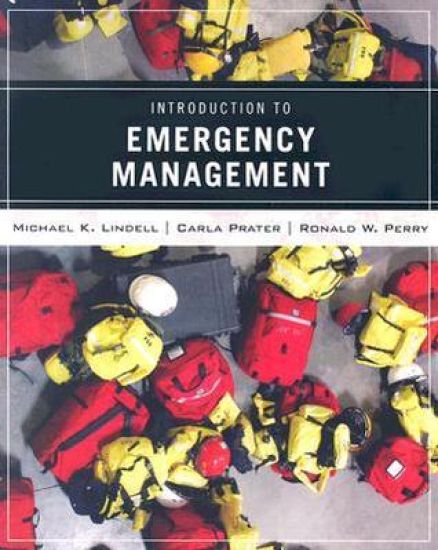
Wiley Pathways Introduction to Emergency Management
Michael K. Lindell; Carla Prater; Ronald W. Perry
John Wiley Sons Inc
2006
nidottu
The recent devastation caused by tsunamis, hurricanes and wildfires highlights the need for highly trained professionals who can develop effective strategies in response to these disasters. This invaluable resource arms readers with the tools to address all phases of emergency management. It covers everything from the social and environmental processes that generate hazards to vulnerability analysis, hazard mitigation, emergency response, and disaster recovery.
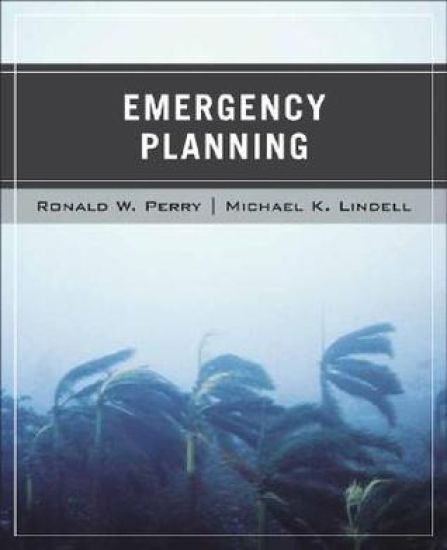
Wiley Pathways Emergency Planning
Ronald W. Perry; Michael K. Lindell
John Wiley Sons Inc
2006
nidottu
In order for a community to be truly prepared to respond to any type of emergency, it must develop effective emergency planning. Emergency Planning guides readers through the steps of developing these plans, offering a number of strategies that will help ensure success. It delves into the patterns of human disaster behavior, social psychology, and communication as well as the basics of generic protective actions, planning concepts, implementation, and action.


Communicating Environmental Risk in Multiethnic Communities
Michael K. Lindell; Ronald W. Perry
SAGE Publications Inc
2004
sidottu
9/11. Tornadoes. Emergency preparedness. Whether explaining parts per million to a community exposed to contaminated groundwater or launching a campaign to encourage home carbon monoxide testing, an effective message is paramount to the desired result: an increased understanding of health risk. How people interpret and respond to risk messages related to potential immediate or long-term environmental danger is largely influenced by such factors as age, ethnicity, community, and proximity to the health risk in question. Communicating Environmental Risk in Multiethnic Communities is the first book to address the theory and practice of disseminating disaster warnings and hazard education messages to multiethnic communities. Authors Michael K. Lindell and Ronald W. Perry introduce theory-based reasoning as a basis for understanding warning dissemination and public education, devoting specific attention to the community context of emergency warning delivery and response. Through these principles of human behavior, readers can apply risk communication information to virtually any specific disaster agent with which they may be concerned. The authors review a variety of theories of emergency decision-making and develop a Protective Action Decision Model (PADM) as the foundation for understanding citizen response to both emergency and educational communications. Combining risk theory with practical application, Communicating Environmental Risk in Multiethnic Communities examines the research literature and identifies the important factors that affect people's decisions to comply with warnings. The authors present a review of a range of public education campaigns for different types of hazards. This volume is recommended for practitioners in private emergency management and federal, state, and local governments, as well as students studying risk communication, health communication, emergency management, and environmental policy and management.
Communicating Environmental Risk in Multiethnic Communities
Michael K. Lindell; Ronald W. Perry
SAGE Publications Inc
2004
nidottu
9/11. Tornadoes. Emergency preparedness. Whether explaining parts per million to a community exposed to contaminated groundwater or launching a campaign to encourage home carbon monoxide testing, an effective message is paramount to the desired result: an increased understanding of health risk. How people interpret and respond to risk messages related to potential immediate or long-term environmental danger is largely influenced by such factors as age, ethnicity, community, and proximity to the health risk in question. Communicating Environmental Risk in Multiethnic Communities is the first book to address the theory and practice of disseminating disaster warnings and hazard education messages to multiethnic communities. Authors Michael K. Lindell and Ronald W. Perry introduce theory-based reasoning as a basis for understanding warning dissemination and public education, devoting specific attention to the community context of emergency warning delivery and response. Through these principles of human behavior, readers can apply risk communication information to virtually any specific disaster agent with which they may be concerned. The authors review a variety of theories of emergency decision-making and develop a Protective Action Decision Model (PADM) as the foundation for understanding citizen response to both emergency and educational communications. Combining risk theory with practical application, Communicating Environmental Risk in Multiethnic Communities examines the research literature and identifies the important factors that affect people's decisions to comply with warnings. The authors present a review of a range of public education campaigns for different types of hazards. This volume is recommended for practitioners in private emergency management and federal, state, and local governments, as well as students studying risk communication, health communication, emergency management, and environmental policy and management.