Kirjojen hintavertailu. Mukana 12 192 650 kirjaa ja 12 kauppaa.

Kirjailija

Ronald W. Walker

Kirjat ja teokset yhdessä paikassa: 5 kirjaa, julkaisuja vuosilta 2004-2011, suosituimpien joukossa Mormon History. Vertaile teosten hintoja ja tarkista saatavuus suomalaisista kirjakaupoista.

Mukana myös kirjoitusasut: Ronald W Walker

5 kirjaa

Kirjojen julkaisuhaarukka 2004-2011.

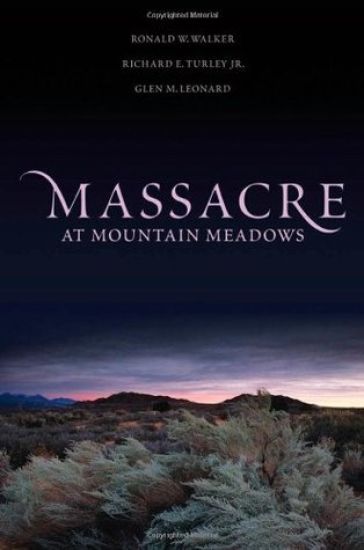
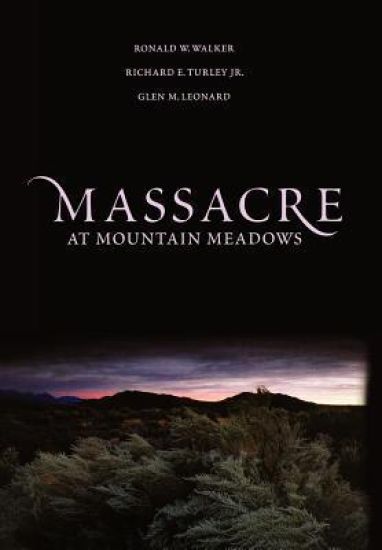
Massacre at Mountain Meadows

Massacre at Mountain Meadows

Ronald W. Walker; Richard E. Turley; Glen M. Leonard

Oxford University Press Inc
2011
nidottu
On September 11, 1857, a band of Mormon militia, under a flag of truce, lured unarmed members of a party of emigrants from their fortified encampment and, with their Paiute allies, killed them. More than 120 men, women, and children perished in the slaughter. Massacre at Mountain Meadows offers the most thoroughly researched account of the massacre ever written. Drawn from documents previously not available to scholars and a careful re-reading of traditional sources, this gripping narrative offers fascinating new insight into why Mormons settlers in isolated southern Utah deceived the emigrant party with a promise of safety and then killed the adults and all but seventeen of the youngest children. The book sheds light on factors contributing to the tragic event, including the war hysteria that overcame the Mormons after President James Buchanan dispatched federal troops to Utah Territory to put down a supposed rebellion, the suspicion and conflicts that polarized the perpetrators and victims, and the reminders of attacks on Mormons in earlier settlements in Missouri and Illinois. It also analyzes the influence of Brigham Young's rhetoric and military strategy during the infamous "Utah War" and the role of local Mormon militia leaders in enticing Paiute Indians to join in the attack. Throughout the book, the authors paint finely drawn portraits of the key players in the drama, their backgrounds, personalities, and roles in the unfolding story of misunderstanding, misinformation, indecision, and personal vendettas. The Mountain Meadows Massacre stands as one of the darkest events in Mormon history. Neither a whitewash nor an exposé, Massacre at Mountain Meadows provides the clearest and most accurate account of a key event in American religious history.
Mormon History

Mormon History

Ronald W Walker; David B Whittaker; James B Allen

University of Illinois Press
2010
nidottu
A companion volume to their massive bibliography Studies in Mormon History, 1830–1997, this descriptive history by a team of top Mormon scholars provides a comprehensive view of how the writing of Mormon history has evolved since the establishment of the church. Mormon History offers an interpretive survey of Mormon historical writings, from the partisan and often ephemeral history of the nineteenth century through the shift in the twentieth toward a more balanced and professional approach and an emphasis on how the Mormons helped settle the American West. The authors examine Mormon biography and autobiography and discuss social science literature on the Mormons, including studies of social geography, rural sociology, and agricultural economics. Two valuable appendices round out this volume, one on the development and nature of Mormon imprints, the other on conducting historical research in Mormon sources.
Massacre at Mountain Meadows

Massacre at Mountain Meadows

Ronald W. Walker; Richard E. Turley; Glen M. Leonard

Oxford University Press Inc
2008
sidottu
On September 11, 1857, a band of Mormon militia, under a flag of truce, lured unarmed members of a party of emigrants from their fortified encampment and, with their Paiute allies, killed them. More than 120 men, women, and children perished in the slaughter. Massacre at Mountain Meadows offers the most thoroughly researched account of the massacre ever written. Drawn from documents previously not available to scholars and a careful re-reading of traditional sources, this gripping narrative offers fascinating new insight into why Mormons settlers in isolated southern Utah deceived the emigrant party with a promise of safety and then killed the adults and all but seventeen of the youngest children. The book sheds light on factors contributing to the tragic event, including the war hysteria that overcame the Mormons after President James Buchanan dispatched federal troops to Utah Territory to put down a supposed rebellion, the suspicion and conflicts that polarized the perpetrators and victims, and the reminders of attacks on Mormons in earlier settlements in Missouri and Illinois. It also analyzes the influence of Brigham Young's rhetoric and military strategy during the infamous "Utah War" and the role of local Mormon militia leaders in enticing Paiute Indians to join in the attack. Throughout the book, the authors paint finely drawn portraits of the key players in the drama, their backgrounds, personalities, and roles in the unfolding story of misunderstanding, misinformation, indecision, and personal vendettas. The Mountain Meadows Massacre stands as one of the darkest events in Mormon history. Neither a whitewash nor an exposé, Massacre at Mountain Meadows provides the clearest and most accurate account of a key event in American religious history.
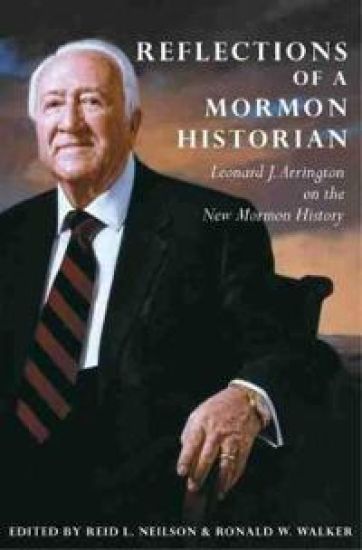
Reflections of a Mormon Historian

Reflections of a Mormon Historian

Leonard J. Arrington; Reid L. Neilson; Ronald W. Walker

Arthur H. Clark Company
2006
sidottu
Conflict between matters of faith and historical truth has been a conundrum at the heart of doing and telling the history of The Church of Jesus Christ of Latter-day Saints (also known as the Mormon Church). Some of the best essays on that topic were written by Leonard J. Arrington, perhaps the best-known member of the group of professionals who founded the New Mormon History of the late twentieth century. Now, Arrington's essay on history and the Mormons are collected in a single source work.Arrington rose to prominence during the so-called "flowering of Mormon history." In a precedent-breaking move, he was made Church Historian in January 1972, the first professional historian to serve in the position.His ideas, as expressed in the essays collected here, helped to determine how Mormon history was written during the last part of the twentieth century. Arrington sought a middle way between the extremes of defending or attacking faith claims--two forces that drove most nineteenth-century and even much twentieth-century writing on the Mormons. He not only adopted a neutral stance in his writing as LDS Historian, his name became connected inseparably with the New Mormon History because of his personality and the quality of his work.The fourteen essays offered here are autobiographical, reflective, analytical, personal, and prophetic. Together, they constitute an illuminating study of the challenges faced by all who study history and face the conflicts its telling involves.Supplementing the essays are a biographical sketch by historian Ronald W. Walker, a chronology of Arrington's life, and a detailed bibliography of his published works and speeches, prepared by David J. Whitaker. A personal tribute to Arrington is given by his daughter, historian Susan Arrington Madsen.The book has a bibliography and index. It is bound in rust linen cloth, has a foil stamped spine and a full-color dust jacket.
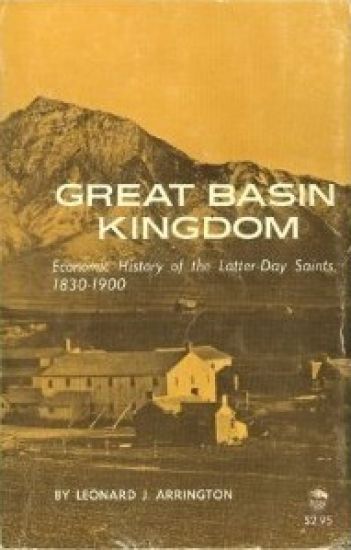
Great Basin Kingdom

Great Basin Kingdom

Leonard J. Arrington; Ronald W. Walker

University of Illinois Press
2004
nidottu
Leonard Arrington, who died in 1999, is considered by most, if not all, serious scholars of Mormon and western history as the single most important figure to write on LDS history. Great Basin Kingdom is perhaps his greatest work. A classic in Mormon studies and western history, Great Basin Kingdom offers insights into the ‘underdeveloped' American economy, a comprehensive treatment of one of the few native American religious movements, and detailed, exciting stories from little-known phases of Mormon and American history. This edition includes thirty new photographs and an introduction by Ronald W. Walker that provides a brief biography of Arrington, as well as the history of the work, its place in Mormon and western historiography, and its lasting impact.