Kirjojen hintavertailu. Mukana 12 595 353 kirjaa ja 12 kauppaa.

Kirjailija

Ronen Palan

Kirjat ja teokset yhdessä paikassa: 7 kirjaa, julkaisuja vuosilta 2003-2026, suosituimpien joukossa Sabotage. Vertaile teosten hintoja ja tarkista saatavuus suomalaisista kirjakaupoista.

7 kirjaa

Kirjojen julkaisuhaarukka 2003-2026.

Sabotage

Sabotage

Anastasia Nesvetailova; Ronen Palan

Penguin Books Ltd
2021
pokkari
'If you're a progressive, in Britain or elsewhere, and if you think the movement needs fresh ideas, read this book, it's full of them. Then get to work' The Guardian'It ought to be required reading for every civil servant, regulator and politician in the UK and elsewhere' Literary ReviewFinancial malpractice, we're told, is an aberration: the actions of a few bad apples deviating from the norms of a market-governed process and gaming the system. In Sabotage, political scientists Anastasia Nesvetailova and Ronen Palan blow this fiction apart, showing that sabotage is not an anomaly, but part of the business model of finance - and always has been.Abusive lending practices, misleading investors, manipulating prices, deliberately falsifying figures, cheating, obstruction and taking advantage of 'the dumbest person in the room' - they're actually the main source of profitability in finance, and the surest way to a bonus. If you want to make money in the industry, you need to find ways of sabotaging either your clients, your competitors or the government (or all three), and above all, the market itself. Talking to industry insiders, economists and high net worth customers, examining the history of finance and its workings today, the authors show us how the idea of sabotage not only makes sense of all past economic crises, but must also be at the heart of all future regulations.

Profit and Power

Profit and Power

Ronen Palan

Cambridge University Press
2026
pokkari
Why are Multinational Corporations so powerful and elites so wealthy while still operating within nation-state rules? Profit and Power examines how firms engage in legal transgression, operating at the edges of legality to maximize profits. Offering a practical analysis of jurisdictional arbitrage, Ronen Palan exposes the hidden mechanisms behind corporate power in globalization and reveals how the rule-based transgressor elite emerged through strategic use of MNC structures. Tracing the origins to the late nineteenth century, Palan focuses on centrally-coordinated multi-corporate enterprises (CCMCEs) – networks of legally independent yet interconnected firms. He explores the gap between the legal entity and the corporate group, a loophole long exploited to arbitrage national regulations, including taxation. This is the first systematic study of jurisdictional arbitrage and its impact on states and society. By analysing corporate decision-making within fragmented regulatory environments, it unveils the systemic role of legal ambiguity in shaping modern capitalism and corporate dominance.
Profit and Power

Profit and Power

Ronen Palan

Cambridge University Press
2026
sidottu
Why are Multinational Corporations so powerful and elites so wealthy while still operating within nation-state rules? Profit and Power examines how firms engage in legal transgression, operating at the edges of legality to maximize profits. Offering a practical analysis of jurisdictional arbitrage, Ronen Palan exposes the hidden mechanisms behind corporate power in globalization and reveals how the rule-based transgressor elite emerged through strategic use of MNC structures. Tracing the origins to the late nineteenth century, Palan focuses on centrally-coordinated multi-corporate enterprises (CCMCEs) – networks of legally independent yet interconnected firms. He explores the gap between the legal entity and the corporate group, a loophole long exploited to arbitrage national regulations, including taxation. This is the first systematic study of jurisdictional arbitrage and its impact on states and society. By analysing corporate decision-making within fragmented regulatory environments, it unveils the systemic role of legal ambiguity in shaping modern capitalism and corporate dominance.
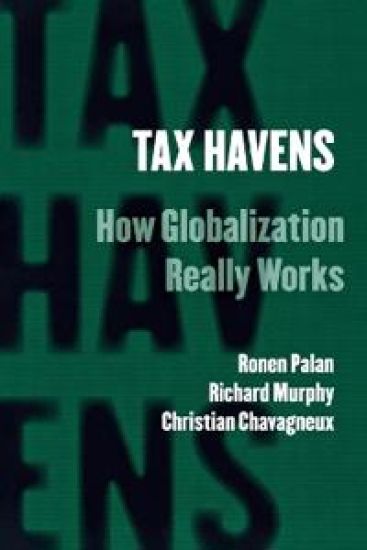
Tax Havens

Tax Havens

Ronen Palan; Richard Murphy; Christian Chavagneux

Cornell University Press
2010
pokkari
If you are looking to understand how tax havens and offshore financial centers work, how they are governed (or not!), and what kind of economic and political impacts they have, then this book is for you! This recent text by well-recognized experts in the field is a most welcome addition to the literatures.... It fills an important void, since there was not until now a general but nevertheless detailed reference text on tax havens... it should be mandatory for courses in IPE, international finance, and international business.— Patrick Leblond - Political Science Quarterly From the Cayman Islands and the Isle of Man to the Principality of Liechtenstein and the state of Delaware, tax havens offer lower tax rates, less stringent regulations and enforcement, and promises of strict secrecy to individuals and corporations alike. In recent years government regulators, hoping to remedy economic crisis by diverting capital from hidden channels back into taxable view, have undertaken sustained and serious efforts to force tax havens into compliance. In Tax Havens, Ronen Palan, Richard Murphy, and Christian Chavagneux provide an up-to-date evaluation of the role and function of tax havens in the global financial system-their history, inner workings, impact, extent, and enforcement. They make clear that while, individually, tax havens may appear insignificant, together they have a major impact on the global economy. Holding up to $13 trillion of personal wealth-the equivalent of the annual U.S. Gross National Product-and serving as the legal home of two million corporate entities and half of all international lending banks, tax havens also skew the distribution of globalization's costs and benefits to the detriment of developing economies. The first comprehensive account of these entities, this book challenges much of the conventional wisdom about tax havens. The authors reveal that, rather than operating at the margins of the world economy, tax havens are integral to it. More than simple conduits for tax avoidance and evasion, tax havens actually belong to the broad world of finance, to the business of managing the monetary resources of individuals, organizations, and countries. They have become among the most powerful instruments of globalization, one of the principal causes of global financial instability, and one of the large political issues of our times.
Tax Havens

Tax Havens

Ronen Palan; Richard Murphy; Christian Chavagneux

Cornell University Press
2010
sidottu
If you are looking to understand how tax havens and offshore financial centers work, how they are governed (or not!), and what kind of economic and political impacts they have, then this book is for you! This recent text by well-recognized experts in the field is a most welcome addition to the literatures.... It fills an important void, since there was not until now a general but nevertheless detailed reference text on tax havens... it should be mandatory for courses in IPE, international finance, and international business.— Patrick Leblond - Political Science Quarterly From the Cayman Islands and the Isle of Man to the Principality of Liechtenstein and the state of Delaware, tax havens offer lower tax rates, less stringent regulations and enforcement, and promises of strict secrecy to individuals and corporations alike. In recent years government regulators, hoping to remedy economic crisis by diverting capital from hidden channels back into taxable view, have undertaken sustained and serious efforts to force tax havens into compliance. In Tax Havens, Ronen Palan, Richard Murphy, and Christian Chavagneux provide an up-to-date evaluation of the role and function of tax havens in the global financial system-their history, inner workings, impact, extent, and enforcement. They make clear that while, individually, tax havens may appear insignificant, together they have a major impact on the global economy. Holding up to $13 trillion of personal wealth-the equivalent of the annual U.S. Gross National Product-and serving as the legal home of two million corporate entities and half of all international lending banks, tax havens also skew the distribution of globalization's costs and benefits to the detriment of developing economies. The first comprehensive account of these entities, this book challenges much of the conventional wisdom about tax havens. The authors reveal that, rather than operating at the margins of the world economy, tax havens are integral to it. More than simple conduits for tax avoidance and evasion, tax havens actually belong to the broad world of finance, to the business of managing the monetary resources of individuals, organizations, and countries. They have become among the most powerful instruments of globalization, one of the principal causes of global financial instability, and one of the large political issues of our times.
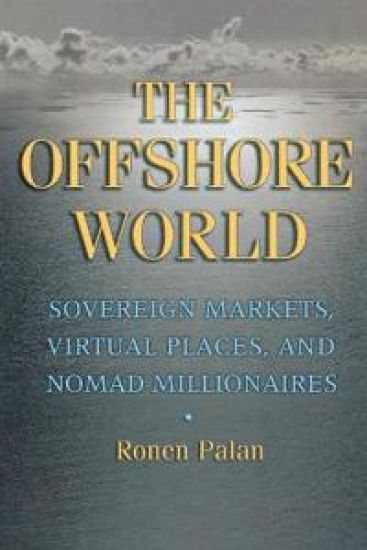
The Offshore World

The Offshore World

Ronen Palan

Cornell University Press
2006
pokkari
The atlas of contemporary capitalism is curious indeed. A desperately poor and civil-war-wracked nation, Liberia, is the world's shipping superpower; the Cayman Islands the fifth-largest financial center in the world; land-locked Zurich a venerable "offshore" banking center. Indeed, it is estimated that half of the global stock of money passes through tax havens. The logic of the offshore world, where millionaires and corporations roam in search of financial advantage, is slippery. It challenges many conventional assumptions about power and economics. In the single most comprehensive account of the offshore economy, Ronen Palan investigates the legal spaces, unregulated and yet maintained and supported by the state system, that have emerged for purposes of international finance, tax havens, export processing zones, flags of convenience, and e-commerce. The offshore economy had its beginnings in the late nineteenth century, saw early development after the First World War, and metastasized in the 1970s. Palan believes that a rapidly expanding offshore economy is now producing a new market in sovereignty; states have discovered that their rights to write law may be used as a commercial asset. This commercialization of sovereignty, he asserts, undermines the legitimacy of the nation-state and supports a form of nomadic capitalism.
The Offshore World

The Offshore World

Ronen Palan

Cornell University Press
2003
sidottu
The atlas of contemporary capitalism is curious indeed. A desperately poor and civil-war-wracked nation, Liberia, is the world's shipping superpower; the Cayman Islands the fifth-largest financial center in the world; land-locked Zurich a venerable "offshore" banking center. Indeed, it is estimated that half of the global stock of money passes through tax havens. The logic of the offshore world, where millionaires and corporations roam in search of financial advantage, is slippery. It challenges many conventional assumptions about power and economics. In the single most comprehensive account of the offshore economy, Ronen Palan investigates the legal spaces, unregulated and yet maintained and supported by the state system, that have emerged for purposes of international finance, tax havens, export processing zones, flags of convenience, and e-commerce. The offshore economy had its beginnings in the late nineteenth century, saw early development after the First World War, and metastasized in the 1970s. Palan believes that a rapidly expanding offshore economy is now producing a new market in sovereignty; states have discovered that their rights to write law may be used as a commercial asset. This commercialization of sovereignty, he asserts, undermines the legitimacy of the nation-state and supports a form of nomadic capitalism.