Kirjojen hintavertailu. Mukana 12 241 687 kirjaa ja 12 kauppaa.

Kirjailija

Ronen Steinke

Kirjat ja teokset yhdessä paikassa: 16 kirjaa, julkaisuja vuosilta 2012-2026, suosituimpien joukossa Fritz Bauer. Vertaile teosten hintoja ja tarkista saatavuus suomalaisista kirjakaupoista.

16 kirjaa

Kirjojen julkaisuhaarukka 2012-2026.

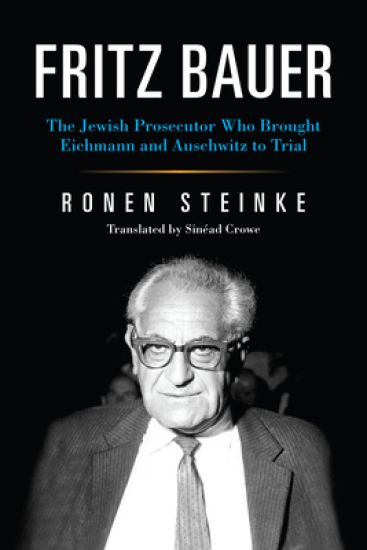
Fritz Bauer

Fritz Bauer

Ronen Steinke

Indiana University Press
2020
pokkari
German Jewish judge and prosecutor Fritz Bauer (1903–1968) played a key role in the arrest of Adolf Eichmann and the initiation of the Frankfurt Auschwitz trials. Author Ronen Steinke tells this remarkable story while sensitively exploring the many contributions Bauer made to the postwar German justice system. As it sheds light on Bauer's Jewish identity and the role it played in these trials and his later career, Steinke's deft narrative contributes to the larger story of Jewishness in postwar Germany. Examining latent antisemitism during this period as well as Jewish responses to renewed German cultural identity and politics, Steinke also explores Bauer's personal and family life and private struggles, including his participation in debates against the criminalization of homosexuality—a fact that only came to light after his death in 1968. This new biography reveals how one individual's determination, religion, and dedication to the rule of law formed an important foundation for German post war society.
Fritz Bauer

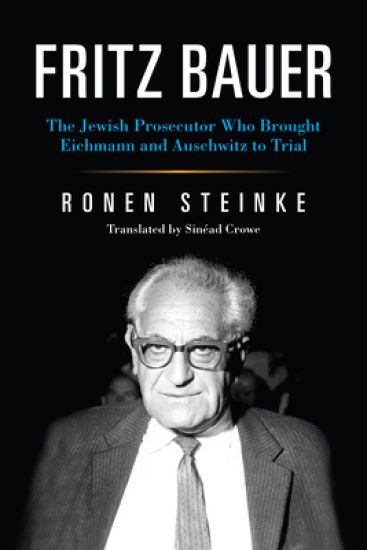
Fritz Bauer

Ronen Steinke

Indiana University Press
2020
sidottu
German Jewish judge and prosecutor Fritz Bauer (1903–1968) played a key role in the arrest of Adolf Eichmann and the initiation of the Frankfurt Auschwitz trials. Author Ronen Steinke tells this remarkable story while sensitively exploring the many contributions Bauer made to the postwar German justice system. As it sheds light on Bauer's Jewish identity and the role it played in these trials and his later career, Steinke's deft narrative contributes to the larger story of Jewishness in postwar Germany. Examining latent antisemitism during this period as well as Jewish responses to renewed German cultural identity and politics, Steinke also explores Bauer's personal and family life and private struggles, including his participation in debates against the criminalization of homosexuality—a fact that only came to light after his death in 1968. This new biography reveals how one individual's determination, religion, and dedication to the rule of law formed an important foundation for German post war society.
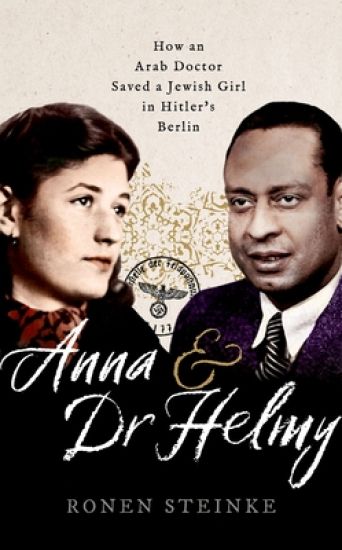
Anna and Dr Helmy

Anna and Dr Helmy

Ronen Steinke

Oxford University Press
2021
sidottu
The remarkable story of Mohammed Helmy, the Egyptian doctor who risked his life to save Jewish Berliners from the Nazis. One of the people he saved was a Jewish girl called Anna. This book tells their story. The Israeli holocaust memorial at Yad Vashem has to date honoured more than 25,000 of the courageous non-Jewish men and women who saved Jewish people during the Second World War. But it is a striking fact that under the 'Righteous Among the Nations' listed at Yad Vashem there is only one Arab person: Mohammed Helmy. Helmy was an Egyptian doctor living in Berlin. He spent the entire war there, all the time walking the fine line between accommodation to the Nazi regime and subversion of it. He was also a master of deception, outfoxing the Nazis and risking his own life to save his Jewish colleagues and other Jewish Berliners from Nazi persecution. One of the people he saved was a Jewish girl called Anna. This book tells their story. Also revealed here is a wider understanding of the Arab community in Berlin at the time, many of whom had warm relations with the Jewish community, and some of whom - like Mohammed Helmy - risked their lives to help their Jewish friends when the Nazis rose to power. Mohammed Helmy was the most remarkable individual amongst this brave group, but he was by no means the only one.
The Politics of International Criminal Justice
To anyone setting out to explore the entanglement of international criminal justice with the interests of States, Germany is a particularly curious, exemplary case. Although a liberal democracy since 1949, its political position has altered radically in the last 60 years. Starting from a position of harsh scepticism in the years following the Nuremberg Trials, and opening up to the rationales of international criminal justice only slowly - and then mainly in the context of domestic trials against functionaries of the former East German regime after 1990 - Germany is today one of the most active supporters of the International Criminal Court. The climax of this is its campaigning to make the ICC independent of the UN Security Council - a debate in which Germany took a position in stark contrast to the United States. This book offers new insight into the debates leading up to such policy shifts. Drawing on government documents and interviews with policymakers, it enriches a broader debate on the politics of international criminal justice which has to date often been focused primarily on the United States.