Kirjojen hintavertailu. Mukana 12 595 353 kirjaa ja 12 kauppaa.

Kirjailija

Rongling Wu

Kirjat ja teokset yhdessä paikassa: 6 kirjaa, julkaisuja vuosilta 2002-2022, suosituimpien joukossa Making Sense of Complexity. Vertaile teosten hintoja ja tarkista saatavuus suomalaisista kirjakaupoista.

6 kirjaa

Kirjojen julkaisuhaarukka 2002-2022.

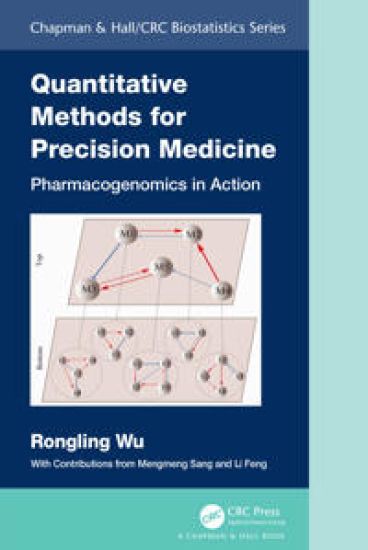
Quantitative Methods for Precision Medicine

Quantitative Methods for Precision Medicine

Rongling Wu

Apple Academic Press Inc.
2022
sidottu
Modern medicine is undergoing a paradigm shift from a "one-size-fits-all" strategy to a more precise patient-customized therapy and medication plan. While the success of precision medicine relies on the level of pharmacogenomic knowledge, dissecting the genetic mechanisms of drug response in a sufficient detail requires powerful computational tools. Quantitative Methods for Precision Medicine: Pharmacogenomics in Action presents the advanced statistical methods for mapping pharmacogenetic control by integrating pharmacokinetic and pharmacodynamic principles of drug-body interactions. Beyond traditional reductionist-based statistical genetic approaches, statistical formulization in this book synthesizes elements of multiple disciplines to infer, visualize, and track how pharmacogenes interact together as an intricate but well-coordinated system to mediate patient-specific drug response.Features:Functional and systems mapping models to characterize the genetic architecture of multiple medication processes Statistical methods for analyzing informative missing data in pharmacogenetic association studies Functional graph theory of inferring genetic interaction networks from association data Leveraging the concept of epistasis to capture its bidirectional, signed and weighted properties Modeling gene-induced cell-cell crosstalk and its impact on drug response A graph model of drug-drug interactions in combination therapies Critical methodological issues to improve pharmacogenomic research as the cornerstone of precision medicine This book is suitable for graduate students and researchers in the fields of biology, medicine, bioinformatics and drug design and delivery who are interested in statistical and computational modelling of biological processes and systems. It may also serve as a major reference for applied mathematicians, computer scientists, and statisticians who attempt to develop algorithmic tools for genetic mapping, systems pharmacogenomics and systems biology. It can be used as both a textbook and research reference. Professionals in pharmaceutical sectors who design drugs and clinical doctors who deliver drugs will also find it useful.
Statistical and Computational Pharmacogenomics
Due to the tremendous accumulation of data for genetic markers, pharmacogenomics, the study of the functions and interactions of all genes in the overall variability of drug response, is one of the hottest areas of research in biomedical science. Statistical and Computational Pharmacogenomics presents recent developments in statistical methodology with a number of detailed worked examples that outline how these methods can be applied. This comprehensive volume provides key tools needed to understand and model the genetic variation for drug response and equips statisticians with a thorough understanding of this complex field and how computational skills can be employed.
Statistical Genetics of Quantitative Traits

Statistical Genetics of Quantitative Traits

Rongling Wu; Changxing Ma; George Casella

Springer-Verlag New York Inc.
2010
nidottu
Most traits in nature and of importance to agriculture are quantitatively inherited. These traits are di?cult to study due to the complex nature of their inheritance. However, recent developments of genomic technologies provide a revolutionary means for unraveling the secrets of genetic variation in quantitative traits. Genomic te- nologies allow the molecular characterization of polymorphic markers throughout the entire genome that are then used to identify and map the genes or quantitative trait loci (QTLs) underlying a quantitative trait based on linkage analysis. Statistical analysis is a crucial tool for analyzing genome data, which are now becoming increasingly available for a variety of species, and for giving precise exp- nations regarding genetic variation in quantitative traits occurring among species, populations, families, and individuals. In 1989, Lander and Botstein published a ha- mark methodological paper for interval mapping that enables geneticists to detect and estimate individual QTL that control the phenotype of a trait. Today, interval mappingisanimportantstatisticaltoolforstudyingthegeneticsofquantitativetraits at the molecular level, and has led to the discovery of thousands of QTLs responsible for a variety of traits in plants, animals, and humans. In a recent study published in Science, Li, Zhou, and Sang (2006, 311, 1936–1939) were able to characterize the molecular basis of the reduction of grain shattering – a fundamental selection process for rice domestication – at the detected QTL by interval mapping.
Statistical and Computational Pharmacogenomics

Statistical and Computational Pharmacogenomics

Rongling Wu; Min Lin

Chapman Hall/CRC
2008
sidottu
Due to the tremendous accumulation of data for genetic markers, pharmacogenomics, the study of the functions and interactions of all genes in the overall variability of drug response, is one of the hottest areas of research in biomedical science. Statistical and Computational Pharmacogenomics presents recent developments in statistical methodology with a number of detailed worked examples that outline how these methods can be applied. This comprehensive volume provides key tools needed to understand and model the genetic variation for drug response and equips statisticians with a thorough understanding of this complex field and how computational skills can be employed.
Statistical Genetics of Quantitative Traits

Statistical Genetics of Quantitative Traits

Rongling Wu; Changxing Ma; George Casella

Springer-Verlag New York Inc.
2007
sidottu
Most traits in nature and of importance to agriculture are quantitatively inherited. These traits are di?cult to study due to the complex nature of their inheritance. However, recent developments of genomic technologies provide a revolutionary means for unraveling the secrets of genetic variation in quantitative traits. Genomic te- nologies allow the molecular characterization of polymorphic markers throughout the entire genome that are then used to identify and map the genes or quantitative trait loci (QTLs) underlying a quantitative trait based on linkage analysis. Statistical analysis is a crucial tool for analyzing genome data, which are now becoming increasingly available for a variety of species, and for giving precise exp- nations regarding genetic variation in quantitative traits occurring among species, populations, families, and individuals. In 1989, Lander and Botstein published a ha- mark methodological paper for interval mapping that enables geneticists to detect and estimate individual QTL that control the phenotype of a trait. Today, interval mappingisanimportantstatisticaltoolforstudyingthegeneticsofquantitativetraits at the molecular level, and has led to the discovery of thousands of QTLs responsible for a variety of traits in plants, animals, and humans. In a recent study published in Science, Li, Zhou, and Sang (2006, 311, 1936–1939) were able to characterize the molecular basis of the reduction of grain shattering – a fundamental selection process for rice domestication – at the detected QTL by interval mapping.
Making Sense of Complexity

Making Sense of Complexity

Scott T. Weidman; Sam S. Wu; Rongling Wu; George Casella

National Academies Press
2002
nidottu
On April 26-28, 2001, the Board on Mathematical Sciences and Their Applications (BMSA) and the Board on Life Sciences of the National Research Council cosponsored a workshop on the dynamical modeling of complex biomedical systems. The workshop's goal was to identify some open research questions in the mathematical sciences whose solution would contribute to important unsolved problems in three general areas of the biomedical sciences: disease states, cellular processes, and neuroscience. The workshop drew a diverse group of over 80 researchers, who engaged in lively discussions. To convey the workshop's excitement more broadly, and to help more mathematical scientists become familiar with these very fertile interface areas, the BMSA appointed one of its members, George Casella, of the University of Florida, as rapporteur. He developed this summary with the help of two colleagues from his university, Rongling Wu and Sam S. Wu, assisted by Scott Weidman, BMSA director. This summary represents the viewpoint of its authors only and should not be taken as a consensus report of the BMSA or of the National Research Council. Table of Contents Front Matter 1 Introduction 2 Modeling Processes within the Cell 3 Probabilistic Models that Represent Biological Observations 4 Modeling with Compartments 5 From the Compartment to the Fluid 6 Gene Transfer as a Biomedical Tool 7 The Data Flood: Analysis of Massive and Complex Genomic Data Sets 8 Summary References Appendix: Workshop Program and Attendees Color Plates