Kirjojen hintavertailu. Mukana 12 595 353 kirjaa ja 12 kauppaa.

Kirjailija

Rory Cormac

Kirjat ja teokset yhdessä paikassa: 14 kirjaa, julkaisuja vuosilta 2013-2026, suosituimpien joukossa Spying on the World. Vertaile teosten hintoja ja tarkista saatavuus suomalaisista kirjakaupoista.

14 kirjaa

Kirjojen julkaisuhaarukka 2013-2026.

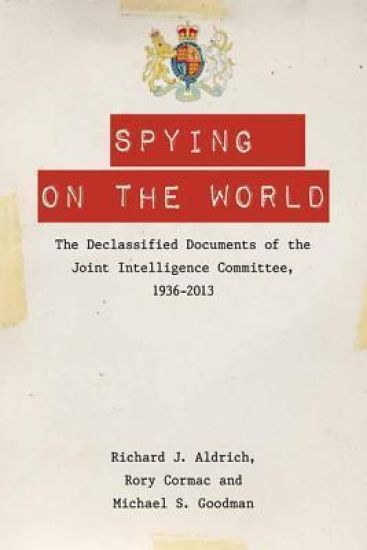
Spying on the World

Spying on the World

Richard J. Aldrich; Rory Cormac; Michael S. Goodman

Edinburgh University Press
2014
nidottu
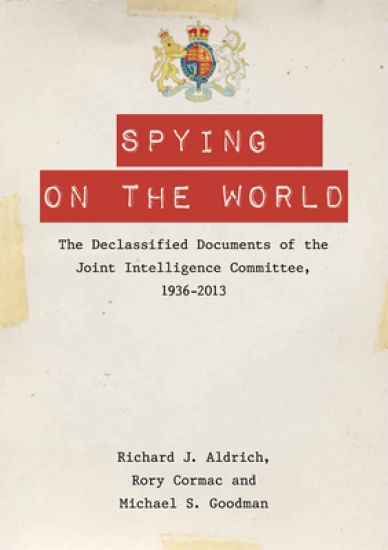
This is a documentary history of how intelligence influenced Britain's policy response to key 20th century events. For more than 50 years, the Joint Intelligence Committee (JIC) has been central to the secret machinery of the British Government, acting as a broker between the realms of the spy and the policy-maker. From WWII to the War in Iraq, and from the Falklands to the IRA, it has been involved in almost every key foreign policy decision. These 18 case studies look at key moments in the JIC's history. Each case study includes a contextualising introduction, a full reproduction of an original JIC document that influenced the government's policy response to a particular situation and explanatory footnotes. It features 18 case studies that pinpoint the role of intelligence in foreign and defence policy from 1936 to the present day. It reproduces the original versions of declassified intelligence assessments and reports. It is suitable for students and academics studying contemporary international history and government policymaking processes.
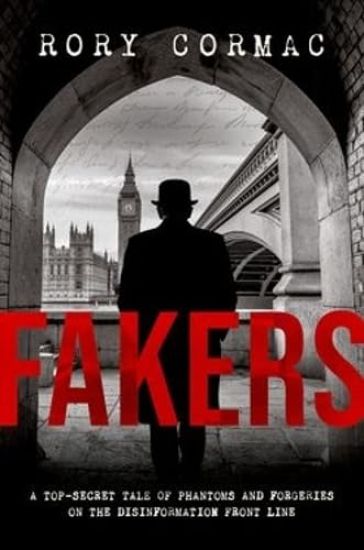
Fakers

Fakers

Rory Cormac

Oxford University Press
2026
sidottu
Intrigue, espionage, and deception. The truth behind 8,000 once top-secret files, so explosive their authors never dreamed they would be released. Fakers reveals the rise and fall of the mavericks running Britain's Cold War forgery empire. Their secret mission was audacious: to disrupt and discredit adversaries across the world using phantom groups, fake sources, and counterfeit documents. The leader was a remarkable character, wrestling with personal and professional dilemmas: Hans Welser. An Austrian refugee and one-time MI5 suspect interned behind barbed wire, Welser was a great survivor who rose to become special operations adviser to the Foreign Office, working hand in glove with MI6. His second in command was an eccentric, hard drinking, and high-flying journalist-turned-propagandist called John Rayner. Brought out of semi-retirement, for one final posting. Their team of bowler-hatted refugees, voluble ex-journalists, trailblazing women, and licentious literary sorts navigated loyalty and betrayal — both professionally and romantically — from the diplomats' attic, in the most sensitive part of the Foreign Office's secret propaganda department. The newly declassified files expose an array of plots, some comically absurd and others dangerously controversial. The forgery empire impersonated everything from hippies and ghosts to Islamists and ballet composers in their campaign to smear hostile politicians, stir tensions among adversaries, and even stymie the career of a contentious British historian. All took place against a high stakes backdrop — both overseas as states competed beneath the looming threat of nuclear war and in the corridors of power at home where grey-suited bureaucrats circled, keen to shut down the team for good. With timely insight into how propaganda works and how to respond to disinformation, Fakers is a thrilling journey into a secret world where nothing was as it seemed.
Crown, Cloak, and Dagger: The British Monarchy and Secret Intelligence from Victoria to Elizabeth II
Surprising revelations about the active role of the monarch in British intelligenceThe British Royal Family and the intelligence community are two of the most mysterious and mythologized actors of the British State. Crown, Cloak, and Dagger offers a new history of how the two have been inextricably linked from the reign of Queen Victoria to the present.Richard J. Aldrich and Rory Cormac unveil a wealth of archival detail that changes our understanding of the role of the monarch in politics, intelligence, and international relations. Successive queens and kings have all played an active role in steering British intelligence, sometimes against the wishes of prime ministers. Even today, the monarch receives "copy No. 1" of every intelligence report. Attempted assassinations and kidnappings, the abdication crisis, world wars and the Cold War, and the death of Princess Diana are just some of the topics covered in the book.Fascinating and fast-paced, Crown, Cloak, and Dagger demonstrates that the British monarch continues to be far more than a figurehead. This book will inform as well as entertain anyone with an interest in history, espionage, and the royals.
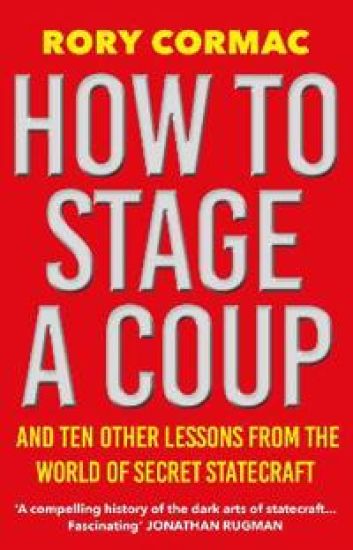
How To Stage A Coup

How To Stage A Coup

Rory Cormac

Atlantic Books
2023
nidottu
'A compelling history of the dark arts of statecraft... Fascinating' Jonathan Rugman'Rich in anecdote and detail.' The TimesToday's world is in flux. Competition between the great powers is back on the agenda and governments around the world are turning to secret statecraft and the hidden hand to navigate these uncertain waters. From poisonings to electoral interference, subversion to cyber sabotage, states increasingly operate in the shadows, while social media has created new avenues for disinformation on a mass scale.This is covert action: perhaps the most sensitive - and controversial - of all state activity. However, for all its supposed secrecy, it has become surprisingly prominent - and it is something that has the power to affect all of us. In an enthralling and urgent narrative packed with real-world examples, Rory Cormac reveals how such activity is shaping the world and argues that understanding why and how states wield these dark arts has never been more important.
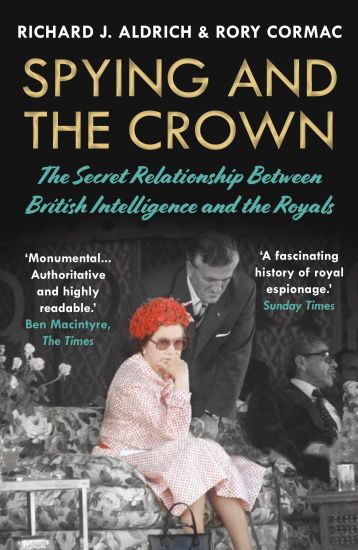
Spying and the Crown

Spying and the Crown

Rory Cormac; Richard J. Aldrich

Atlantic Books
2022
nidottu
A Daily Mail Book of the Year and a The Times and Sunday Times Best Book of 2021'Monumental.. Authoritative and highly readable.' Ben Macintyre, The Times'A fascinating history of royal espionage.' Sunday Times'Excellent... Compelling' GuardianFor the first time, Spying and the Crown uncovers the remarkable relationship between the Royal Family and the intelligence community, from the reign of Queen Victoria to the death of Princess Diana. In an enthralling narrative, Richard J. Aldrich and Rory Cormac show how the British secret services grew out of persistent attempts to assassinate Victoria and then operated on a private and informal basis, drawing on close personal relationships between senior spies, the aristocracy, and the monarchy. Based on original research and new evidence, Spying and the Crown presents the British monarchy in an entirely new light and reveals how far their majesties still call the shots in a hidden world.Previously published as The Secret Royals.
How to Stage a Coup: And Ten Other Lessons from the World of Secret Statecraft
'A compelling history of the dark arts of statecraft... Fascinating' Jonathan Rugman 'Rich in anecdote and detail.' The Times Today's world is in flux. Competition between the great powers is back on the agenda and governments around the world are turning to secret statecraft and the hidden hand to navigate these uncertain waters. From poisonings to electoral interference, subversion to cyber sabotage, states increasingly operate in the shadows, while social media has created new avenues for disinformation on a mass scale. This is covert action: perhaps the most sensitive - and controversial - of all state activity. However, for all its supposed secrecy, it has become surprisingly prominent - and it is something that has the power to affect all of us. In an enthralling and urgent narrative packed with real-world examples, Rory Cormac reveals how such activity is shaping the world and argues that understanding why and how states wield these dark arts has never been more important.
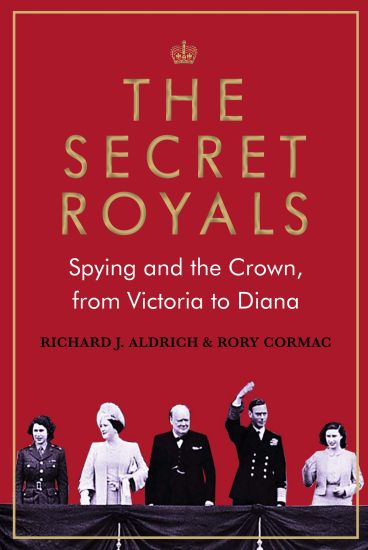
The Secret Royals

The Secret Royals

Rory Cormac

Atlantic Books
2021
sidottu
A Daily Mail Book of the Year and a The Times and Sunday Times Best Book of 2021'Monumental.. Authoritative and highly readable.' Ben Macintyre, The Times'A fascinating history of royal espionage.' Sunday Times'Excellent... Compelling' GuardianFor the first time, The Secret Royals uncovers the remarkable relationship between the Royal Family and the intelligence community, from the reign of Queen Victoria to the death of Princess Diana. In an enthralling narrative, Richard J. Aldrich and Rory Cormac show how the British secret services grew out of persistent attempts to assassinate Victoria and then operated on a private and informal basis, drawing on close personal relationships between senior spies, the aristocracy, and the monarchy. This reached its zenith after the murder of the Romanovs and the Russian revolution when, fearing a similar revolt in Britain, King George V considered using private networks to provide intelligence on the loyalty of the armed forces - and of the broader population.In 1936, the dramatic abdication of Edward VIII formed a turning point in this relationship. What originally started as family feuding over a romantic liaison with the American divorcee Wallis Simpson, escalated into a national security crisis. Fearing the couple's Nazi sympathies as well as domestic instability, British spies turned their attention to the King. During the Second World War, his successor, King George VI gradually restored trust between the secret world and House of Windsor. Thereafter, Queen Elizabeth II regularly enacted her constitutional right to advise and warn, raising her eyebrow knowingly at prime ministers and spymasters alike.Based on original research and new evidence, The Secret Royals presents the British monarchy in an entirely new light and reveals how far their majesties still call the shots in a hidden world.
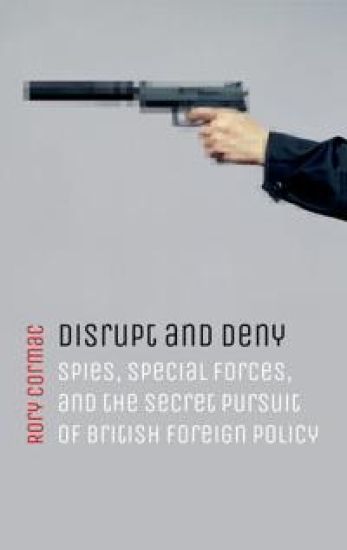
Disrupt and Deny

Disrupt and Deny

Rory Cormac

Oxford University Press
2021
nidottu
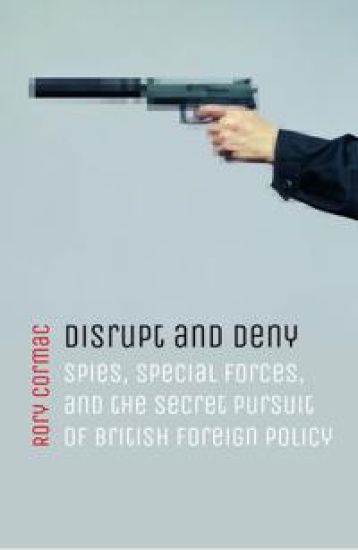
Disrupt and Deny is the untold story behind Britain's secret scheming against both enemies and friends from 1945 to the present day. British leaders use spies and Special Forces to interfere in the affairs of others discreetly and deniably. Since 1945, MI6 has spread misinformation designed to divide and discredit targets from the Middle East to Eastern Europe and Northern Ireland. It has instigated whispering campaigns and planted false evidence on officials working behind the Iron Curtain, tried to foment revolution in Albania, blown up ships to prevent the passage of refugees to Israel, and secretly funnelled aid to insurgents in Afghanistan and dissidents in Poland. MI6 has launched cultural and economic warfare against Iceland and Czechoslovakia. It has tried to instigate coups in Congo, Egypt, Syria, Saudi Arabia, Iran, and elsewhere. Through bribery and blackmail, Britain has rigged elections as colonies moved to independence. Britain has fought secret wars in Yemen, Indonesia, and Oman - and discreetly used Special Forces to eliminate enemies from colonial Malaya to Libya during the Arab Spring. This is covert action: a vital, though controversial, tool of statecraft and perhaps the most sensitive of all government activity. If used wisely, it can play an important role in pursuing national interests in a dangerous world. If used poorly, it can cause political scandal - or worse. In Disrupt and Deny, Rory Cormac tells the remarkable true story of Britain's secret scheming against its enemies, as well as its friends; of intrigue and manoeuvring within the darkest corridors of Whitehall, where officials fought to maintain control of this most sensitive and seductive work; and, above all, of Britain's attempt to use smoke and mirrors to mask decline. He reveals hitherto secret operations, the slush funds that paid for them, and the battles in Whitehall that shaped them.
The Black Door Lib/E: Spies, Secret Intelligence, and British Prime Ministers
Intelligence can do a prime minister's dirty work. For more than a century, secret wars have been waged directly from Number 10. They have staved off conflict, defeats, and British decline through fancy footwork, often deceiving friend and foe alike. Yet as the birth of the modern British secret service in 1909, prime ministers were strangers to the secret world--sometimes with disastrous consequences.During the Second World War, Winston Churchill oversaw a remarkable revolution in the exploitation of intelligence, bringing it into the center of government. Churchill's wartime regime also formed a school of intelligence for future prime ministers, and its secret legacy has endured. Margaret Thatcher, Tony Blair and David Cameron all became great enthusiasts for spies and special forces.Although Britain's political leaders have often feigned ignorance about what one prime minister called this "strange underworld," some of the most daring and controversial intelligence operations can be traced straight back to Number 10
Disrupt and Deny

Disrupt and Deny

Rory Cormac

Oxford University Press
2018
sidottu
British leaders use spies and Special Forces to interfere in the affairs of others discreetly and deniably. Since 1945, MI6 has spread misinformation designed to divide and discredit targets from the Middle East to Eastern Europe and Northern Ireland. It has instigated whispering campaigns and planted false evidence on officials working behind the Iron Curtain, tried to foment revolution in Albania, blown up ships to prevent the passage of refugees to Israel, and secretly funnelled aid to insurgents in Afghanistan and dissidents in Poland. MI6 has launched cultural and economic warfare against Iceland and Czechoslovakia. It has tried to instigate coups in Congo, Egypt, Syria, Saudi Arabia, Iran, and elsewhere. Through bribery and blackmail, Britain has rigged elections as colonies moved to independence. Britain has fought secret wars in Yemen, Indonesia, and Oman -- and discreetly used Special Forces to eliminate enemies from colonial Malaya to Libya during the Arab Spring. This is covert action: a vital, though controversial, tool of statecraft and perhaps the most sensitive of all government activity. If used wisely, it can play an important role in pursuing national interests in a dangerous world. If used poorly, it can cause political scandal -- or worse. In Disrupt and Deny, Rory Cormac tells the remarkable true story of Britain's secret scheming against its enemies, as well as its friends; of intrigue and manoeuvring within the darkest corridors of Whitehall, where officials fought to maintain control of this most sensitive and seductive work; and, above all, of Britain's attempt to use smoke and mirrors to mask decline. He reveals hitherto secret operations, the slush funds that paid for them, and the battles in Whitehall that shaped them.
Black Door

Black Door

Richard Aldrich; Rory Cormac

Harpercollins Publishers
2017
pokkari
The Black Door explores the evolving relationship between successive British prime ministers and the intelligence agencies, from Asquithâ??s Secret Service Bureau to Cameronâ??s National Security Council.
Spying on the World

Spying on the World

Richard J. Aldrich; Rory Cormac; Michael S. Goodman

Edinburgh University Press
2014
sidottu
For more than half a century, the Joint Intelligence Committee or 'JIC' has been a central component of the British Government's secret machinery. It represents the highest authority in the world of intelligence and acts as a broker between the spy and the policy-maker. From WWII to the War in Iraq, and from the Falklands to the IRA, it has been involved in almost every key foreign policy decision. This book reveals the declassified papers of the JIC, shining a light on the workings of Whitehall's secret world and the vital, previously unknown, role played by intelligence in pivotal events across the twentieth and twenty-first centuries.
Confronting the Colonies: British Intelligence and Counterinsurgency
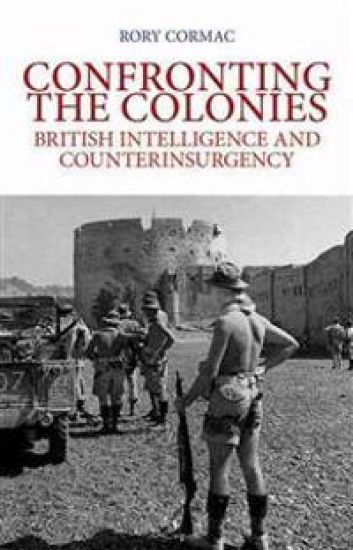
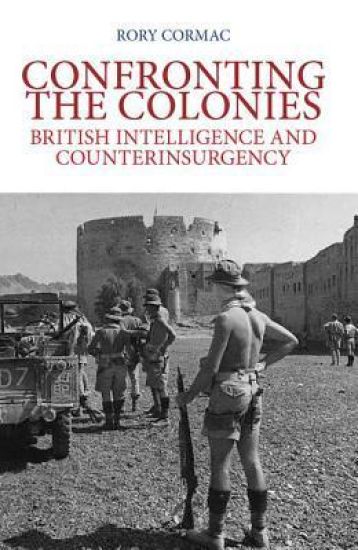
Moving the debate beyond the place of tactical intelligence in counterinsurgency warfare, Confronting the Colonies considers the view from Whitehall, where the biggest decisions were made. It reveals the evolving impact of strategic intelligence upon government understandings of, and policy responses to, insurgent threats. Confronting the Colonies demonstrates for the first time how, in the decades after World War Two, the intelligence agenda expanded to include non-state actors, insurgencies, and irregular warfare. It explores the challenges these emerging threats posed to intelligence assessment and how they were met with varying degrees of success. Such issues remain of vital importance today. By examining the relationship between intelligence and policy, Cormac provides original and revealing insights into government thinking in the era of decolonisation, from the origins of nationalist unrest to the projection of dwindling British power. He demonstrates how intelligence (mis-)understood the complex relationship between the Cold War, nationalism, and decolonisation; how it fuelled fierce Whitehall feuding; and how it shaped policymakers' attempts to integrate counterinsurgency into broader strategic policy.
Confronting the Colonies

Confronting the Colonies

Rory Cormac

C Hurst Co Publishers Ltd
2013
sidottu
Moving the debate beyond the place of tactical intelligence in counterinsurgency warfare, Confronting the Colonies considers the view from Whitehall, where the biggest decisions were made. It reveals the evolving impact of strategic intelligence upon government under- standings of, and policy responses to, insurgent threats. Confronting the Colonies demonstrates for the first time how, in the decades after World War Two, the intelligence agenda expanded to include non-state actors, insurgencies, and irregular warfare. It explores the challenges these emerging threats posed to intelligence assessment and how they were met with varying degrees of success. Such issues remain of vital importance today. By examining the relationship between intelligence and policy, Cormac provides original and revealing in- sights into government thinking in the era of decolonisation, from the origins of nationalist unrest to the projection of dwindling British power. He demonstrates how intelligence (mis-) understood the complex relationship between the Cold War, nationalism, and decolonisation; how it fuelled fierce Whitehall feuding; and how it shaped policymakers' attempts to integrate counterinsurgency into broader strategic policy.