Kirjojen hintavertailu. Mukana 12 595 353 kirjaa ja 12 kauppaa.

Kirjailija

Rosalind Rosenberg

Kirjat ja teokset yhdessä paikassa: 5 kirjaa, julkaisuja vuosilta 1983-2020, suosituimpien joukossa Jane Crow. Vertaile teosten hintoja ja tarkista saatavuus suomalaisista kirjakaupoista.

5 kirjaa

Kirjojen julkaisuhaarukka 1983-2020.

Jane Crow

Jane Crow

Rosalind Rosenberg

Oxford University Press Inc
2020
nidottu
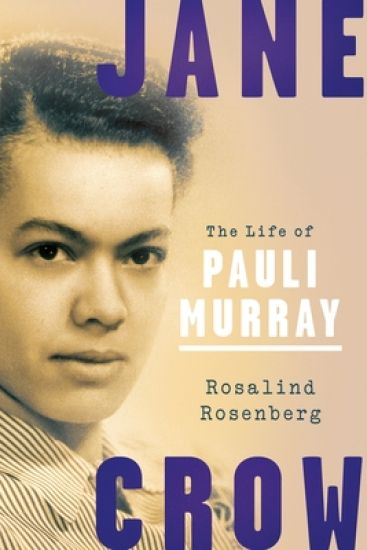
Throughout her prodigious life, activist and lawyer Pauli Murray systematically fought against all arbitrary distinctions in society, channeling her outrage at the discrimination she faced to make America a more democratic country. In this definitive biography, Rosalind Rosenberg offers a poignant portrait of a figure who played pivotal roles in both the modern civil rights and women's movements. A mixed-race orphan, Murray grew up in segregated North Carolina before escaping to New York, where she attended Hunter College and became a labor activist in the 1930s. When she applied to graduate school at the University of North Carolina, where her white great-great-grandfather had been a trustee, she was rejected because of her race. She went on to graduate first in her class at Howard Law School, only to be rejected for graduate study again at Harvard University this time on account of her sex. Undaunted, Murray forged a singular career in the law. In the 1950s, her legal scholarship helped Thurgood Marshall challenge segregation head-on in the landmark Brown v. Board of Education case. When appointed by Eleanor Roosevelt to the President's Commission on the Status of Women in 1962, she advanced the idea of Jane Crow, arguing that the same reasons used to condemn race discrimination could be used to battle gender discrimination. In 1965, she became the first African American to earn a JSD from Yale Law School and the following year persuaded Betty Friedan to found an NAACP for women, which became NOW. In the early 1970s, Murray provided Ruth Bader Ginsburg with the argument Ginsburg used to persuade the Supreme Court that the Fourteenth Amendment to the Constitution protects not only blacks but also women - and potentially other minority groups - from discrimination. By that time, Murray was a tenured history professor at Brandeis, a position she left to become the first black woman ordained a priest by the Episcopal Church in 1976. Murray accomplished all this while struggling with issues of identity. She believed from childhood she was male and tried unsuccessfully to persuade doctors to give her testosterone. While she would today be identified as transgender, during her lifetime no social movement existed to support this identity. She ultimately used her private feelings of being "in-between" to publicly contend that identities are not fixed, an idea that has powered campaigns for equal rights in the United States for the past half-century.
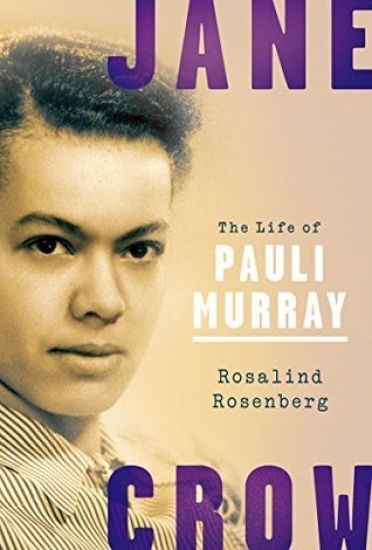
Jane Crow

Jane Crow

Rosalind Rosenberg

Oxford University Press Inc
2017
sidottu
Pauli Murray (1910-1985) played pivotal roles in both the modern civil rights and women's movements. In the 1950s, her legal scholarship helped Thurgood Marshall to shift his course and attack segregation frontally in Brown v. Board of Education. In the 1960s, Murray persuaded Betty Friedan to help her found an NAACP for women, which Friedan named NOW. In the early 1970s, Murray provided Ruth Bader Ginsburg with the argument Ginsburg used to persuade the Supreme Court that the Fourteenth Amendment to the Constitution protects not only blacks but also women -- and potentially other minority groups -- from discrimination. A mixed-race orphan, Murray grew up in the segregated schools of North Craolina, before escaping to New York, where she attended Hunter College and became a labor activist in the 1930s. Applying to graduate school at the University of North Carolina, where her white great-great-grandfather had been a trustee, she was rejected on account of her race. Deciding to become a lawyer, she graduated first in her class at Howard Law School, only to be rejected for graduate study at Harvard University on account of her sex. Undaunted, Murray forged a singular career in the law, directly impacting one of the landmark Supreme Court cases. Appointed by Eleanor Rossevelt to the President's Commission on the Status of Women in 1962, she advanced the idea of Jane Crow, arguing that the same reasons used to attack race discrimination could be used to battle gender discrimination. In 1965, she becanme the first black person to earn a JSD from Yale Law School and the follow year persuaded Betty Friedan to found what became the nation's most famous feminist organization. Most importantly, her concept of Jane Crow propelled Ginsberg to her first Supreme Court victory for women's rights. By that time, Murray was a tenured history professor at Brandeis, a position she left to become the first woman ordained a priest by the Episcopal Church in 1976. Murray accomplished all of this as someone who would today be identified as transgender but who, at a time when no social movement existed to support this identity, focused her attention on systematic attacks on arbitrary distinctions of all sorts, transforming the idea of what equality means.
Changing the Subject

Changing the Subject

Rosalind Rosenberg

Columbia University Press
2004
sidottu
This remarkable story begins in the years following the Civil War, when reformers-emboldened by the egalitarian rhetoric of the post-Civil War era-pressed New York City's oldest institution of higher learning to admit women in the 1870s. Their effort failed, but within twenty years Barnard College was founded, creating a refuge for women scholars at Columbia, as well as an academic beachhead "from which women would make incursions into the larger university." By 1950, Columbia was granting more advanced degrees to women and hiring more female faculty than any other university in the country. In Changing the Subject, Rosalind Rosenberg shows how this century-long struggle transcended its local origins and contributed to the rise of modern feminism, furthered the cause of political reform, and enlivened the intellectual life of America's most cosmopolitan city. Surmounting a series of social and institutional obstacles to gain access to Columbia University, women played a key role in its evolution from a small, Protestant, male-dominated school into a renowned research university. At the same time, their struggles challenged prevailing ideas about masculinity, femininity, and sexual identity; questioned accepted views about ethnicity, race, and rights; and thereby laid the foundation for what we now know as gender. From Lillie Devereux Blake, Annie Nathan Meyer, and Virginia Crocheron Gildersleeve in the first generation, through Ruth Benedict, Margaret Mead, and Zora Neale Hurston in the second, to Kate Millett, Gerda Lerner, and Ruth Bader Ginsburg in the third, the women of Columbia shook the world.
Beyond Separate Spheres

Beyond Separate Spheres

Rosalind Rosenberg

Yale University Press
1983
pokkari
"With superb insight and erudition Rosenberg discerns the connections between social science and feminism which replaced the ideal of ‘true womanhood’ with ‘the new woman’ at the turn of the 20th century. Besides brilliantly illuminating the personalities and ideas which led from one intellectual era to another, the book contributes groundbreaking research to the question of feminism’s fate in the 1920s."-- Nancy F. Cott"Weaving anecdote and analysis, Rosenberg shows how the women’s experiences in academic and institutional settings influenced the direction and content of their theoretical work."-- Kathryn Kish Sklar, The Wilson Quarterly"Brilliant and pioneering. . . . Details a fascinating chapter in American intellectual and educational history, and sensitively depicts the often painful challenges faced by women academics of an earlier age."-- Marie Marmo Mullaney, Library Journal"Forcefully argued and gracefully written, this work . . . not only sheds new light on the intellectual roots of modern feminism, but advances an irrefutable indictment of an academic world that systematically excluded talented women from teaching posts while allowing their male mentors to lay claim to their pioneering scholarship."-- Eric Foner, Commonweal"Fascinating. . . . Deserves the widest possible readership."-- Hamilton Cravens, Science