Kirjojen hintavertailu. Mukana 12 530 820 kirjaa ja 12 kauppaa.
Kirjailija
Rosalyn H. Shute
Kirjat ja teokset yhdessä paikassa: 9 kirjaa, julkaisuja vuosilta 2015-2026, suosituimpien joukossa The Psychology of Social Identity. Vertaile teosten hintoja ja tarkista saatavuus suomalaisista kirjakaupoista.
Who are you, really? Why does it sometimes feel so hard to fit in? Are we defined by our past, or can we reinvent who we are? The Psychology of Social Identity unpacks the fascinating, messy, and ever-changing nature of identity. Drawing on cutting-edge psychological research and real-world examples, this engaging book explores how social groups, life changes, and cultural influences shape our identities. It challenges the myth of a singular "true self" and offers fresh perspectives on belonging, rejection, and the power of embracing complexity. With relatable anecdotes, global insights, and practical advice, this book is a guide to understanding yourself and others in a world of constant change. Whether you're someone navigating identity challenges or simply curious about what makes us who we are, The Psychology of Social Identity is for anyone seeking clarity and connection in the complexities of modern life.
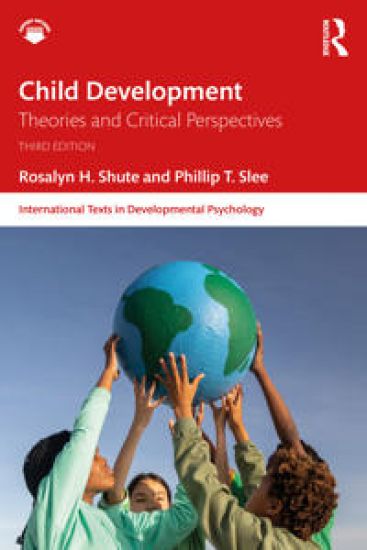
Child Development: Theories and Critical Perspectives provides a perceptive and engaging overview of theories in child and adolescent psychology, uniquely combining traditional scientific perspectives with critical (postmodern) approaches. This new edition has been extensively revised to incorporate recent advances in the field, featuring a new chapter, 'Theorizing about children’s digital worlds', that explores contemporary issues including social media, artificial intelligence, internet addiction and the banning of mobile phones in schools. The authors skilfully place developmental theories within philosophical and cultural contexts, tracing historical developments across different schools of thought while exploring their interconnections and practical implications. Early chapters cover mainstream theorists such as Piaget, Skinner, Freud and Vygotsky. Other influential theorists include Maccoby and Thelen, and contemporary thinkers such as Overton and Stetsenko. Significant figures less well-known today, like Dewey and Rubinstein, are also introduced. The text also addresses broader frameworks including lifespan perspectives, systems theory, evolutionary theory, epigenetics, feminist approaches, children's voices, and Indigenous theories. Current controversies such as ‘decolonizing’ developmental psychology and the role of universities in knowledge production are also discussed. Written with students in mind, the book includes valuable pedagogical features such as recommended readings, discussion questions, activities and relevant websites. Essential reading for postgraduate students in developmental psychology, education, social work and social policy, its lucid style makes complex theoretical concepts accessible to readers at all levels, including those with limited background in psychology.
Child Development: Theories and Critical Perspectives provides a perceptive and engaging overview of theories in child and adolescent psychology, uniquely combining traditional scientific perspectives with critical (postmodern) approaches. This new edition has been extensively revised to incorporate recent advances in the field, featuring a new chapter, 'Theorizing about children’s digital worlds', that explores contemporary issues including social media, artificial intelligence, internet addiction and the banning of mobile phones in schools. The authors skilfully place developmental theories within philosophical and cultural contexts, tracing historical developments across different schools of thought while exploring their interconnections and practical implications. Early chapters cover mainstream theorists such as Piaget, Skinner, Freud and Vygotsky. Other influential theorists include Maccoby and Thelen, and contemporary thinkers such as Overton and Stetsenko. Significant figures less well-known today, like Dewey and Rubinstein, are also introduced. The text also addresses broader frameworks including lifespan perspectives, systems theory, evolutionary theory, epigenetics, feminist approaches, children's voices, and Indigenous theories. Current controversies such as ‘decolonizing’ developmental psychology and the role of universities in knowledge production are also discussed. Written with students in mind, the book includes valuable pedagogical features such as recommended readings, discussion questions, activities and relevant websites. Essential reading for postgraduate students in developmental psychology, education, social work and social policy, its lucid style makes complex theoretical concepts accessible to readers at all levels, including those with limited background in psychology.
This book addresses, and seeks to harmonise, different paradigms for understanding school bullying. It sets out to examine two paradigms for conceptualising bullying, and the worldviews that underpin them. It uses a complex systems perspective to bring the two paradigms together in a holistic fashion. By doing so, it creates an integrated framework for conceptualising the many individual, relational and societal factors that are in dynamic interaction and play a part in promoting or reducing school bullying. This book draws upon a number of disciplines by way of background, including evolutionary, child development and social psychological theories of group behaviour and identity. It proposes that the human need for belonging is central to understanding bullying, and situates the topic within an understanding of gender and children’s human rights, bringing philosophical and moral perspectives to bear. It discusses practical ways forward, presents a systemic approach to bullying and application of complex adaptive systems methods to bullying research and evaluation. It serves as an introduction to such methods and suggests further creative ideas for policy, intervention practice, and teacher education about bullying.
This book addresses, and seeks to harmonise, different paradigms for understanding school bullying. It sets out to examine two paradigms for conceptualising bullying, and the worldviews that underpin them. It uses a complex systems perspective to bring the two paradigms together in a holistic fashion. By doing so, it creates an integrated framework for conceptualising the many individual, relational and societal factors that are in dynamic interaction and play a part in promoting or reducing school bullying. This book draws upon a number of disciplines by way of background, including evolutionary, child development and social psychological theories of group behaviour and identity. It proposes that the human need for belonging is central to understanding bullying, and situates the topic within an understanding of gender and children’s human rights, bringing philosophical and moral perspectives to bear. It discusses practical ways forward, presents a systemic approach to bullying and application of complex adaptive systems methods to bullying research and evaluation. It serves as an introduction to such methods and suggests further creative ideas for policy, intervention practice, and teacher education about bullying.
Adolescent girls’ wellbeing is under threat. They face pressure to achieve academically while simultaneously negotiating a life dominated by social media, an unrelenting focus on appearance, cyberbullying, sexual harassment and ready access to pornography characterised by male violence to women.The sociocultural environment presents significant risks for girls’ mental health, yet clinical psychology remains largely focused on the individual. Cultural factors are also overshadowed by postfeminist forces and a renewed emphasis on biological determinants of psychological sex differences. Clinical Psychology and Adolescent Girls in a Postfeminist Era goes back to first principles and revisits the question of the place of nature and nurture in children’s development, in the light of what we now know about neural plasticity, dynamic systems and gender socialisation. Feminism and its sometimes uncomfortable relationship with psychology is discussed, as are the meaning and implications of ‘postfeminism’, and whether girls have ‘special strengths’. Practice principles and specific ideas for practice with today’s girls are all included. Finally, there is a complementary chapter on working with adolescent boys.Feminist writings about psychotherapy (with women) had their heyday some time ago, and some see boys as the ones who now need special attention. This book contends that the changing pressures of today’s western world call for a renewed interest in specialised practice with girls, taking account of up-to-date theories about child development, and exploring the idea of expanding clinical practice beyond the individual.
Adolescent girls’ wellbeing is under threat. They face pressure to achieve academically while simultaneously negotiating a life dominated by social media, an unrelenting focus on appearance, cyberbullying, sexual harassment and ready access to pornography characterised by male violence to women.The sociocultural environment presents significant risks for girls’ mental health, yet clinical psychology remains largely focused on the individual. Cultural factors are also overshadowed by postfeminist forces and a renewed emphasis on biological determinants of psychological sex differences. Clinical Psychology and Adolescent Girls in a Postfeminist Era goes back to first principles and revisits the question of the place of nature and nurture in children’s development, in the light of what we now know about neural plasticity, dynamic systems and gender socialisation. Feminism and its sometimes uncomfortable relationship with psychology is discussed, as are the meaning and implications of ‘postfeminism’, and whether girls have ‘special strengths’. Practice principles and specific ideas for practice with today’s girls are all included. Finally, there is a complementary chapter on working with adolescent boys.Feminist writings about psychotherapy (with women) had their heyday some time ago, and some see boys as the ones who now need special attention. This book contends that the changing pressures of today’s western world call for a renewed interest in specialised practice with girls, taking account of up-to-date theories about child development, and exploring the idea of expanding clinical practice beyond the individual.
Child Development: Theories and Critical Perspectives provides an engaging and perceptive overview of both well-established and recent theories in child and adolescent psychology. This unique summary of traditional scientific perspectives alongside critical post-modern thinking will provide readers with a sense of the historical development of different schools of thought. The authors also place theories of child development in philosophical and cultural contexts, explore links between them, and consider the implications of theory for practice in the light of the latest thinking and developments in implementation and translational science.Early chapters cover mainstream theories such as those of Piaget, Skinner, Freud, Maccoby and Vygotsky, whilst later chapters present interesting lesser-known theorists such as Sergei Rubinstein, and more recent influential theorists such as Esther Thelen. The book also addresses lifespan perspectives and systems theory, and describes the latest thinking in areas ranging from evolutionary theory and epigenetics, to feminism, the voice of the child and Indigenous theories.The new edition of Child Development has been extensively revised to include considerable recent advances in the field. As with the previous edition, the book has been written with the student in mind, and includes a number of useful pedagogical features including further reading, discussion questions, activities, and websites of interest.Child Development: Theories and Critical Perspectives will be essential reading for students on advanced courses in developmental psychology, education, social work and social policy, and the lucid style will also make it accessible to readers with little or no background in psychology.
Child Development: Theories and Critical Perspectives provides an engaging and perceptive overview of both well-established and recent theories in child and adolescent psychology. This unique summary of traditional scientific perspectives alongside critical post-modern thinking will provide readers with a sense of the historical development of different schools of thought. The authors also place theories of child development in philosophical and cultural contexts, explore links between them, and consider the implications of theory for practice in the light of the latest thinking and developments in implementation and translational science.Early chapters cover mainstream theories such as those of Piaget, Skinner, Freud, Maccoby and Vygotsky, whilst later chapters present interesting lesser-known theorists such as Sergei Rubinstein, and more recent influential theorists such as Esther Thelen. The book also addresses lifespan perspectives and systems theory, and describes the latest thinking in areas ranging from evolutionary theory and epigenetics, to feminism, the voice of the child and Indigenous theories.The new edition of Child Development has been extensively revised to include considerable recent advances in the field. As with the previous edition, the book has been written with the student in mind, and includes a number of useful pedagogical features including further reading, discussion questions, activities, and websites of interest.Child Development: Theories and Critical Perspectives will be essential reading for students on advanced courses in developmental psychology, education, social work and social policy, and the lucid style will also make it accessible to readers with little or no background in psychology.