Kirjojen hintavertailu. Mukana 12 390 323 kirjaa ja 12 kauppaa.

Kirjailija

Rosemary Ashton

Kirjat ja teokset yhdessä paikassa: 7 kirjaa, julkaisuja vuosilta 1995-2018, suosituimpien joukossa George Eliot. Vertaile teosten hintoja ja tarkista saatavuus suomalaisista kirjakaupoista.

7 kirjaa

Kirjojen julkaisuhaarukka 1995-2018.

George Eliot

George Eliot

Rosemary Ashton

Faber Faber
2013
pokkari
'This richly enjoyable biography of the great Victorian novelist reminds us how truly revolutionary was George Eliot... [Ashton] provides luminously sane readings of the marvellous novels.' A.N. Wilson, Evening Standard'Excellent... Ashton cites Eliot's achievement in a literary landscape which moves from Scott and George Sand to Dickens, Tennyson and Browning... a fluent, vivid book... it makes one thrill again to the breadth of Eliot's genius and the passionate, vulnerable nature that accompanied her wide-ranging mind.' Jenny Uglow, Independent on Sunday'An extremely impressive work... the George Eliot who emerges from Professor Ashton's book is a remarkable woman of exceptional integrity whose life expresses the spirit of the Victorian age, even as it goes against the very grain of it.' Susie Boyt, Sunday Express
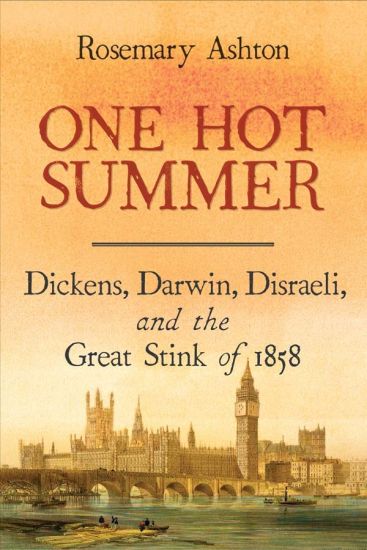
One Hot Summer

One Hot Summer

Rosemary Ashton

Yale University Press
2018
pokkari
A unique, colorful view of Victorian London when residents both famous and now-forgotten endured “the Great Stink” across one hot summer? While 1858 in London may have been noteworthy for its broiling summer months and the related stench of the sewage-filled Thames River, the year is otherwise little remembered. And yet, historian Rosemary Ashton reveals in this compelling microhistory, 1858 was marked by significant, if unrecognized, turning points. For ordinary people, and also for the rich, famous, and powerful, the months from May to August turned out to be a summer of consequence. Ashton mines Victorian letters and gossip, diaries, court records, newspapers, and other contemporary sources to uncover historically crucial moments in the lives of three protagonists—Charles Dickens, Charles Darwin, and Benjamin Disraeli. She also introduces others who gained renown in the headlines of the day, among them George Eliot, Karl Marx, William Thackeray, and Edward Bulwer Lytton. Ashton reveals invisible threads of connection among Londoners at every social level in 1858, bringing the celebrated city and its citizens vibrantly to life.
Little Germany

Little Germany

Rosemary Ashton

Faber Faber
2013
nidottu
Following the failure of the 1848 revolution a great many political refugees headed for England - the richly cosmopolitan hub of an Empire, and the commercial-industrial locus of the world. Among the German contingent of exiles were, famously, Karl Marx and Friedrich Engels. But many less luminous names, no less well-educated in their native Germany, also settled in England and made their way there, whether as teachers or tailors, journalists or musicians, polemicists or political organizers. Few of these exiles knew how long they would have to call England home: some became keen Anglophiles, while others remained resolutely wedded in spirit to 'the old country.' Rosemary Ashton's study, first published in 1986, charts the fortunes of this disparate group and illuminates Victorian England through their eyes, so making a fascinating account of a neglected area of Anglo-German relations.
Victorian Bloomsbury

Victorian Bloomsbury

Rosemary Ashton

Yale University Press
2012
sidottu
While Bloomsbury is now associated with Virginia Woolf and her early-twentieth-century circle of writers and artists, the neighborhood was originally the undisputed intellectual quarter of nineteenth-century London. Drawing on a wealth of untapped archival resources, Rosemary Ashton brings to life the educational, medical, and social reformists who lived and worked in Victorian Bloomsbury and who led crusades for education, emancipation, and health for all. Ashton explores the secular impetus behind these reforms and the humanitarian and egalitarian character of nineteenth-century Bloomsbury. Thackeray and Dickens jostle with less famous characters like Henry Brougham and Mary Ward. Embracing the high life of the squares, the nonconformity of churches, the parades of shops, schools, hospitals and poor homes, this is a major contribution to the history of nineteenth-century London.
142 Strand

142 Strand

Rosemary Ashton

Vintage
2008
pokkari
In 1851 Chapman brought Marian Evans - the future George Eliot - to London where her arrival caused rows in the household, which included Chapman's wife and also his mistress. The Strand was packed with booksellers, magazine publishers, theatres, clubs, and quack doctors.