Kirjojen hintavertailu. Mukana 12 390 323 kirjaa ja 12 kauppaa.

Kirjailija

Rosemary Deem

Kirjat ja teokset yhdessä paikassa: 6 kirjaa, julkaisuja vuosilta 1988-2022, suosituimpien joukossa Knowledge, Higher Education, and the New Managerialism. Vertaile teosten hintoja ja tarkista saatavuus suomalaisista kirjakaupoista.

6 kirjaa

Kirjojen julkaisuhaarukka 1988-2022.

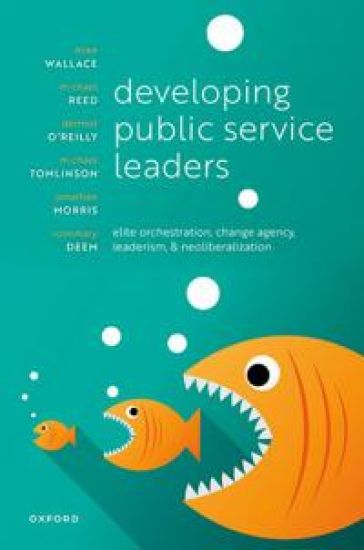
Developing Public Service Leaders

Developing Public Service Leaders

Mike Wallace; Michael Reed; Dermot O'Reilly; Michael Tomlinson; Jonathan Morris; Rosemary Deem

Oxford University Press
2022
sidottu
Developing Public Service Leaders examines why and how governments and representative bodies in public service organizations have mounted major interventions over the last two decades to develop senior staff as leaders. A critical explanation is developed of the foundational contribution made by national leadership development interventions in the 2000s to the emergence, proliferation, and normalization of leadership development provision. Through carrying out qualitative research in England, the authors investigate the national leadership development interventions for school education, healthcare, and higher education. Whilst also looking at the contemporary legacy of these interventions within a global scale, examining the growing international movement and comparing interventions across the world. The book looks at new ways to approach leadership development, adopting a novel perspective on leadership as a metaphorical concept and coining the concept of 'leaderism', and exploring how although senior staff may be widely acculturated as leaders, they may not necessarily be committed to acting as government change agents. Leadership development makes a diffuse contribution towards the ongoing neoliberalization of public services. Developing Public Service Leaders is a comprehensive and essential read for a researcher or policymaker striving for an in-depth understanding of the field and its ramifications.
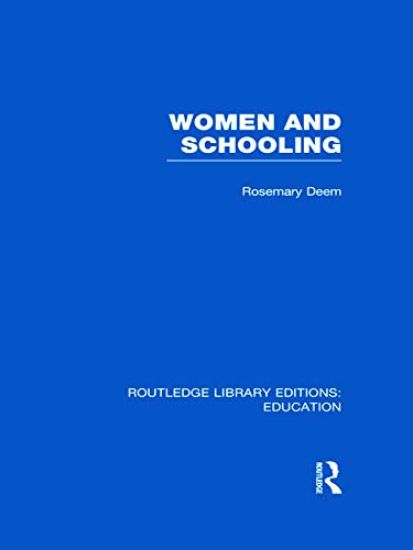
Women & Schooling

Women & Schooling

Rosemary Deem

Routledge
2014
nidottu
This book begins with an analysis of the gradual extension of educational opportunities for women since the nineteenth century, with special attention given to the period since 1944. There is careful exploration of the interaction between the family and the school, and an examination of their role as institutions which help to maintain the existing class relations, sexual division of labour and ideology of a capitalist society. Rosemary Deem also looks at how these institutions differentiate the socialization, culture and education of girls from that of boys, and considers the implications of the Sex Discrimination Act and the Equal Opportunities Commission for education.
Women & Schooling

Women & Schooling

Rosemary Deem

Routledge
2011
sidottu
This book begins with an analysis of the gradual extension of educational opportunities for women since the nineteenth century, with special attention given to the period since 1944. There is careful exploration of the interaction between the family and the school, and an examination of their role as institutions which help to maintain the existing class relations, sexual division of labour and ideology of a capitalist society. Rosemary Deem also looks at how these institutions differentiate the socialization, culture and education of girls from that of boys, and considers the implications of the Sex Discrimination Act and the Equal Opportunities Commission for education.
Knowledge, Higher Education, and the New Managerialism

Knowledge, Higher Education, and the New Managerialism

Rosemary Deem; Sam Hillyard; Michael Reed

Oxford University Press
2008
nidottu
The nature of Higher Education in the UK has changed over the last three decades. Academics can no longer be said to carry out their work in 'ivory towers', as increasing government intervention and a growing 'target culture' has changed the way they work. Increasingly universities have transformed from 'communities of scholars' to 'workplaces'. The organization and administration of universities has seen a corresponding prevalence of ideas and strategies drawn from the 'New Public Management' ideology in response, promoting a more 'business-focussed' approach in the management of public services. This book examines the issues that academics now face as a result of these changes, both as the 'knowledge-workers' managed, and the 'manager-academic'. It draws on a detailed study of academics holding management roles ranging from Head of Department to Vice Chancellor in sixteen UK universities, exploring their career histories and trajectories, and providing extensive accounts of their values, practices, relationships with others, and their training and development as managers. Drawing on debates around 'New Public Management', knowledge management, and knowledge workers, the wider implications of these themes for policy innovation and strategy in HE and the public sector more generally are considered, developing a critical response to recent approaches to managing public services, and practical suggestions for improvements which could be made to the training and support of senior and middle managers in universities. The book will be of interest to all teaching, researching, or managing in Higher Education, Education policy-makers, and academics and researchers concerned with Public Management, Knowledge Management, or Higher Education.
Knowledge, Higher Education, and the New Managerialism

Knowledge, Higher Education, and the New Managerialism

Rosemary Deem; Sam Hillyard; Michael Reed

Oxford University Press
2007
sidottu
The nature of Higher Education in the UK has changed over the last three decades. Academics can no longer be said to carry out their work in 'ivory towers', as increasing government intervention and a growing 'target culture' has changed the way they work. Increasingly universities have transformed from 'communities of scholars' to 'workplaces'. The organization and administration of universities has seen a corresponding prevalence of ideas and strategies drawn from the 'New Public Management' ideology in response, promoting a more 'business-focussed' approach in the management of public services. This book examines the issues that these changes have had on academics, both as the 'knowledge-workers' managed, and the 'manager-academic'. It draws on a detailed study of academics holding management roles ranging from Head of Department to Vice Chancellor in sixteen UK universities, exploring their career histories and trajectories, and providing extensive accounts of their values, practices, relationships with others, and their training and development as managers. Drawing on debates around 'New Public Management', knowledge management, and knowledge workers, the wider implications of these themes for policy innovation and strategy in HE and the public sector more generally are considered, developing a critical response to recent approaches to managing public services, and practical suggestions for improvements which could be made to the training and support of senior and middle managers in universities. The book will be of interest to all teaching, researching, or managing in Higher Education, Education policy-makers, and academics and researchers concerned with Public Management, Knowledge Management, or Higher Education.
Work, Unemployment and Leisure

Work, Unemployment and Leisure

Rosemary Deem

Routledge
1988
nidottu
Rosemary Deem provides students with a concise introduction to a range of issues and debates surrounding work, unemployment and leisure in contemporary societies. Beginning with an examination of the social and historical factors which have shaped work and leisure patterns in modern Britain, she shows how the boundaries between them are culturally constructed and change over time. As well as looking at the effects of class, Work, Unemployment and Leisure also considers gender, race and ethnicity dimensions. The author takes a wide view of work, encompassing work carried out both within and outside the formal economy. The chapter on unemployment considers the lives of those who are unemployed, and the impact of unemployment on work and leisure. There is a critical analysis of leisure itself and some recent controversies are considered. The final chapter contains a discussion of the future of work and leisure in industrial societies.