Kirjojen hintavertailu. Mukana 12 265 473 kirjaa ja 12 kauppaa.

Kirjailija

Rosi Braidotti

Kirjat ja teokset yhdessä paikassa: 29 kirjaa, julkaisuja vuosilta 1991-2026, suosituimpien joukossa Post-Nationalism. Vertaile teosten hintoja ja tarkista saatavuus suomalaisista kirjakaupoista.

29 kirjaa

Kirjojen julkaisuhaarukka 1991-2026.

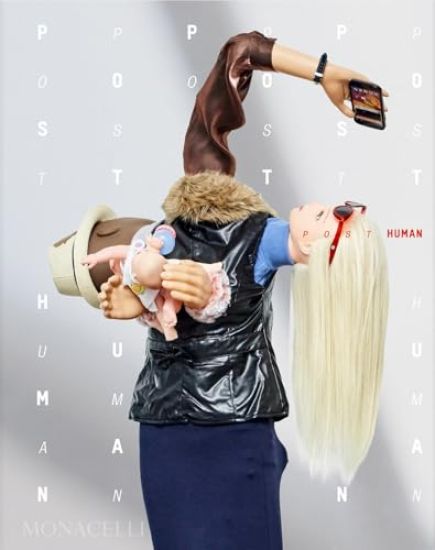
Post Human

Post Human

Rosi Braidotti; Jeffrey Deitch; Philippa Snow

Monacelli Press
2026
nidottu
A renewed examination of Jeffrey Deitch’s pivotal exhibition Originally exhibited in 1992, Jeffrey Deitch’s groundbreaking exhibition Post Human brought together the work of thirty-six young artists interested in new frontiers of body and identity transformation. The prescient exhibition, which traveled to five international venues, introduced the art world to posthumanism - how the human body continues to merge with and diverge from technology. Both the show and it catalogue, which featured a unique visual essay and innovative design, helped set the agenda for art discourse in the 1990s. More than thirty years later, Deitch revitalized Post Human at his Los Angeles gallery, bringing the themes of the original back to the present. The show’s 2024 iteration presented several key figures who participated in the original exhibition in dialogue with emerging contemporary artists whose boundary-pushing work explores how these themes, particularly recent forms of technology such as AI, have evolved over the course of the twenty-first century. This timely publication revisits artworks from both iterations of the show. Readers will discover color photography of the featured works, along with Deitch’s iconic visual essay from the original catalogue and text contributions from contemporary philosopher Rosi Braidotti and critic Philippa Snow. Together, they form a printed testament to the show’s indelible impact and Deitch’s everlasting influence on the art world. Featured artists include: Isabelle Albuquerque, Matthew Barney, Ivana Bašic, Frank Benson, Ashley Bickerton, Maurizio Cattelan, Chris Cunningham, John Currin, Alex Da Corte, Olivia Erlanger, Jana Euler, Rachel Feinstein, Urs Fischer, Pippa Garner, Robert Gober, Hugh Hayden, Damien Hirst, Tishan Hsu, Pierre Huyghe, Anne Imhof, Alex Israel, Arthur Jafa, Jamian Juliano-Villani, Mike Kelley, Josh Kline, Jeff Koons, Paul McCarthy, Sam McKinniss, Mariko Mori, Takashi Murakami, Wangechi Mutu, Cady Noland, Charles Ray, Cindy Sherman, Kiki Smith, Hajime Sorayama, Anna Uddenberg, Cajsa von Zeipel, Jeff Wall, Jordan Wolfson, and Anicka Yi.
Posthuman Knowledge and the Critical Posthumanities
On the advanced knowledge economy, which perpetuates patterns of discrimination and exclusion, and the threat of climate change devastation for both human and nonhuman entities. Robots designed to care for people and neglected landscapes of digital trash. The promise of synthetic biology and the panic of living on a dying planet. Wonderful feats of intelligence and systemic acts of violence. Exhilaration and exhaustion. Rosi Braidotti argues that we must think about these apparent contradictions all together in order to make differences that actually matter. Posthuman Knowledge and the Critical Posthumanities oscillates between evocations and transections of contemporary conditions, for which Braidotti offers what she calls the "posthuman convergence" as a new paradigm for situating and navigating their problems and possibilities. Reflecting on the knotted situation of the academic humanities, cognitive capitalism, and advanced climate change, she delivers an intersectional critique of humanism and anthropocentrism, and targets their exclusions and aporias to address subjectivity, knowledge production, and academic structures within that posthuman convergence. Braidotti's convergence demands imagination, endurance, connectivity, and perspectives multiplied, embodied, and grounded in the only world we have.
Tieto ihmisen jälkeen

Tieto ihmisen jälkeen

Rosi Braidotti

Eurooppalaisen filosofian seura
2024
nidottu
Tieto Ihmisen jälkeenesittää kriittisen posthumanistisen näkemyksen ihmistieteiden paikasta teknologian, kapitalismin ja ympäristötuhonläpäisemässäyhteiskunnassa. Feministisestä ja uusmaterialistisesta ajattelusta ammentava teos tarjoaa vision ihmistieteistä, joissa sekä tiedon subjektit että tietoa tuottavat instituutiot saavat voimaa moninaisuudesta ja monilajisuudesta
Posthuman Feminism

Posthuman Feminism

Rosi Braidotti

Polity Press
2021
nidottu
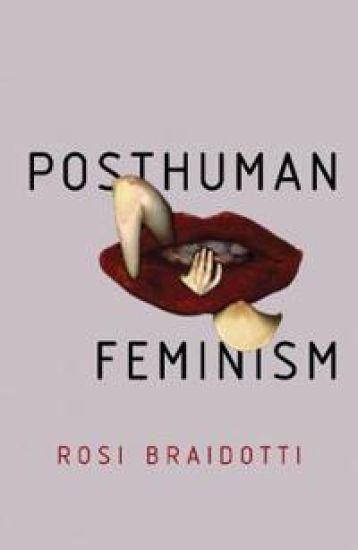
In a context marked by the virulent return of patriarchal and white supremacist attitudes, a new generation of feminist activists are continuing the struggle: these are very feminist times. But how do these and other movements relate to the contemporary posthuman condition? In this important new book, Rosi Braidotti examines the implications of the posthuman turn for feminist theory and practice. She defines the posthuman turn as a convergence between posthumanism on the one hand and post-anthropocentrism on the other, and she examines their complex relationship and joint impact. Braidotti claims that mainstream posthuman scholarship has neglected feminist theory, while in fact feminism is one of the precursors of the posthuman turn, through diverse social movements and political traditions. Posthuman Feminism is an analytic and creative response to contemporary conditions and a call to action. It highlights the constraints but also the potentialities available to feminist political subjects as they confront the ever-growing injustices of sexism, racism, ecocide and neoliberal capitalism. This bold new text by a leading feminist philosopher will be of great interest to students and scholars throughout the humanities and social sciences.
Posthuman Feminism

Posthuman Feminism

Rosi Braidotti

Polity Press
2021
sidottu
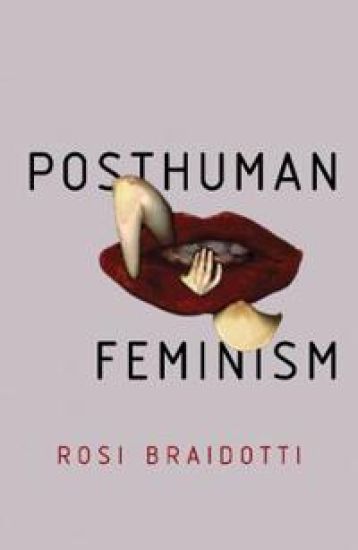
In a context marked by the virulent return of patriarchal and white supremacist attitudes, a new generation of feminist activists are continuing the struggle: these are very feminist times. But how do these and other movements relate to the contemporary posthuman condition? In this important new book, Rosi Braidotti examines the implications of the posthuman turn for feminist theory and practice. She defines the posthuman turn as a convergence between posthumanism on the one hand and post-anthropocentrism on the other, and she examines their complex relationship and joint impact. Braidotti claims that mainstream posthuman scholarship has neglected feminist theory, while in fact feminism is one of the precursors of the posthuman turn, through diverse social movements and political traditions. Posthuman Feminism is an analytic and creative response to contemporary conditions and a call to action. It highlights the constraints but also the potentialities available to feminist political subjects as they confront the ever-growing injustices of sexism, racism, ecocide and neoliberal capitalism. This bold new text by a leading feminist philosopher will be of great interest to students and scholars throughout the humanities and social sciences.
Posthuman Knowledge

Posthuman Knowledge

Rosi Braidotti

Polity Press
2019
sidottu
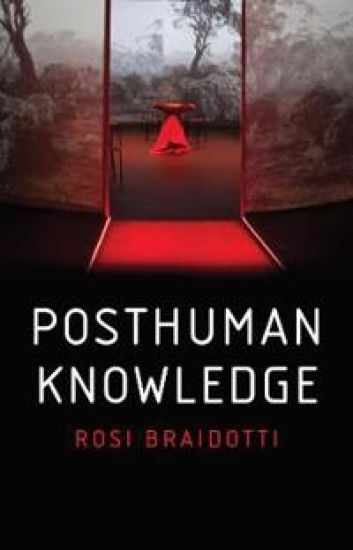
The question of what defines the human, and of what is human about the humanities, have been shaken up by the radical critiques of humanism and the displacement of anthropomorphism that have gained currency in recent years, propelled in part by rapid advances in our knowledge of living systems and of their genetic and algorithmic codes coupled with the global expansion of a knowledge-intensive capitalism. In Posthuman Knowledge, Rosi Braidotti takes a closer look at the impact of these developments on three major areas: the constitution of our subjectivity, the general production of knowledge and the practice of the academic humanities. Drawing on feminist, postcolonial and anti-racist theory, she argues that the human was never a neutral category but one always linked to power and privilege. Hence we must move beyond the old dualities in which Man defined himself, beyond the sexualized and racialized others that were excluded from humanity. Posthuman knowledge, as Braidotti understands it, is not so much an alternative form of knowledge as a critical call: a call to build a multi-layered and multi-directional project that displaces anthropocentrism while pursuing the analysis of the discriminatory and violent aspects of human activity and interaction wherever they occur.Situated between the exhilaration of scientific and technological advances on the one hand and the threat of climate change devastation on the other, the posthuman convergence encourages us to think hard and creatively about what we are in the process of becoming.
Posthuman Knowledge

Posthuman Knowledge

Rosi Braidotti

Polity Press
2019
nidottu
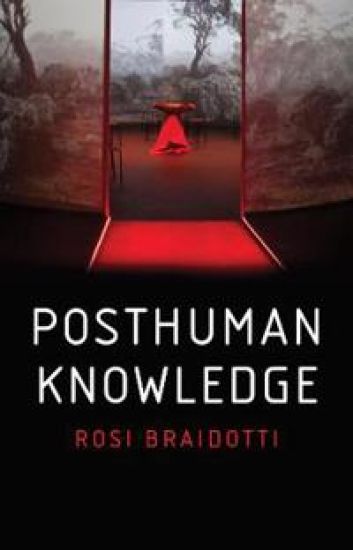
The question of what defines the human, and of what is human about the humanities, have been shaken up by the radical critiques of humanism and the displacement of anthropomorphism that have gained currency in recent years, propelled in part by rapid advances in our knowledge of living systems and of their genetic and algorithmic codes coupled with the global expansion of a knowledge-intensive capitalism. In Posthuman Knowledge, Rosi Braidotti takes a closer look at the impact of these developments on three major areas: the constitution of our subjectivity, the general production of knowledge and the practice of the academic humanities. Drawing on feminist, postcolonial and anti-racist theory, she argues that the human was never a neutral category but one always linked to power and privilege. Hence we must move beyond the old dualities in which Man defined himself, beyond the sexualized and racialized others that were excluded from humanity. Posthuman knowledge, as Braidotti understands it, is not so much an alternative form of knowledge as a critical call: a call to build a multi-layered and multi-directional project that displaces anthropocentrism while pursuing the analysis of the discriminatory and violent aspects of human activity and interaction wherever they occur.Situated between the exhilaration of scientific and technological advances on the one hand and the threat of climate change devastation on the other, the posthuman convergence encourages us to think hard and creatively about what we are in the process of becoming.
The Well at Winter Solstice

The Well at Winter Solstice

Eleanor Rees; Rosi Braidotti

Salt Publishing
2019
pokkari
These are the voices of those who are silent: in the graveyards, holy wells, the river, the changing tides. A ghostly choir of lost children, hermits, lovers and rough sleepers, serving maids and sailor boys, saints and hermaphrodites resounding through the rhythms of the water. Places and objects communicate also: a chapel, oak tree, back-lane, woodland, riverside town; bones sing and a bell tolls. The poems speak with them and for them, channelling their messages, their visions and their warnings.
Hello, Robot

Hello, Robot

Mateo Kries; Christoph Thun-Hohenstein; Katrien Laporte; Hortensia Völckers; Alexander Farenholtz; Ulrich Spiesshofer; Ameile Klein; Marlies Wirth; Gesche Joost; Bruce Stirling; Fredo De Smet; Frauke Zeller; David Harris Smith; Thomas Geisler; Fiona Raby; Anthony Dunne; Carlo Ratti; Daniele Belleri; Rosi Braidotti; et al

Vitra Design Museum
2017
nidottu
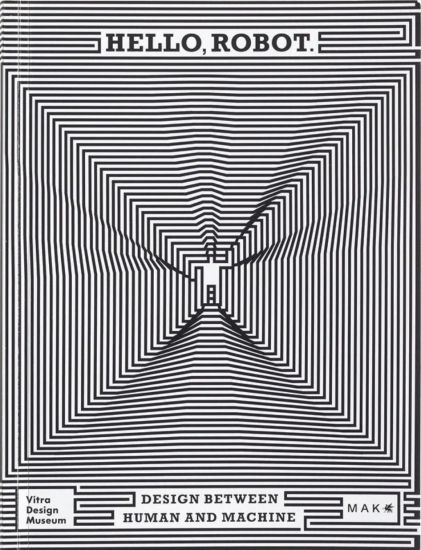
Hello, Robot. Design Between Human and Machine investigates how robotics is becoming part of our everyday lives. The exhibitions shows that design in its traditional function as a mediator is indispensable if robots are to become a visible reality and not just remain hidden in washing machines, cars and cash machines. The volume clarifies where we already encounter these intelligent machines and where we may come across them in the near future: in industry, in the military and in everyday settings; at nurseries and retirement homes; in our bodies and in the cloud; when shopping and having sex; in video games and, of course, in film and literature. In a series of in-depth essays and interviews, experts such as the science fiction author Bruce Sterling and the design duo Dunne & Raby explore the question of how we deal with our environment becoming increasingly digital, smarter and more autonomous. They highlight our often ambivalent relationship to new technologies and discuss the opportunities and challenges that are posed to us as individuals and as a society in this context. In this regard, Hello, Robot. broadens the scope of the discussion to the ethical and political questions with which we are faced today in the light of technological advances in robotics, whilst confronting us with the contradictions that are often found in the answers to these questions.
After Poststructuralism

After Poststructuralism

Rosi Braidotti

Acumen Publishing Ltd
2013
sidottu
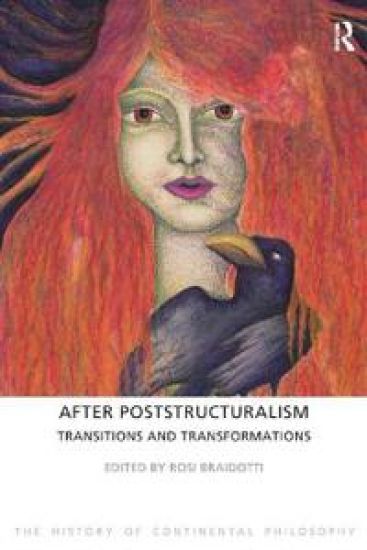
The end of the Cold War revitalised continental philosophy and, more particularly, interest in it from outside philosophy. "After Poststructuralism: Transitions and Transformations" analyses the main developments in continental philosophy between 1980-1995, a time of great upheaval and profound social change. The volume ranges across the birth of postmodernism, the differing traditions of France, Germany and Italy, third generation critical theory, radical democracy, postcolonial philosophy, the turn to ethics, feminist philosophies, the increasing engagement with religion, and the rise of performativity and post-analytic philosophy. Analyses of the major figures are integrated within the discussion. After Poststructuralism reveals how continental philosophy - fuelled by an intense ethical and political desire to reflect changing social and political conditions - responded to the changing world and to the key issues of the time, notably globalisation, technology and ethnicity.
After Poststructuralism

After Poststructuralism

Rosi Braidotti

Acumen Publishing Ltd
2013
nidottu
The end of the Cold War revitalised continental philosophy and, more particularly, interest in it from outside philosophy. "After Poststructuralism: Transitions and Transformations" analyses the main developments in continental philosophy between 1980-1995, a time of great upheaval and profound social change. The volume ranges across the birth of postmodernism, the differing traditions of France, Germany and Italy, third generation critical theory, radical democracy, postcolonial philosophy, the turn to ethics, feminist philosophies, the increasing engagement with religion, and the rise of performativity and post-analytic philosophy. Analyses of the major figures are integrated within the discussion. After Poststructuralism reveals how continental philosophy - fuelled by an intense ethical and political desire to reflect changing social and political conditions - responded to the changing world and to the key issues of the time, notably globalisation, technology and ethnicity.
The Posthuman

The Posthuman

Rosi Braidotti

Polity Press
2013
nidottu
The Posthuman offers both an introduction and major contribution to contemporary debates on the posthuman. Digital 'second life', genetically modified food, advanced prosthetics, robotics and reproductive technologies are familiar facets of our globally linked and technologically mediated societies. This has blurred the traditional distinction between the human and its others, exposing the non-naturalistic structure of the human. The Posthuman starts by exploring the extent to which a post-humanist move displaces the traditional humanistic unity of the subject. Rather than perceiving this situation as a loss of cognitive and moral self-mastery, Braidotti argues that the posthuman helps us make sense of our flexible and multiple identities.Braidotti then analyzes the escalating effects of post-anthropocentric thought, which encompass not only other species, but also the sustainability of our planet as a whole. Because contemporary market economies profit from the control and commodification of all that lives, they result in hybridization, erasing categorical distinctions between the human and other species, seeds, plants, animals and bacteria. These dislocations induced by globalized cultures and economies enable a critique of anthropocentrism, but how reliable are they as indicators of a sustainable future?The Posthuman concludes by considering the implications of these shifts for the institutional practice of the humanities. Braidotti outlines new forms of cosmopolitan neo-humanism that emerge from the spectrum of post-colonial and race studies, as well as gender analysis and environmentalism. The challenge of the posthuman condition consists in seizing the opportunities for new social bonding and community building, while pursuing sustainability and empowerment.
The Posthuman

The Posthuman

Rosi Braidotti

Polity Press
2013
sidottu
The Posthuman offers both an introduction and major contribution to contemporary debates on the posthuman. Digital 'second life', genetically modified food, advanced prosthetics, robotics and reproductive technologies are familiar facets of our globally linked and technologically mediated societies. This has blurred the traditional distinction between the human and its others, exposing the non-naturalistic structure of the human. The Posthuman starts by exploring the extent to which a post-humanist move displaces the traditional humanistic unity of the subject. Rather than perceiving this situation as a loss of cognitive and moral self-mastery, Braidotti argues that the posthuman helps us make sense of our flexible and multiple identities.Braidotti then analyzes the escalating effects of post-anthropocentric thought, which encompass not only other species, but also the sustainability of our planet as a whole. Because contemporary market economies profit from the control and commodification of all that lives, they result in hybridization, erasing categorical distinctions between the human and other species, seeds, plants, animals and bacteria. These dislocations induced by globalized cultures and economies enable a critique of anthropocentrism, but how reliable are they as indicators of a sustainable future?The Posthuman concludes by considering the implications of these shifts for the institutional practice of the humanities. Braidotti outlines new forms of cosmopolitan neo-humanism that emerge from the spectrum of post-colonial and race studies, as well as gender analysis and environmentalism. The challenge of the posthuman condition consists in seizing the opportunities for new social bonding and community building, while pursuing sustainability and empowerment.
Nomadic Theory

Nomadic Theory

Rosi Braidotti

Columbia University Press
2012
pokkari
Rosi Braidotti's nomadic theory outlines a sustainable modern subjectivity as one in flux, never opposed to a dominant hierarchy yet intrinsically other, always in the process of becoming, and perpetually engaged in dynamic power relations both creative and restrictive. Nomadic theory offers an original and powerful alternative for scholars working in cultural and social criticism and has, over the past decade, crept into continental philosophy, queer theory, and feminist, postcolonial, techno-science, media, and race studies, as well as into architecture, history, and anthropology. This collection provides a core introduction to Braidotti's nomadic theory and its innovative formulations, which playfully engage with Deleuze, Foucault, Irigaray, and a host of political and cultural issues. Arranged thematically, essays begin with such concepts as sexual difference and embodied subjectivity and follow with explorations in technoscience, feminism, postsecular citizenship, and the politics of affirmation. Braidotti develops a distinctly positive critical theory that rejuvenates the experience of political scholarship. Inspired yet not confined by Deleuzian vitalism, with its commitment to the ontology of flows, networks, and dynamic transformations, she emphasizes affects, imagination, and creativity and the politics of radical immanence. Incorporating ideas from Nietzsche and Spinoza as well, Braidotti establishes a critical-theoretical framework equal parts critique and creation. Ever mindful of the perils of defining difference in terms of denigration and the related tendency to subordinate sexualized, racialized, and naturalized others, she explores the eco-philosophical implications of nomadic theory, feminism, and the irreducibility of sexual difference and sexuality. Her dialogue with technoscience is crucial to nomadic theory, which deterritorializes the established understanding of what counts as human, along with our relationship to animals, the environment, and changing notions of materialism. Keeping her distance from the near-obsessive focus on vulnerability, trauma, and melancholia in contemporary political thought, Braidotti promotes a politics of affirmation that has the potential to become its own generative life force.
Nomadic Theory

Nomadic Theory

Rosi Braidotti

Columbia University Press
2012
sidottu
Rosi Braidotti's nomadic theory outlines a sustainable modern subjectivity as one in flux, never opposed to a dominant hierarchy yet intrinsically other, always in the process of becoming, and perpetually engaged in dynamic power relations both creative and restrictive. Nomadic theory offers an original and powerful alternative for scholars working in cultural and social criticism and has, over the past decade, crept into continental philosophy, queer theory, and feminist, postcolonial, techno-science, media, and race studies, as well as into architecture, history, and anthropology. This collection provides a core introduction to Braidotti's nomadic theory and its innovative formulations, which playfully engage with Deleuze, Foucault, Irigaray, and a host of political and cultural issues. Arranged thematically, essays begin with such concepts as sexual difference and embodied subjectivity and follow with explorations in technoscience, feminism, postsecular citizenship, and the politics of affirmation. Braidotti develops a distinctly positive critical theory that rejuvenates the experience of political scholarship. Inspired yet not confined by Deleuzian vitalism, with its commitment to the ontology of flows, networks, and dynamic transformations, she emphasizes affects, imagination, and creativity and the politics of radical immanence. Incorporating ideas from Nietzsche and Spinoza as well, Braidotti establishes a critical-theoretical framework equal parts critique and creation. Ever mindful of the perils of defining difference in terms of denigration and the related tendency to subordinate sexualized, racialized, and naturalized others, she explores the eco-philosophical implications of nomadic theory, feminism, and the irreducibility of sexual difference and sexuality. Her dialogue with technoscience is crucial to nomadic theory, which deterritorializes the established understanding of what counts as human, along with our relationship to animals, the environment, and changing notions of materialism. Keeping her distance from the near-obsessive focus on vulnerability, trauma, and melancholia in contemporary political thought, Braidotti promotes a politics of affirmation that has the potential to become its own generative life force.