Kirjojen hintavertailu. Mukana 12 595 353 kirjaa ja 12 kauppaa.

Kirjailija

Rosie Parnell

Kirjat ja teokset yhdessä paikassa: 11 kirjaa, julkaisuja vuosilta 2002-2026, suosituimpien joukossa Built Environment Education for Children and Youth. Vertaile teosten hintoja ja tarkista saatavuus suomalaisista kirjakaupoista.

11 kirjaa

Kirjojen julkaisuhaarukka 2002-2026.

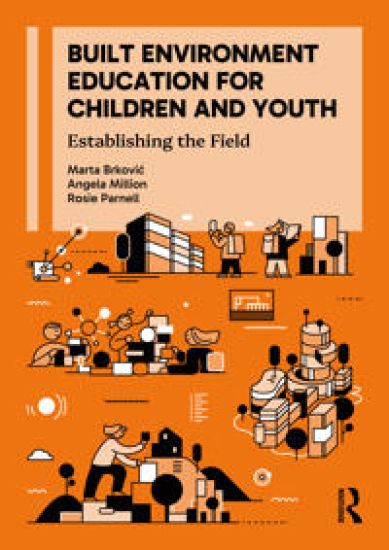
Built Environment Education for Children and Youth

Built Environment Education for Children and Youth

Marta Brkovic Dodig; Angela Million; Rosie Parnell

TAYLOR FRANCIS LTD
2026
nidottu
How do children learn about the spaces in which they live, play, and grow? Built Environment Education for Children and Youth is an essential guide to a dynamic yet fragmented field, bringing together educators, architects, spatial designers and planners, as well as cultural practitioners working in museums, schools, universities, architecture centres, professional bodies, networks and private practice, to explore how young people can meaningfully engage with their built environments. By engaging with the built environment, young people develop agency and spatial literacy that support their sense of belonging, underpin civic participation, and open up more equitable possibilities for shaping the places they inhabit. Grounded in a broad international evidence base—drawing on an analysis of 385+ Built Environment Education initiatives institutional settings, 30 practitioner interviews and 15 in-depth studies—this book reflects BEE state of the art pr across world regions and contexts. Depicting innovative pedagogies and real-world examples, it charts a path towards a more cohesive and inclusive approach to built environment education and Baukultur. Whether you're an educator, designer, planner or policymaker, this engaging resource will inspire you to shape the future of built environment education— by strengthening the next generation’s capacity to understand and shape place, recognising children as spatial agents in their own right.
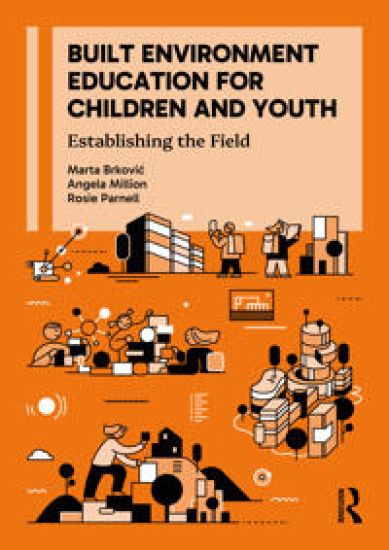
Built Environment Education for Children and Youth

Built Environment Education for Children and Youth

Marta Brkovic Dodig; Angela Million; Rosie Parnell

TAYLOR FRANCIS LTD
2026
sidottu
How do children learn about the spaces in which they live, play, and grow? Built Environment Education for Children and Youth is an essential guide to a dynamic yet fragmented field, bringing together educators, architects, spatial designers and planners, as well as cultural practitioners working in museums, schools, universities, architecture centres, professional bodies, networks and private practice, to explore how young people can meaningfully engage with their built environments. By engaging with the built environment, young people develop agency and spatial literacy that support their sense of belonging, underpin civic participation, and open up more equitable possibilities for shaping the places they inhabit. Grounded in a broad international evidence base—drawing on an analysis of 385+ Built Environment Education initiatives institutional settings, 30 practitioner interviews and 15 in-depth studies—this book reflects BEE state of the art pr across world regions and contexts. Depicting innovative pedagogies and real-world examples, it charts a path towards a more cohesive and inclusive approach to built environment education and Baukultur. Whether you're an educator, designer, planner or policymaker, this engaging resource will inspire you to shape the future of built environment education— by strengthening the next generation’s capacity to understand and shape place, recognising children as spatial agents in their own right.
Spatial Design with Children

Spatial Design with Children

Rosie Parnell; Jo Birch; Maria Patsarika; Maša Šorn

Routledge
2026
nidottu
Architects and designers have been endlessly fascinated and inspired by working with children and young people. The relationship between the designer and child is potentially a rich source of learning and development for both, leading to new thinking about the design of our built environments. This book will help practitioners and students to get the most out of their interactions with children in the design process. The book brings together the theory and practice of engaging children and young people with architecture and the built environment. Structured around a series of roles that a child/young person might play in the architectural design and build process, it helps readers gain a broad understanding of the principles underlying the field, but within a supportive framework for its application. Roles are as follows: Advocates for ChangeCreative InspirersResearchers(Co) DesignersTrailblazersBuildersClientsPlacemakersExpert Consultants Written specifically with a design audience in mind, it provides a range of inspiring examples of educational and participatory design projects from the UK, USA, Australia, New Zealand, Japan, Sweden, Iceland, Norway, Finland, Poland, Germany, France and Turkey. The book finishes with a ‘how to’ guide - for those who want to design their own participatory/educational design process. This will include diagrams and will cross-reference to the examples in previous chapters. However, the guide is specific without being prescriptive. It categorises stages and phases of involvement as well as the roles of participants, allowing readers to critically deliberate which approaches will be appropriate in which contexts. Beautifully illustrated and in full colour, this book will be essential to anyone involved in engaging children in built environment design and education projects – from architects and students of architecture to teachers, youth workers and professional facilitators.
Spatial Design with Children

Spatial Design with Children

Rosie Parnell; Jo Birch; Maria Patsarika; Maša Šorn

Routledge
2026
sidottu
Architects and designers have been endlessly fascinated and inspired by working with children and young people. The relationship between the designer and child is potentially a rich source of learning and development for both, leading to new thinking about the design of our built environments. This book will help practitioners and students to get the most out of their interactions with children in the design process. The book brings together the theory and practice of engaging children and young people with architecture and the built environment. Structured around a series of roles that a child/young person might play in the architectural design and build process, it helps readers gain a broad understanding of the principles underlying the field, but within a supportive framework for its application. Roles are as follows: Advocates for ChangeCreative InspirersResearchers(Co) DesignersTrailblazersBuildersClientsPlacemakersExpert Consultants Written specifically with a design audience in mind, it provides a range of inspiring examples of educational and participatory design projects from the UK, USA, Australia, New Zealand, Japan, Sweden, Iceland, Norway, Finland, Poland, Germany, France and Turkey. The book finishes with a ‘how to’ guide - for those who want to design their own participatory/educational design process. This will include diagrams and will cross-reference to the examples in previous chapters. However, the guide is specific without being prescriptive. It categorises stages and phases of involvement as well as the roles of participants, allowing readers to critically deliberate which approaches will be appropriate in which contexts. Beautifully illustrated and in full colour, this book will be essential to anyone involved in engaging children in built environment design and education projects – from architects and students of architecture to teachers, youth workers and professional facilitators.
Consensus Design

Consensus Design

Rosie Parnell; Christopher Day

Routledge
2016
sidottu
Consensus Design offers a practical step by step guide to co-design; an increasingly important consideration for architects as they compete for work. The text moves from identifying the methodology of the process to developing a series of principles and practical steps which illustrate how consensus design can be established. For easy reference, flow charts show the process of achieving consensus design and include variations for different types of project and different groups of people. It gives clear timings so that agreements can be reached within a specific time frame, and also features a number of case studies to illustrate consensus design principles in practice. Case studies include projects in the UK, US, and Sweden. Consensus design isn't just a utopian ideal. It's the only meaningful way in which people can be involved in shaping where they live and work. It can have an influence on social stability, crime-reduction, personal health and building longevity, all of which in turn have monetary and environmental cost implications. Its consideration can also greatly help architects win work and commissions. Day argues that when places are designed by professionals for people, many things obvious to the residents are overlooked. When they are designed by lay people, the design can suffer from the lowest common denominator factor. When places are designed by both it tends to end up in conflict. However, Consensus Design shows that co-design is not doomed to either conflict or banality if it is managed correctly.
The Crit: An Architecture Student's Handbook

The Crit: An Architecture Student's Handbook

Rosie Parnell; Rachel Sara; Mark Parsons; Charles Doidge

Routledge
2016
sidottu
The architectural crit, review or jury is a cornerstone of architectural education around the world. The defence of ideas, drawings, and models in an open format before staff and peers is intended to be a foreground for healthy creative debate, but many students view it as hostile confrontation – an ego trip for staff and humiliation for them. This accessible and immensely enjoyable book guides students through this academic minefield. This fully updated edition includes advice and suggestions for tutors on how to model a crit around a broad range of learning styles, as well as a new section aimed at students with learning disabilities, to ensure that the process is constructive and beneficial for all architecture and design scholars. Packed with practical tips from tutors, students and professionals, this reassuringly honest book will prepare students to build more creative relationships with clients and users across the industry. Also in the Seriously Useful Guides series: * Practical Experience * The Dissertation * The Portfolio
The Crit: An Architecture Student's Handbook

The Crit: An Architecture Student's Handbook

Rosie Parnell; Rachel Sara; Mark Parsons; Charles Doidge

Architectural Press
2006
nidottu
The architectural crit, review or jury is a cornerstone of architectural education around the world. The defence of ideas, drawings, and models in an open format before staff and peers is intended to be a foreground for healthy creative debate, but many students view it as hostile confrontation – an ego trip for staff and humiliation for them. This accessible and immensely enjoyable book guides students through this academic minefield. This fully updated edition includes advice and suggestions for tutors on how to model a crit around a broad range of learning styles, as well as a new section aimed at students with learning disabilities, to ensure that the process is constructive and beneficial for all architecture and design scholars. Packed with practical tips from tutors, students and professionals, this reassuringly honest book will prepare students to build more creative relationships with clients and users across the industry. Also in the Seriously Useful Guides series: * Practical Experience * The Dissertation * The Portfolio
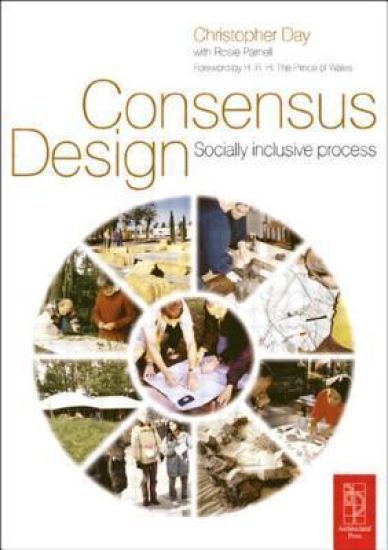
Consensus Design

Consensus Design

Rosie Parnell; Christopher Day

Architectural Press
2002
nidottu
Consensus Design offers a practical step by step guide to co-design; an increasingly important consideration for architects as they compete for work. The text moves from identifying the methodology of the process to developing a series of principles and practical steps which illustrate how consensus design can be established. For easy reference, flow charts show the process of achieving consensus design and include variations for different types of project and different groups of people. It gives clear timings so that agreements can be reached within a specific time frame, and also features a number of case studies to illustrate consensus design principles in practice. Case studies include projects in the UK, US, and Sweden. Consensus design isn't just a utopian ideal. It's the only meaningful way in which people can be involved in shaping where they live and work. It can have an influence on social stability, crime-reduction, personal health and building longevity, all of which in turn have monetary and environmental cost implications. Its consideration can also greatly help architects win work and commissions. Day argues that when places are designed by professionals for people, many things obvious to the residents are overlooked. When they are designed by lay people, the design can suffer from the lowest common denominator factor. When places are designed by both it tends to end up in conflict. However, Consensus Design shows that co-design is not doomed to either conflict or banality if it is managed correctly.