Kirjojen hintavertailu. Mukana 12 595 353 kirjaa ja 12 kauppaa.

Kirjailija

Rosie Serdiville

Kirjat ja teokset yhdessä paikassa: 15 kirjaa, julkaisuja vuosilta 2011-2026, suosituimpien joukossa Knights. Vertaile teosten hintoja ja tarkista saatavuus suomalaisista kirjakaupoista.

15 kirjaa

Kirjojen julkaisuhaarukka 2011-2026.

Cromwell's Convicts

Cromwell's Convicts

John Sadler; Rosie Serdiville

PEN SWORD BOOKS LTD
2026
nidottu
On 3 September 1650 Oliver Cromwell won a decisive victory over the Scottish Covenanters at the Battle of Dunbar – a victory that is often regarded as his finest hour – but the aftermath, the forced march of 5,000 prisoners from the battlefield to Durham, was one of the cruellest episodes in his career. The march took them seven days, without food and with little water, no medical care, the property of a ruthless regime determined to eradicate any possibility of further threat. Those who survived long enough to reach Durham found no refuge, only pestilence and despair. Exhausted, starving and dreadfully weakened, perhaps as many as 1,700 died from typhus and dysentery. Those who survived were condemned to hard labour and enforced exile in conditions of virtual slavery in a harsh new world across the Atlantic. Cromwell's Convicts describes their ordeal in detail and, by using archaeological evidence, brings the story right up to date. John Sadler and Rosie Serdiville describe the battle at Dunbar, but their main focus is on the lethal week-long march of the captives that followed. They make extensive use of archive material, retrace the route taken by the prisoners and describe the recent archaeological excavations in Durham which have identified some of the victims and given us a graphic reminder of their fate.
Cromwell's Convicts

Cromwell's Convicts

John Sadler; Rosie Serdiville

Pen Sword Military
2020
sidottu
On 3 September 1650 Oliver Cromwell won a decisive victory over the Scottish Covenanters at the Battle of Dunbar - a victory that is often regarded as his finest hour - but the aftermath, the forced march of 5,000 prisoners from the battlefield to Durham, was one of the cruellest episodes in his career. The march took them seven days, without food and with little water, no medical care, the property of a ruthless regime determined to eradicate any possibility of further threat. Those who survived long enough to reach Durham found no refuge, only pestilence and despair. Exhausted, starving and dreadfully weakened, perhaps as many as 1,700 died from typhus and dysentery. Those who survived were condemned to hard labour and enforced exile in conditions of virtual slavery in a harsh new world across the Atlantic. Cromwell's Convicts describes their ordeal in detail and, by using archaeological evidence, brings the story right up to date. John Sadler and Rosie Serdiville describe the battle at Dunbar, but their main focus is on the lethal week-long march of the captives that followed. They make extensive use of archive material, retrace the route taken by the prisoners and describe the recent archaeological excavations in Durham which have identified some of the victims and given us a graphic reminder of their fate.
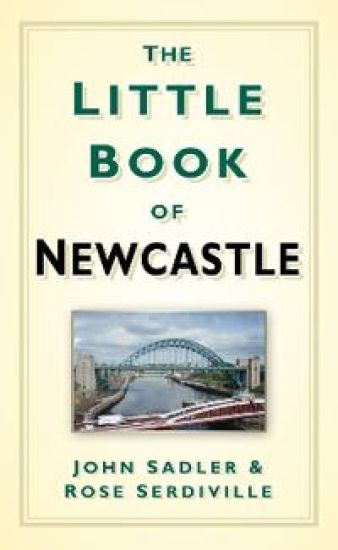
The Little Book of Newcastle

The Little Book of Newcastle

John Sadler; Rosie Serdiville

The History Press Ltd
2019
nidottu
The Little Book of Newcastle is a funny, fast-paced, fact-packed compendium of the sort of frivolous, fantastic or simply strange information which no-one will want to be without. Here we find out about the most unusual crimes and punishments, eccentric inhabitants, famous sons and daughters and literally hundreds of wacky facts (plus some authentically bizarre bits of historic trivia). John Sadler’s new book gathers together a myriad of data on Newcastle. There are lots of factual chapters but also plenty of frivolous details which will amuse and surprise. A reference book and a quirky guide, this can be dipped in to time and time again to reveal something new about the people, the heritage, the secrets and the enduring fascination of the city. A remarkably engaging little book, this is essential reading for visitors and locals alike.
Alexander the Great

Alexander the Great

John Sadler; Rosie Serdiville

Casemate Publishers
2019
nidottu
Alexander was perhaps the greatest conquering general in history. In just over a generation, his northern Greek state of Macedon rose to control the whole of the vast Persian Empire. It was the legacy of his father, Philip, that launched Alexander on a spectacular career of conquest that planted Hellenic culture across most of Asia. In a dozen years Alexander took the whole of Asia Minor and Egypt, destroyed the once mighty Persian Empire, and pushed his army eastwards as far as the Indus. No-one in history has equalled his achievement. Julius Caesar, contemplating his hero’s statue, is said to have wept because by contrast he had accomplished so little.Much of Alexander’s success can be traced to the Macedonian phalanx, a close-ordered battle formation of sarissa-wielding infantry that proved itself a war-winning weapon. The army Alexander inherited from his father was the most powerful in Greece, highly disciplined, trained and loyal only to the king. United in a single purpose, they fought as one. Alexander recognized this and is quoted as saying, “Remember upon the conduct of each depends the fate of all.” Cavalry was also of crucial importance in the Macedonian army, as the driving force to attack the flanks of the enemy in battle. A talented commander, able to anticipate how his opponent would think, Alexander understood how to commit his forces to devastating effect, and was never defeated in battle. He also developed a corps of engineers that utilised catapults and siege towers against enemy fortifications. Alexander led from the front, fighting with his men, eating with them, refusing water when there was not enough, and his men would quite literally follow him to the ends of the (known) world, and none of his successors was able to hold together the empire he had forged. Although he died an early death his fame and glory persist to this day.This concise history gives an overview of Alexander’s life from a military standpoint, from his early military exploits to the creation of his empire and the legacy left after his premature death.
Knights

Knights

Rosie Serdiville; John Sadler

Rosen Young Adult
2018
sidottu
The notion of a chivalrous knight has been the subject of much romanticizing and myth-making. That said, warriors on horseback were key players in the warfare and political fabric of Europe in the Middle Ages. This informative volume highlights key events in the world on the knight, such as the Battle of Agincourt and the Fourth Crusade. A timeline clarifies how and when figures and events fit into the historical record, sidebars supply interesting facts or define key terms, and profiles introduce interesting figures, such as Gwenllian ferch Gruffydd, Sir Henry Percy, and Joan of Arc. Maps, illustrated manuscript details, sculpture, and more illustrate this lively tome.
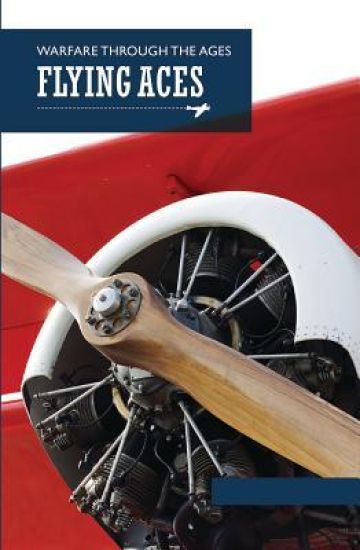
Flying Aces

Flying Aces

John Sadler; Rosie Serdiville

Rosen Young Adult
2018
sidottu
The ace in the air was once a celebrity figure, a glamorous warrior of the skies. But this was daunting and dangerous work in the midst of brutal and bloody wars. An action-packed narrative keeps the reader riveted to the tales of real-life awesome aces, and cuts through the glitz to get to the nitty-gritty of these fights and flights. Readers will learn about the top aces from around the world, all kinds of planes, the wars in which they flew, and victories, emphasizing record holders. Topical quotes, songs, and poems will engage readers as well.
Castles

Castles

John Sadler; Rosie Serdiville

Casemate Publishers
2018
nidottu
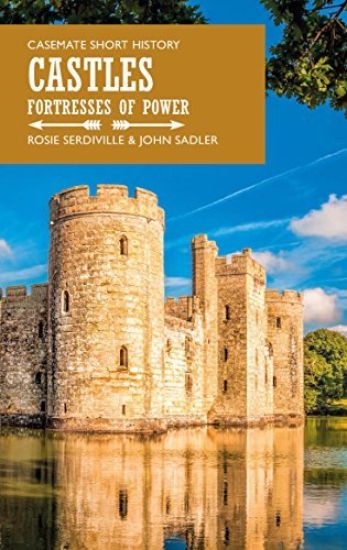
Fortified structures have been in existence for thousands of years. In ancient and medieval times castles were the ultimate symbol of power, dominating their surroundings, and marking the landscape with their imposing size and impregnable designs. After the Norman conquest of England, castles exploded in popularity amongst the nobility, with William the Conqueror building an impressive thirty-six castles between 1066-1087, including Windsor Castle is one example of such a castle which survives today, a monument of the remarkable architecture designed and developed in medieval England.This concise and entertaining short history explores the life of the castle, one that often involved warfare and sieges. The castle was a first and foremost a fortress, the focus of numerous clashes which took place in the twelfth and thirteenth centuries. Castles became targets of sieges, such as that organised by Prince Louis of France against Dover castle in 1216, and were forced to adopt greater defensive measures.Also explored is how they evolved from motte-and-bailey to stone keep castles, in the face of newly-developed siege machines and trebuchets. The trebuchet named Warwolf, which Edward I had assembled for his siege of Scotland’s Stirling Castle, reportedly took three months to construct and was almost four hundred feet tall on completion. With features such as ‘murder-holes’ for throwing boiling oil at the attackers, the defenders in the castle fought back in earnest. Alongside such violence, the castle functioned as a residence for the nobles and their servants, often totalling several hundred in number. It was the location for extravagant banquets held in the great hall by the lord and lady, and the place where the lord carried out his administrative duties such as overseeing laws and collecting taxes.
Knights

Knights

John Sadler; Rosie Serdiville

Casemate Publishers
2017
nidottu
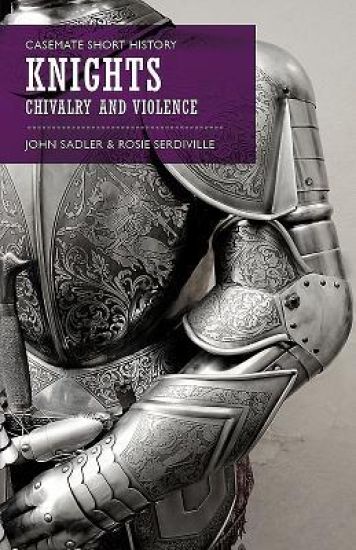
Originally warriors mounted on horseback, knights became associated with the concept of chivalry as it was popularised in medieval European literature. Knights were expected to fight bravely and honourably and be loyal to their lord until death if necessary. Later chivalry came to encompass activities such as tournaments and hunting, and virtues including justice, charity and faith. The Crusades were instrumental in the development of the code of chivalry, and some crusading orders of knighthood, such as the Knights Templar, have become legend.Boys would begin their knightly training at the age of seven, learning to hunt and studying academic studies before becoming assistants to older knights, training in combat and learning how to care for a knight’s essentials: arms, armour, and horses. After fourteen years of training, and when considered master of all the skills of knighthood, a squire was eligible to be knighted.In peacetime knights would take part in tournaments. Tournaments were a major spectator sport, but also an important way for knights to practice their skills – knights were often injured and sometimes killed in melees.Knights figured large in medieval warfare and literature. In the 15th century knights became obsolete due to advances in warfare, but the title of ‘knight’ has survived as an honorary title granted for services to a monarch or country, and knights remain a strong concept in popular culture.This short history will cover the rise and decline of the medieval knights, including the extensive training, specific arms and armour, tournaments and the important concept of chivalry.
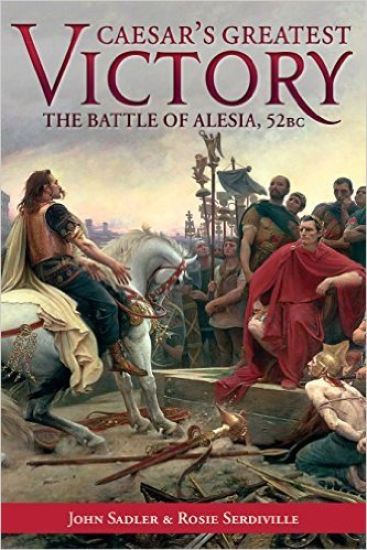
Caesar’S Greatest Victory

Caesar’S Greatest Victory

John Sadler; Rosie Serdiville

Casemate Publishers
2016
sidottu
The Battle for Alesia was a decisive moment in world history. It determined whether Rome would finally conquer Gaul or whether Celtic chieftain Vercingetorix would throw off the yoke and consequently whether a number of independent Celtic tribal kingdoms could resist the might of Rome. Failure would have been a total defeat for Julius Caesar, not just in Gaul but in the Senate. His career would have been over, his enemies would have pulled him down, civil war would have ensued, no dictatorship, no liaison with Cleopatra. Rome would not have become an empire beyond the Mediterranean. European, and therefore world history might have been a very different story. Caesar’s campaign of 52 BC frequently hung in the balance. Vercingetorix was a far more formidable opponent than any encountered in Gaul; bold charismatic and imbued with strategic insight of the highest order. The Romans were caught totally off-guard and it seemed all too likely their grip on Gaul, which Caesar had imagined secure, would be prised free. The Siege of Alesia itself was one of the most astonishing military undertakings of all times. Caesar’s interior siege lines stretched for 18 kilometres and were surrounded by an outward facing line three kilometres longer, complete with palisades, towers, ditches, minefields and outposts. This work was completed in less than three weeks. Vercingetorix’s refuge proved a trap and, despite an energetic defence and the arrival of a huge relief army, there was to be no escape. Caesar’s Greatest Victory fully reveals both sides of the conflict, to explore in depth the personalities involved and to examine the legacy of the campaign which still resonates today. The arms, equipment, tactics and fighting styles of Roman and Celtic armies are explained, as well as the charisma and leadership of Caesar and Vercingetorix and the command and control structures of both sides. Using new evidence from archaeology, the authors construct a fresh account of not just the siege itself but also the Alesia campaign and place it into the wider context of the history of warfare. This is Roman history at its most exciting, featuring events still talked about today.
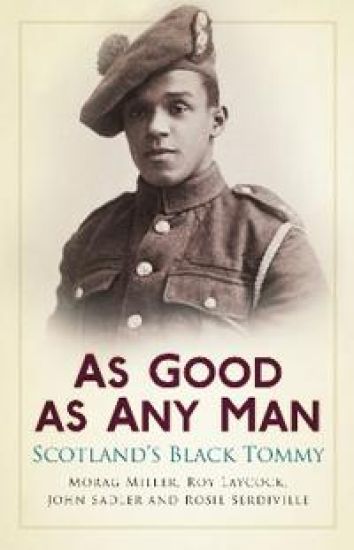
As Good as Any Man

As Good as Any Man

Morag Miller; Roy Laycock; John Sadler; Rosie Serdiville

The History Press Ltd
2014
nidottu
When the harrowing Great War diaries of one of Britain’s first black soldiers were unearthed in a dusty Scottish attic nearly 100 years after they were written, they posed a bit of a mystery. The diary entries – ranging from May 1917 to March 1918 – were written by one Arthur Roberts while he served initially with the King’s Own Scottish Borderers before being transferred to Royal Scots Fusiliers in 1917. He details what life was like for him during the First World War, how he survived the Battle of Passchendaele, and how he escaped unscathed when a German shell killed a dozen men round him. Yet Arthur was an otherwise unknown man – what was the rest of his life like? Now, Morag Miller and Roy Laycock have painstakingly researched Roberts’ life history, filling in the gaps. From his birth in Bristol, to his life in Glasgow and time at the front, they provide here much more than just a war memoir. This is a unique history of one man’s remarkable life. Beautifully illustrated with Roberts’ own accomplished photographs and artwork, As Good As Any Man is the remarkable biography of one of Britain’s black Tommies.
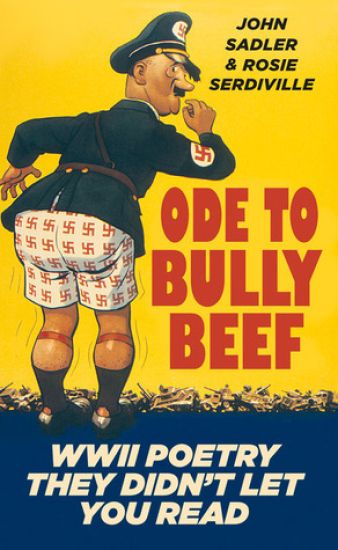
Ode to Bully Beef

Ode to Bully Beef

Rosie Serdiville; John Sadler

The History Press Ltd
2014
nidottu
The Second World War (1939–45) was not greeted with the same lavish outpouring of patriotic fervour that had attended August 1914. Any rags of glory had long since been drowned in the mud of Flanders. The Great War had been heralded as ‘the war to end all wars’; veterans were promised ‘a land fit for heroes’. Both of these vain boasts soon began to sound hollow as depression, unemployment, poverty and a rash of new wars followed. The sons and daughters of those who had embarked upon their own patriotic Calvary did so again in an altogether more sombre spirit. One significant difference between the two conflicts is that, whilst both were industrial wars, the Second World War was far nearer the concept of total war. The growth of strategic air power, in its infancy in 1918, had by 1939 become a reality. In this war, even more widespread and terrible than the last, there were to be no civilians. Death sought new victims everywhere; British citizens were now in the front line, there was to be no respite, no hiding place. This is the poetry and prose of those who were there, ordinary people caught in the terrible maelstrom of mass conflict on a scale hitherto unimagined; this is their testimony.
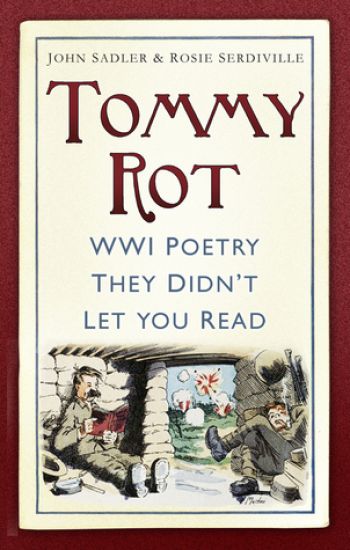
Tommy Rot

Tommy Rot

John Sadler; Rosie Serdiville

The History Press Ltd
2013
nidottu
The Great War 1914-1918 was dubbed the ‘war to end all wars’ and introduced the full flowering of industrial warfare to the world. The huge enthusiasm which had greeted the outbreak of hostilities in August 1914 soon gave way to a grim resignation and, as the Western Front became a long, agonising battle of dire attrition, revulsion. Never before had Britain's sons and daughters poured out their lifeblood in such prolonged and seemingly incessant slaughter. The conflict produced a large corpus of war poetry, though focus to date has rested with the ‘big’ names - Brooke, Sassoon, Graves, Owen, Rosenberg and Blunden et al – with their descent from youthful enthusiasm to black cynicism held as a mirror of the nation’s journey. Their fame is richly merited, but there are others that, until now, you would not expect to find in any Great War anthology. This is ‘Tommy’ verse, mainly written by other ranks and not, as is generally the case with the more famous war poets, by officers. It is, much of it, doggerel, loaded with lavatorial humour. Much of the earlier material is as patriotic and sentimental as the times, jingoistic and occasionally mawkish. However, the majority of the poems in this collection have never appeared in print before; they have been unearthed in archives, private collections and papers. Their authors had few pretences, did not see themselves as poets, nor were writing for fame and posterity. Nonetheless, these lost voices of the Great War have a raw immediacy, and an instant connection that the reader will find compelling.
The Battle of Flodden 1513

The Battle of Flodden 1513

John Sadler; Rosie Serdiville

The History Press Ltd
2013
nidottu
The Battle of Flodden in 1513 was the largest battle ever to take place between England and Scotland. James IV himself led an army of 30,000 men over the border into England, ostensibly in revenge for the murder of a Scotsman, but in reality to assist their ally the French by diverting the forces of Henry VIII. Yet the Scots were hampered by old-fashioned weapons and tactics, whereas the English deployed more accurate artillery and their vaunted longbowmen. When King James IV was killed while leading a charge, and many of their officers died, the Scots were left in disarray and the English victory was decisive. As the first new history of the battle in a decade, this authoritative and eye-opening account marks the 500th anniversary and brings our knowledge of the conflict up to date. Expert knowledge and detailed maps look at the key events, the 1135 campaign and the minor battles of Millfield and Norham, and a full profile of the respective forces and deployments, and convey the battle’s course concisely and clearly. A key read for those interested in military history or the period in general.
The Great Siege of Newcastle 1644

The Great Siege of Newcastle 1644

Rosie Serdiville; John Sadler

The History Press Ltd
2011
nidottu
In the autumn of 1644 was fought one of the most sustained and desperate sieges of the First Civil War when Scottish Covenanter forces under the Earl of Leven finally stormed Newcastle-upon-Tyne, the King's greatest bastion in the north-east and the key to his power there. The city had been resolutely defended throughout the year by the Marquis of Newcastle, who had defied both the Covenanters and northern Parliamentarians. Newcastle had held sway in the north-east since the outbreak of the war in 1642. He had defeated the Fairfaxes at Adwalton Moor and secured the City of Newcastle as the major coal exporter and port of entry for vital Royalist munitions and supply. Without this the north was lost. If anything, Newcastle was more important, in strategic terms, than York and it was the city's fall in October which marked the final demise of Royalist domination of the north. The book tells the story of the people who fought there, what motivated them and who led them there. It is also an account of what happened on the day, a minute-by-minute chronicle of Newcastle's bloodiest battle. The account draws heavily on contemporary source material, some of which has not received a full airing until now.