Kirjojen hintavertailu. Mukana 12 595 353 kirjaa ja 12 kauppaa.

Kirjailija

Ross Balchin

Kirjat ja teokset yhdessä paikassa: 4 kirjaa, julkaisuja vuosilta 2014-2017, suosituimpien joukossa Working with Brain Injury. Vertaile teosten hintoja ja tarkista saatavuus suomalaisista kirjakaupoista.

4 kirjaa

Kirjojen julkaisuhaarukka 2014-2017.

Addressing Brain Injury in Under-Resourced Settings

Addressing Brain Injury in Under-Resourced Settings

Ross Balchin; Rudi Coetzer; Christian Salas; Janice Webster

Psychology Press Ltd
2017
nidottu
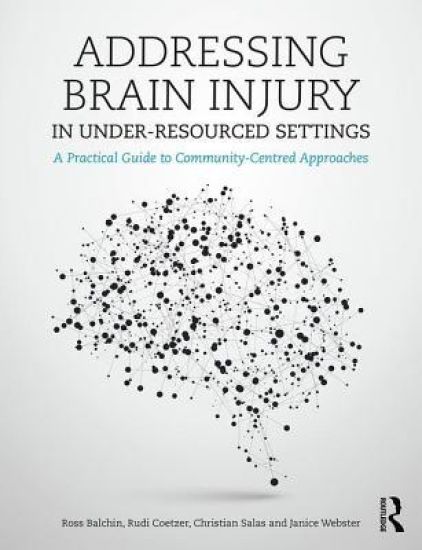
Many of the world’s population have no access to appropriate diagnostic, neurorehabilitative or support services following brain injury. Addressing Brain Injury in Under-Resourced Settings: A Practical Guide to Community-Centred Approaches tackles this unacceptable gap in service provision by empowering the reader to provide basic care, education and support for patients with brain injuries and their families.Written for an audience which does not necessarily have any prior knowledge of the brain, neurorehabilitation or brain injuries/pathologies, this practical guide first examines the global context of brain injury, considering the cross-cultural realities across communities worldwide. The book goes on to explore the reality of brain injury and how to work with its consequences, offering practical knowledge and advice in a user-friendly, richly illustrated format. It provides easily digestible information about the brain, including its normal functioning and the ways in which it can be damaged through injury and disease. The book also covers the basic skills needed to identify neurological difficulties and provides guidance on basic rehabilitation input and support. The final section of the book covers how to provide services, including working with organisations and communities, volunteering, initiating and developing community-based projects and programmes, and caring for patients and their families from emergency to recovery to rehabilitation.This book is an invaluable resource for community health workers, voluntary sector workers and all professional healthcare providers who work with brain-injured patients around the world. It will also be important reading for policy developers, fundraising organisations and those who work with global humanitarian initiatives.
Addressing Brain Injury in Under-Resourced Settings

Addressing Brain Injury in Under-Resourced Settings

Ross Balchin; Rudi Coetzer; Christian Salas; Janice Webster

Psychology Press Ltd
2017
sidottu
Many of the world’s population have no access to appropriate diagnostic, neurorehabilitative or support services following brain injury. Addressing Brain Injury in Under-Resourced Settings: A Practical Guide to Community-Centred Approaches tackles this unacceptable gap in service provision by empowering the reader to provide basic care, education and support for patients with brain injuries and their families.Written for an audience which does not necessarily have any prior knowledge of the brain, neurorehabilitation or brain injuries/pathologies, this practical guide first examines the global context of brain injury, considering the cross-cultural realities across communities worldwide. The book goes on to explore the reality of brain injury and how to work with its consequences, offering practical knowledge and advice in a user-friendly, richly illustrated format. It provides easily digestible information about the brain, including its normal functioning and the ways in which it can be damaged through injury and disease. The book also covers the basic skills needed to identify neurological difficulties and provides guidance on basic rehabilitation input and support. The final section of the book covers how to provide services, including working with organisations and communities, volunteering, initiating and developing community-based projects and programmes, and caring for patients and their families from emergency to recovery to rehabilitation.This book is an invaluable resource for community health workers, voluntary sector workers and all professional healthcare providers who work with brain-injured patients around the world. It will also be important reading for policy developers, fundraising organisations and those who work with global humanitarian initiatives.
Working with Brain Injury

Working with Brain Injury

Rudi Coetzer; Ross Balchin

Psychology Press Ltd
2014
sidottu
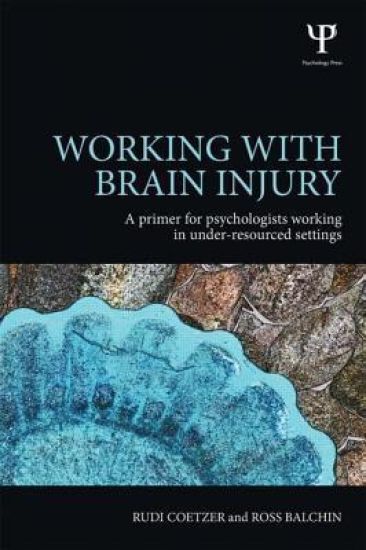
This book provides a hands-on resource for the development of essential skills and competencies in clinical neuropsychology. On a very practical level it addresses a question frequently asked by students, trainees, interns, and newly qualified psychologists: what do I need to know in order to perform the everyday tasks involved in clinical neuropsychology? The authors distil, from a vast knowledge base, the practical skills and knowledge needed to lay the foundations for working with brain-injured patients, especially within the developed and developing world where time and resources are limited.The book is divided into three main sections: Basic Foundations, Clinical Practice, and Professional Issues. Together these sections cover 18 fundamental topics, each representing a key part of the life of a practitioner. Each chapter contains practical tips, points for reflective practice, and suggested further reading, with a particular emphasis on issues pertaining to working in under-resourced clinical environments. The book draws upon landmark academic papers and textbooks, and also the authors’ experiences of working in state hospitals in both South Africa and the National Health Service in the United Kingdom.Working with Brain Injury will be essential reading for clinical psychology trainees and their supervisors, for newly qualified psychologists in clinical settings, and for students and practitioners in other clinical professions seeking an introduction to clinical neuropsychology.
Working with Brain Injury

Working with Brain Injury

Rudi Coetzer; Ross Balchin

Psychology Press Ltd
2014
nidottu
This book provides a hands-on resource for the development of essential skills and competencies in clinical neuropsychology. On a very practical level it addresses a question frequently asked by students, trainees, interns, and newly qualified psychologists: what do I need to know in order to perform the everyday tasks involved in clinical neuropsychology? The authors distil, from a vast knowledge base, the practical skills and knowledge needed to lay the foundations for working with brain-injured patients, especially within the developed and developing world where time and resources are limited.The book is divided into three main sections: Basic Foundations, Clinical Practice, and Professional Issues. Together these sections cover 18 fundamental topics, each representing a key part of the life of a practitioner. Each chapter contains practical tips, points for reflective practice, and suggested further reading, with a particular emphasis on issues pertaining to working in under-resourced clinical environments. The book draws upon landmark academic papers and textbooks, and also the authors’ experiences of working in state hospitals in both South Africa and the National Health Service in the United Kingdom.Working with Brain Injury will be essential reading for clinical psychology trainees and their supervisors, for newly qualified psychologists in clinical settings, and for students and practitioners in other clinical professions seeking an introduction to clinical neuropsychology.