Kirjojen hintavertailu. Mukana 12 595 353 kirjaa ja 12 kauppaa.

Kirjailija

Ross Harrison

Kirjat ja teokset yhdessä paikassa: 17 kirjaa, julkaisuja vuosilta 1974-2025, suosituimpien joukossa Cambridge Philosophers. Vertaile teosten hintoja ja tarkista saatavuus suomalaisista kirjakaupoista.

17 kirjaa

Kirjojen julkaisuhaarukka 1974-2025.

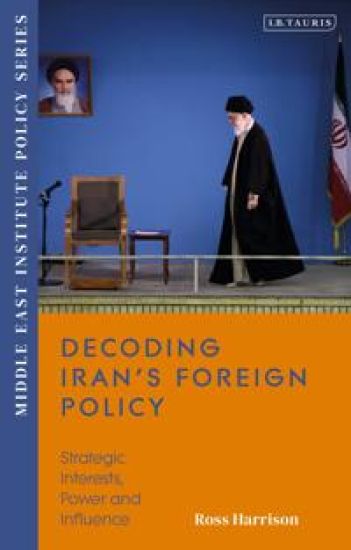
Decoding Iran’s Foreign Policy

Decoding Iran’s Foreign Policy

Ross Harrison

BLOOMSBURY PUBLISHING PLC
2025
nidottu
Since the 1979 revolution, Iranian leaders have persisted in advancing a foreign policy aimed at achieving regional prominence and, in particular, rebuffing U.S. efforts to limit Iran’s influence. But how are foreign policy decisions made in light of the country’s tumultuous history? How do the challenges posed by regional and global actors impact Iranian decision making? And how can we expect Iran to behave in the future?This book uses a ‘strategic lens’ to explain how Iran conducts its current foreign policy and to unpack the dilemmas and strategic quandaries facing the Islamic Republic today. Ross Harrison argues that to understand Iranian behavior it is essential to look at it from the perspective of Iran’s strategic interests, namely: its capabilities; how Iran interprets the region, the international community and itself; and the state’s conception of time and territory in its foreign policy calculations. Iranian foreign policy - in searching for a winning strategy for power and influence – is revealed to evince ideological strains but also realpolitik considerations based on current interpretations of the national interest. These different strains in Iran’s foreign policy represent the complexity of the challenges and opportunities the state faces. They also help us to understand the present and future of Iranian foreign policy behavior.
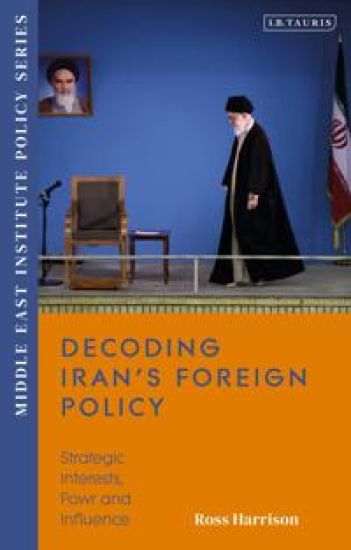
Decoding Iran’s Foreign Policy

Decoding Iran’s Foreign Policy

Ross Harrison

BLOOMSBURY PUBLISHING PLC
2025
sidottu
Since the 1979 revolution, Iranian leaders have persisted in advancing a foreign policy aimed at achieving regional prominence and, in particular, rebuffing U.S. efforts to limit Iran’s influence. But what are the drivers of Iran’s foreign policy in light of the country’s tumultuous history? How do the challenges posed by regional and global actors impact Iranian foreign policymaking? And how can we expect Iran to behave in the future?This book uses a ‘strategic lens’ to explain how Iran conducts its current foreign policy and to unpack the dilemmas and strategic quandaries facing the Islamic Republic today. Ross Harrison argues that to understand Iranian behavior it is essential to look at it from the perspective of how Iran interprets its history, the region, the international community and itself; and the state’s capabilities and conception of time and territory. Iranian foreign policy - in searching for a winning strategy for power and influence – is revealed to evince ideological strains, but also realpolitik considerations based on current interpretations of the national interest. These different strains in Iran’s foreign policy represent the complexity of the challenges and opportunities the state faces. They also help us to understand the present and future of Iranian foreign policy behavior.
ECMAScript Cookbook

ECMAScript Cookbook

Ross Harrison

Packt Publishing Limited
2018
nidottu
Become a better web programmer by writing efficient and modular code using ES6 and ES8 About This Book • Learn to write asynchronous code and improve the readability of your web applications • Explore advanced concepts such as closures, Proxy, generators, Promise, async functions, and Atomics • Use different design patterns to create structures to solve common organizational and processing issues Who This Book Is For If you're a web developer with a basic understanding of JavaScript and wish to learn the latest features of ECMAScript for developing efficient web applications, this book is for you. What You Will Learn • Organize JavaScript programs across multiple files, using ES modules • Create and work with promises using the Promise object and methods • Compose async functions to propagate and handle errors • Solve organizational and processing issues with structures using design patterns • Use classes to encapsulate and share behavior • Orchestrate parallel programs using WebWorkers, SharedMemory, and Atomics • Use and extend Map, Set, and Symbol to work with user-defined classes and simulate data types • Explore new array methods to avoid looping with arrays and other collections In Detail ECMAScript Cookbook follows a modular approach with independent recipes covering different feature sets and specifications of ECMAScript to help you become an efficient programmer. This book starts off with organizing your JavaScript applications as well as delivering those applications to modem and legacy systems. You will get acquainted with features of ECMAScript 8 such as async, SharedArrayBuffers, and Atomic operations that enhance asynchronous and parallel operations. In addition to this, this book will introduce you to SharedArrayBuffers, which allow web workers to share data directly, and Atomic operations, which help coordinate behavior across the threads. You will also work with OOP and Collections, followed by new functions and methods on the built-in Object and Array types that make common operations more manageable and less error-prone. You will then see how to easily build more sophisticated and expressive program structures with classes and inheritance. In the end, we will cover Sets, Maps, and Symbols, which are the new types introduced in ECMAScript 6 to add new behaviors and allow you to create simple and powerful modules. By the end of the book, you will be able to produce more efficient, expressive, and simpler programs using the new features of ECMAScript. Style and approach This book will follow a modular approach covering independent recipes on different features of ECMAScript throughout the book.
From Chaos to Cooperation: Toward Regional Order in the Middle East

From Chaos to Cooperation: Toward Regional Order in the Middle East

Ross Harrison

Createspace Independent Publishing Platform
2017
nidottu
It might seem confounding to explore the pathways and prospects for regional cooperation in a Middle East currently mired in proxy conflict, civil war and terrorism. But the Middle East is not the first region in the world to pass through a period of intense conflict-consider Europe or East Asia just a few decades ago-and exit on a path toward regional cooperation. Indeed, it is exactly the immense toll that regional conflict is taking on states, societies, and economies of the region that makes developing a vision toward defusing regional conflict and building stability all the more urgent. Societies at war are those that urgently need an alternative vision of regional order and a roadmap for getting there. Despite-or perhaps because of-the conflicted realities of today's Middle East, this volume takes on the issue of regional cooperation head-on. In total, it attempts to provide a balanced approach-neither falling into the traps of na ve optimism nor cynical pessimism. It does, however, approach the topic from the belief that the only way to move the Middle East from its current state of instability, destruction, and despair is through eventual cooperation between the major regional powers, as remote as the prospects for this appear today.
Shadow of the Wraith

Shadow of the Wraith

Ross Harrison

Lulu Press Inc
2015
sidottu
SPECIAL EDITION: It sounds like a simple assignment: track down the mysterious Star Wraith and put an end to its rampage. But when Travis Archer and his team of inept soldiers find themselves the most wanted people in the galaxy - hounded by assassins, terrorists and their own military - they realise the Wraith is just a symptom of a much larger problem...Finding war raging between one army intent on destroying an entire species, and another that will destroy the galaxy, Travis must put aside his fears and his past to uncover the truth behind it all. To become the hero he's always imagined.
Strategic Thinking in 3D

Strategic Thinking in 3D

Ross Harrison

Potomac Books Inc
2013
sidottu
Effective strategic thinking requires a clear understanding of one’s external environment. Each organization has a unique environment, but as Ross Harrison explains in Strategic Thinking in 3D, any environment-whether in the fields of national security, foreign policy, or business-has three dimensions: systems, opponents, and groups. Systems strategy involves the challenge of creating leverage against opponents by shaping the external environments they rely on for sustaining their power. Opponents-based strategy requires analyzing a competitor’s capability, motivation, and strategy, assessing one’s own competitive challenges, and then developing approaches for directly confronting the opponent. Group strategy aims to mobilize political, consumer, and market groups against the power of an opponent. Strategic Thinking in 3D makes strategy “portable” for individuals who switch careers multiple times during their professional lives, moving among public, nonprofit, and private sector jobs. Harrison uses al Qaeda’s strategy against the United States as a “capstone” case study to demonstrate how strategic success often results from the cascading effect of “wins” in all three of these dimensions. Conversely, strategic failure can come from the mutual reinforcement of “losses” across these same three dimensions. Reinforcing and integrating the concepts, Harrison shows how strategy in 3D actually works in practice.
Temple of the Sixth

Temple of the Sixth

Ross Harrison

Createspace Independent Publishing Platform
2012
nidottu
When omens of the End Times appear across the galaxy, it signals the start of a war between two immortal forces - the Celestians and the Hierarchy. The Hierarchy have learnt and adapted since they last waged war, forcing the Celestians to enlist the aid of mortals to free a kidnapped god.Thardriik Jhunassi Kortlyn III - Theak - was a private detective. For a day. Then came the incident with the dead puppy and the inevitable end of his crime-fighting career. Despite his flaws, Theak is a clear choice for the Celestians, and he is drawn into the centre of a battle that will decide the fate of the galaxy.Time is something the Celestians' heroes do not have as the Hierarchy's infection spreads across countless worlds, bending every living creature to their will. With the heroes' every step bringing them closer towards one final battle, there is only one question: can they defeat an ancient and immortal enemy?
Personality Development in Adolescent Girls: Monographs of the Society for Research in Child Development, V16, No. 53, 1951
Personality Development in Adolescent Girls is a monograph published by the Society for Research in Child Development in 1951. The book, written by Lawrence K. Frank, focuses on the development of personality in adolescent girls. Frank explores the various factors that influence personality development, including family dynamics, peer relationships, and cultural norms. He also discusses the role of education and the impact of social and economic factors on adolescent girls' development. The book provides a comprehensive overview of the complex process of personality development during the adolescent years and is a valuable resource for educators, psychologists, and parents.Additional Authors Karen Machover And Meta Steiner.This scarce antiquarian book is a facsimile reprint of the old original and may contain some imperfections such as library marks and notations. Because we believe this work is culturally important, we have made it available as part of our commitment for protecting, preserving, and promoting the world's literature in affordable, high quality, modern editions, that are true to their original work.
Bentham-Arg Philosophers

Bentham-Arg Philosophers

Ross Harrison

Routledge
2008
nidottu
First Published in 1999. The purpose of this series is to provide a contemporary assessment and history of the entire course of philosophical thought. Each book constitutes a detailed, critical introduction to the work of a philosopher of major influence and significance. The series in which this work appears, the Arguments of the Philosophers, should, ideally, identify the arguments of a particular philosopher and then subject them to relentless, modern, critical examination. The work which follows diverges from this ideal type in having rather more attention given to the identification than to the criticism of its subject’s arguments.
Hobbes, Locke, and Confusion's Masterpiece

Hobbes, Locke, and Confusion's Masterpiece

Ross Harrison

Cambridge University Press
2002
pokkari
In this major study of the foundations of modern political theory the eminent political philosopher Ross Harrison explains, analyzes, and criticizes the work of Hobbes, Locke, and their contemporaries. He provides a full account of the turbulent historical background that shaped the political, intellectual, and religious content of this philosophy. The book explores such questions as the limits of political authority and the relation of the legitimacy of government to the will of its people in non-technical, accessible prose that will appeal to students of philosophy, politics, theology and history.
Hobbes, Locke, and Confusion's Masterpiece

Hobbes, Locke, and Confusion's Masterpiece

Ross Harrison

Cambridge University Press
2002
sidottu
In this major 2003 study of the foundations of modern political theory the eminent political philosopher Ross Harrison explains, analyzes, and criticizes the work of Hobbes, Locke, and their contemporaries. He provides a full account of the turbulent historical background that shaped the political, intellectual, and religious content of this philosophy. The book explores such questions as the limits of political authority and the relation of the legitimacy of government to the will of its people in non-technical, accessible prose that will appeal to students of philosophy, politics, theology and history.
Bentham-Arg Philosophers

Bentham-Arg Philosophers

Ross Harrison

Routledge
1999
sidottu
First Published in 1999. The purpose of this series is to provide a contemporary assessment and history of the entire course of philosophical thought. Each book constitutes a detailed, critical introduction to the work of a philosopher of major influence and significance. The series in which this work appears, the Arguments of the Philosophers, should, ideally, identify the arguments of a particular philosopher and then subject them to relentless, modern, critical examination. The work which follows diverges from this ideal type in having rather more attention given to the identification than to the criticism of its subject’s arguments.
Democracy

Democracy

Ross Harrison

Routledge
1995
nidottu
Democracy surrounds us like the air we breath, and is normally taken very much for granted. Across the world democracy has become accepted as an unquestionably good thing. Yet upon further examination the merits of democracy are both paradoxical and problematic, and the treasured values of liberty and equality can be used to argue both for and against it.In the historical section of the book, Ross Harrison clearly traces the history of democracy by examining the works of, amongst others, Plato and Aristotle, Hegel and Marx. Informed by facts and detailed knowledge of these famous thinkers, Harrison provides a clear and cogent justification of democracy.
On What There Must Be

On What There Must Be

Ross Harrison

Oxford University Press
1974
sidottu
This book addresses the importance of space and time, of existence unperceived, of publicity and action, and of natural laws. These are examined in a single argument which extends from Chapter Three to Chapter Seven and in the course of which the essential features of any comprehensible world are either assumed or derived. In Chapter Two, before this argument begins, the book introduces and argues for the methods by which this general argument is developed. In Chapter One, the book attempts to show why it is important to consider the essential features of any comprehensible world. This chapter forms a prolegomenon to the inquiry. The argument in it is of a somewhat more impressionistic nature than the argument later in the inquiry; and so it is probably important to point out that the conclusions reached in the inquiry itself are practically independent of the argument of the first chapter. Those that are totally unconvinced by it may still be persuaded by the general argument which follows.