Kirjailija
Rowan Williams
Kirjat ja teokset yhdessä paikassa: 133 kirjaa, julkaisuja vuosilta 1995-2026, suosituimpien joukossa The Bright Field. Vertaile teosten hintoja ja tarkista saatavuus suomalaisista kirjakaupoista.
133 kirjaa
Kirjojen julkaisuhaarukka 1995-2026.
Millions have read his words or heard him speak. Now in this book by Rowan Williams and Greg Garrett, there’s a chance to find out more about the man behind the books and speeches. ‘Rowan Williams in Conversation’ allows the reader to be a fly on the wall as two friends – one the former Archbishop of Canterbury, the other ‘one of America's leading voices on religion and culture’ (BBC Radio) – talk about their shared passions and interests. ‘Rowan Williams in Conversation’ is Williams at his most relaxed and personal, offering unique insights into his most heartfelt beliefs and enthusiasms. Listen in as he reflects with Greg Garrett on the vital pursuits that have characterized his life and ministry: among them, friendship, imagination, popular culture, faith and politics, prayer, and the blessings of sacred community. Greg Garrett and Rowan Williams’ book is a unique opportunity to sample the rich and wide-ranging thought of Williams, as he talks about the though-provoking spiritual issues and intellectual passions that are most dear to his heart.
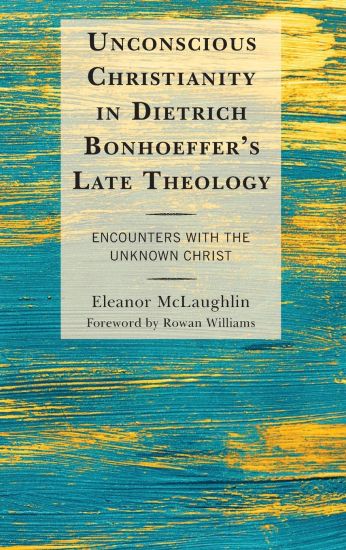
Unconscious Christianity in Dietrich Bonhoeffer's Late Theology
Eleanor McLaughlin; Rowan Williams
Lexington Books/Fortress Academic
2020
sidottu
In the last years of his life, Dietrich Bonhoeffer began work on an idea that he called unbewußtes Christentum, ‘unconscious Christianity’. While Bonhoeffer’s other ideas from this period have been extensively studied and are important in the field of theology and beyond, this idea has been almost completely ignored. For the first time in Bonhoeffer scholarship, Eleanor McLaughlin provides a definition of unconscious Christianity, based on a close reading and analysis of the texts in which Bonhoeffer mentioned the term. From a variety of surviving texts, from a scribbled marginal note in his Ethics manuscript to the fiction he wrote in prison, she constructs a detailed definition of this term which sheds light on not only Bonhoeffer’s late work, but his theological development as a whole.
With typical eloquence and wisdom, in The Way of St Benedict Rowan Williams explores the appeal of St Benedict’s sixth-century Rule, showing it to be a document of great relevance to present day Christians and non-believers at our particular moment in history.For over a millennium the Rule – a set of guidelines for monastic conduct – has been influential on the life of Benedictine monks, but has also served in some sense as a ‘background note’ to almost all areas of civic experience: artistic, intellectual and institutional.The effects of this on society have been far-reaching and Benedictine communities and houses still attract countless visitors, testifying to the appeal and continuing relevance of Benedict’s principles.As the author writes, the chapters of his book, which range from a discussion of Abbot Cuthbert Butler’s mysticism to ‘Benedict and the Future of Europe’, are ‘simply an invitation to look at various current questions through the lens of the Rule and to reflect on aspects of Benedictine history that might have something to say to us’.With Williams as our guide, The Way of St Benedict speaks to the Rule’s ability to help anyone live more fully in harmony with others whilst orientating themselves fully to the will of God.
A LETTER GOD MIGHT HAVE WRITTEN. Being a poet, being an archbishop, being human
Rowan Williams
Balestier
2019
pokkari
The City is my Monastery
Richard Carter; Samuel Wells; Rowan Williams
Canterbury Press Norwich
2019
nidottu
Richard Carter swapped a life of simplicity with an Anglican religious order in the Solomon Islands for parish ministry in one of London's busiest churches, St Martin-in-the-Fields. Seeing a need for monastic values in the centre of the city, he founded the Nazareth Community. Its members gather from everyday life to seek God in contemplation, to acknowledge their dependence on God’s grace and to learn to live openly and generously with all. Part story, part spiritual meditation, The City is My Monastery offers spiritual wisdom for daily life rooted in the Nazareth Community’s seven guiding principles: Silence, Service, Scripture, Sacrament, Sharing, Sabbath Time and Staying.
Suddenly There is God plunges us into the key stories of biblical characters who find themselves caught up in the divine-human drama. With unique insight, it relates these stories directly to the distinct stages of our own lives: being created, falling from grace, leaving the childhood ark, hearing God's call, gaining freedom, embracing covenant, praying the psalms, learning forgiveness, choosing love, and expecting resurrection. The scenes unfold before our eyes like a riveting play or film, as we discover with astonishment how closely the progression of Old and New Testament stories reflects our own spiritual journey.Packed with historical content and written with dramatic intensity, Suddenly There is God suggests contemplative ways for us to nurture an ardent expectation of encountering God. By identifying with the biblical characters--their conflicts, difficult choices, and realizations--we recognize how divine presence continually breaks into our own life story. This book is a valuable resource for clergy, students, and spiritual seekers who long to experience the drama of sacred Scripture as deeply personal revelation.
2020 Catholic Press Association Book Award for ScriptureSuddenly There is God plunges us into the key stories of biblical characters who find themselves caught up in the divine-human drama. With unique insight, it relates these stories directly to the distinct stages of our own lives: being created, falling from grace, leaving the childhood ark, hearing God's call, gaining freedom, embracing covenant, praying the psalms, learning forgiveness, choosing love, and expecting resurrection. The scenes unfold before our eyes like a riveting play or film, as we discover with astonishment how closely the progression of Old and New Testament stories reflects our own spiritual journey. Packed with historical content and written with dramatic intensity, Suddenly There is God suggests contemplative ways for us to nurture an ardent expectation of encountering God. By identifying with the biblical characters--their conflicts, difficult choices, and realizations--we recognize how divine presence continually breaks into our own life story. This book is a valuable resource for clergy, students, and spiritual seekers who long to experience the drama of sacred Scripture as deeply personal revelation.
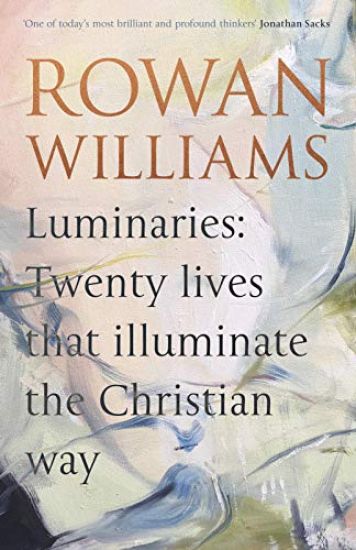
Starting in the first century with St Paul and ending in the twentieth with St Oscar Romero, Rowan Williams invites you to reflect with him on the lives and legacies of twenty great Christians – saints, martyrs, poets, theologians and social reformers. Their stories and writings have profoundly influenced his own life and thought, and this sequence of short reflections is sure to sharpen your theological vision and cast a fresh light on what it means to live and breathe the gospel. Included among these 'luminaries' are Augustine of Hippo, William Tyndale, Teresa of Avila, Charles Dickens, Florence Nightingale, Dietrich Bonhoeffer and Simone Weil, Let these brilliant meditations light your way as you follow the footsteps of the faithful who have gone before.
“Doing” theology ought to be deep, creative, and awe-inspiring. Big theological questions should be asked in the most genuinely helpful manner. Often, and inevitably from a human perspective, we ask questions such as “Why doesn’t God…?” or “Why does God allow…?” or, perhaps more appropriately, “What is the best way to conceive of God through His engagement with creation?” In Real Divine Insight and Human Consciousness, Andrew Bigg considers the logical and eschatological consequences of the pivotal union of “perspectives” in the Christian concept of Incarnation. The systematic approach proceeds as “according to a whole,” or both theologically and scientifically relevant.We are aware, not least through Biblical texts, that there is a divine viewpoint of creation. The Bible says, “For my thoughts are not your thoughts, nor are your ways my ways…For as the heavens are higher than the earth, so are my ways higher than your ways and my thoughts than your thoughts” (Isaiah 55:8-9). Furthermore, “the Lord does not see as mortals see” (1 Samuel 16:7), and we even hear the charge “you thought that I was one just like yourself” (Psalm 50:21).Humanity, however, asks questions about God’s “perspective,” while God asks rhetorical questions about human perspectives. In the Incarnation, however, these conflicting perspectives are somehow established in union with one another. From this divine-human perspective, Christ asks His disciples the incisive opening question “What are you looking for?,” followed by the invitation “come and see” (John 1:37-39). Engaging theologically, learning what best to ask and how best to ask it, is inseparable from a journey of formation, preparation, and growth towards that ultimately shared self-knowledge to which Christ’s invitation directs us, pointing towards a nuanced way of “seeing” and, eventually, “seeing together.”
Among the many causes of anxiety in today's world are global concerns to do with social and economic inequality, the importance of sustainable development, and climate change. These raise human--that is moral and spiritual--questions about who we are, our destiny, how we can be helped to flourish, and what we hope for. Hope Rediscovered is about being re-oriented in the face of such challenges, Bishop David Atkinson, who has an abiding interest in Christian ethics, pastoral theology and science, has put some key questions to the Gospel of John--a text which says much about human flourishing, and which draws on the Wisdom themes of the Hebrew Bible, about misunderstanding our place in creation, and about practical living. Like his followers, Jesus was beset with conflicts within 'the world'. The first century Christian community, to which the Gospel was addressed, discovered how to live hopefully in the way of Wisdom, energized by God's Spirit. The focus of this timely book is deep practical wisdom for a troubled world. ""A treasure trove of wise insights and reflection"" --Dave Bookless, A Rocha International Bishop David Atkinson undertook research in organic chemistry before being ordained. He served as Fellow and Chaplain of Corpus Christi College, Oxford. He was a Canon of Southwark Cathedral and Archdeacon of Lewisham before becoming Bishop of Thetford in 2001. He retired in 2009.
• Second volume of the In Conversation series • Insights into the art of listening from former Archbishop of Canterbury Rowan Williams and author Greg Garrett How is God speaking into our lives today? How do Christians discern what they’re being called to do? How do literature and culture intersect with the Scriptures and our tradition? And what might the work of the artist teach us about both spiritual practice and the vocational tasks of preaching and teaching? Be a fly on the wall and listen in as dear friends—one who happens to be the past Archbishop of Canterbury, the other, “one of the Episcopal Church's most engaging evangelists” (Barbara Brown Taylor)—discuss their longtime passions and shared interests. In this new volume of the “In Conversation series,” Rowan Williams and Greg Garrett talk about friendship, the Church, the gift of great novels, the importance of Shakespeare, the art of writing poetry and fiction, the preaching event, engaging popular culture, the relationship between faith and politics, the practice of prayer, and the necessity of sacred community, modeling for us in the process both the vanishing art of conversation and an active engagement with faith, culture, and real life.
En bok om kärnan i vad det innebär att vara människa - Vad är medvetande? - Är hjärnan en maskin? - Vad är det som gör oss till personer? - Hur hittar man vägen till mänsklig mognad? I Vara människa funderar Rowan William över vad som kännetecknar att vara människa. Detta är en innehållsrik och tankeväckande reflektion om några av de mest grundläggande förutsättningarna med att vara människa: medvetande, språk, relationer, tal och mänsklig mognad. Rowan Williams har tidigare utkommit med två böcker i en liten serie med titlarna Vara kristen och Vara lärjunge. De har blivit mycket uppskattade och uppmärksammade. Detta är den tredje boken i serien. Ett storartat och gripande arbete. Filosofisk teologi när den är som bäst. Jonathan SacksROWAN WILLIAMS (f 1950) är en brittisk teolog, poet och ärkebiskop emeritus i Anglikanska kyrkan. Sedan 2013 är han föreståndare för Magdalene College i Cambridge, och en efterfrågad föreläsare och författare.
Jesus according to the New Testament
James D. G. Dunn; Rowan Williams
William B Eerdmans Publishing Co
2019
nidottu
A senior biblical scholar's concise guide to how Jesus is described across the New TestamentNew Testament scholar James D. G. Dunn has written numerous commentaries, books, and essays sharing his thought with the world. In this small, straightforward book designed for a lay audience, Dunn focuses his fifty-plus years of scholarship on the central question posed by the New Testament-who is Jesus?Dunn surveys the New Testament books from Matthew to Rev-elation, exploring and unpacking what they actually say about Jesus. Dunn's Jesus according to the New Testament points to the wonder of those first witnesses and enriches our understanding of who Jesus is to us today.
Christianity Today, Award of Merit, History/Biography (2006) The well-worn saying about being condemned to repeat the history we do not know applies to church history as much as to any other area of history. But how can we discern what lessons we need to learn from the many centuries of church history?In this small but thoughtful volume, respected theologian and churchman Rowan Williams opens up a theological approach to history, an approach that is both nonpartisan and relevant to the church's present needs. As he reflects on how we consider the past in general, Williams suggests that church history remains important not so much for winning arguments as for clarifying who we are as time-bound human beings. Williams particularly addresses North American readers in his new preface to this perennially timely invitation to remember who we are.
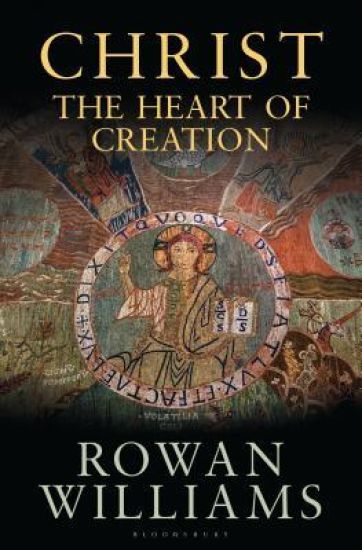
In this wide-ranging book, Rowan Williams argues that what we say about Jesus Christ is key to understanding what Christian belief says about creator and creation overall.Through detailed discussion of texts from the earliest centuries to the present day, we are shown some of the various and subtle ways in which Christians have discovered in their reflections on Christ the possibility of a deeply affirmative approach to creation, and a set of radical insights in ethics and politics as well.Throughout his life, Rowan Williams has been deeply influenced by thinkers of the Eastern Christian tradition as well as Catholic and Anglican writers. This book draws on insights from Eastern Christianity, from the Western Middle Ages and from Reformed thinkers, from Calvin to Bonhoeffer – as well as considering theological insights sparked by philosophers like Kierkegaard and Wittgenstein.Christ the Heart of Creation concerns fundamental issues for Christian belief and Williams tackles them head-on: he writes with pellucid clarity and shows his gift for putting across what are inevitably complex ideas to a wide audience.
Being Human: Bodies, Minds, Persons
Rowan Williams
William B. Eerdmans Publishing Company
2018
nidottu
What is consciousness? Is the mind a machine? What makes each of us a person? How do our bodies relate to our minds?In this deeply engaging exploration of what it means to be human, Rowan Williams addresses these frequently asked questions with lucid meditations that draw from findings in neuroscience, philosophy, psychology, and literature. Then he presses on to ask, Might faith be necessary to human flourishing? If so, why? And how can a traditional Christian practice--namely, silence--help us advance on the path to human maturity?The book ends with a brief but profound meditation on Christ's ascension, inviting readers to consider how, through Jesus, our humanity in all its variety and vulnerability has been transfigured and taken into the heart of the divine life.Being Human is a book that readers of all religious persuasions will find both challenging and highly rewarding. Questions at the end of each chapter encourage personal reflection or group discussion.
• Well-known and well-loved bishop of the Episcopal Church and Anglican Communion This official biography tells the compelling story of the Rt. Rev. Mark Dyer: Irish Catholic boy from New Hampshire, U.S. Navy vet, Roman Catholic then Episcopal priest, bishop, and seminary professor—and one of the most influential, beloved leaders of the American Episcopal Church and the worldwide Anglican Communion. Following a dispute with ecclesiastical authorities, Dyer left the Roman Church for the Anglican Church of Canada. Later received as priest in the Episcopal Church, his gifts as teacher, preacher, and pastor were recognized with election as Bishop of Bethlehem, Pennsylvania. There, he established a new model of leadership, delegating administrative duties to concentrate on spiritual direction, pastoral care, and creating mission projects at every church in his diocese. Also renowned as a story-teller, many of his favorite stories appear here, told in his own voice. Called by leadership of the Anglican Communion to a variety of roles, for more than 20 years Bishop Dyer was on the front lines of the most contentious issues facing the church throughout the world, including ordination of women and gay people. He also was co-chair of the ecumenical dialogue between the Anglican and Eastern Orthodox Churches, which produced a landmark agreement after 17 years of meetings.