

Kirjailija
Roy A Harrisville
Kirjat ja teokset yhdessä paikassa: 11 kirjaa, julkaisuja vuosilta 2002-2023, suosituimpien joukossa The Story of Jesus. Vertaile teosten hintoja ja tarkista saatavuus suomalaisista kirjakaupoista.
Mukana myös kirjoitusasut: Roy A. Harrisville
11 kirjaa
Kirjojen julkaisuhaarukka 2002-2023.
The importance of faith in Christianity cannot be denied, nor the arguments surrounding it. The crisis of faith that now grips the Western church necessitates a fresh look at its essential teachings. This study traces the trajectory of St. Paul's concept of faith in the rest of the New Testament in order to answer the question of how far and in what manner the other books of the New Testament agree or disagree with the Apostle of the Gentiles. Was St. Paul an outlier or an influencer? Common assumptions about faith and the language of faith are challenged in this study. Rather than giving simple voice to conventional presuppositions, this book wrestles with the origin and character of Christian faith and provides a provocative view that should spark renewed discussion about the heart of Christianity.
This book introduces the reader to the various perspectives involved in the interpretation of the New Testament from the lexicographical to the feminist approach. Each chapter contains examples of the perspective involved--its presuppositions and method, followed by a caveat. This book promises to be a welcome companion and invaluable source for students of New Testament theology.
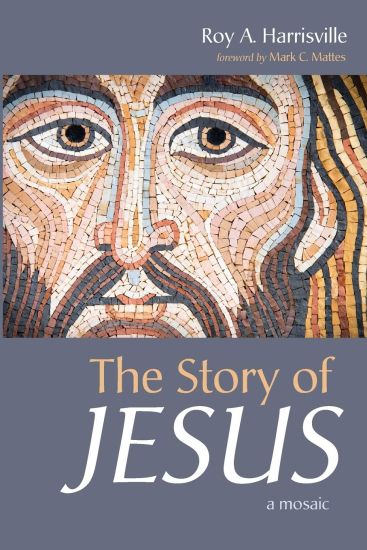
This book, written for college and seminary age students, is the distillation of reflection on the life and career of Jesus of Nazareth for over three decades. Such reflection needs no legitimizing since preoccupation with Jesus of Nazareth continues in one form or another till the present day. The arrangement of the pieces and fragments which make up the ""mosaic"" in part pursue the usual chronological order as appears in most editions of the Bible. But the interpretation of events within each sequence are this author's own. In discussion with early or contemporary scholars, the text may reflect agreement or disagreement, but assumes the right to and responsibility for a specific point of view. As indicated, the book is a ""mosaic,"" comprised of pieces and fragments. It in no way intends to match the often massive attempts at describing Jesus of Nazareth that have been published over the centuries. Like a mosaic, it will show wear and tear, but it will be sufficient to indicate to the reader precisely whose face appears amid all those fragments and pieces, and enough to awaken reflection on his life and career.
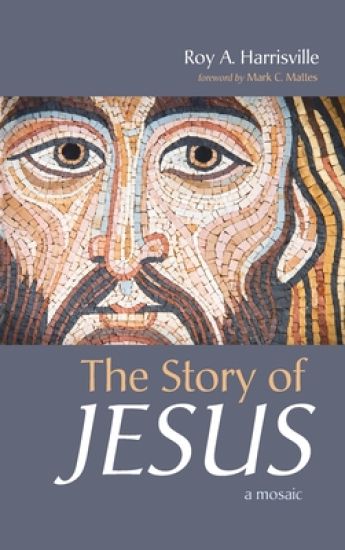
This book, written for college and seminary age students, is the distillation of reflection on the life and career of Jesus of Nazareth for over three decades. Such reflection needs no legitimizing since preoccupation with Jesus of Nazareth continues in one form or another till the present day. The arrangement of the pieces and fragments which make up the ""mosaic"" in part pursue the usual chronological order as appears in most editions of the Bible. But the interpretation of events within each sequence are this author's own. In discussion with early or contemporary scholars, the text may reflect agreement or disagreement, but assumes the right to and responsibility for a specific point of view. As indicated, the book is a ""mosaic,"" comprised of pieces and fragments. It in no way intends to match the often massive attempts at describing Jesus of Nazareth that have been published over the centuries. Like a mosaic, it will show wear and tear, but it will be sufficient to indicate to the reader precisely whose face appears amid all those fragments and pieces, and enough to awaken reflection on his life and career.

For generations, scholars who study the letters of St. Paul have argued about ""being-in-Christ"" and ""justification by faith"" as though they were competing theologies. They have argued about faith as divine gift or human work, and more recently the faith of Jesus Christ has been called into question. Harrisville proposes a provocative and simple solution to these issues by examining scholarly assumptions and presenting the faith of St. Paul as a dynamic and life-changing power. Participation in Christ and righteousness by faith are actually complimentary expressions for the same concept. The apostle's faith was not self-engendered but a gift that transformed him into a believer. Taking a more organic approach to understanding the faith of St. Paul, this book provides a path toward reconciling entrenched positions and providing a fresh perspective by presenting the apostle's concept of faith as a transformative gift of divine power. ""Leaving no stone unturned, Dr. Harrisville has produced an exhaustive study of how faith can be considered a gift of God, totally, and at the same time a human activity. With care and insight he works his way through passages in Paul's letters that have to do with faith, believing, participation in Christ, obedience, and more. He engages modern scholars and goes beyond them with a fresh proposal. The book is timely and important for all interested in Pauline theology."" --Arland J. Hultgren, Luther Seminary, St. Paul, Minnesota ""After a perceptive review of scholarship, Dr. Harrisville presents us with his own interpretation of key texts on faith in the Pauline corpus. Convinced that faith for Paul is a divine gift of life and an ongoing empowerment for living, he explores how it is operative in Paul's thought and life with ramifications for understanding many issues related to Paul's understanding of righteousness, being in Christ, and faithful living."" --Charles B. Puskas, author with Mark Reasoner, The Letters of Paul ""Frequently, scholars artificially pit an objective, forensic approach to the doctrine of justification by faith against a subjective, personal view of faith as participation in Christ. Harrisville shows that this divide, entrenched in contemporary scholarship, is not true to Paul. In Paul's vision of faith, God as the indwelling Christ is simultaneously giver and gift. Thoroughly laying out the topography of the scholarly debate, as well as analyzing Pauline texts, Harrisville uncovers faith as both a result of grace and as utterly transformative, continuously remaking believers anew in Christ. This is a must-read for scholars of the Bible, theologians, and pastors."" --Mark Mattes, Grand View University, Des Moines, Iowa ""In this concise and compelling study Roy Harrisville opens up new vistas of interpretation: Faith for Paul is more than human act or individual disposition--it is a transformative divine power bestowing new life through Christ. The book's exegetical rigor and theological passion will engage and excite all readers."" --Benjamin Schliesser, University of Bern, Germany Roy A. Harrisville III is a pastor in Menomonie, Wisconsin. He has published several articles and is the author of The Figure of Abraham in the Epistles of St. Paul (1992).


Harrisville begins by describing the emergence and use of the historical-critical method. He then attends to the malaise that has come over the method, which he says still persists. Finally, Harrisville commends the historical-critical method, though shorn of its arrogance. He claims that the method and all its users comprise a "Pandora's Box" that, when opened, releases "a myriad other pains," but hope still remains.

Since the advent of formal biblical criticism, many have come to see the crucifixion as merely one event in the process of religious development. Yet for the New Testament writers it was so much more, representing a radical break that forever affected their perception of God and the world. In this book Roy Harrisville examines the thought worlds of the New Testament writers, showing how the cross fractured their previously held ideas, causing a profound reorientation centered on the story of the cross. Focusing chronologically on Paul, the Synoptic writers, John, and the authors of "Hebrews" and "1 Peter", Harrisville demonstrates changes in the writers' understanding of sacrifice, law, Hellenism, apocalyptic, and other areas - changes that created the new values of the radically different Christian community. An insightful work of careful critical scholarship, Harrisville's "Fracture" will appeal to anyone interested in reviewing the New Testament's witness to that which lies at the heart of earliest Christian confession and which has provoked such bitter conflict in history.
The Bible in Modern Culture: Baruch Spinoza to Brevard Childs
Roy A. Harrisville
William B Eerdmans Publishing Co
2002
pokkari
Historical-Critical Method in Biblical Scholarship has been a Pandora's box for the intellectual life of the church. No achievement of modern scholarship has been more effective in understanding the Bible, yet it has also seriously challenged a church trying to preserve the integrity of its cherished theological traditions. In this critically acclaimed book Roy Harrisville and Walter Sundberg trace the development and drama of historical-critical method by surveying the major figures who created and employed it -- from Baruch Spinoza in the seventeenth century to present-day interpreters. This expanded second edition of The Bible in Modern Culture includes three new chapters detailing the work of Adolf Schlatter, Paul Ricoeur, and Brevard Childs.