Kirjojen hintavertailu. Mukana 12 390 323 kirjaa ja 12 kauppaa.

Kirjailija

Roy Allison

Kirjat ja teokset yhdessä paikassa: 6 kirjaa, julkaisuja vuosilta 1996-2016, suosituimpien joukossa Internal Factors in Russian Foreign Policy. Vertaile teosten hintoja ja tarkista saatavuus suomalaisista kirjakaupoista.

6 kirjaa

Kirjojen julkaisuhaarukka 1996-2016.

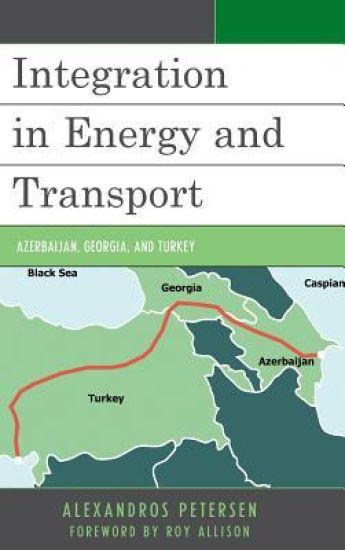
Integration in Energy and Transport

Integration in Energy and Transport

Alexandros Petersen; Roy Allison

Lexington Books
2016
sidottu
The South Caucasus has established itself as a corridor for transporting energy from Azerbaijan to Georgia, Turkey, and on to Europe, symbolized by the Baku-Tbilisi-Ceyhan oil pipeline. This new infrastructure has created an east-west “Eurasian bridge” in which transnational extra-regional actors, especially the European Union and international financial institutions, have played a critical role. This book offers an original exploration of integration in the energy and transport sectors amongst Azerbaijan, Georgia, and Turkey, and the capacity of this to fundamentally change relations between these countries. In the period studied, from the mid-1990s to 2008, integration in energy and transport did not result in broader political, security, and sociocultural integration in any significant way. The author sets his analysis in a theoretical framework, drawing on theories of integration, but also grounds it in the detailed, empirical knowledge that is the measure of true expertise.
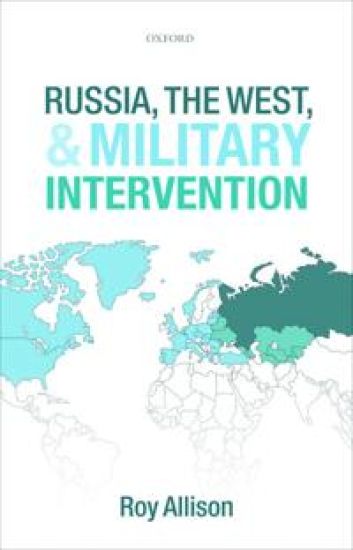
Russia, the West, and Military Intervention

Russia, the West, and Military Intervention

Roy Allison

Oxford University Press
2013
sidottu
Russia has been embroiled in bitter disputes with major Western powers over high-profile military interventions - over Kosovo (1999), Iraq (2003), Georgia (2008), and even Libya (2011) which had a UN Security Council mandate. Moscow and the West reached much more agreement over the Gulf War (1990) and intervention in Afghanistan (2001), but these cases are exceptional. This interdisciplinary study explores the persistent differences between Russian and Western leaders about most Western-led military campaigns and about Russia's own use of force in the CIS region. What does this tell us about emerging norms on the use of force in humanitarian crises? How and why has there been such controversy over the legal justifications for these military operations? Has greater consensus been possible over force in global counterterrorism? What do all these controversies tell us about international rule-making? More specifically, how can we understand Russian political and diplomatic responses during international crises around major interventions? This book argues that Russia has been influential in these debates on norms and law as a permanent United Nations Security Council member and as a major military power. Moscow's approach to these questions has reflected distinctive and quite entrenched attitudes to international order and sovereignty, as well as a preoccupation with its own status. The book draws deeply on Russian sources to show how these attitudes are expressed among the Russian leadership and the political elite. This raises challenging questions about the ability of Russia and Western states to cooperate in emerging crises, in Syria, Iran, or elsewhere and about Russia's role in international society.
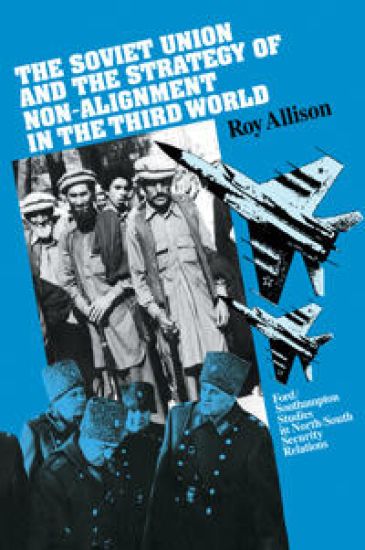
The Soviet Union and the Strategy of Non-Alignment in the Third World
This study investigates the overall Soviet conception of non-alignment in the Third World and assesses Soviet policy in relation to this issue. The author argues that official Soviet encouragement for the policy of non-alignment and Soviet support for the programme of the Non-Aligned Movement in the 1960s and 1970s have been part of a broad Soviet strategy aimed at weakening and ultimately supplanting Western military and political ties with Third World states. Soviet officials have been reluctant, therefore, to view neutrality, nuetralism or non-alignment as concepts or policies which denote an intermediate status between the blocs. This study assesses the implications of such perceptions for Soviet policy and considers how far Soviet leaders have accepted the independent foreign policy aspirations of non-aligned states.
Putin's Russia and the Enlarged Europe

Putin's Russia and the Enlarged Europe

Roy Allison; Margot Light; Stephen White

Wiley-Blackwell (an imprint of John Wiley Sons Ltd)
2006
nidottu
This authoritative work examines recent changes in Russia's relations with the EU and NATO and explores the patterns of support for these various orientations among its own elites and public. Investigates Russian engagement with the enlarged European Union and NATO. Evaluates the serious choices to be made on both sides about the obstacles to good relations, and about the policies to enable a form of Russian 'inclusion without membership'. Draws on extensive interviews with Russian decision-makers as well as a body of new survey evidence, official sources and recently published debates. Anticipates the issues that will become increasingly prominent, including competition in the 'common neighbourhood' and controversy over the role of values in shaping Russia's future position in Europe.
Putin's Russia and the Enlarged Europe

Putin's Russia and the Enlarged Europe

Roy Allison; Margot Light; Stephen White

Wiley-Blackwell (an imprint of John Wiley Sons Ltd)
2006
sidottu
This authoritative work examines recent changes in Russia's relations with the EU and NATO and explores the patterns of support for these various orientations among its own elites and public. Investigates Russian engagement with the enlarged European Union and NATO. Evaluates the serious choices to be made on both sides about the obstacles to good relations, and about the policies to enable a form of Russian 'inclusion without membership'. Draws on extensive interviews with Russian decision-makers as well as a body of new survey evidence, official sources and recently published debates. Anticipates the issues that will become increasingly prominent, including competition in the 'common neighbourhood' and controversy over the role of values in shaping Russia's future position in Europe.
Internal Factors in Russian Foreign Policy

Internal Factors in Russian Foreign Policy

Neil Malcolm; Alex Pravda; Roy Allison; Margot Light

Oxford University Press
1996
sidottu
After the turmoil following the collapse of Soviet power, post-Communist Russia has emerged as an assertively independent force in international affairs. Meanwhile, an intense debate has been underway in Moscow about Russia's national interests and foreign policy priorities. Domestic political conflicts and the close ties with former Soviet partner states have made internal factors particularly particularly important in shaping Russian foreign policy. Internal Factors in Russian Foreign Policy is the first systematic analysis of the domestic political forces which condition the international behaviour of the new Russian state. Four leading specialists examine in turn the areas of foreign policy thinking and debate, how policy is made, the public politics of foreign policy and the role of the military. They explore the changing domestic alignments associated with recent shifts in Russian foreign policy, focusing on the roles played by institutions such as the Security Council and the legislature, by military groupings and by emerging economic interests. The authors throw new light on the domestic foundations of Moscow's more assertive and sef-reliant stance.