Kirjojen hintavertailu. Mukana 12 595 353 kirjaa ja 12 kauppaa.

Kirjailija

Roy Domenico

Kirjat ja teokset yhdessä paikassa: 2 kirjaa, julkaisuja vuosilta 2021-2027, suosituimpien joukossa Italy’s War at Home. Vertaile teosten hintoja ja tarkista saatavuus suomalaisista kirjakaupoista.

2 kirjaa

Kirjojen julkaisuhaarukka 2021-2027.

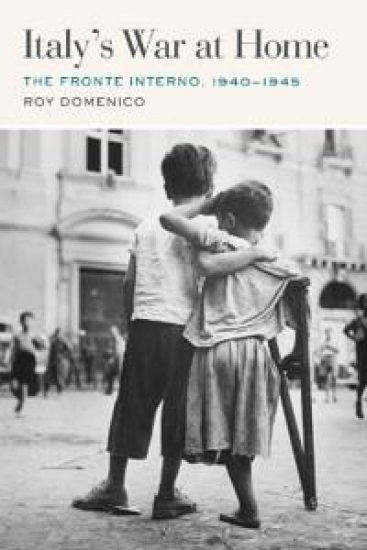
Italy’s War at Home

Italy’s War at Home

Roy Domenico

FORDHAM UNIVERSITY PRESS
2027
pokkari
Brings the story of World War II in Italy and among Italians to an English-speaking audience and adds to our understanding of the collapse and ruin of dictatorships. Italy’s World War II experience might be described as a blunder, a mistake, or a tragedy. Since 1922, Benito Mussolini’s Fascist regime had been constructing a paper tiger – lots of bluster but not much to back it up. A dictatorship, sometimes based on coercion and sometimes on enticement, could never be sure of popular support. When, in June 1940, the drumbeats announced Italy's entry into the most terrible war in history, the regime’s goal to build a race of "new" men – brutal warriors for Italy- proved utterly futile. Exposed in lies and corruption, without any serious war plans, incapable of protecting its citizens, stuck in a disgraceful alliance with the unforgiving Third Reich, and now trapped in an absurdly uneven war against a coalition of unstoppable power, Mussolini and his Fascists were doomed. Bombardments of cities, the strafing of innocents, hunger and shortages, along with Nazi brutality, took massive physical and moral tolls. Mussolini’s totalitarian endeavors to control the lives of Italians proved futile when his armies suffered defeat everywhere, and Anglo-American air armadas brought the "new" men to their knees. Aspects of "old" Italy, however, – Catholicism, for example, the Renaissance and Enlightenment traditions, and working-class solidarity, pillars of Italian identities that have little to nothing in common with Mussolini’s dictatorship – soon surfaced to shape postwar and post-Fascist Italy.
The Devil and the Dolce Vita

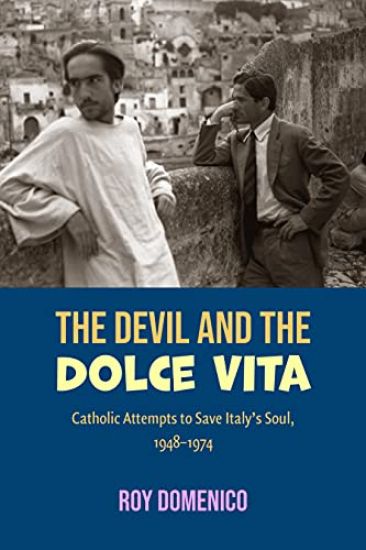
The Devil and the Dolce Vita

Roy Domenico

THE CATHOLIC UNIVERSITY OF AMERICA PRESS
2021
nidottu
Italy's economic expansion after World War Two triggered significant social and cultural change. Secularization accompanied this development and triggered alarm bells across the nation's immense Catholic community. The Devil and the 'Dolce Vita' is the story of that community – the church of Popes Pius XII, John XXIII and Paul VI, the lay Catholic Action association, and the Christian Democratic Party – and their efforts in a series of culture wars to preserve a traditional way of life and to engage and tame the challenges of a rapidly modernizing society. Roy Domenico begins this study during the heady days of the April 1948 Christian Democratic electoral triumph and ends when pro-divorce forces dealt the Catholics a defeat in the referendum of May 1974 where their hopes crashed and probably ended. Between those two dates Catholics engaged secularists in a number of battles – many over film and television censorship, encountering such figures as Roberto Rossellini, Luchino Visconti, Federico Fellini, and Pier Paolo Pasolini. The Venice Film Festival became a locus in the fight as did places like Pozzonovo, near Padua, where the Catholics directed their energies against a Communist youth organization; and Prato in Tuscany where the bishop led a fight to preserve church weddings. Concern with proper decorum led to more skirmishes on beaches and at resorts over modest attire and beauty pageants. By the 1960s and 1970s other issues, such as feminism, a new frankness about sexual relations, and the youth rebellion emerged to contribute to a perfect storm that led to the divorce referendum and widespread despair in the Catholic camp.