Kirjojen hintavertailu. Mukana 12 595 353 kirjaa ja 12 kauppaa.

Kirjailija

Roy Flukinger

Kirjat ja teokset yhdessä paikassa: 3 kirjaa, julkaisuja vuosilta 2006-2016, suosituimpien joukossa Proof. Vertaile teosten hintoja ja tarkista saatavuus suomalaisista kirjakaupoista.

3 kirjaa

Kirjojen julkaisuhaarukka 2006-2016.

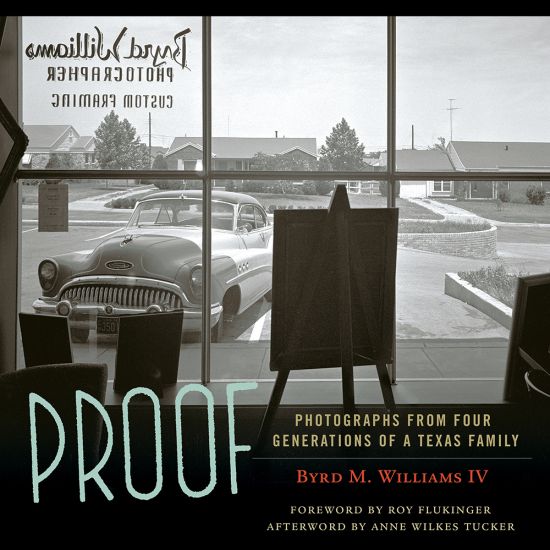
Proof

Proof

Byrd M. Williams IV; Roy Flukinger; Anne Wilkes Tucker

University of North Texas Press,U.S.
2016
sidottu
The Byrd Williams Collection at the University of North Texas contains more than 10,000 prints and 300,000 negatives, accumulated by four generations of Texas photographers, all named Byrd Moore Williams. Beginning in the 1880s in Gainesville, the four Byrds photographed customers in their studios, urban landscapes, crime scenes, Pancho Villa’s soldiers, televangelists, and whatever aroused their unpredictable and wide-ranging curiosity. When Byrd IV sat down to choose a selection from this dizzying array, he came face to face with the nature of mortality and memory, his own and his family’s. In some cases these photos are the only evidence remaining that someone lived and breathed on this earth.The 193 photos selected here are organized into thematic sections such as “Landscapes,” “Violence and Religion,” and “Darkness.” They are significant not just for the range of subjects, but for the inclusion of a variety of examples of the evolving photographic technology from the 1880s to the present. This book is an unprecedented portrait of both photographic history and the history of Texas, as well as a record of one unique family.

The Gernsheim Collection

The Gernsheim Collection

Roy Flukinger; Mark Haworth-Booth

University of Texas Press
2010
sidottu
Alfred H. Barr Jr. Award, College Art Association, 2012The Gernsheim Collection is one of the most important collections of photography in the world. Amassed by the renowned husband-and-wife team of Helmut and Alison Gernsheim between 1945 and 1963, it contains an unparalleled range of images, beginning with the world's earliest-known photograph from nature, made by Joseph NicÉphore NiÉpce in 1826. The Gernsheim Collection includes some 35,000 major and representative photographs from the nineteenth and twentieth centuries; a research library of some 3,600 books, journals, and published articles; about 250 autographed letters and manuscripts; and more than 200 pieces of early photographic equipment. Its encyclopedic scope-as well as the expertise and taste with which the Gernsheims built the collection-makes the Gernsheim Collection one of the world's premier resources for the study and appreciation of the development of photography.Published to coincide with a landmark exhibition staged by the Harry Ransom Center at the University of Texas at Austin, which owns the collection, this volume presents masterpieces of the Gernsheim Collection, along with lesser-known images of great historical significance. Arranged in chronological order, this selection effectively constitutes a visual history of photography from its beginnings to the mid-twentieth century. Each full-page image is accompanied by an extensive annotation in which Roy Flukinger describes the photograph's place in the evolution of photography and also within the Gernsheim Collection. Flukinger also provides an enlightening introduction in which he traces the Gernsheims' passionate careers as collectors and pioneering historians of photography, showing how their untiring efforts significantly contributed to the acceptance of photography as a fine art and as a field worthy of intellectual inquiry. Appreciations of the Gernsheim Collection by Alison NordstrÖm and Mark Haworth-Booth confirm its singular importance as a collection of outstanding breadth and depth in the history of photography.
Fruit of the Orchard

Fruit of the Orchard

Phyllis Glazer; Roy Flukinger; Eugene Hargrove; Marvin Legator

University of North Texas Press,U.S.
2006
sidottu
In 1982, a toxic waste facility opened in the Piney Woods in Winona, Texas. The residents were told that the company would plant fruit trees on the land left over from its ostensible salt-water injection well. Soon after the plant opened, however, residents started noticing huge orange clouds rising from the facility and an increase in rates of cancer and birth defects in both humans and animals. The company dismissed their concerns, and confusion about what chemicals it accepted made investigations difficult. Outraged by what she saw, Phyllis Glazer founded Mothers Organized to Stop Environmental Sins (MOSES) and worked tirelessly to publicize the problems in Winona. The story was featured in ""People"", the ""Houston Chronicle"" magazine, and ""The Dallas Observer"". The plant finally closed in 1998, citing the negative publicity generated by the group. This book originated in 1994 when Cromer-Campbell was asked by Phyllis Glazer to produce a photograph for a poster about the campaign. She was so touched by the people in the town that she set out to document their stories. Using a plastic Holga camera, she created hauntingly distorted images that are both works of art and testaments to the damage inflicted on the people of a small Texas town by one company's greed. In the accompanying essays, Phyllis Glazer describes the history of Winona and the fight against the facility; Roy Flukinger discusses Cromer-Campbell's striking photographic technique; Eugene Hargrove explores issues of environmental justice; and Marvin Legator elaborates on how industry and government discourage victims of chemical exposure from seeking or obtaining relief.