
Kirjailija
Roy Porter
Kirjat ja teokset yhdessä paikassa: 35 kirjaa, julkaisuja vuosilta 1989-2022, suosituimpien joukossa Flesh in the Age of Reason. Vertaile teosten hintoja ja tarkista saatavuus suomalaisista kirjakaupoista.
35 kirjaa
Kirjojen julkaisuhaarukka 1989-2022.
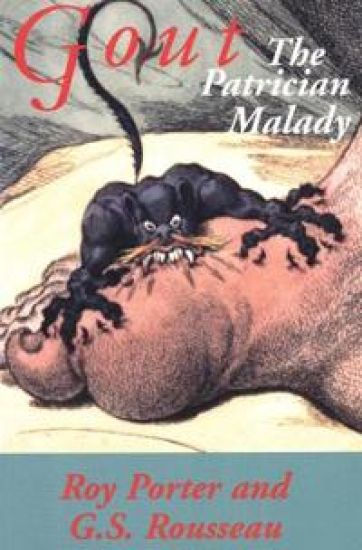
Gout has fascinated medical writers and cultural commentators from the time of ancient Greece. Historically seen as a disease afflicting upper-class males of superior wit, genius, and creativity, it has included among its sufferers Erasmus, the Medici, Edward Gibbon, Samuel Johnson, Immanuel Kant, and Robert Browning. Gout has also been the subject of powerful medical folklore, viewed as a disease that protects its sufferers and assures long life. This dazzlingly insightful and readable book investigates the history of gout and through it offers a new perspective on medical and social history, sex, prejudice, and class, and explains why gout was gender specific.
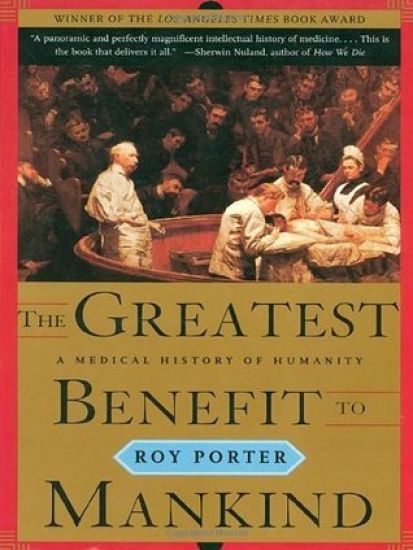
The Greatest Benefit to Mankind: A Medical History of Humanity
Roy Porter
W. W. Norton Company
1999
nidottu
Hailed as "a remarkable achievement" (Boston Globe) and as "a triumph: simultaneously entertaining and instructive, witty and thought-provoking...a splendid and thoroughly engrossing book" (Los Angeles Times), Roy Porter's charting of the history of medicine affords us an opportunity as never before to assess its culture and science and its costs and benefits to mankind. Porter explores medicine's evolution against the backdrop of the wider religious, scientific, philosophical, and political beliefs of the culture in which it develops, covering ground from the diseases of the hunter-gatherers to the more recent threats of AIDS and Ebola, from the clearly defined conviction of the Hippocratic oath to the muddy ethical dilemmas of modern-day medicine. Offering up a treasure trove of historical surprises along the way, this book "has instantly become the standard single-volume work in its field" (The Lancet).
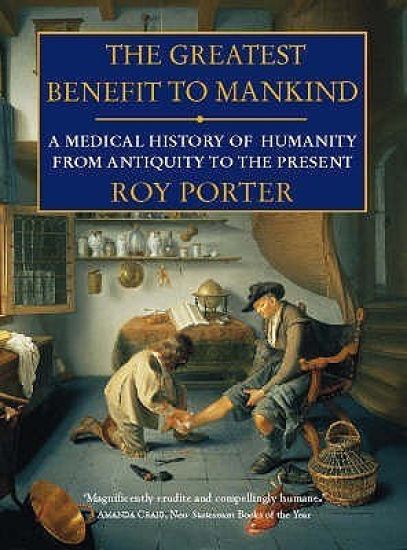
Medicine advances ever faster, and with it not just a capacity to overcome sickness, but to transform the very nature of life. Starting in ancient times, this text charts how this health revolution came about and how life for human beings in the West has ceased to be "nasty, brutish and short".

The History of Bethlem
Jonathan Andrews; Asa Briggs; Roy Porter; Penny Tucker; Keir Waddington
Routledge
1997
sidottu
Bethlem Hospital, popularly known as "Bedlam", is a unique institution. Now seven hundred and fifty years old, it has been continuously involved in the care of the mentally ill in London since at least the 1400s. As such it has a strong claim to be the oldest foundation in Europe with an unbroken history of sheltering and treating the mentally disturbed. During this time, Bethlem has transcended locality to become not only a national and international institution, but in many ways, a cultural and literary myth.The History of Bethlem is a scholarly history of this key establishment by distinguished authors, including Asa Briggs and Roy Porter. Based upon extensive research of the hospital's archives, the book looks at Bethlem's role within the caring institutions of London and Britain, and provides a long overdue re-evaluation of its place in the history of psychiatry.
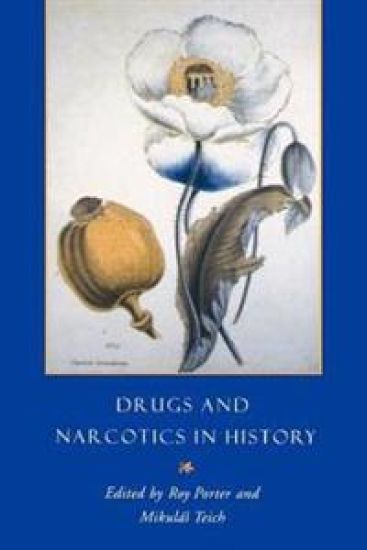
This collection of essays explores the complex and contested histories of drugs and narcotics in societies from ancient Greece to the present day. The Greek term pharmakon means both medicament and poison. The book shows how this verbal ambivalence encapsulates the ambiguity of man’s use of chemically-active substances over the centuries to diminish pain, fight disease, and correct behaviour. It shows that the major substances so used, from herbs of the field to laboratory-produced synthetic medicines, have a healing potential, and have been widely employed both within and outside the medical profession. The boundary lines between use and abuse in society have been powerfully contested, while ‘alternative’ medicine has often sought to develop milder, purer, or more natural drugs. Clearly, these issues remain unresolved today: some highly addictive and dangerous substances such as cigarettes remain freely available, others are available only on prescription, while others are illegal and the objects of international contraband trade and the targets of ‘drugs wars’.

Upplysningen på 1700-talet är en av de mest spännande och viktiga strömmarna i europeisk kultur. I kamp mot tyranni, okunnighet och vidskepelse formulerade den ideal som än i dag bygger under vårt samhälle: en tro på förnuft, kritik, tankefrihet, religions- och yttrandefrihet, vetenskapens värde, kampen för framåtskridande. Upplysningstänkarna undergrävde l?ancien régime och försåg franska revolutionen med dess idéer. Likväl var upplysningen inte en enkel ensartad rörelse. Som nyare forskning visat skilde sig dess ledande gestalter ? tänkare som Voltaire, Diderot, Hume, Rousseau och Kant ? mycket från varandra. Vad som stod i förgrunden växlade under seklets gång. Och upplysningens religiösa synsätt och politiska fältrop skilde sig från land till land. Inte heller kan den alltför glättiga bilden av upplysningen godtas längre. Upplysningen hade sin mörka sida, den understödde många gånger despotin och föraktade massorna. Och den hyste tvivel på sin förmåga: medförde civilisationen verkligen äkta framsteg? Eller borde vi försöka återuppväcka naturtillståndet? Upplysningen - en introduktion utforskar utifrån en upplysningsvänlig inställning all den sammansatthet som upplysningen bar på. Den sammanfattar och utvärderar den moderna och aktuella forskningen och ger en ny och heltäckande bild av denna mångskiftande rörelse.

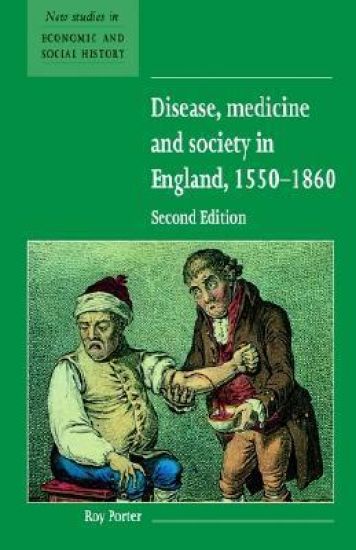
Disease, Medicine and Society in England, 1550–1860
Roy Porter
Cambridge University Press
1995
pokkari
In his short but authoritative study, Roy Porter examines the impact of disease upon the English and their responses to it before the widespread availability and public provision of medical care. Professor Porter incorporates into the revised second edition new perspectives offered by recent research into provincial medical history, the history of childbirth, and women’s studies in the social history of medicine. He begins by sketching a picture of the threats posed by disease to population levels and social continuity from Tudor times to the Industrial Revolution, going on to consider the nature and development of the medical profession, attitudes to doctors and disease, and the growing commitment of the state to public health. Drawing together a wide range of often fragmentary material, and providing a detailed annotated bibliography, this book is an important guide to the history of medicine and to English social history.
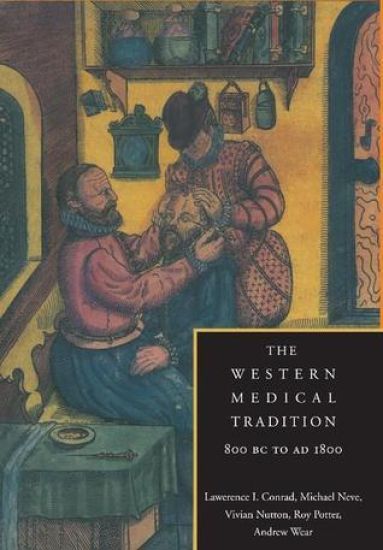
The Western Medical Tradition
Lawrence I. Conrad; Michael Neve; Vivian Nutton; Roy Porter; Andrew Wear
Cambridge University Press
1995
pokkari
This text, written by members of the Wellcome Institute for the History of Medicine, is designed to cover the history of western medicine from classical antiquity to 1800. As one guiding thread it takes, as its title suggests, the system of medical ideas that in large part went back to the Greeks of the eighth century BC, and played a major role in the understanding and treatment of health and disease. Its influence spread from the Aegean basin to the rest of the Mediterranean region, to Europe, and then to European settlements overseas. By the nineteenth century, however, this tradition no longer carried the same force or occupied so central a position within medicine. This book charts the influence of this tradition, examining it in its social and historical context. It is essential reading as a new synthesis for all students of the history of medicine.
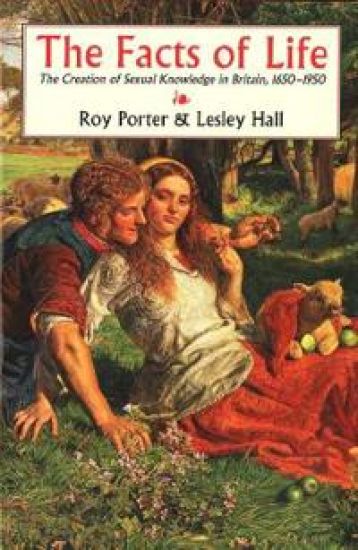
This remarkable book traces the development of sexual knowledge and guidance in Britain over three centuries. An absorbing, shocking, and often moving narrative, it investigates how views on sexual activities, sexual disorders, sexual pleasures, and sexual proprieties evolved through the years.Roy Porter and Lesley Hall explore the moral, religious, scientific, medical, domestic, social, and cultural backgrounds of various periods in which sexual information was received. They assess, for example, the impact of literature on sex on the legal regulation of prostitution, the control of contagious diseases, gender relations in and out of marriage, social purity movements, and social hygiene concerns. They describe the emergence of evolutionist and laboratory discourses on sexuality, the origins of sexual surveys, debates about marriage and free love, and associated revelations of personal sexual experiences.Examining texts that range from Nicolas Venette's Mysteries of Conjugal Love Reveal'd, written near the close of the seventeenth century, to Marie Stopes's Married Love, a famous tract of the twentieth century, Porter and Hall show how these texts established and authorized sexual knowledge and sexual practices. They describe the authors of these texts, their careers, and the motives for involvement in medico-moral campaigns that were often thought unsavory and commonly led to criticism and censure.Challenging and overturning common assumptions and historiographical traditions—from hoary myths of the Victorians to the work of Michel Foucault—the book adds a great deal to our understanding of the origins of sexual mores and knowledge.


The Renaissance in National Context
Roy Porter; Mikulas Teich
Cambridge University Press
1991
sidottu
The Renaissance in National Context aims to dispel the commonly-held view that the great efflorescence of art, learning and culture in the period from c. 1350 to 1550 was solely or even primarily an Italian phenomenon. These essays address the development of art, literacy and humanism across the length and breadth of Europe, showing that the Renaissance had many sources independent of Italy, meeting numerous local needs, and serving diverse local functions, specific to the political, economic, social and religious climates of various regions and principalities. The authors show that though the Renaissance was in a fashion backward-looking, recovering the culture of antiquity, it nevertheless served as the springboard for many specifically modern developments, including the rise of diplomacy, education, printing, nationalism, and the "new science."
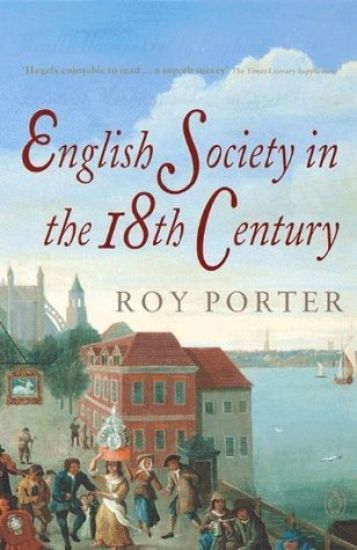
A portrait of 18th century England, from its princes to its paupers, from its metropolis to its smallest hamlet. The topics covered include - diet, housing, prisons, rural festivals, bordellos, plays, paintings, and work and wages.
Pre-modern society was overshadowed by illness and the threat of death. This outstanding new book examines what people did when they fell sick in Britain between 1650 - 1850. The authors investigate the well-established and flourishing tradition of self-medication, as practised by individuals, within the family and in the wider community. They look at what kinds of medical services could be obtained, both from the regular profession and among quacks and other healers. Above all they explore the personal and sociological bonds developed between patients and their doctors, examining in particular the economic and ethical dimensions of this privileged but precarious relationship. What precisely did doctors have to offer the sick in an age before scientific medicine could promise near-certain cures? This fundamental question is analysed against the background of the cultural and religious attitudes of Enlightenment England and in the context of the development of the medical profession. Drawing on the letters, journals and autobiographies of individual sufferers and from the papers of doctors, this remarkable investigation opens up new issues and offers interpretations which will certainly stimulate controversy among historians, anthropologists and sociologists and lead the way to further research in this area.