Kirjojen hintavertailu. Mukana 12 657 676 kirjaa ja 12 kauppaa.

Kirjailija

Roy Scranton

Kirjat ja teokset yhdessä paikassa: 11 kirjaa, julkaisuja vuosilta 2013-2025, suosituimpien joukossa Att lära sig dö i antropocen : reflektioner över en civilisations slut. Vertaile teosten hintoja ja tarkista saatavuus suomalaisista kirjakaupoista.

11 kirjaa

Kirjojen julkaisuhaarukka 2013-2025.

Impasse

Impasse

Roy Scranton

STANFORD UNIVERSITY PRESS
2025
sidottu
We need a new realism in the face of global climate catastrophe. Extreme heat, fires, floods, and storms are transforming our planet. Yet instead of serious responses from world leaders, we get increasing emissions, divisive politics, and ersatz solutions that offer more of the same: more capitalism, more complexity, more "progress." The impasse we face is not only political and institutional, but cognitive, existential, and narrative. We're incapable of grasping the scale, speed, and impact of global warming. Our brains can't make sense of how radically our world is changing. And we optimistically cling to a civilizational narrative that promises a better tomorrow if we just keep doing what we're doing. It's well past time, Roy Scranton argues, to free ourselves from our dangerous and dogmatic faith in progress. Such unwarranted optimism will only accelerate our collective disintegration. If we want to have any hope at all for the future, it must be grounded in a recognition of human limits—a view Scranton calls ethical pessimism. Drawing from psychology, philosophy, history, and politics, as well as film, literature, and personal experience, Scranton describes the challenges we face in making sense of our predicament, from problems in communication to questions of justice, from the inherent biases in human perception to the difficulties of empirical knowledge. What emerges is a challenging but ultimately hopeful proposition: if we have the courage to accept our limits, we may find a way to embrace our unknowable future.
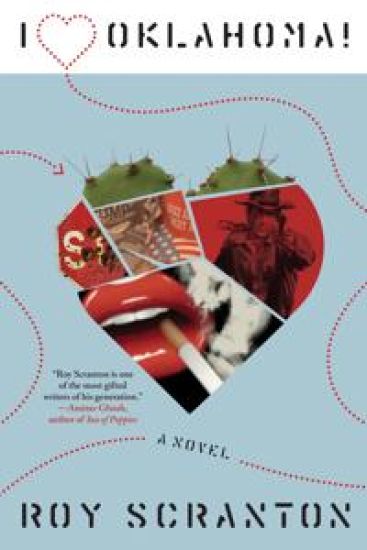
I Heart Oklahoma

I Heart Oklahoma

Roy Scranton

Soho Press
2021
nidottu
Roy Scranton, controversial and critically-acclaimed, brings us a formally daring road trip into the heart of present-day America. Suzie's seen it all, but now she's looking for something she lost: a sense of the future. So when the chance comes to work with a maverick video artist on his road movie about Donald Trump's America, she's pretty sure it's a bad idea but she signs up anyway, hoping for an outside shot at starting over. A provocative, genderqueer, shapeshifting musical romp through the brain-eating nightmare of contemporary America, I Heart Oklahoma is a book about art, guns, cars, American landscapes, and American history. This kaleidoscopic novel moves from our bleeding-edge present to a furious Faulknerian retelling of the Charlie Starkweather killings in the 1950s, capturing in its fragmented, mesmerizing form the violence at the heart of the American dream.
Total Mobilization

Total Mobilization

Roy Scranton

University of Chicago Press
2019
sidottu
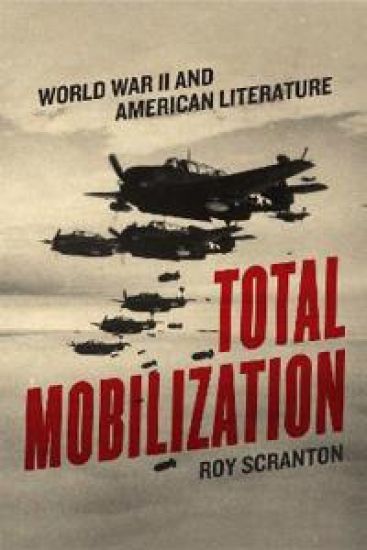
Since World War II, the story of the trauma hero--the noble white man psychologically wounded by his encounter with violence--has become omnipresent in America's narratives of war, an imaginary solution to the contradictions of American political hegemony. In Total Mobilization, Roy Scranton cuts through the fog of trauma that obscures World War II, uncovering a lost history and reframing the way we talk about war today. Considering often overlooked works by James Jones, Wallace Stevens, Martha Gellhorn, and others, alongside cartoons and films, Scranton investigates the role of the hero in industrial wartime, showing how such writers struggled to make sense of problems that continue to plague us today: the limits of American power, the dangers of political polarization, and the conflicts between nationalism and liberalism. By turning our attention to the ways we make war meaningful--and by excavating the politics implicit within the myth of the traumatized hero--Total Mobilization revises the way we understand not only World War II, but all of postwar American culture.
Total Mobilization

Total Mobilization

Roy Scranton

University of Chicago Press
2019
pokkari
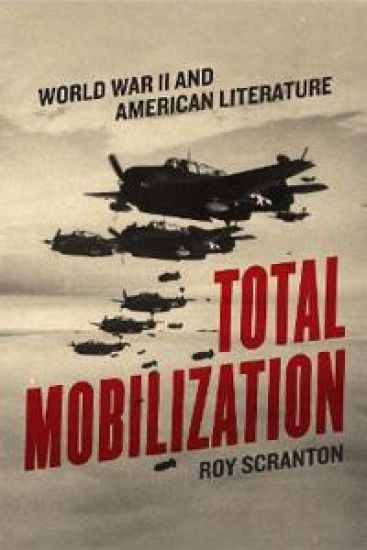
Since World War II, the story of the trauma hero--the noble white man psychologically wounded by his encounter with violence--has become omnipresent in America's narratives of war, an imaginary solution to the contradictions of American political hegemony. In Total Mobilization, Roy Scranton cuts through the fog of trauma that obscures World War II, uncovering a lost history and reframing the way we talk about war today. Considering often overlooked works by James Jones, Wallace Stevens, Martha Gellhorn, and others, alongside cartoons and films, Scranton investigates the role of the hero in industrial wartime, showing how such writers struggled to make sense of problems that continue to plague us today: the limits of American power, the dangers of political polarization, and the conflicts between nationalism and liberalism. By turning our attention to the ways we make war meaningful--and by excavating the politics implicit within the myth of the traumatized hero--Total Mobilization revises the way we understand not only World War II, but all of postwar American culture.
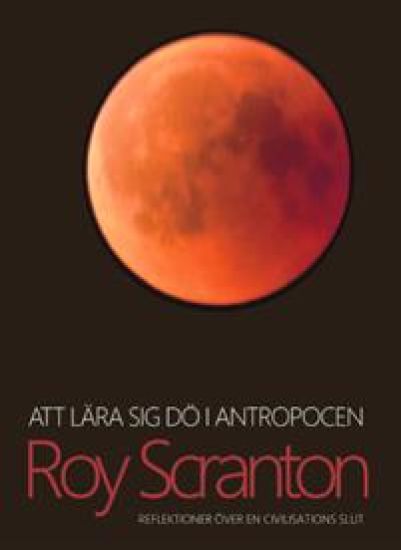
Att lära sig dö i antropocen : reflektioner över en civilisations slut
Vi är körda. Haven stiger, temperaturen ökar och extrema väder äventyrar såväl den globala infrastrukturen som skördar och tillgången till vatten. Klimatförändringar orsakade av människor hotar inte bara den politiska och ekonomiska stabiliteten utan själva civilisationen. Den kaotiska tidsålder vi nu lever i, antropocen, kräver en radikalt ny vision för mänskligheten.
We're Doomed. Now What?

We're Doomed. Now What?

Roy Scranton

Soho Press Inc
2018
nidottu
An American Orwell for the age of Trump, Roy Scranton faces the unpleasant facts of our day with fierce insight and honesty. We're Doomed. Now What? penetrates to the very heart of our time. Our moment is one of alarming and bewildering change--the breakup of the post-1945 global order, a multispecies mass extinction, and the beginning of the end of civilization as we know it. Not one of us is innocent, not one of us is safe. Now what? We're Doomed. Now What? addresses the crisis that is our time through a series of brilliant, moving, and original essays on climate change, war, literature, and loss, from one of the most provocative and iconoclastic minds of his generation. Whether writing about sailing through the melting Arctic, preparing for Houston's next big storm, watching Star Wars, or going back to the streets of Baghdad he once patrolled as a soldier, Roy Scranton handles his subjects with the same electric, philosophical, demotic touch that he brought to his groundbreaking New York Times essay, "Learning How to Die in the Anthropocene."
War Porn

War Porn

Roy Scranton

Soho Press Inc
2017
nidottu
"One of the best and most disturbing war novels in years." --The Wall Street Journal "War porn," n. Videos, images, and narratives featuring graphic violence, often brought back from combat zones, viewed voyeuristically or for emotional gratification. Such media are often presented and circulated without context, though they may be used as evidence of war crimes. War porn is also, in Roy Scranton's searing debut novel, a metaphor for the experience of war in the age of the War on Terror, the fracturing and fragmentation of perspective, time, and self that afflicts soldiers and civilians alike, the global networks and face-to-face moments that suture our fragmented lives together. In War Porn three lives fit inside one another like nesting dolls: a restless young woman at an end-of-summer barbecue in Utah; an American soldier in occupied Baghdad; and Qasim al-Zabadi, an Iraqi math professor, who faces the US invasion of his country with fear, denial, and perseverance. As War Porn cuts from America to Iraq and back again, as home and hell merge, we come to see America through the eyes of the occupied, even as we see Qasim become a prisoner of the occupation. Through the looking glass of War Porn, Scranton reveals the fragile humanity that connects Americans and Iraqis, torturers and the tortured, victors and their victims.
Learning to Die in the Anthropocene: Reflections on the End of a Civilization
Coming home from the war in Iraq, US Army private Roy Scranton thought he'd left the world of strife behind. Then he watched as new calamities struck America, heralding a threat far more dangerous than ISIS or al-Qaeda: Hurricane Katrina, Superstorm Sandy, megadrought - the shock and awe of global warming. Our world is changing. Rising seas, spiking temperatures, and extreme weather imperil global infrastructure, crops, and water supplies. Conflict, famine, plagues, and riots menace from every quarter. From war-stricken Baghdad to the melting Arctic, human-caused climate change poses a danger not only to political and economic stability but to civilization itself...and to what it means to be human. Our greatest enemy, it turns out, is ourselves. The warmer, wetter, more chaotic world we now live in - the Anthropocene - demands a radical new vision of human life. In this bracing response to climate change, Roy Scranton combines memoir, reportage, philosophy, and Zen wisdom to explore what it means to be human in a rapidly evolving world, taking listeners on a journey through street protests, the latest findings of earth scientists, a historic UN summit, millennia of geological history, and the persistent vitality of ancient literature. Expanding on his influential New York Times essay (the number-one most-emailed article the day it appeared, and selected for Best American Science and Nature Writing 2014), Scranton responds to the existential problem of global warming by arguing that in order to survive, we must come to terms with our mortality. Plato argued that to philosophize is to learn to die. If that's true, says Scranton, then we have entered humanity's most philosophical age - for this is precisely the problem of the Anthropocene. The trouble now is that we must learn to die not as individuals but as a civilization. Roy Scranton has published in The New York Times, The Wall Street Journal, Rolling Stone, Boston Review, and Theory and Event and has been interviewed on NPR's Fresh Air, among other media.
Learning to Die in the Anthropocene

Learning to Die in the Anthropocene

Roy Scranton

City Lights Books
2015
pokkari
"In Learning to Die in the Anthropocene, Roy Scranton draws on his experiences in Iraq to confront the grim realities of climate change. The result is a fierce and provocative book."--Elizabeth Kolbert, Pulitzer Prize-winning author of The Sixth Extinction: An Unnatural History "Roy Scranton's Learning to Die in the Anthropocene presents, without extraneous bullshit, what we must do to survive on Earth. It's a powerful, useful, and ultimately hopeful book that more than any other I've read has the ability to change people's minds and create change. For me, it crystallizes and expresses what I've been thinking about and trying to get a grasp on. The economical way it does so, with such clarity, sets the book apart from most others on the subject."--Jeff VanderMeer, author of the Southern Reach trilogy "Roy Scranton lucidly articulates the depth of the climate crisis with an honesty that is all too rare, then calls for a reimagined humanism that will help us meet our stormy future with as much decency as we can muster. While I don't share his conclusions about the potential for social movements to drive ambitious mitigation, this is a wise and important challenge from an elegant writer and original thinker. A critical intervention."--Naomi Klein, author of This Changes Everything: Capitalism vs. the Climate "Concise, elegant, erudite, heartfelt & wise."--Amitav Ghosh, author of Flood of Fire "War veteran and journalist Roy Scranton combines memoir, philosophy, and science writing to craft one of the definitive documents of the modern era."--The Believer Best Books of 2015 Coming home from the war in Iraq, US Army private Roy Scranton thought he'd left the world of strife behind. Then he watched as new calamities struck America, heralding a threat far more dangerous than ISIS or Al Qaeda: Hurricane Katrina, Superstorm Sandy, megadrought--the shock and awe of global warming. Our world is changing. Rising seas, spiking temperatures, and extreme weather imperil global infrastructure, crops, and water supplies. Conflict, famine, plagues, and riots menace from every quarter. From war-stricken Baghdad to the melting Arctic, human-caused climate change poses a danger not only to political and economic stability, but to civilization itself ...and to what it means to be human. Our greatest enemy, it turns out, is ourselves. The warmer, wetter, more chaotic world we now live in--the Anthropocene--demands a radical new vision of human life. In this bracing response to climate change, Roy Scranton combines memoir, reportage, philosophy, and Zen wisdom to explore what it means to be human in a rapidly evolving world, taking readers on a journey through street protests, the latest findings of earth scientists, a historic UN summit, millennia of geological history, and the persistent vitality of ancient literature. Expanding on his influential New York Times essay (the #1 most-emailed article the day it appeared, and selected for Best American Science and Nature Writing 2014), Scranton responds to the existential problem of global warming by arguing that in order to survive, we must come to terms with our mortality. Plato argued that to philosophize is to learn to die. If that's true, says Scranton, then we have entered humanity's most philosophical age--for this is precisely the problem of the Anthropocene. The trouble now is that we must learn to die not as individuals, but as a civilization. Roy Scranton has published in the New York Times, Wall Street Journal, Rolling Stone, Boston Review, and Theory and Event, and has been interviewed on NPR's Fresh Air, among other media.
Fire and Forget

Fire and Forget

Matt Gallagher; Roy Scranton; Colum McCann; Siobhan Fallon; Colby Buzzell; Brian Turner

Da Capo Press Inc
2013
pokkari
Fire and Forget includes the title story from Redeployment by Phil Klay, 2014 National Book Award Winner in FictionThese stories aren't pretty and they aren't for the faint of heart. They are realistic, haunting and shocking. And they are all unforgettable. Television reports, movies, newspapers and blogs about the wars in Iraq and Afghanistan have offered images of the fighting there. But this collection offers voices- powerful voices, telling the kind of truth that only fiction can offer.What makes the collection so remarkable is that all of these stories are written by those who were there, or waited for them at home. The anthology, which features a Foreword by National Book Award winner Colum McCann, includes the best voices of the wars' generation: award-winning author Phil Klay's Redeployment" Brian Turner, whose poem Hurt Locker" was the movie's inspiration Colby Buzzell, whose book My War resonates with countless veterans Siobhan Fallon, whose book You Know When the Men Are Gone echoes the joy and pain of the spouses left behind Matt Gallagher, whose book Kaboom captures the hilarity and horror of the modern military experience and ten others.