Kirjojen hintavertailu. Mukana 12 152 606 kirjaa ja 12 kauppaa.

Kirjailija

Rubén Gallo

Kirjat ja teokset yhdessä paikassa: 5 kirjaa, julkaisuja vuosilta 2004-2023, suosituimpien joukossa Conversation at Princeton. Vertaile teosten hintoja ja tarkista saatavuus suomalaisista kirjakaupoista.

Mukana myös kirjoitusasut: Ruben Gallo

5 kirjaa

Kirjojen julkaisuhaarukka 2004-2023.

Conversation at Princeton

Conversation at Princeton

Mario Vargas Llosa; Rubén Gallo

Farrar, Straus and Giroux
2023
sidottu
A series of conversations held at Princeton University between the Nobel laureate Mario Vargas Llosa and Rub n Gallo. Princeton University, 2015. For one semester, Mario Vargas Llosa taught a course on literature and politics with Rub n Gallo. Over several classes, the two writers spoke to students about the theory of the novel and the relationship between journalism, politics, and literature through five beloved books by the Nobel laureate: Conversation in The Cathedral, The Real Life of Alejandro Mayta, Who Killed Palomino Molero?, A Fish in the Water, and The Feast of the Goat. Conversation at Princeton records these exhilarating discussions and captures the three complementary perspectives that converged in the classroom: that of Vargas Llosa, who reveals the creative process behind his novels; that of Rub n Gallo, who analyzes the different meanings the works took on after their publication; and that of the students, whose reflections and questions give voice to the responses of millions of Vargas Llosa's readers. During these talks, Vargas Llosa not only speaks with intelligence and lucidity about the craft of writing, but also offers an absorbing, inquisitive analysis of today's political and cultural landscape. Conversation at Princeton is a singular opportunity to attend a unique master class on literature and society taught by one of our greatest writers and thinkers.
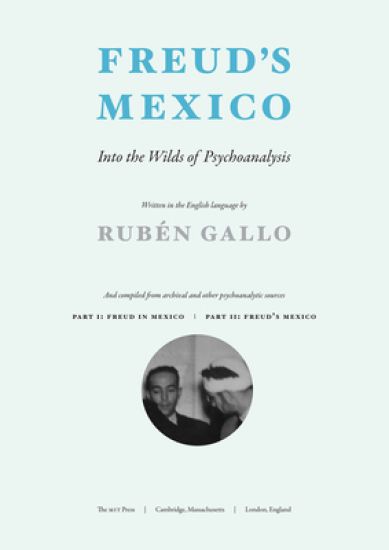
Freud's Mexico

Freud's Mexico

Rubén Gallo

MIT Press
2015
pokkari
Freud's Mexican disciples, Mexican books, Mexican antiquities, and Mexican dreams.Freud's Mexico is a completely unexpected contribution to Freud studies. Here, Ruben Gallo reveals Freud's previously undisclosed connections to a culture and a psychoanalytic tradition not often associated with him. This book bears detailed testimony to Freud's relationship to a country he never set foot in, but inhabited imaginatively on many levels.In the Mexico of the 1920s and 1930s, Freud made an impact not only among psychiatrists but also in literary, artistic, and political circles. Gallo writes about a "motley crew" of Freud's readers who devised some of the most original, elaborate, and influential applications of psychoanalytic theory anywhere in the world. After describing Mexico's Freud, Gallo offers an imaginative reconstruction of Freud's Mexico: Freud owned a treatise on criminal law by a Mexican judge who put defendants-including Trotsky's assassin-on the psychoanalyst's couch; he acquired Mexican pieces as part of his celebrated collection of antiquities; he recorded dreams of a Mexico that was fraught with danger; and he belonged to a secret society that conducted its affairs in Spanish.
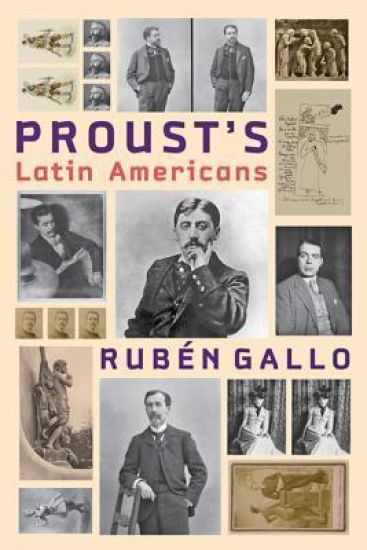
Proust's Latin Americans

Proust's Latin Americans

Rubén Gallo

Johns Hopkins University Press
2014
sidottu
Part biography, part cultural history, part literary study, Ruben Gallo's book explores the presence of Latin America in Proust's life and work. The novelist lived in an era shaped by French colonial expansion into the Americas: just before his birth, Napoleon III installed Maximilian as emperor of Mexico, and during the 1890s France was shaken by the Panama Affair, a financial scandal linked to the construction of the canal in which thousands of French citizens lost their life savings. It was in the context of these tense Franco-Latin American relations that the novelist met the circle of friends discussed in Proust's Latin Americans: the composer Reynaldo Hahn, Proust's Venezuelan lover; Gabriel de Yturri, an Argentinean dandy; Jose-Maria de Heredia, a Cuban poet and early literary model; Antonio de La Gandara, a Mexican society painter; and Ramon Fernandez, a brilliant Mexican critic turned Nazi sympathizer. Gallo discusses the correspondence - some of it never before published - between the novelist and this heterogeneous group and also presents insightful readings of In Search of Lost Time that posit Latin America as the novel's political unconscious. Proust's speculation with Mexican stocks informed his various fictional passages devoted to financial transactions, and the Panama Affair shaped his understanding of the conquest of America in a little-known early text. Proust's Latin Americans will be of interest to scholars of modernism, French literature, Proust studies, gender studies, and Latin American studies.
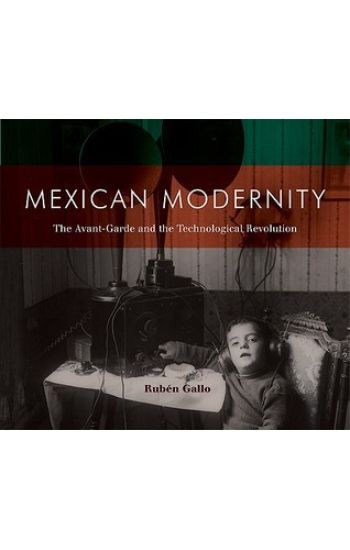
Mexican Modernity

Mexican Modernity

Rubén Gallo

MIT Press
2010
pokkari
A secret history of Mexican modernity told through five artifacts-cameras, typewriters, radio, cement, stadiums-and the radical transformation of art and literature they brought about in the 1920s and 1930s.In Mexican Modernity, Ruben Gallo tells the story of a second Mexican Revolution, a battle fought on the front of cultural representation. The new revolutionaries were not rebels or outlaws but artists and writers; their weapons were cameras, typewriters, radios, and other technological artifacts, and their goal was not to topple a dictator but to dethrone nineteenth-century aesthetics. Gallo tells the story of this other revolution by focusing on five artifacts that left a deep mark on the literature and the arts of the 1920s and 1930s: the camera and its novel techniques for seeing the modern world; the typewriter and its mechanization of literary aesthetics; radio and poetic experiments with wireless communication; cement architecture and its celebration of functional internationalism; and the stadium and its deployment as a mass medium for political spectacle.Gallo traces the ways artists and writers, armed with these artifacts, revolutionized representation by breaking with the traditional modes of production that had dominated Mexican cultural practices: Tina Modotti rose against the conventions of "artistic" photography by promoting a radically modern photographic aesthetics; typewriting authors rejected the literary precepts of modernismo to celebrate the stridencies of mechanical writing; and young architects abandoned older building materials for the symbolic strength of reinforced concrete.Gallo uncovers a secret history of Mexican modernity that includes a number of fascinating episodes: the pictorialist backlash against Modotti and Edward Weston; the postcolonial Remingtont typewriter; Mexican radio in the North Pole; the campaign to aestheticize cement through journals and artistic competitions; and the protofascist political spectacles held at Mexico City's National Stadium in the 1920s.
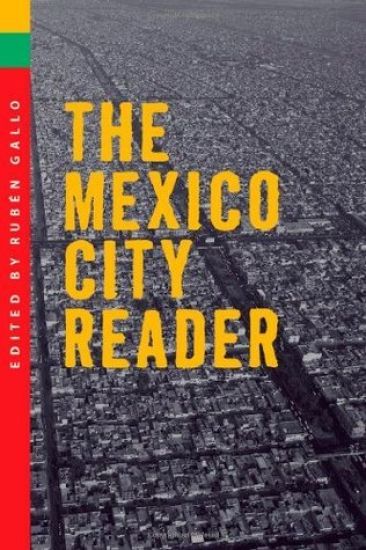
The Mexico City Reader

The Mexico City Reader

Ruben Gallo

University of Wisconsin Press
2004
nidottu
The Mexico City Reader is an anthology of ""cronicas"" - short texts that are a cross between literary essay and urban reportage - about life in Mexico City today. This is not the ""City of Palaces"" of yesteryear, but the vibrant, chaotic, anarchic city of the 1980s and 1990s - the city of garbage mafias, corrupt ex-presidents, and spectacular crime. Taken together in all their variety, these texts form a mosiac of life in Mexico City. Like the visitor wandering through the city streets, the reader should expect to be constantly surprised. Mexico City is one of Latin America's cultural capitals, and one of the most vibrant urban spaces in the world. Like the streets of the city, The Mexico City Reader is brimming with life, crowded with flaneurs, flirtatious students, Indian dancers, food vendors, fortune tellers, political activists, and peasant protesters. The writers include expert theorists - a panoply of writers from Carlos Monsivais and Jorge Ibaguengoitia to Fabrizio Mejia Madrid and Juieta Garcia Gonzalez - brought together precisely because they are experienced practitioners of the city.