Kirjojen hintavertailu. Mukana 12 495 367 kirjaa ja 12 kauppaa.

Kirjailija

Rui Diogo

Kirjat ja teokset yhdessä paikassa: 28 kirjaa, julkaisuja vuosilta 2004-2025, suosituimpien joukossa Muscular and Skeletal Anomalies in Human Trisomy in an Evo-Devo Context. Vertaile teosten hintoja ja tarkista saatavuus suomalaisista kirjakaupoista.

28 kirjaa

Kirjojen julkaisuhaarukka 2004-2025.

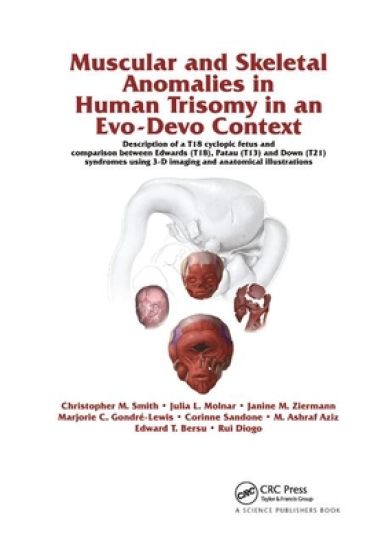
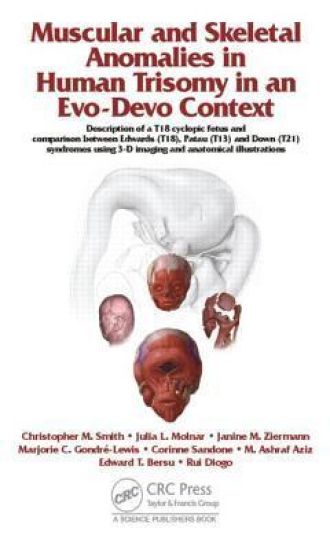
Muscular and Skeletal Anomalies in Human Trisomy in an Evo-Devo Context

Muscular and Skeletal Anomalies in Human Trisomy in an Evo-Devo Context

Rui Diogo; Christopher M. Smith; Janine M. Ziermann; Julia Molnar; Marjorie C. Gondre-Lewis; Corinne Sandone; Edward T. Bersu; Mohammed Ashraf Aziz

CRC Press
2019
nidottu
This book focuses on human anatomy and medicine and specifically on both muscular and skeletal birth defects in humans with trisomy. Moreover, this book also deals with Down syndrome, which is one of the most studied human syndromes and, due to its high incidence and the fact that individuals with this syndrome often live until adulthood, is of special interest to the scientific and medical community.This new line of inquiry is addressed to a wide audience, including medical researchers, physicians, surgeons, medical and dental students, pathologists, and pediatricians, among others, while also being of interest to developmental and evolutionary biologists, anatomists, functional morphologists, and zoologists.
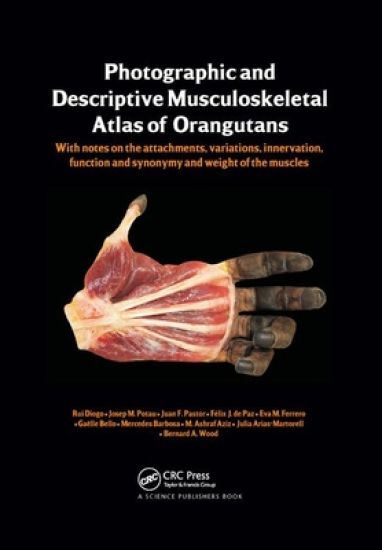
Photographic and Descriptive Musculoskeletal Atlas of Orangutans

Photographic and Descriptive Musculoskeletal Atlas of Orangutans

Rui Diogo; Josep M. Potau; Juan F. Pastor; Felix J. de Paz; Mercedes Barbosa; Eva M. Ferrero; Gaëlle Bello; Mohammed Ashraf Aziz; Julia Arias-Martorell; Bernard Wood

CRC Press
2019
nidottu
Orangutans, together with chimpanzees and gorillas, are our closest living relatives. Photographic and Descriptive Musculoskeletal Atlas of Orangutans, the first photographic and descriptive musculoskeletal atlas of the genus Pongo, adopts the same format as the photographic atlases of Gorilla, Pan and Hylobates previously published by the same authors. These four books are part of a series of monographs that will set out the comparative and phylogenetic context of the gross anatomy and evolutionary history of the soft tissue morphology of modern humans and their closest relatives. The present atlas, which includes detailed high-quality photographs of musculoskeletal structures from most anatomical regions of the body as well as textual information about the attachments, innervation, function and weight of the respective muscles, is based on dissections of five orangutans and on an extensive review of the literature. It provides an updated review of the anatomical variations within orangutans as well as an extensive list of the synonyms used in the literature to designate the structures we discuss. It will be of interest to students, teachers and researchers studying primatology, comparative anatomy, functional morphology, zoology, and physical anthropology and to medical students, doctors and researchers who are curious about the origin, evolution, homology and variations of the musculoskeletal structures of modern humans.
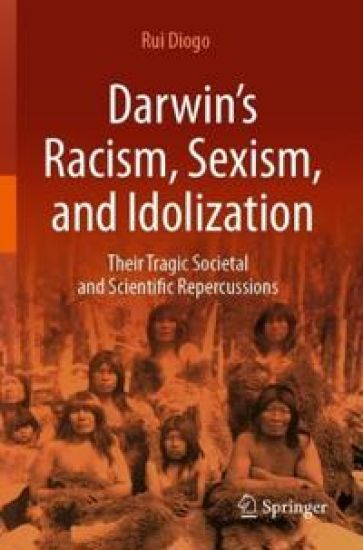
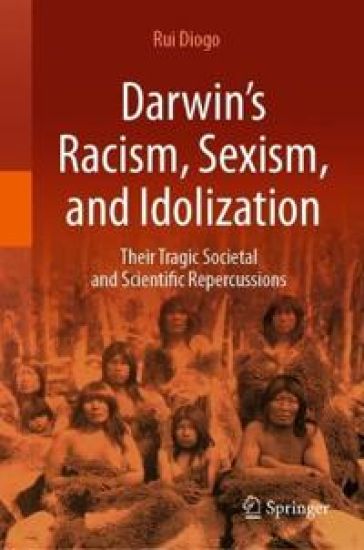
Darwin’s Racism, Sexism, and Idolization

Darwin’s Racism, Sexism, and Idolization

Rui Diogo

Springer International Publishing AG
2025
nidottu
In this book Diogo, a renowned biologist and anthropologist, addresses a question that is critical for the understanding of science, beliefs, idolization, systemic racism and sexism, and our societies in general: why has Darwin been idolized in such a unique way, particularly by Western scholars? Diogo shows that many evolutionary 'facts' stated in Darwin's works, particularly about human evolution, are inaccurate constructions based on Victorian biases and stereotypes: non-Europeans are inferior, women have a lower intelligence than men, Victorian society was the pinnacle of evolution, and so on. Importantly, such inaccurate biased statements about our evolution are markedly in contrast with the mostly accurate, and often brilliant, ideas put forward by Darwin concerning non-human organisms. Importantly, it was precisely the combination of such brilliant ideas, the use of simplistic and sometimes exaggerated metaphors that were catchy and easily absorbed by the general public, and Darwin's intellectual conservatism and biased ideas about women and non-European peoples that led to Darwin's idolization, particularly by Western scientists, as well as to the darkest societal repercussions of his works. By portraying such biased ideas as “evolutionary facts”, Darwin provided easy ammunition for populist political leaders, authoritarians, colonialists, and white supremacists to 'scientifically' defend social hierarchies, sexism, racism, discrimination, oppression, and segregation. A typical argument used to defend Darwin from portraying such erroneous sexist and racist ideas as “facts” is that ‘back then’ everybody was racist and sexist. Diogo deconstructs this argument by providing enthralling case studies and travel descriptions by authors such as Wallace and Humboldt, who often praised the indigenous peoples that repulsed - and criticized the social hierarchies and Western imperialism that marveled - Darwin. The aim of this book is therefore not to 'cancel' Darwin orargue that he was always wrong: not at all, in general he was an extraordinary biologist, but was a much less successful anthropologist due in great part to his Victorian biases. Instead, the book discusses Darwin's writings, ideas, and their repercussions in a broader way, without taboos, omissions, idolization or demonization in order to show Darwin, and science in general, in all their complexity. This is because, if we fail to acknowledge and emphasize the biases, prejudices, inaccuracies, and abuses of our past, and merely continue to blindly idealize it, our kids will be condemned to undertake or suffer similar societal abuses in the future.
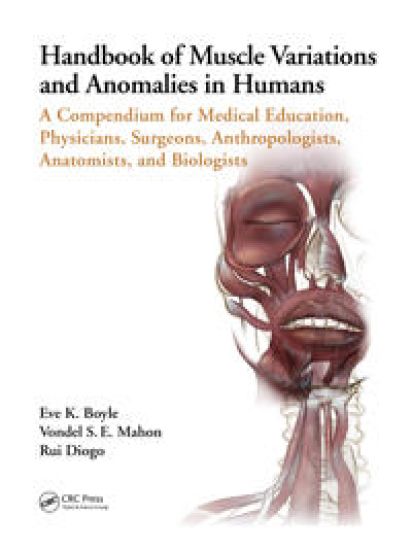
Handbook of Muscle Variations and Anomalies in Humans

Handbook of Muscle Variations and Anomalies in Humans

Eve K. Boyle; Vondel S. E. Mahon; Rui Diogo

TAYLOR FRANCIS LTD
2024
nidottu
Most textbooks and atlases of human anatomy chronicle only a few cases of muscle variations in the "normal" human population, or of muscle anomalies within congenital malformations. Consequently, there is a misconception of what is considered "normal" human anatomy and what that looks like. Each person within the "normal" population has at least a few muscle variations, and there are millions of individuals born globally each year with muscle anomalies. There are crucial knowledge gaps between what is taught, what students learn, what textbooks and atlases show, and what truly happens in nature and within our species. This handbook fills this gap by: 1) providing a comparative evolutionary context for muscle variations and defects in humans, 2) summarizing the major types of variations and anomalies found in humans, and 3) including didactic figures for a visually engaging learning experience. This book is of interest to students, professors, and researchers in biological anthropology, comparative anatomy, functional morphology, zoology, and evolutionary and developmental biology, as well as to clinicians and practicing health professionals.Key Features Summarizes most recorded variations and anomalies for each muscle in the human body Provides information on the comparative anatomy of each muscle, including evolutionary differences from our closest living relatives, the apes Includes didactic illustrations of the variations and anomalies for a visually engaging learning experience Comprehensively reviews literature to document prevalence information for each variation and anomaly, within humansRelated TitlesBrown, D. E. Human Biological Diversity, 2nd ed. (ISBN 978-1-138-03753-3)Diogo, R., et al. Understanding Human Anatomy and Pathology: An Evolutionary and Developmental Guide for Medical Students (ISBN 978-1-4987-5384-5)Diogo, R. Muscles of Chordates: Development, Homologies, and Evolution (ISBN 978-1-138-57116-7)
Darwin’s Racism, Sexism, and Idolization

Darwin’s Racism, Sexism, and Idolization

Rui Diogo

Springer International Publishing AG
2024
sidottu
In this book Diogo, a renowned biologist and anthropologist, addresses a question that is critical for the understanding of science, beliefs, idolization, systemic racism and sexism, and our societies in general: why has Darwin been idolized in such a unique way, particularly by Western scholars? Diogo shows that many evolutionary 'facts' stated in Darwin's works, particularly about human evolution, are inaccurate constructions based on Victorian biases and stereotypes: non-Europeans are inferior, women have a lower intelligence than men, Victorian society was the pinnacle of evolution, and so on. Importantly, such inaccurate biased statements about our evolution are markedly in contrast with the mostly accurate, and often brilliant, ideas put forward by Darwin concerning non-human organisms. Importantly, it was precisely the combination of such brilliant ideas, the use of simplistic and sometimes exaggerated metaphors that were catchy and easily absorbed by the general public, and Darwin's intellectual conservatism and biased ideas about women and non-European peoples that led to Darwin's idolization, particularly by Western scientists, as well as to the darkest societal repercussions of his works. By portraying such biased ideas as “evolutionary facts”, Darwin provided easy ammunition for populist political leaders, authoritarians, colonialists, and white supremacists to 'scientifically' defend social hierarchies, sexism, racism, discrimination, oppression, and segregation. A typical argument used to defend Darwin from portraying such erroneous sexist and racist ideas as “facts” is that ‘back then’ everybody was racist and sexist. Diogo deconstructs this argument by providing enthralling case studies and travel descriptions by authors such as Wallace and Humboldt, who often praised the indigenous peoples that repulsed - and criticized the social hierarchies and Western imperialism that marveled - Darwin. The aim of this book is therefore not to 'cancel' Darwin orargue that he was always wrong: not at all, in general he was an extraordinary biologist, but was a much less successful anthropologist due in great part to his Victorian biases. Instead, the book discusses Darwin's writings, ideas, and their repercussions in a broader way, without taboos, omissions, idolization or demonization in order to show Darwin, and science in general, in all their complexity. This is because, if we fail to acknowledge and emphasize the biases, prejudices, inaccuracies, and abuses of our past, and merely continue to blindly idealize it, our kids will be condemned to undertake or suffer similar societal abuses in the future.
Handbook of Muscle Variations and Anomalies in Humans

Handbook of Muscle Variations and Anomalies in Humans

Eve K. Boyle; Vondel S. E. Mahon; Rui Diogo

TAYLOR FRANCIS LTD
2022
sidottu
Most textbooks and atlases of human anatomy chronicle only a few cases of muscle variations in the "normal" human population, or of muscle anomalies within congenital malformations. Consequently, there is a misconception of what is considered "normal" human anatomy and what that looks like. Each person within the "normal" population has at least a few muscle variations, and there are millions of individuals born globally each year with muscle anomalies. There are crucial knowledge gaps between what is taught, what students learn, what textbooks and atlases show, and what truly happens in nature and within our species. This handbook fills this gap by: 1) providing a comparative evolutionary context for muscle variations and defects in humans, 2) summarizing the major types of variations and anomalies found in humans, and 3) including didactic figures for a visually engaging learning experience. This book is of interest to students, professors, and researchers in biological anthropology, comparative anatomy, functional morphology, zoology, and evolutionary and developmental biology, as well as to clinicians and practicing health professionals.Key Features Summarizes most recorded variations and anomalies for each muscle in the human body Provides information on the comparative anatomy of each muscle, including evolutionary differences from our closest living relatives, the apes Includes didactic illustrations of the variations and anomalies for a visually engaging learning experience Comprehensively reviews literature to document prevalence information for each variation and anomaly, within humansRelated TitlesBrown, D. E. Human Biological Diversity, 2nd ed. (ISBN 978-1-138-03753-3)Diogo, R., et al. Understanding Human Anatomy and Pathology: An Evolutionary and Developmental Guide for Medical Students (ISBN 978-1-4987-5384-5)Diogo, R. Muscles of Chordates: Development, Homologies, and Evolution (ISBN 978-1-138-57116-7)
Meaning of Life, Human Nature, and Delusions

Meaning of Life, Human Nature, and Delusions

Rui Diogo

Springer International Publishing AG
2021
sidottu
Whatever are your beliefs, background, education, political views or interests, one thing is sure: this book will engage you, teach you something new, and more importantly make you to re-think deeply about critical aspects of your daily-life, including sex, love, food, physical activities, diseases, work and stress, and how you see and deal with other people, other animals, and the planet in general. Indeed, it focuses on topics that have fascinated people from all places and historical periods since times immemorial: Why are we here? What is the meaning of life? Are we progressing, and will we thrive? It does this by integrating in a unique fashion information from ancient Greek, Sumerian, Hindu, Jewish, Buddhist, Christian and Muslim texts to high-tech brain research, facts about near-death experiences, Covid-19, QAnon conspiracies, virtual reality and dating aps; from Adam and Eve to the rise of misogyny and racism to Black Lives Matter, Me-Too, Hollywood romantic movies andDisney fairy-tales. Contrary to notions about 'human progress' and 'Homo Deus' defended by authors such as Harari, Pinker and Dawkins, it shows that human history instead involves the repetition of similar imaginary tales created by a combination of traits found in other animals and the uniquely human obsession about 'cosmic purpose' stories related to our awareness of death's inevitability. Organized religions appeared later, chiefly during the rise of agriculture and 'civilizations'. Diogo navigates mesmerizing untold stories revealing a paradox: these events and the industrial 'revolution' increased inequality, oppression, slavery, subjugation of women, famines, plagues, 'work', stress, and suicides. Data from psychology, biology, neurobiology, and cross-cultural studies of hunter-gatherers and so-called 'developed' societies reveal an even more profound paradox: within all forms of life, the 'sapient being' is the one immersed in Neverland's world of unreality- truly a Homo irrationalis, fictus and socialis believing in fictional tales about cosmic 'duties', 'romantic meant to be', demons, inferior 'races' and 'genders', conspiracies, and 'justified' slavery, warfare, genocides, and animal abuses. Importantly, such tales play, on the other hand, crucial functions such as help coping with death and a plethora of societal troubles, decreasing stress, or preventing drug and alcohol abuse. An optimist and passionate wondered and wanderer, Diogo provides enthralling details about the history of religion, discrimination, romantic love, warfare, diseases and Earth's biodiversity illustrating how 'virtue is in the middle' and that we - with our intriguing combination of beliefs, bodily needs and desires, artistic abilities, and mismatches between our senses' illusions and the cosmos' reality - are not 'better' or 'worse' than the other millions of captivating living species. This powerful and urgently needed message has critical repercussions for how we understand, care about, and mindfully enjoy living in this splendid planet, in the reality of here and now.Pre-publication comments: "I applaud the enormous work that Diogo has invested in this follow-up to his widely acclaimed Evolution driven by organismal behavior book, and the challenge of getting people to think beyond and outside of our usual set of definitions and expectations. The case-studies provided in the book are fascinating and insightful" (Drew Noden, Award-winning Emeritus Professor, Cornell University)"Rui Diogo is becoming the Slavoj Zizek of evolutionary biology" (Marcelo Sanchez-Villagra, Director of the Paleontological Institute and Museum of the University of Zurich)
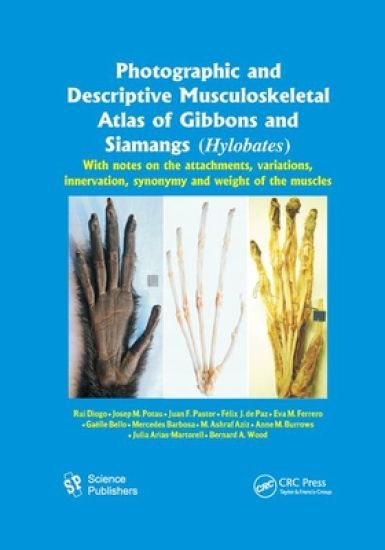
Photographic and Descriptive Musculoskeletal Atlas of Gibbons and Siamangs (Hylobates)

Photographic and Descriptive Musculoskeletal Atlas of Gibbons and Siamangs (Hylobates)

Rui Diogo; Josep M. Potau; Juan F. Pastor; Felix J. dePaz; Eva M. Ferrero; Gaelle Bello; Mercedes Barbosa; M. Ashraf Aziz; Anne M. Burrows; Julia Arias-Martorell; Bernard A. Wood

CRC Press
2019
nidottu
This book is the first photographic and descriptive musculoskeletal atlas of Hylobates, and adopts the same format as the photographic atlas of Gorilla published by the same authors in 2010. These two books are part of a series of monographs that will set out the comparative and phylogenetic context of the gross anatomy and evolutionary history of the soft tissue morphology of modern humans and their closest relatives. This atlas, which includes detailed high-quality photographs of musculoskeletal structures from most anatomical regions of the body as well as textual information about the attachments, innervation and weight of the respective muscles, is based on dissections and on an extensive review of the literature. It provides an updated review of the anatomical variations within hylobatids as well as an extensive list of the synonyms used in the literature to designate the structures we discuss. The atlas will be of interest to students, teachers and researchers studying primatology, comparative anatomy, functional morphology, zoology, and physical anthropology and to medical students, doctors and researchers who are curious about the origin, evolution, homology and variations of the musculoskeletal structures of modern humans.
Photographic and Descriptive Musculoskeletal Atlas of Chimpanzees

Photographic and Descriptive Musculoskeletal Atlas of Chimpanzees

Rui Diogo; Josep M. Potau; Juan F. Pastor

CRC Press
2019
nidottu
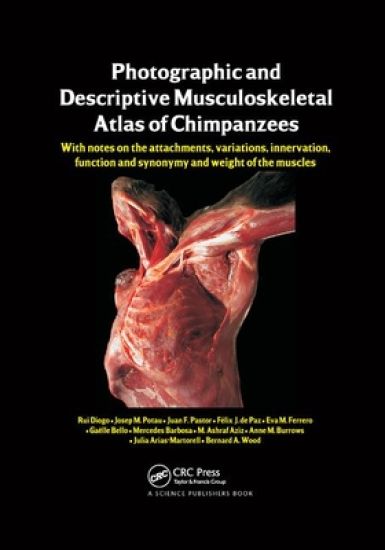
Chimpanzees, including common chimpanzees and bonobos, are our closest living relatives. This book, which is the first photographic and descriptive musculoskeletal atlas of the genus Pan, adopts the same format as the photographic atlases of Gorilla and Hylobates previously published by the same authors. These three books are part of a series of monographs that will set out the comparative and phylogenetic context of the gross anatomy and evolutionary history of the soft tissue morphology of modern humans and their closest relatives. The atlas, which includes detailed high-quality photographs of musculoskeletal structures from most anatomical regions of the body as well as textual information about the attachments, innervation, function and weight of the respective muscles, is based on dissections of up to 12 chimpanzees and on an extensive review of the literature. It provides an updated review of the anatomical variations within chimpanzees as well as an extensive list of the synonyms used in the literature. The book is designed for students, teachers and researchers studying primatology, comparative anatomy, functional morphology, zoology, and physical anthropology and to medical students, doctors and researchers who are curious about the origin, evolution, homology and variations of the musculoskeletal structures of modern humans.
The Origin of Higher Clades

The Origin of Higher Clades

Rui Diogo

CRC Press
2018
sidottu
The book provides insight on the osteology, myology, phylogeny and evolution of Osteichthyes. It not only provides an extensive cladistic analysis of osteichthyan higher-level inter-relationships based on a phylogenetic comparison of 356 characters in 80 extant and fossil terminal taxa representing all major groups of Osteichthyes, but also analyses various terminal taxa and osteological characters. And also provides a general discussion on issues such as the comparative anatomy, homologies and evolution of osteichthyan cranial and pectoral muscles, the development of zebrafish cephalic muscles and the implications for evolutionary developmental studies, the origin homologies and evolution of one of the most peculiar and enigmatic structural complexes of osteichthyans, the Weberian apparatus, and the use of myological versus osteological characters in phylogenetic reconstructions.
Evolution Driven by Organismal Behavior

Evolution Driven by Organismal Behavior

Rui Diogo

Springer International Publishing AG
2018
nidottu
This book proposes a new way to think about evolution. The author carefully brings together evidence from diverse fields of science. In the process, he bridges the gaps between many different--and usually seen as conflicting--ideas to present one integrative theory named ONCE, which stands for Organic Nonoptimal Constrained Evolution. The author argues that evolution is mainly driven by the behavioral choices and persistence of organisms themselves, in a process in which Darwinian natural selection is mainly a secondary--but still crucial--evolutionary player. Within ONCE, evolution is therefore generally made of mistakes and mismatches and trial-and-error situations, and is not a process where organisms engage in an incessant, suffocating struggle in which they can't thrive if they are not optimally adapted to their habitats and the external environment. Therefore, this unifying view incorporates a more comprehensive view of the diversity and complexity of life by stressing that organisms are not merely passive evolutionary players under the rule of external factors. This insightful and well-reasoned argument is based on numerous fascinating case studies from a wide range of organisms, including bacteria, plants, insects and diverse examples from the evolution of our own species. The book has an appeal to researchers, students, teachers, and those with an interest in the history and philosophy of science, as well as to the broader public, as it brings life back into biology by emphasizing that organisms, including humans, are the key active players in evolution and thus in the future of life on this wonderful planet.
Muscles of Chordates

Muscles of Chordates

Rui Diogo; Janine M. Ziermann; Julia Molnar; Natalia Siomava; Virginia Abdala

CRC Press
2018
sidottu
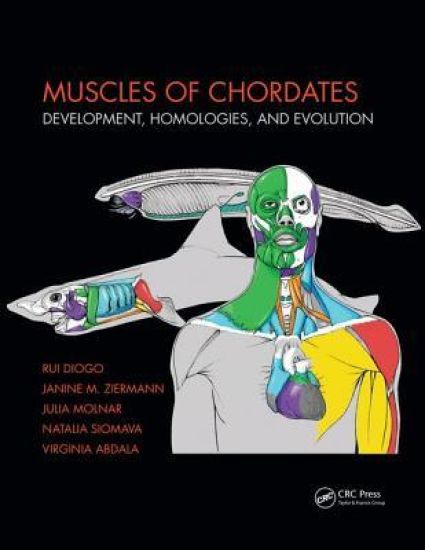
Chordates comprise lampreys, hagfishes, jawed fishes, and tetrapods, plus a variety of more unfamiliar and crucially important non-vertebrate animal lineages, such as lancelets and sea squirts. This will be the first book to synthesize, summarize, and provide high-quality illustrations to show what is known of the configuration, development, homology, and evolution of the muscles of all major extant chordate groups. Muscles as different as those used to open the siphons of sea squirts and for human facial communication will be compared, and their evolutionary links will be explained. Another unique feature of the book is that it covers, illustrates, and provides detailed evolutionary tables for each and every muscle of the head, neck and of all paired and median appendages of extant vertebrates.Key Selling Features:Has more than 200 high-quality anatomical illustrations, including evolutionary trees that summarize the origin and evolution of all major muscle groups of chordates Includes data on the muscles of the head and neck and on the pectoral, pelvic, anal, dorsal, and caudal appendages of all extant vertebrate taxaExamines experimental observations from evolutionary developmental biology studies of chordate muscle development, allowing to evolutionarily link the muscles of vertebrates with those of other chordatesDiscusses broader developmental and evolutionary issues and their implications for macroevolution, such as the links between phylogeny and ontogeny, homology and serial homology, normal and abnormal development, the evolution, variations, and birth defects of humans, and medicine.
Muscles of Chordates

Muscles of Chordates

Rui Diogo; Janine M. Ziermann; Julia Molnar; Natalia Siomava; Virginia Abdala

CRC Press
2018
nidottu
Chordates comprise lampreys, hagfishes, jawed fishes, and tetrapods, plus a variety of more unfamiliar and crucially important non-vertebrate animal lineages, such as lancelets and sea squirts. This will be the first book to synthesize, summarize, and provide high-quality illustrations to show what is known of the configuration, development, homology, and evolution of the muscles of all major extant chordate groups. Muscles as different as those used to open the siphons of sea squirts and for human facial communication will be compared, and their evolutionary links will be explained. Another unique feature of the book is that it covers, illustrates, and provides detailed evolutionary tables for each and every muscle of the head, neck and of all paired and median appendages of extant vertebrates.Key Selling Features:Has more than 200 high-quality anatomical illustrations, including evolutionary trees that summarize the origin and evolution of all major muscle groups of chordates Includes data on the muscles of the head and neck and on the pectoral, pelvic, anal, dorsal, and caudal appendages of all extant vertebrate taxaExamines experimental observations from evolutionary developmental biology studies of chordate muscle development, allowing to evolutionarily link the muscles of vertebrates with those of other chordatesDiscusses broader developmental and evolutionary issues and their implications for macroevolution, such as the links between phylogeny and ontogeny, homology and serial homology, normal and abnormal development, the evolution, variations, and birth defects of humans, and medicine.
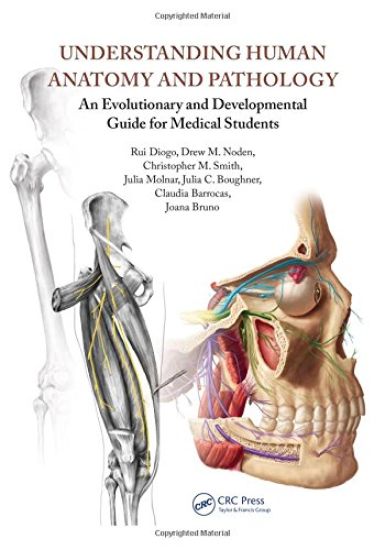
Understanding Human Anatomy and Pathology

Understanding Human Anatomy and Pathology

Rui Diogo; ew M. Noden; Christopher M. Smith; Julia Molnar; Julia C. Boughner; Claudia Alexandra Amorim Barrocas; Joana Araujo Bruno

CRC Press
2017
sidottu
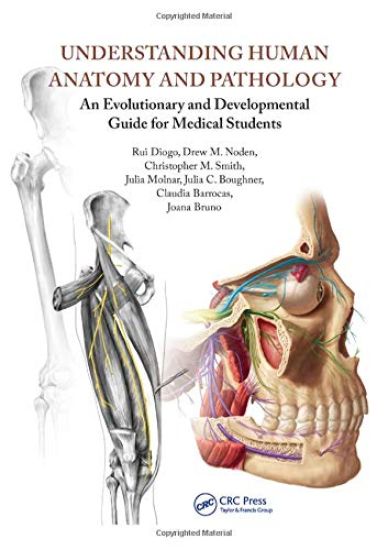
Understanding Human Anatomy and Pathology: An Evolutionary and Developmental Guide for Medical Students provides medical students with a much easier and more comprehensive way to learn and understand human gross anatomy by combining state-of-the-art knowledge about human anatomy, evolution, development, and pathology in one book. The book adds evolutionary, pathological, and developmental information in a way that reduces the difficulty and total time spent learning gross anatomy by making learning more logical and systematic. It also synthesizes data that would normally be available for students only by consulting several books at a time. Anatomical illustrations are carefully selected to follow the style of those seen in human anatomical atlases but are simpler in their overall configuration, making them easier to understand without overwhelming students with visual information. The book‘s organization is also more versatile than most human anatomy texts so that students can refer to different sections according to their own learning styles. Because it is relatively short in length and easily transportable, students can take this invaluable book anywhere and use it to understand most of the structures they need to learn for any gross anatomy course.
Photographic and Descriptive Musculoskeletal Atlas of Bonobos

Photographic and Descriptive Musculoskeletal Atlas of Bonobos

Rui Diogo; Brian Shearer; Josep M. Potau; Juan F. Pastor; Felix J. de Paz; Julia Arias-Martorell; Cassandra Turcotte; Ashley Hammond; Evie Vereecke; Marie Vanhoof; Sandra Nauwelaerts; Bernard Wood

Springer International Publishing AG
2017
sidottu
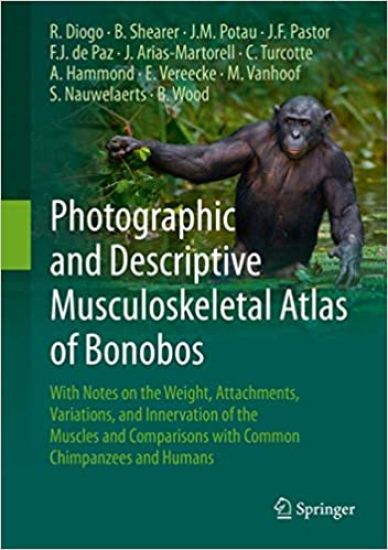
Chimpanzees, including bonobos and common chimpanzees, are our closest living relatives. However, surprisingly, the information about the soft tissues of bonobos is very scarce, making it difficult to discuss and understand human evolution. This book, which is the first photographic and descriptive musculoskeletal atlas of bonobos (Pan paniscus), adopts the same format as the photographic atlases of other apes previously published by the same authors. These books are part of a series of monographs that will set out the comparative and phylogenetic context of the gross anatomy and evolutionary history of the soft tissue morphology of modern humans and their closest relatives. The present atlas, which includes detailed high quality photographs of the musculoskeletal structures from most anatomical regions of the body as well as textual information about the attachments, innervation, function and weight of the respective muscles, is based ondissections of seven bonobos, including adults, adolescents, infants and fetuses, and males and females, and on an extensive review of the literature for comparisons with common chimpanzees. It therefore provides an updated review of the anatomical variations within chimpanzees as well as an extensive list of synonyms used in the literature to designate the structures covered here. Moreover, contrary to the previous photographic atlases of apes, it also provides details on neurovascular structures such as the brachial and lumbrosacral plexuses. The book will therefore be of interest to students, teachers and researchers focusing on primatology, comparative anatomy, functional morphology, zoology, and physical anthropology and to medical students, doctors and researchers who are curious about the origin, evolution, homology and variations of the musculoskeletal and neurovascular structures of modern humans.
Evolution Driven by Organismal Behavior

Evolution Driven by Organismal Behavior

Rui Diogo

Springer International Publishing AG
2017
sidottu
This book proposes a new way to think about evolution. The author carefully brings together evidence from diverse fields of science. In the process, he bridges the gaps between many different--and usually seen as conflicting--ideas to present one integrative theory named ONCE, which stands for Organic Nonoptimal Constrained Evolution. The author argues that evolution is mainly driven by the behavioral choices and persistence of organisms themselves, in a process in which Darwinian natural selection is mainly a secondary--but still crucial--evolutionary player. Within ONCE, evolution is therefore generally made of mistakes and mismatches and trial-and-error situations, and is not a process where organisms engage in an incessant, suffocating struggle in which they can't thrive if they are not optimally adapted to their habitats and the external environment. Therefore, this unifying view incorporates a more comprehensive view of the diversity and complexity of life by stressing that organisms are not merely passive evolutionary players under the rule of external factors. This insightful and well-reasoned argument is based on numerous fascinating case studies from a wide range of organisms, including bacteria, plants, insects and diverse examples from the evolution of our own species. The book has an appeal to researchers, students, teachers, and those with an interest in the history and philosophy of science, as well as to the broader public, as it brings life back into biology by emphasizing that organisms, including humans, are the key active players in evolution and thus in the future of life on this wonderful planet.
Understanding Human Anatomy and Pathology

Understanding Human Anatomy and Pathology

Rui Diogo; ew M. Noden; Christopher M. Smith; Julia Molnar; Julia C. Boughner; Claudia Alexandra Amorim Barrocas; Joana Araujo Bruno

Productivity Press
2016
nidottu
Understanding Human Anatomy and Pathology: An Evolutionary and Developmental Guide for Medical Students provides medical students with a much easier and more comprehensive way to learn and understand human gross anatomy by combining state-of-the-art knowledge about human anatomy, evolution, development, and pathology in one book. The book adds evolutionary, pathological, and developmental information in a way that reduces the difficulty and total time spent learning gross anatomy by making learning more logical and systematic. It also synthesizes data that would normally be available for students only by consulting several books at a time.Anatomical illustrations are carefully selected to follow the style of those seen in human anatomical atlases but are simpler in their overall configuration, making them easier to understand without overwhelming students with visual information. The book’s organization is also more versatile than most human anatomy texts so that students can refer to different sections according to their own learning styles.Because it is relatively short in length and easily transportable, students can take this invaluable book anywhere and use it to understand most of the structures they need to learn for any gross anatomy course.
Muscular and Skeletal Anomalies in Human Trisomy in an Evo-Devo Context

Muscular and Skeletal Anomalies in Human Trisomy in an Evo-Devo Context

Rui Diogo; Christopher M. Smith; Janine M. Ziermann; Julia Molnar; Marjorie C. Gondre-Lewis; Corinne Sandone; Edward T. Bersu; Mohammed Ashraf Aziz

Productivity Press
2015
sidottu
This book focuses on human anatomy and medicine and specifically on both muscular and skeletal birth defects in humans with trisomy. Moreover, this book also deals with Down syndrome, which is one of the most studied human syndromes and, due to its high incidence and the fact that individuals with this syndrome often live until adulthood, is of special interest to the scientific and medical community.This new line of inquiry is addressed to a wide audience, including medical researchers, physicians, surgeons, medical and dental students, pathologists, and pediatricians, among others, while also being of interest to developmental and evolutionary biologists, anatomists, functional morphologists, and zoologists.