

Kirjailija
Rupert Sheldrake
Kirjat ja teokset yhdessä paikassa: 41 kirjaa, julkaisuja vuosilta 1994-2023, suosituimpien joukossa La ciencia y las prácticas espirituales. Vertaile teosten hintoja ja tarkista saatavuus suomalaisista kirjakaupoista.
41 kirjaa
Kirjojen julkaisuhaarukka 1994-2023.
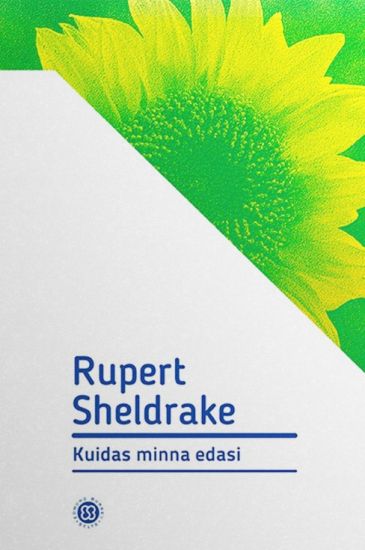
Briti biokeemik dr Rupert Sheldrake (snd 1942) ühendab vaimsed otsingud teadlase vaatepunktiga. Raamat "Kuidas minna edasi "on jätk teosele "Teadus ja vaimne praktika" (eesti keeles 2020).Sheldrake näitab, et vaimsele sfäärile võib läheneda väga erineval viisil ning kõigil suundadel on teaduslikult mõõdetav mõju. Mida rohkem teadlased selliste praktikate ja teadvuse uurimisega tegelevad, seda kiiremini mureneb barjäär, mille oleme ise teaduse ja vaimse sfääri vahele ehitanud. Kui eelmises raamatus vaatles Sheldrake eri religioonidele iseloomulikke tegevusi, siis nüüd on luubi all praktikad, mida tavaliselt ei seostata vaimsete kogemustega nagu näiteks õppetunnid loomadelt ja sportlikud harrastused.

To 'go beyond' means to access a higher state of consciousness--a place of bliss, greater understanding, love and connection. This groundbreaking manual combines the latest scientific research with deep mystic knowledge and wisdom in order to examine seven spiritual practices. Along the way, it points out how everyday activities, including sports and our relationships with animals, can bring us closer to mystical dimensions. It also delves into traditional religious practices such as fasting, prayer, and the celebration of festivals and holy days, and looks at the states of consciousness induced by psychedelics such as ayahuasca. Ultimately, the book sets out to investigate why these practices work, how they relate to our brains, and to what extent they can open the door to expanded forms of consciousness.
The scientific counter argument to Richard Dawkin's The God Delusion
To go beyond is to move into a higher state of consciousness, to a place of bliss, greater understanding, love, and deep connectedness, a realm where we finally find life's meaning - experiences for which all spiritual seekers seek.Dr Rupert Sheldrake, writing as both a scientist and a spiritual explorer, looks at seven spiritual practices that are personally transformative and have scientifically measurable effects. He combines the latest scientific research with his extensive knowledge of mystical traditions around the world to show how we may tune into more-than-human realms of consciousness through psychedelics, such as ayahuasca, and by taking cannabis. He also shows how everyday activities can have mystical dimensions, including sports and learning from animals. He discusses traditional religious practices such as fasting, prayer, and the celebration of festivals and holy days.Why do these practices work? Are their effects all inside brains and essentially illusory? Or can we really make contact with forms of consciousness greater than our own? We are in the midst of a spiritual revival. This book is an essential guide.
We are in the midst of a spiritual revival. This book is an essential guide. "Wonderfully clear and inspiring... I regard this as one of the most important books of our generation." --Larry Dossey, MD, author of One Mind "... a rare and needed voice in an apocalyptic time like ours. The practices he espouses do not take us out of the world but put us back in." --Matthew Fox, author of Original Blessing "An affable, erudite manual..." --The Times Literary Supplement To go beyond is to move into a higher state of consciousness, to a place of bliss, greater understanding, love, and deep connectedness, a realm where we finally find life's meaning. Scientist and spiritual explorer Rupert Sheldrake looks at seven spiritual practices that are personally transformative and have scientifically measurable effects. He combines the latest scientific research with his extensive knowledge of mystical traditions to show how we may tune into more-than-human realms of consciousness through psychedelics such as ayahuasca, and how everyday activities can have mystical dimensions, including sports and learning from animals. He discusses traditional religious practices such as fasting, prayer, and the celebration of festivals and holy days. Why do these practices work? Are their effects solely inside our brains and essentially illusory? Or can we really make contact with forms of consciousness greater than our own? Dr. Rupert Sheldrake is a biologist and the author of more than ninety technical papers and fourteen books, including Science Set Free. After studying at Cambridge and Harvard Universities, he worked in Hyderabad, India, as principal plant physiologist at the International Crops Research Institute for the Semi-Arid Tropics, and lived for two years in the Benedictine ashram of Father Bede Griffiths. From 2005 to 2010, he was director of the Perrott-Warrick Project for the study of unexplained human and animal abilities, funded by Trinity College, Cambridge. He is currently a Fellow of the Institute of Noetic Sciences in Petaluma, California, and of Schumacher College in Dartington, Devon, UK. He lives in London with his wife Jill Purce, with whom he has two sons.
We are in the midst of a spiritual revival. This book is an essential guide. "Wonderfully clear and inspiring... I regard this as one of the most important books of our generation." --Larry Dossey, MD, author of One Mind "... a rare and needed voice in an apocalyptic time like ours. The practices he espouses do not take us out of the world but put us back in." --Matthew Fox, author of Original Blessing "An affable, erudite manual..." --The Times Literary Supplement To go beyond is to move into a higher state of consciousness, to a place of bliss, greater understanding, love, and deep connectedness, a realm where we finally find life's meaning. Scientist and spiritual explorer Rupert Sheldrake looks at seven spiritual practices that are personally transformative and have scientifically measurable effects. He combines the latest scientific research with his extensive knowledge of mystical traditions to show how we may tune into more-than-human realms of consciousness through psychedelics such as ayahuasca, and how everyday activities can have mystical dimensions, including sports and learning from animals. He discusses traditional religious practices such as fasting, prayer, and the celebration of festivals and holy days. Why do these practices work? Are their effects solely inside our brains and essentially illusory? Or can we really make contact with forms of consciousness greater than our own? Dr. Rupert Sheldrake is a biologist and the author of more than ninety technical papers and fourteen books, including Science Set Free. After studying at Cambridge and Harvard Universities, he worked in Hyderabad, India, as principal plant physiologist at the International Crops Research Institute for the Semi-Arid Tropics, and lived for two years in the Benedictine ashram of Father Bede Griffiths. From 2005 to 2010, he was director of the Perrott-Warrick Project for the study of unexplained human and animal abilities, funded by Trinity College, Cambridge. He is currently a Fellow of the Institute of Noetic Sciences in Petaluma, California, and of Schumacher College in Dartington, Devon, UK. He lives in London with his wife Jill Purce, with whom he has two sons.
Los efectos de las pr cticas espirituales est n siendo cient ficamente investigados como nunca antes. Muchos estudios han demostrado que, por lo general, estas pr cticas hacen que las personas sean m s felices y saludables. En este pionero libro, Rupert Sheldrake nos muestra c mo la ciencia valida siete pr cticas esenciales para la mayor a de religiones y que forman parte de nuestra herencia humana com n: meditaci n, gratitud, conexi n con la naturaleza, relaci n con las plantas, rituales, cantos y peregrinaci n a lugares sagrados. Sheldrake resume las m s recientes investigaciones cient ficas sobre lo que sucede cuando participamos en este tipo de pr cticas y sugiere diferentes v as para que los lectores exploren estos campos por s mismos. Para aquellos que se adhieren a alguna religi n, este libro iluminar los or genes evolutivos de su propia tradici n. Para los no religiosos, mostrar c mo los fundamentos de las pr cticas espirituales son accesibles para todos. Many studies have shown that spiritual practices can make people happier and healthier. In this pioneering book, Rupert Sheldrake demonstrates how science confirms seven practices that are essential in the majority of religions and that form part of our common human spirit: meditation, gratitude, connections with nature, relationships with plants, rituals, song, and pilgrimages to sacred places.
In this pioneering book Rupert Sheldrake shows how science helps validate seven practices on which all religions are built, and which are part of our common human heritage:· Meditation· Gratitude· Connecting with nature· Relating to plants· Rituals· Singing and chanting· Pilgrimage and holy places. The effects of spiritual practices are now being investigated scientifically as never before, and many studies have shown that religious and spiritual practices generally make people happier and healthier. Rupert Sheldrake summarizes the latest scientific research on what happens when we take part in these practices, and suggests ways that readers can explore these fields for themselves. For those who are religious, Science and Spiritual Practices will illuminate the evolutionary origins of their own traditions and give a new appreciation of their power. For the non-religious, this book will show how the core practices of spirituality are accessible to all, even if they do not subscribe to a religious belief system. This is a book for anyone who suspects that in the drive towards radical secularism, something valuable has been left behind. Rupert Sheldrake believes that by opening ourselves to the spiritual dimension we may find the strength to live more wholesome and fulfilling lives.
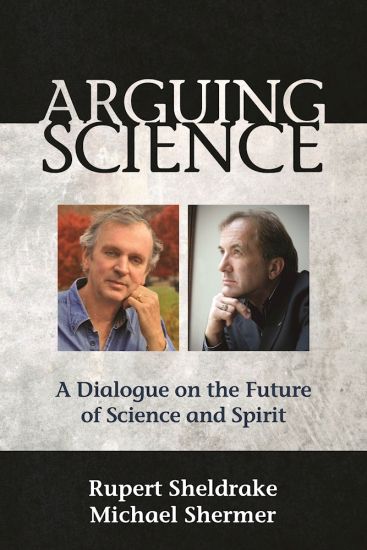
Two controversial authors debate the nature and methods of science, its dogmas, and its future. Rupert Sheldrake argues that science needs to free itself from materialist dogma while Michael Shermer contends that science, properly conceived, is a materialistic enterprise; for science to look beyond materialist explanations is to betray science and engage in superstition. Issues discussed include: materialism and its role in science, whether belief in God is compatible with a scientific perspective, and parapsychology. Michael Shermer is Editor-in-Chief of "Skeptic "magazine and the author of numerous books including "Skeptic."Rupert Sheldrake is a biologist and author of ten books including his most recent, "Science Set Free," which challenges scientific dogma.

Award-winning author Kate Banks teams up with world-famous Ruper Sheldrake in Boy's Best Friend to create a book that's sure to be a hit with dog lovers and little scientists everywhere. Eleven-year-old George has a dog, Bart, who seems to know everything about him--from when he is feeling sad to when he will arrive home from school. George's new neighbor and classmate, Lester, also has a dog, Bill Gates, and Lester thinks he is the smartest animal in the world. When their teacher assigns a school science project about animal behavior, George and Lester decide to conduct an experiment based on the world-famous Rupert Sheldrake's experiments about dogs. George even has an e-mail exchange with Dr. Sheldrake to help him with the project--and he and Lester soon find out that, through a few simple experiments, kids can make scientific discoveries, too.

En skriftlig dialog mellom Rupert Sheldrake og Michael Shermer. Sommeren 2015 var nettstedet The Best Schools vert for en skriftlig dialog mellom Rupert Sheldrake og Michael Shermer. Dialogene foregikk skriftlig over tre måneder med tre hovedtema - hvert med åpningsinnlegg, respons og replikk. The Best Schools var bevisst på å kalle dette dialog og ikke debatt, med det siktemål å nærme seg bedre forståelse, fremfor å score poeng. Denne boken samler dialogene, for første gang i trykt form. Shermer og Sheldrake er grunnleggende uenige når det gjelder de tre hovedtemaene: vitenskap, Gud og paranormale fenomener. En sjelden sjanse til selv å reflektere over sentrale og kompliserte spørsmål!
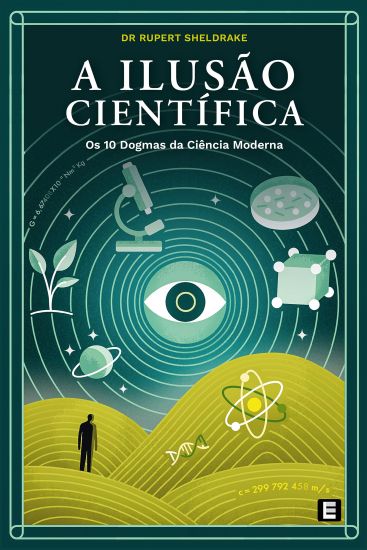
Videnskabens bedrag og vildfarelse er, at den giver et indtryk af at have svar på de fleste store spørgsmål, og at den ifølge sin videnskabelige natur hviler på sikre grundlag. Den engelske biolog Rupert Sheldrake har stor tiltro til den videnskabelige metode, men han foretager i denne bog et klart opgør med videnskabelige institutioners og traditioners træghed, konformitet og ideologiske dogmatik. Sheldrake udforsker i bogen videnskabelige trosformer og fremviser visionen om en friere forskerånd med fornyet vitalitet og større frihed fra de dogmer, som fastlåser den. Blandt hans centrale tanker er især disse ti, som Sheldrake sætter i modspil til ti centrale, videnskabelige dogmer:1. Universet kan opfattes som levende2. Stoffet kan have en form for bevidsthed3. Naturlovene kan opfattes som vaner, der ændrer sig og udvikles4. Universets samlede stof og energi kan være i vækst5. Naturen kan have iboende formål og hensigter6. Biologisk arv kan have andre kilder end genetik7. Hukommelse kan være lagret uden for hjernen, hvorfra vi kan hente den8. Bevidstheden fungerer også uden for hjernen og nerve-systemet9. Psykiske fænomener kan være virkelige10. Mekanisk baseret medicin kan være stærkt begrænsende* Bogen vandt i 2012 "the Book of the Year Award from the British Scientific and Medical Network."Bogen berører mange emner som:MORFOGENEGISK FELT, TELEPATI, PLACEBO-EFFEKT og TANKENS KRAFT
Why Science Is Wrong...About Almost Everything
Alex Tsakiris; Rupert Sheldrake
Anomalist Books
2014
pokkari