Kirjojen hintavertailu. Mukana 12 595 353 kirjaa ja 12 kauppaa.
Kirjailija
Rupert Sheldrake
Kirjat ja teokset yhdessä paikassa: 41 kirjaa, julkaisuja vuosilta 1994-2023, suosituimpien joukossa La ciencia y las prácticas espirituales. Vertaile teosten hintoja ja tarkista saatavuus suomalaisista kirjakaupoista.
"Matthew Fox might well be the most creative, the most comprehensive, surely the most challenging religious-spiritual teacher in America."--Thomas Berry"Rupert Sheldrake continues to chart a new course in our understanding of the non-local mind that connects all of us."--Deepak ChopraMany people believe in angels, but few can define these enigmatic spirits. Now visionary theologian Matthew Fox and acclaimed biologist Rupert Sheldrake--pioneers in modern religious thinking and scientific theory--launch a groundbreaking exploration into the ancient concept of the angel and restore dignity, meaning, and joy to our time-honored belief in these heavenly beings.
The bestselling author of Dogs That Know When Their Owners Are Coming Home offers an intriguing new assessment of modern day science that will radically change the way we view what is possible. In Science Set Free (originally published to acclaim in the UK as The Science Delusion), Dr. Rupert Sheldrake, one of the world's most innovative scientists, shows the ways in which science is being constricted by assumptions that have, over the years, hardened into dogmas. Such dogmas are not only limiting, but dangerous for the future of humanity. According to these principles, all of reality is material or physical; the world is a machine, made up of inanimate matter; nature is purposeless; consciousness is nothing but the physical activity of the brain; free will is an illusion; God exists only as an idea in human minds, imprisoned within our skulls. But should science be a belief-system, or a method of enquiry? Sheldrake shows that the materialist ideology is moribund; under its sway, increasingly expensive research is reaping diminishing returns while societies around the world are paying the price. In the skeptical spirit of true science, Sheldrake turns the ten fundamental dogmas of materialism into exciting questions, and shows how all of them open up startling new possibilities for discovery. Science Set Free will radically change your view of what is real and what is possible.
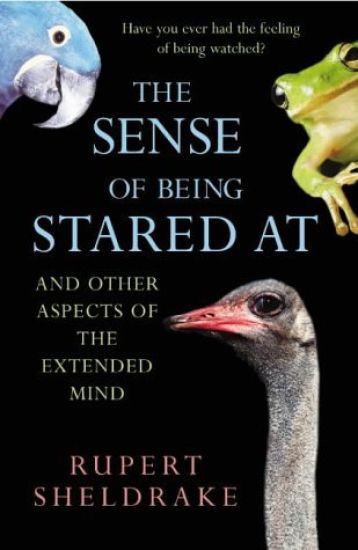
Explores Rupert Sheldrake's more than 25 years of research into telepathy, staring and intention, precognition, and animal premonitions - Shows that unexplained human abilities--such as the sense of being stared at and phone telepathy--are not paranormal but normal, part of our biological nature - Draws on more than 5,000 case histories, 4,000 questionnaire responses, and the results of experiments carried out with more than 20,000 people - Reveals that our minds and intentions extend beyond our brains into the world around us and even into the future Nearly everyone has experienced the feeling of being watched or had their stare result in a glance in their direction. The phenomenon has been cited throughout history in nearly every culture, along with other commonplace "paranormal" occurrences such as premonitions and telepathy. In this newly updated edition, Sheldrake shares his more than 25 years of research into telepathy, the power of staring, remote viewing, precognition, and animal premonitions. Drawing on more than 5,000 case histories, 4,000 questionnaire responses, and the results of experiments on staring, thought transference, phone telepathy, and other phenomena carried out with more than 20,000 people as well as reports and data from dozens of independent research teams, Sheldrake shows that these unexplained human abilities--such as the sense of being stared at--are not paranormal but normal, part of our biological nature. He reveals that telepathy depends on social bonds and traces its evolution from the connections between members of animal groups such as flocks, schools, and packs. Sheldrake shows that our minds and intentions extend beyond our brains into our surroundings with invisible connections that link us to each other, to the world around us, and even to the future.
In this compelling and challenging argument, biologist Rupert Sheldrake explains that the fundamental delusion of science is the belief that it has understood the nature of reality, that all of the fundamental questions have been answered and only the details remain to be ironed out. In an impassioned contention, however, Sheldrake demonstrates that science true science, which should be skeptical and inquisitive has been constricted by assumptions that have become dogmas. He scientifically tackles these dogmas which include the belief that all reality is either material or physical, that the world is composed of dead matter, that nature has no purpose, that the conscience is merely a physical manifestation of the brain showing that science would be immeasurably better without them: freer, more interesting, and more fun."
Wie alle haben telepathische Fähigkeiten, Vorahnungen, die uns und anderen das Leben retten können, und andere bislang unerklärliche Wahrnehmungen, wie das Gefühl, von jemanden angestarrt zu werden - sie gehören zu unserer biologischen Ausstattung. In seinem erfolgreichen Buch ?Der siebte Sinn der Tiere? hat Rupert Sheldrake nachgewiesen, dass diese Fähigkeiten im Tierreich weit verbreitet sind. Wir Menschen haben zwar viel von dieser Sensibilität verloren, haben diese Fähigkeiten aber trotzdem mit vielen Arten gemein. Das lässt sich mit einfachen Experimenten nachweisen. Sheldrakes Forschungen führen zu einem neuen Verständnis der Natur des menschlichen Geistes. Der Geist, so seine These, beschränkt sich nicht auf das Gehirn, sondern umfasst ausgedehnte Einflussfelder, die weit über Gehirn und Körper hinaus reichen. Und er belegt seine Thesen auf eindruckvolle Weise.
Den engelske forskeren og biologen Sheldrake trekker ti av de mest standhaftige dogmene opp av kjelleren og frem i dagslyset, og gjør vitenskapen, mennesket og verden en stor tjeneste. Vitenskapens største vrangforestilling er at den allerede har svar på det meste. At de grunnleggende spørsmålene prinsipielt er løst. Sheldrake har stor tro på vitenskap og vitenskapelig metode, men tar et grundig oppgjør med dogmatisk ideologi, fryktbasert konformitet og institusjonell treghet. Vitenskapen vil fornyes når den fristilles fra dogmene som binder den.
Rupert Sheldrake's theory of morphic resonance challenges the fundamental assumptions of modern science. An accomplished biologist, Sheldrake proposes that all natural systems from crystals to human society inherit a collective memory that influences their form and behaviour. Rather than being ruled by fixed laws nature is essentially habitual. THE PRESENCE OF THE PAST lays out the evidence for Sheldrake's controversial theory exploring its implications in the fields of biology physics psychology and sociology. At the same time Sheldrake delivers a stinging critique of conventional scientific thinking which sees nature as a machine that although constant and governed by eternal laws is nonetheless somehow evolutionary. In place of the mechanistic neo-Darwinian world-view he offers a new understanding of life matters and mind. Rupert Sheldrake is a former Research Fellow of the Royal Society and was a scholar of Clare College Cambridge and a Frank Knox Fellow at Harvard University.
. Explores the scandalous history of parapsychology since the scientific revolution of the 17th century . Provides reproducible evidence from scientific research that telepathy, clairvoyance, precognition and psychokinesis are real . Shows that scepticism of psi phenomena is based more on a religion of materialism than on hard science Reports of psychic abilities, such as telepathy, clairvoyance, precognition and psychokinesis, date back to the beginning of recorded human history in all cultures. Documented, reproducible evidence exists that these abilities are real, yet the mainstream scientific community has vehemently denied the existence of psi phenomena for centuries. The battle over the reality of psi has carried on in scientific academies, courtrooms, scholarly journals, newspapers and radio stations and has included scandals, wild accusations, ruined reputations, as well as bizarre characters on both sides of the debate. If true evidence exists, why then is the study of psi phenomena - parapsychology - so controversial? And why has the controversy lasted for centuries? Exploring the scandalous history of parapsychology and citing decades of research, Chris Carter shows that replicable evidence of psi phenomena exists. The controversy over parapsychology continues, not because ESP and other abilities cannot be verified, but because their existence challenges deeply held worldviews more strongly rooted in religious and philosophical beliefs than in hard science. By outlining the origin of this passionate debate, Carter calls on all open-minded individuals to disregard the church of scepticism and reach their own conclusions by looking at the vast body of evidence. Carter reveals how the doctrine of materialism - in which nothing matters but matter - has become an infallible article of faith for many scientists and philosophers, much like the convictions of religious fundamentalists. Consequently, the possibility of psychic abilities cannot be tolerated because their existence would refute materialism and contradict a deeply ingrained ideology.
Defining the phenomenon of morphic resonance as the process whereby organisms' past forms and behaviors influence organisms of the same kind in the present through direct connections across time and space, Rupert Sheldrake reinterprets the regularities of nature as being more like habits than immutable laws and calls into question many fundamental concepts about life and consciousness. The first edition of this book created a furor when it appeared, provoking the outrage of the old guard scientific community and the approbation of the new. A lively debate ensued, as researchers devised experiments testing Sheldrake's hypothesis, and these developments are recorded in this revised and expanded edition. Definiendo el fen meno de la resonancia m rfica como el proceso mediante el cual formas y conductas de organismos pasados influyen organismos presentes del mismo tipo, Sheldrake reinterpreta las regularidades de la naturaleza como algo que se asemeja m s a h bitos que a leyes inmutables y cuestiona muchos conceptos fundacionales sobre la vida y la conciencia. La primera edici n de este libro cre un furor cuando fue publicada, provocando un esc ndalo en la comunidad cient fica tradicional y una aprobaci n en la nueva. Le sigui un debate avivado, durante el cual investigadores dise aron experimentos para poner a prueba la hip tesis de Sheldrake, y estos desarrollos est n documentados en esta edici n revisada y expandida.
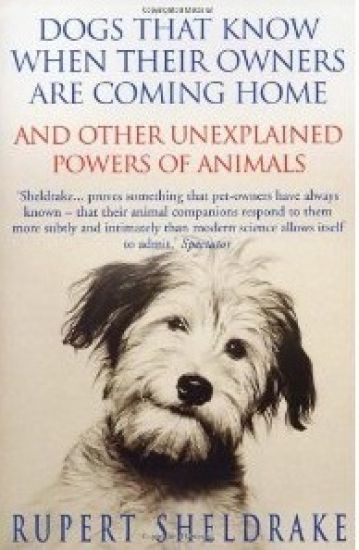
With a scientist's mind and an animal lover's compassion, world-renowned biologist Rupert Sheldrake presents a groundbreaking exploration of animal behavior that will profoundly change the way we think about animals--and ourselves.How do cats know when it's time to go to the vet, even before the cat carrier comes out? How do dogs know when their owners are returning home at unexpected times? How can horses find their way back to the stable over completely unfamiliar terrain?After five years of extensive research involving thousands of people who have pets and work with animals, Dr. Sheldrake proves conclusively what many pet owners already know: there is a strong connection between humans and animals that defies present-day scientific understanding. Sheldrake compellingly demonstrates that we and our pets are social animals linked together by invisible bonds connecting animals to each other, to their owners, and to their homes in powerful ways. His provocative ideas about these social, or morphic, fields explain the uncanny behavior often observed in pets and help provide an explanation for amazing animal behavior in the wild, such as migration and homing.Dogs That Know When Their Owners Are Coming Home not only provides fascinating insight into animal, and human, behavior, but also teaches us to question the boundaries of conventional scientific thought, and shows that the very animals who are closest to us have much to teach us about biology, nature, and consciousness.
New updated and expanded edition of the groundbreaking book that ignited a firestorm in the scientific world with its radical approach to evolution - Explains how past forms and behaviors of organisms determine those of similar organisms in the present through morphic resonance - Reveals the nonmaterial connections that allow direct communication across time and space When A New Science of Life was first published the British journal Nature called it "the best candidate for burning there has been for many years." The book called into question the prevailing mechanistic theory of life when its author, Rupert Sheldrake, a former research fellow of the Royal Society, proposed that morphogenetic fields are responsible for the characteristic form and organization of systems in biology, chemistry, and physics--and that they have measurable physical effects. Using his theory of morphic resonance, Sheldrake was able to reinterpret the regularities of nature as being more like habits than immutable laws, offering a new understanding of life and consciousness. In the years since its first publication, Sheldrake has continued his research to demonstrate that the past forms and behavior of organisms influence present organisms through direct immaterial connections across time and space. This can explain why new chemicals become easier to crystallize all over the world the more often their crystals have already formed, and why when laboratory rats have learned how to navigate a maze in one place, rats elsewhere appear to learn it more easily. With more than two decades of new research and data, Rupert Sheldrake makes an even stronger case for the validity of the theory of formative causation that can radically transform how we see our world and our future.
Mit seinen Thesen über das Universum erregte Rupert Sheldrake weltweites Aufsehen. Die Neuausgabe seines grundlegenden Buches hat der Wissenschaftler nun aktualisiert und stark erweitert. Ein ausführlicher Anhang berichtet über neueste Forschungsergebnisse, beschreibt Experimente und Tests und konzipiert weitere Untersuchungen.
**The fully revised edition of Rupert Sheldrake's controversial science classic, from the author of the bestselling Dogs That Know When Their Owners are Coming Home, celebrates its 40th anniversary in 2021!** After chemists crystallised a new chemical for the first time, it became easier and easier to crystallise in laboratories all over the world. After rats at Harvard first escaped from a new kind of water maze, successive generations learned quicker and quicker. Then rats in Melbourne, Australia learned yet faster. Rats with no trained ancestors shared in this improvement. Rupert Sheldrake sees these processes as examples of morphic resonance. Past forms and activities of organisms, he argues, influence organisms in the present through direct connections across time and space.Individual plants and animals both draw upon and contribute to the collective memory of their species. Sheldrake, now Director of the Perrott-Warwick Project supported by Trinity College, Cambridge, reinterprets the regularities of nature as being more like habits than immutable laws. Described as 'the best candidate for burning there has been for many years' by Nature on first publication, this updated edition will raise hackles and inspire curiosity in equal measure.
Zwar gibt es auch bei Menschen einen ?siebten Sinn?, doch ist er offenbar weniger ausgeprägt und sensibel als bei Tieren. Tiere können z.B. bevorstehende Erdbeben und andere Naturkatastrophen wahrnehmen, lange bevor Menschen etwas davon spüren. Sheldrake hat dieses Phänomen untersucht und für sein Buch neben eigenen Experimenten Hunderte von Geschichten ausgewertet, die Tierbesitzer von überall her ihm berichtet haben. Ein aufregendes und unterhaltsames Buch, das uns zeigt, wie viele intuitive Fähigkeiten wir Menschen verloren haben und was wir von unseren Tiergefährten lernen können.
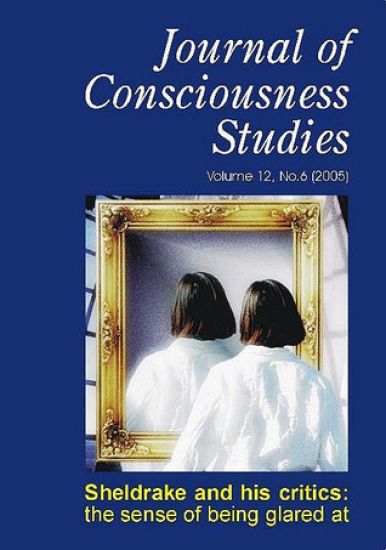
Rupert Sheldrake outraged the scientific establishment in the early 1980s with his hypothesis of morphic resonance: his book A New Science of Life was denounced by the journal Nature as 'the best candidate for burning there has been for many years'. With his academic career torpedoed, Sheldrake has become the champion of 'the people's science'. Books such as Dogs That Know When Their Owners Are Coming Home and The Sense of Being Stared At have won him popular acclaim and academic opprobrium in equal measure. In this special issue of the Journal of Consciousness Studies, Sheldrake summarizes his case for the 'non-visual detection of staring’. His claims are scrutinised by fourteen critics, to whose commentaries he then responds. In his editorial introduction, Revd. Anthony Freeman explores the concept of ‘heresy’ in science and in religion.
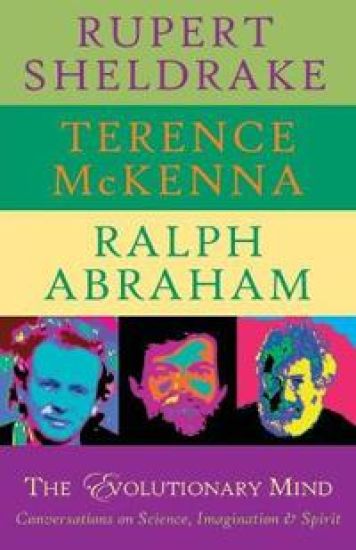
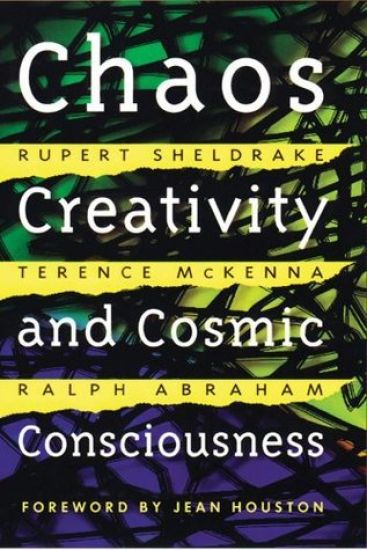
Stimulating and often startling discussions between three friends, all highly original thinkers: Rupert Sheldrake, controversial biologist, Terence McKenna, psychedelic visionary, and Ralph Abraham, chaos mathematician. Their passion is to break out of paradigms that retard our evolution and to explore new possibilities. Through challenge and synergy they venture where few have gone before, leading their readers on an exciting journey of discovery. Their discussions focus on the evolution of the mind, the role of psychedelics, skepticism, the psychic powers of animals, the structure of time, the life of the heavens, the nature of God, and transformations of consciousness."Three fine thinkers take us plunging into the universe of chaos, mind, and spirit. Instead of leaving us lost, they bring us back with startling insights and more wonder than we knew we had." --Matthew Fox, "Original Blessing and Sheer Joy""A jam-session of the mind, an intellectual movable feast, an on-going conversation that began over twenty years ago and remains as lively and relevant today as it ever was. Sadly, Terence had to leave the conversation a little earlier than planned. But the appearance of this book of trialogues at this critical, historical juncture is a reaffirmation of the potency of the optimistic vision that the trialogues express." --Dennis McKenna, brother of the late Terence McKennaRupert Sheldrake is a biologist and author of many books including "The Sense of Being Stared At, And Other Aspects of the Extended Mind." Ralph Abraham is a mathematician, one of the pioneers of chaos theory and the author of several books including "Chaos, Gaia, Eros: A Chaos Pioneer Uncovers the Three Great Streams of History." The late Terence McKenna was a scholar of shamanism, ethno-botanist, psychedelic researcher and author of many books including "Food of the Gods and True Hallucinations."
Have you ever had a premonition, the feeling of being watched, or a telepathic experience? Renowned biologist Rupert Sheldrake explores the intricacies of the mind and discovers that our perceptive abilities are stronger than many of us could have imagined.
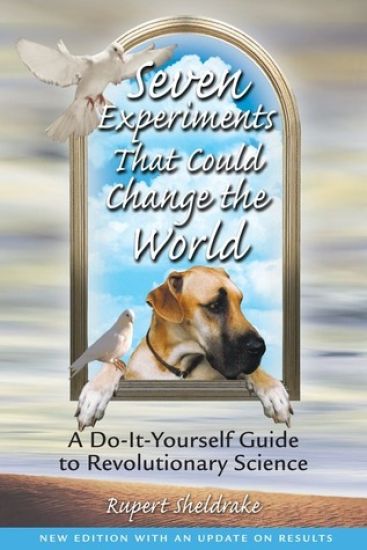
Examines the realities of inexplicable natural phenomenon and provides explanations that push the boundaries of science. How does your pet know when you are coming home? How do pigeons home? Can people really feel a phantom amputated arm? These questions and more form the basis of Sheldrake's look at the world of contemporary science as he puts some of the most cherished assumptions of established science to the test. What Sheldrake discovers is that certain scientific beliefs are so widely taken for granted that they are no longer regarded as theories but are seen as scientific common sense. In the true spirit of science Sheldrake examines seven of these beliefs. Refusing to let intellectual dogmatism influence his search for the truth Sheldrake presents simple experiments that allow the curious and the sceptical to join in his journey of discovery. He examines the taboo of taking pets seriously and explores the question of human extrasensory perception. Perhaps most important he questions the notion that science must be expensive in order to achieve important results showing that inexpensive methods can indeed shake the very foundations of science as we know it.* Looks at animal telepathy and the ability of pigeons to home. * Proves the point that big questions don't need big science. * Noted scientist Rupert Sheldrake is a former fellow of the Royal Society.
A wide-ranging investigation of the ecology of inner and outer space the role of chaos theory in the dynamics of human creation and the rediscovery of traditional wisdom. In this book of trialogues the late psychedelic visionary and shamanologist Terence McKenna, acclaimed biologist and originator of the morphogenetic fields theory Rupert Sheldrake and mathematician and chaos theory scientist Ralph Abraham explore the relationships between chaos and creativity and their connection to cosmic consciousness. Their observations call into question our current views of reality morality and the nature of life in the universe. The authors challenge the reader to the deepest levels of thought with wide-ranging investigations of the ecology of inner and outer space the role of chaos in the dynamics of human creation and the resacralization of the world. Among the provocative questions the authors raise are: Is Armageddon a self-fulfilling prophecy? Are we humans the imaginers or the imagined? Are the eternal laws of nature still evolving? What is the connection between physical light and the light of consciousness? Part ceremony part old-fashioned intellectual discussion these trialogues are an invitation to a new understanding of what Jean Houston calls the dreamscapes of our everyday waking life.