Kirjojen hintavertailu. Mukana 12 595 353 kirjaa ja 12 kauppaa.

Kirjailija

Rushton Julian

Kirjat ja teokset yhdessä paikassa: 8 kirjaa, julkaisuja vuosilta 1981-2007, suosituimpien joukossa Mozart: An Extraordinary Life. Vertaile teosten hintoja ja tarkista saatavuus suomalaisista kirjakaupoista.

8 kirjaa

Kirjojen julkaisuhaarukka 1981-2007.

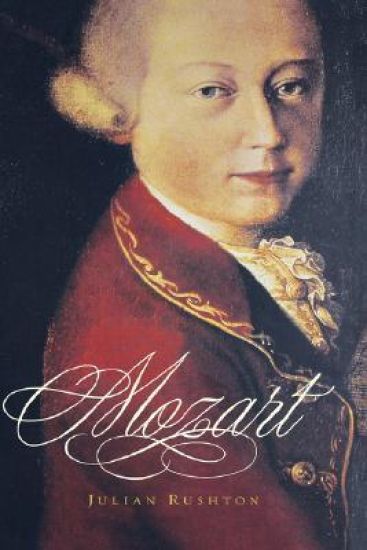
Mozart

Mozart

Rushton Julian

Oxford University Press Inc
2006
sidottu
Wolfgang Amadeus Mozart is one of the great icons of Western music. An amazing prodigy—he toured the capitals of Europe while still a child, astonishing royalty and professional musicians with his precocious skills—he wrote as an adult some of the finest music in the entire European tradition. Julian Rushton offers a concise and up-to-date biography of this musical genius, combining a well-researched life of the composer with an introduction to the works—symphonic, chamber, sacred, and theatrical—of one of the few musicians in history to have written undisputed masterpieces in every genre open to composers of his time. Rushton offers a vivid portrait of the composer, ranging from Mozart the Wunderkind—travelling with his family from Salzburg to Vienna, Paris, London, Rome, and Milan—to the mature author of such classic works as "The Marriage of Figaro", "Don Giovanni", and "The Magic Flute". During the past half-century, scholars have thoroughly explored Mozart's life and music, offering new interpretations of his compositions based on their historical context and providing a factual basis for confirming or, more often, debunking fanciful accounts of the man and his work. Rushton takes full advantage of these biographical and musical studies as well as the definitive New Mozart Edition to provide an accurate account of Mozart's life and, equally important, an insightful look at the music itself, complete with musical examples. An engaging biography for general readers that will also be an informative resource for scholars, this new addition to the prestigious Master Musicians series offers an authoritative portrait of one of the defining figures of European culture.
Mozart: An Extraordinary Life

Mozart: An Extraordinary Life

Rushton Julian

Associated Board of the Royal Schools of Music
2005
muu
Julian Rushton jumps right into the debate with this fascinating and readable history, dispensing with the myth, conjecture ,and popular iconography that frequently distorts our notions of what Mozart and his times were really like. What emerges is a more human and believable portrait, challenging our preconceptions while deepening our understanding of this extraordinary man and his music.
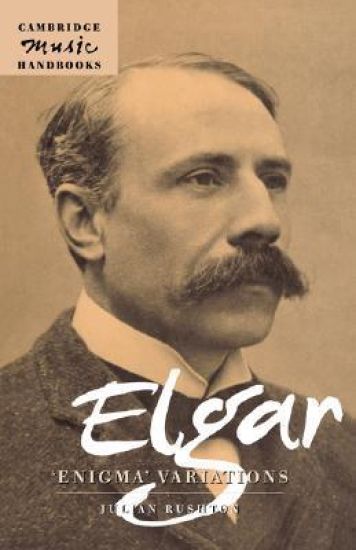
Elgar: Enigma Variations

Elgar: Enigma Variations

Rushton Julian

Cambridge University Press
1999
pokkari
Elgar’s Variations for Orchestra, commonly known as the ‘Enigma’ Variations, marked an epoch both in his career, and in the renaissance of English music at the turn of the century. First performed in 1899 under Hans Richter, the work became his passport to national fame and international success. From the first it intrigued listeners to know why it was called ‘enigma’, and who were the ‘friends pictured within’, to whom the work is dedicated. Appearing in the centenary year of the work’s composition, this book elucidates what is known, and what has been said about the work and the enigma, and directs future listeners to what matters most: the inspired qualities of the music.
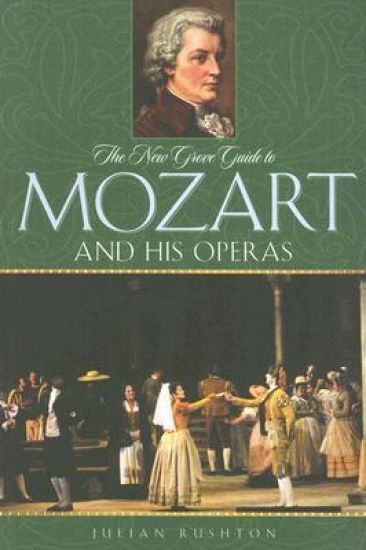
The New Grove Guide to Mozart and His Operas

The New Grove Guide to Mozart and His Operas

Rushton Julian

Oxford University Press Inc
2007
nidottu
Each entry in the New Grove Guides series of composers and their operas is based on articles in The New Grove Dictionary of Opera, that feature information on the lives of individual composers, their works, their librettists and interpreters, and the places where they performed. These unique books compile the meticulously researched articles into organized narratives, designed to make finding information as easy as possible without sacrificing readability. Each volume is completely up-to-date, and includes a suggested listening guide and an eight-page glossy insert containing relevant illustrations. Each volume is a must-own for lovers of opera and classical music. One of the best known and most admired figures in European music was Wolfgang Amadè Mozart. His short but colorful life is of enduring interest, and his works remain central to the repertories of classical music. This book gives a concise and scholarly account of Mozart's activities as a composer of operas. It includes a concise biography, orientated towards the operas; an essay on Mozart's operatic contribution and style, and the antecedents to his operas; a separate synopsis and historical account of each opera; and three essays which bind into narrative form the dictionary entries on librettists, interpreters, and venues. There is a new introduction, a glossary of relevant terms, a list of operatic roles, and a guide to listening.
Elgar: Enigma Variations

Elgar: Enigma Variations

Rushton Julian

Cambridge University Press
1999
sidottu
Elgar’s Variations for Orchestra, commonly known as the ‘Enigma’ Variations, marked an epoch both in his career, and in the renaissance of English music at the turn of the century. First performed in 1899 under Hans Richter, the work became his passport to national fame and international success. From the first it intrigued listeners to know why it was called ‘enigma’, and who were the ‘friends pictured within’, to whom the work is dedicated. Appearing in the centenary year of the work’s composition, this book elucidates what is known, and what has been said about the work and the enigma, and directs future listeners to what matters most: the inspired qualities of the music.
W. A. Mozart: Idomeneo

W. A. Mozart: Idomeneo

Rushton Julian

Cambridge University Press
1993
pokkari
Idomeneo, by common consent Mozart's greatest opera seria, is a rich synthesis of the dramatic potentialities of Italian opera seria, French tragédie lyrique, and recent German opera. It was composed for the finest orchestra in Germany and some excellent singers. Mozart's relish of the challenge and his problems with some performers and the bureaucracy are uniquely documented in his letters home and these form the basis of a vivid account of the genesis of the opera. A detailed synopsis relates the musical and dramatic action of the opera. Further chapters trace the historical development of its subject matter 'from myth to libretto' and chart the opera's performance history, including a description of Richard Strauss's 1931 reworking. Later chapters consider the opera's general structure and the musical forms, and analyse passages of particular interest.
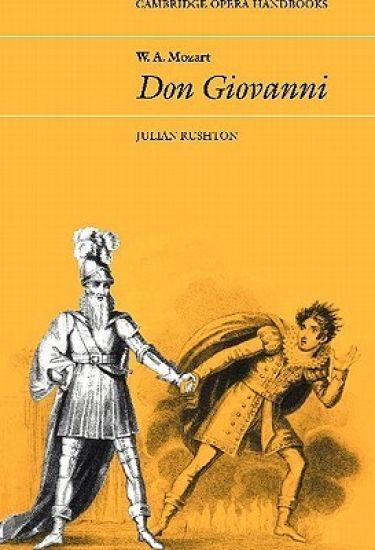
W. A. Mozart: Don Giovanni

W. A. Mozart: Don Giovanni

Rushton Julian

Cambridge University Press
1981
pokkari
This book is a study of Mozart’s Don Giovanni, his second opera to a libretto by da Ponte. Although it is one of the handful of best-known and most often performed operas of the last two hundred years, Don Giovanni is seldom given in an authentic form and arguments persist as to its nature. Julian Rushton takes the view that, notwithstanding the tragic nature of certain scenes, it must be regarded as an opera buffa. He gives a brief summary of its history and life in the theatre, but the chief historical essay (by Edward Forman) concerns the subject-matter before it reached da Ponte. The book includes a very detailed synopsis which forms the basis of an extended commentary on the librettist’s handling of a plot constructed of both original and inherited ideas. Bernard Williams contributes an essay on Don Giovanni as an idea in literature and philosophy since Mozart. The book concludes with an extensive bibliography, and a discography of complete recordings compiled by Malcolm Walker.