Kirjojen hintavertailu. Mukana 12 390 323 kirjaa ja 12 kauppaa.

Kirjailija

Rushworth M. Kidder

Kirjat ja teokset yhdessä paikassa: 4 kirjaa, julkaisuja vuosilta 2006-2016, suosituimpien joukossa Dylan Thomas. Vertaile teosten hintoja ja tarkista saatavuus suomalaisista kirjakaupoista.

Mukana myös kirjoitusasut: Rushworth M Kidder

4 kirjaa

Kirjojen julkaisuhaarukka 2006-2016.

Dylan Thomas

Dylan Thomas

Rushworth M. Kidder

Princeton University Press
2016
sidottu
Since the Bible appears so frequently in Dylan Thomas' work, some critics have decided that he must be a religious poet. Others, noting blasphemous statements and certain irreligious aspects of Thomas' personal life, contend that he was no such thing. Rushworth M. Kidder, investigating this problem, looks below the surface of the obviously religious imagery and discovers a more profound poetry. The first part of this book discusses the nature of religious poetry and the application of that term to Thomas' work; it then develops the necessary background based on his letters and prose comments to provide a foundation for the study; and finally it examines the relationship between the religious aspects of his poetry and his well-known ambiguity. The author re-defines the vocabulary for dealing with religious imagery by establishing three distinct categories of imagery: referential, allusive, and thematic. This original technique is used to examine critically Thomas' poems to show the development of his religious and poetic thought. There are numerous close, sensitive readings of individual poems to show how his poetry, like the Bible, teaches by parable, speaking deliberate ambiguity rather than simple dogma. This strategy inspired poetry that is technically complex but thematically simple, a mode of verse that became more explicitly religious in the poet's final years. Originally published in 1973. The Princeton Legacy Library uses the latest print-on-demand technology to again make available previously out-of-print books from the distinguished backlist of Princeton University Press. These editions preserve the original texts of these important books while presenting them in durable paperback and hardcover editions. The goal of the Princeton Legacy Library is to vastly increase access to the rich scholarly heritage found in the thousands of books published by Princeton University Press since its founding in 1905.

Dylan Thomas

Dylan Thomas

Rushworth M. Kidder

Princeton University Press
2015
pokkari
Since the Bible appears so frequently in Dylan Thomas' work, some critics have decided that he must be a religious poet. Others, noting blasphemous statements and certain irreligious aspects of Thomas' personal life, contend that he was no such thing. Rushworth M. Kidder, investigating this problem, looks below the surface of the obviously religious imagery and discovers a more profound poetry. The first part of this book discusses the nature of religious poetry and the application of that term to Thomas' work; it then develops the necessary background based on his letters and prose comments to provide a foundation for the study; and finally it examines the relationship between the religious aspects of his poetry and his well-known ambiguity. The author re-defines the vocabulary for dealing with religious imagery by establishing three distinct categories of imagery: referential, allusive, and thematic. This original technique is used to examine critically Thomas' poems to show the development of his religious and poetic thought. There are numerous close, sensitive readings of individual poems to show how his poetry, like the Bible, teaches by parable, speaking deliberate ambiguity rather than simple dogma. This strategy inspired poetry that is technically complex but thematically simple, a mode of verse that became more explicitly religious in the poet's final years. Originally published in 1973. The Princeton Legacy Library uses the latest print-on-demand technology to again make available previously out-of-print books from the distinguished backlist of Princeton University Press. These editions preserve the original texts of these important books while presenting them in durable paperback and hardcover editions. The goal of the Princeton Legacy Library is to vastly increase access to the rich scholarly heritage found in the thousands of books published by Princeton University Press since its founding in 1905.
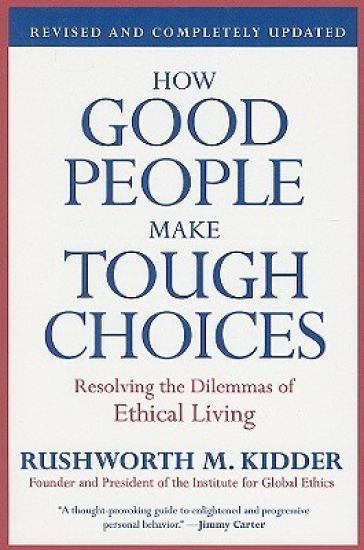
How Good People Make Tough Choices: Resolving the Dilemmas of Ethical Living
This insightful and brilliant analysis of ethics teaches readers valuable skills in evaluating tough choices and arriving at sound conclusions."A thought-provoking guide to enlightened and progressive personal behavior."--Jimmy CarterAn essential guide to ethical action updated for our challenging times, How Good People Make Tough Choices by Rushworth M. Kidder offers practical tools for dealing with the difficult moral dilemmas we face in our everyday lives. The founder and president of the Institute for Global Ethics, Dr. Kidder provides guidelines for making the important decisions in situations that may not be that clear cut--from most private and personal to the most public and global. Former U.S. senator and NBA legend Bill Bradley calls How Good People Make Tough Choices "a valuable guide to more informed and self-conscious moral judgments."
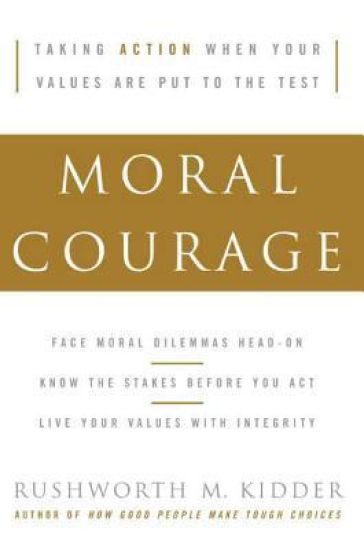
Moral Courage

Moral Courage

Rushworth M Kidder

HarperCollins
2006
nidottu
Why did a group of teenagers watch a friend die instead of putting their own reputations at risk? Why did a top White House official decide to come clean and accept a prison sentence during Watergate? Why did a finance executive turn down millions out of respect for her employer? Why are some willing to risk their futures to uphold principles? What gives us the strength to stand up for what we believe?As these questions suggest, the topic of moral courage is front and center in today's culture. Enron, Arthur Andersen, the U.S. Olympic Committee, abusive priests, cheating students, domestic violence -- all these remind us that taking ethical stands should be a higher priority in our culture. Why, when people discern wrongdoing, are they sometimes unready, unable, or unwilling to act?In a book rich with examples, Rushworth Kidder reveals that moral courage is the bridge between talking ethics and doing ethics. Defining it as a readiness to endure danger for the sake of principle, he explains that the courage to act is found at the intersection of three elements: action based on core values, awareness of the risks, and a willingness to endure necessary hardship. By exploring how moral courage spurs us to strive for core values, he demonstrates the benefits of ethical action to the individual and to society -- and the severe consequences that can result from remaining morally dormant.Moral Courage puts indispensable concepts and tools into our hands, equipping us to respond to the increasingly complicated moral challenges we face at work, at home, and in our communities. It enables us to make clear, confident decisions by exploring some litmus-test questions: Is the benefit worth the risk?Am I motivated by my desire to uphold my beliefs or just to impose them on others?Will my actions create collateral damage among those with no stake in the outcome? While physical courage may no longer be a necessary survival skill or an essential rite of passage out of childhood, few would dispute the growing need for moral courage as the true gauge of maturity. Treating this subject not as an esoteric branch of philosophy but as a practical necessity for modern life, Kidder deftly leads us to a clear understanding of what moral courage is, what it does, and how to get it.