Kirjojen hintavertailu. Mukana 12 390 323 kirjaa ja 12 kauppaa.

Kirjailija

Russell B. Goodman

Kirjat ja teokset yhdessä paikassa: 7 kirjaa, julkaisuja vuosilta 1991-2025, suosituimpien joukossa American Philosophy before Pragmatism. Vertaile teosten hintoja ja tarkista saatavuus suomalaisista kirjakaupoista.

7 kirjaa

Kirjojen julkaisuhaarukka 1991-2025.

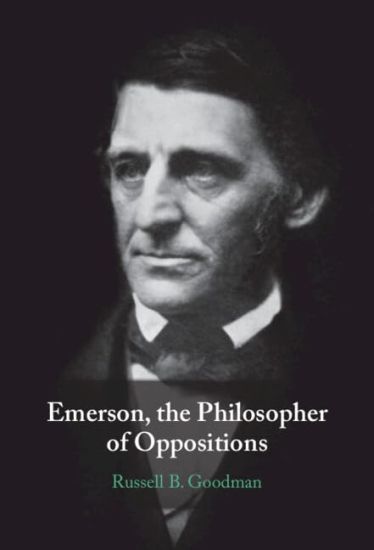
Emerson, the Philosopher of Oppositions

Emerson, the Philosopher of Oppositions

Russell B. Goodman

Cambridge University Press
2025
sidottu
Ralph Waldo Emerson developed a metaphysics of process, an epistemology of moods, and an 'exist'ntialist' ethics of self-improvement, drawing on sources including Neoplatonism, Kantianism, Hinduism, and the skepticism of Montaigne. In this book, Russell Goodman demonstrates how Emerson's essays embody oppositions - one and many, fixed and flowing, nominalism and realism - and argues, in tracing Emerson's main positions, that we miss the living nature of his philosophy unless we take account of the motions and patterns of his essays and the ways in which instability, spontaneity and inconsistency are dramatized within them. Goodman presents Emerson as a philosopher in conversation with Plato, Kant, Nietzsche, William James, Wittgenstein, and Cavell. He finds a variety of skepticisms in Emerson's work - about friendship, language, freedom, and the world's existence - but also an acknowledgement of skepticism as a 'wise' form of life.
American Philosophy before Pragmatism

American Philosophy before Pragmatism

Russell B. Goodman

Oxford University Press
2018
nidottu
Russell B. Goodman tells the story of the development of philosophy in America from the mid-18th century to the late 19th century. The key figures in this story, Jonathan Edwards, Benjamin Franklin, Thomas Jefferson, the writers of The Federalist, and the romantics (or 'transcendentalists') Emerson and Thoreau, were not professors but men of the world, whose deep formative influence on American thought brought philosophy together with religion, politics, and literature. Goodman considers their work in relation to the philosophers and other thinkers they found important: the deism of John Toland and Matthew Tindal, the moral sense theories of Francis Hutcheson, Adam Smith, and David Hume, the political and religious philosophy of John Locke, the romanticism of William Wordsworth and Samuel Taylor Coleridge, and the transcendental idealism of Immanuel Kant. Goodman discusses Edwards's condemnation and Franklin's acceptance of deism, argues that Jefferson was an Epicurean in his metaphysical views and a Christian, Stoic, and Epicurean in his moral outlook, traces Emerson's debts to writers from Madame de Staël to William Ellery Channing, and considers Thoreau's orientation to the universe through sitting and walking. The morality of American slavery is a major theme in American Philosophy before Pragmatism, introduced not to excuse or condemn, but to study how five formidably intelligent people thought about the question when it was--as it no longer is for us--open. Edwards, Franklin and Jefferson owned slaves, though Franklin and Jefferson played important roles in disturbing the uneasy American moral equilibrium that included slavery, even as they approved an American constitution that included it. Emerson and Thoreau were prominent public opponents of slavery in the eighteen forties and fifties. The book contains an Interlude on the concept of a republic and concludes with an Epilogue documenting some continuities in American philosophy, particularly between Emerson and the pragmatists.
American Philosophy before Pragmatism

American Philosophy before Pragmatism

Russell B. Goodman

Oxford University Press
2015
sidottu
Russell B. Goodman tells the story of the development of philosophy in America from the mid-18th century to the late 19th century. The key figures in this story, Jonathan Edwards, Benjamin Franklin, Thomas Jefferson, the writers of The Federalist, and the romantics (or 'transcendentalists') Emerson and Thoreau, were not professors but men of the world, whose deep formative influence on American thought brought philosophy together with religion, politics, and literature. Goodman considers their work in relation to the philosophers and other thinkers they found important: the deism of John Toland and Matthew Tindal, the moral sense theories of Francis Hutcheson, Adam Smith, and David Hume, the political and religious philosophy of John Locke, the romanticism of William Wordsworth and Samuel Taylor Coleridge, and the transcendental idealism of Immanuel Kant. Goodman discusses Edwards's condemnation and Franklin's acceptance of deism, argues that Jefferson was an Epicurean in his metaphysical views and a Christian, Stoic, and Epicurean in his moral outlook, traces Emerson's debts to writers from Madame de Staël to William Ellery Channing, and considers Thoreau's orientation to the universe through sitting and walking. The morality of American slavery is a major theme in American Philosophy before Pragmatism, introduced not to excuse or condemn, but to study how five formidably intelligent people thought about the question when it was--as it no longer is for us--open. Edwards, Franklin and Jefferson owned slaves, though Franklin and Jefferson played important roles in disturbing the uneasy American moral equilibrium that included slavery, even as they approved an American constitution that included it. Emerson and Thoreau were prominent public opponents of slavery in the eighteen forties and fifties. The book contains an Interlude on the concept of a republic and concludes with an Epilogue documenting some continuities in American philosophy, particularly between Emerson and the pragmatists.
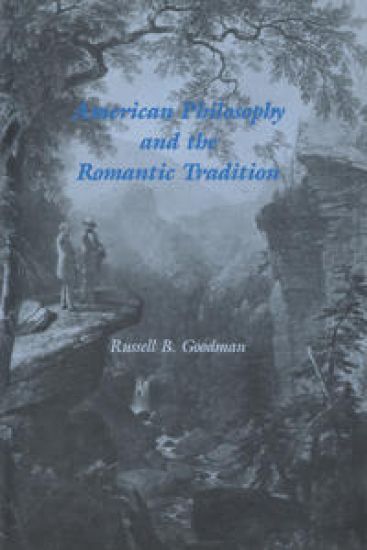
American Philosophy and the Romantic Tradition

American Philosophy and the Romantic Tradition

Russell B. Goodman

Cambridge University Press
2008
pokkari
Professional philosophers have tended either to shrug off American philosophy as negligible or derivative or to date American philosophy from the work of twentieth-century analytical positivists such as Quine. Russell Goodman expands on the revisionist position developed by Stanley Cavell, that the most interesting strain of American thought proceeds not from Puritan theology or from empirical science but from a peculiarly American kind of Romanticism. This insight leads Goodman, through Cavell, back to Emerson and Thoreau and thence to William James and John Dewey, as they assimilated to American circumstances and intellectual habits the currents of European thought from Kant to Wittgenstein.
Wittgenstein and William James

Wittgenstein and William James

Russell B. Goodman

Cambridge University Press
2007
pokkari
This 2002 book explores Wittgenstein's long engagement with the work of the pragmatist William James. In contrast to previous discussions Russell Goodman argues that James exerted a distinctive and pervasive positive influence on Wittgenstein's thought. For example, the book shows that the two philosophers share commitments to anti-foundationalism, to the description of the concrete details of human experience, to the priority of practice over intellect, and to the importance of religion in understanding human life. Considering in detail what Wittgenstein learnt from his reading of Principles of Psychology and Varieties of Religious Experience the author provides considerable evidence for Wittgenstein's claim that he is saying 'something that sounds like pragmatism'. This provocative account of the convergence in the thinking of two major philosophers usually considered as members of discrete traditions will be eagerly sought by students of Wittgenstein, William James, pragmatism and the history of twentieth-century philosophy.
Wittgenstein and William James

Wittgenstein and William James

Russell B. Goodman

Cambridge University Press
2002
sidottu
This 2002 book explores Wittgenstein's long engagement with the work of the pragmatist William James. In contrast to previous discussions Russell Goodman argues that James exerted a distinctive and pervasive positive influence on Wittgenstein's thought. For example, the book shows that the two philosophers share commitments to anti-foundationalism, to the description of the concrete details of human experience, to the priority of practice over intellect, and to the importance of religion in understanding human life. Considering in detail what Wittgenstein learnt from his reading of Principles of Psychology and Varieties of Religious Experience the author provides considerable evidence for Wittgenstein's claim that he is saying 'something that sounds like pragmatism'. This provocative account of the convergence in the thinking of two major philosophers usually considered as members of discrete traditions will be eagerly sought by students of Wittgenstein, William James, pragmatism and the history of twentieth-century philosophy.
American Philosophy and the Romantic Tradition

American Philosophy and the Romantic Tradition

Russell B. Goodman

Cambridge University Press
1991
sidottu
Professional philosophers have tended either to shrug off American philosophy as negligible or derivative or to date American philosophy from the work of twentieth-century analytical positivists such as Quine. Russell Goodman expands on the revisionist position developed by Stanley Cavell, that the most interesting strain of American thought proceeds not from Puritan theology or from empirical science but from a peculiarly American kind of Romanticism. This insight leads Goodman, through Cavell, back to Emerson and Thoreau and thence to William James and John Dewey, as they assimilated to American circumstances and intellectual habits the currents of European thought from Kant to Wittgenstein.