Kirjojen hintavertailu. Mukana 12 247 652 kirjaa ja 12 kauppaa.

Kirjailija

Russell Blackford

Kirjat ja teokset yhdessä paikassa: 9 kirjaa, julkaisuja vuosilta 1999-2023, suosituimpien joukossa Science Fiction and the Moral Imagination. Vertaile teosten hintoja ja tarkista saatavuus suomalaisista kirjakaupoista.

9 kirjaa

Kirjojen julkaisuhaarukka 1999-2023.

How We Became Post-Liberal

How We Became Post-Liberal

Russell Blackford

BLOOMSBURY PUBLISHING PLC
2023
sidottu
Liberalism is in trouble. As a set of ideas, it has lost much of its historical authority in guiding public policy and personal behaviour. In this post-liberal climate, Russell Blackford asks whether liberalism is truly over. How We Became Post-Liberal examines how Western liberal democracies became nations where traditional liberal principles of toleration (religious and otherwise), individual liberty and freedom of speech are frequently dismissed as outdated or twisted to support conservative policies. Blackford traces the lineage of liberalism from problems of toleration that emerged when Christianity triumphed in the late centuries of classical antiquity, with comparison to non-Western civilizations. The political and philosophical story culminates in the recent development – over the past 30 to 50 years – of post-liberal ideologies in the West. At each stage, Blackford discusses arguments for and against liberal principles, identifying why no argument to date has been totally successful in convincing opponents, while maintaining that liberalism’s ideas and language are still worth saving. From campus wars over academic freedom to the Charlie Hebdo attack and the murder of Samuel Paty, this is an indispensable guide for anyone wanting to understand the why, what and how of the post-liberal world.
How We Became Post-Liberal

How We Became Post-Liberal

Russell Blackford

BLOOMSBURY PUBLISHING PLC
2023
nidottu
Liberalism is in trouble. As a set of ideas, it has lost much of its historical authority in guiding public policy and personal behaviour. In this post-liberal climate, Russell Blackford asks whether liberalism is truly over. How We Became Post-Liberal examines how Western liberal democracies became nations where traditional liberal principles of toleration (religious and otherwise), individual liberty and freedom of speech are frequently dismissed as outdated or twisted to support conservative policies. Blackford traces the lineage of liberalism from problems of toleration that emerged when Christianity triumphed in the late centuries of classical antiquity, with comparison to non-Western civilizations. The political and philosophical story culminates in the recent development – over the past 30 to 50 years – of post-liberal ideologies in the West. At each stage, Blackford discusses arguments for and against liberal principles, identifying why no argument to date has been totally successful in convincing opponents, while maintaining that liberalism’s ideas and language are still worth saving. From campus wars over academic freedom to the Charlie Hebdo attack and the murder of Samuel Paty, this is an indispensable guide for anyone wanting to understand the why, what and how of the post-liberal world.
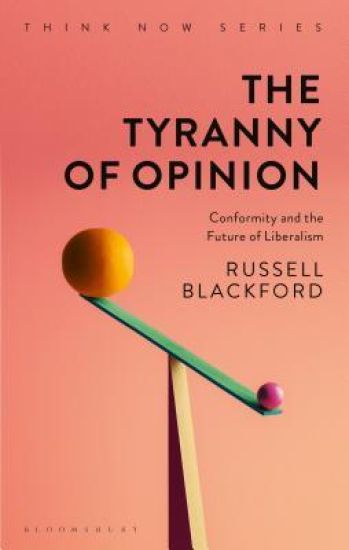
The Tyranny of Opinion

The Tyranny of Opinion

Russell Blackford

Bloomsbury Academic
2018
sidottu
We live in an age of ideology, propaganda, and tribalism. Political conformity is enforced from many sides; the insidious social control that John Stuart Mill called “the tyranny of the prevailing opinion and feeling.” Liberal or left-minded people are often more afraid of each other than of their conservative or right wing opponents. Social media and call-out-culture makes it easier to name, shame, ostracize and harass non-conformists, and destroys careers and lives.How can we oppose this, regaining freedom and our sense of ourselves as individuals? The Tyranny of Opinion identifies the problem, defines its character, and proposes strategies of resistance. Russell Blackford calls for an end to ideological purity policing and for recommitment to the foundational liberal values of individual liberty and spontaneity, free inquiry, diverse opinion, and honest debate.
The Tyranny of Opinion

The Tyranny of Opinion

Russell Blackford

Bloomsbury Academic
2018
nidottu
We live in an age of ideology, propaganda, and tribalism. Political conformity is enforced from many sides; the insidious social control that John Stuart Mill called “the tyranny of the prevailing opinion and feeling.” Liberal or left-minded people are often more afraid of each other than of their conservative or right wing opponents. Social media and call-out-culture makes it easier to name, shame, ostracize and harass non-conformists, and destroys careers and lives.How can we oppose this, regaining freedom and our sense of ourselves as individuals? The Tyranny of Opinion identifies the problem, defines its character, and proposes strategies of resistance. Russell Blackford calls for an end to ideological purity policing and for recommitment to the foundational liberal values of individual liberty and spontaneity, free inquiry, diverse opinion, and honest debate.
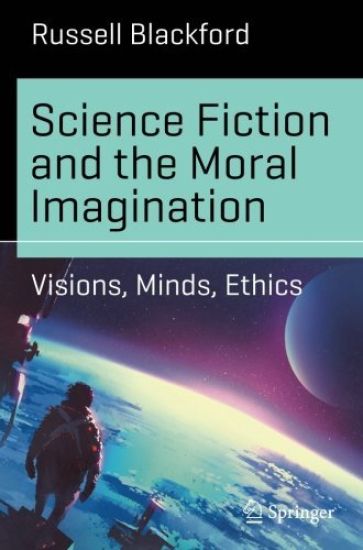
Science Fiction and the Moral Imagination

Science Fiction and the Moral Imagination

Russell Blackford

Springer International Publishing AG
2017
nidottu
In this highly original book, Russell Blackford discusses the intersection of science fiction and humanity’s moral imagination. With the rise of science and technology in the 19th century, and our continually improving understanding of the cosmos, writers and thinkers soon began to imagine futures greatly different from the present. Science fiction was born out of the realization that future technoscientific advances could dramatically change the world. Along with the developments described in modern science fiction - space societies, conscious machines, and upgraded human bodies, to name but a few - come a new set of ethical challenges and new forms of ethics. Blackford identifies these issues and their reflection in science fiction. His fascinating book will appeal to anyone with an interest in philosophy or science fiction, or in how they interact.“This is a seasoned, balanced analysis of a major issue in our thinking about the future, seen through the lens of science fiction, a central art of our time. Everyone from humanists to technologists should study these ideas and examples. Blackford’s book is wise and savvy, and a delight to read as well.” Greg Benford, author of Timescape.
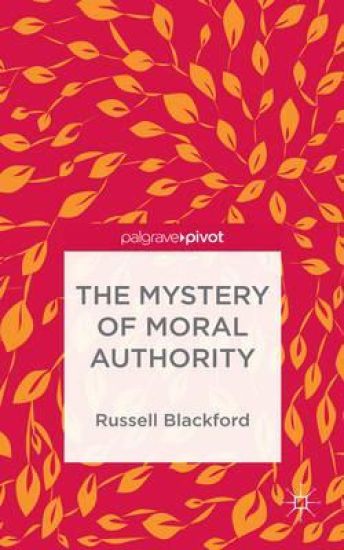
The Mystery of Moral Authority

The Mystery of Moral Authority

Russell Blackford

Palgrave Macmillan
2015
sidottu
The Mystery of Moral Authority argues for a sceptical and pragmatic view of morality as an all-too-human institution. Searching, intellectually rigorous, and always fair to rival views, it represents the state of the art in a tradition of moral philosophy that includes Thomas Hobbes, David Hume, and J.L. Mackie.
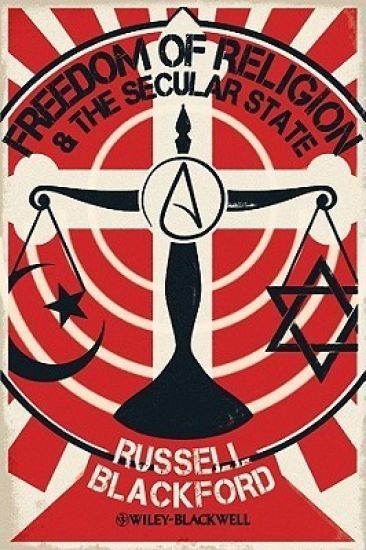
Freedom of Religion and the Secular State

Freedom of Religion and the Secular State

Russell Blackford

John Wiley Sons Inc
2012
sidottu
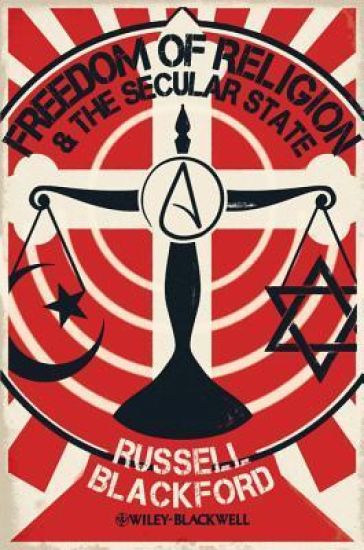
Exploring the relationship between religion and the state Focusing on the intersection of religion, law, and politics in contemporary liberal democracies, Blackford considers the concept of the secular state, revising and updating enlightenment views for the present day. Freedom of Religion and the Secular State offers a comprehensive analysis, with a global focus, of the subject of religious freedom from a legal as well as historical and philosophical viewpoint. It makes an original contribution to current debates about freedom of religion, and addresses a whole range of hot-button issues that involve the relationship between religion and the state, including the teaching of evolution in schools, what to do about the burqa, and so on.
Freedom of Religion and the Secular State

Freedom of Religion and the Secular State

Russell Blackford

John Wiley Sons Inc
2012
nidottu
Exploring the relationship between religion and the state Focusing on the intersection of religion, law, and politics in contemporary liberal democracies, Blackford considers the concept of the secular state, revising and updating enlightenment views for the present day. Freedom of Religion and the Secular State offers a comprehensive analysis, with a global focus, of the subject of religious freedom from a legal as well as historical and philosophical viewpoint. It makes an original contribution to current debates about freedom of religion, and addresses a whole range of hot-button issues that involve the relationship between religion and the state, including the teaching of evolution in schools, what to do about the burqa, and so on.
Strange Constellations

Strange Constellations

Russell Blackford; Van Ikin; Sean McMullen

Praeger Publishers Inc
1999
sidottu
Australia has long been thought of by Europeans as an exotic and mysterious land. During the nineteenth century, it was envisioned much as the moon and Mars are today: a distant and uncharted place with hidden possibilities for explorations and adventures. The continent captured the imagination of European writers in the 1800s, and with its settlement, Australia became the setting for tales of lost worlds and ancient civilizations. Australia has since developed a rich national literature, and perhaps because of its novelty and wilderness, it has inspired numerous science fiction writers. This book provides a critical survey of the history of Australian science fiction from its nineteenth century origins to the present.The volume proceeds chronologically, with an introductory section on the origins of Australian science fiction before 1925. It then turns to the rise of traditional science fiction in Australia from 1926 to 1959, with discussions of such writers as James Morgan Walsh, Norma Hemming, and Wynne Whiteford. A section on the period from 1960 to 1974 examines the growing national recognition given to such Australian science fiction writers as David Rome and Jack Wodhams, while a section on science fiction between 1975 and 1984 reviews the rise of small presses and the growth of literary criticism of the genre in Australia. A final section addresses the maturation of Australian science fiction from 1985 to 1998 with attention to Aussiecon Two. Extensive bibliographic information concludes the volume.