
Kirjailija
Russell Duncan
Kirjat ja teokset yhdessä paikassa: 5 kirjaa, julkaisuja vuosilta 1986-2023, suosituimpien joukossa Contemporary United States. Vertaile teosten hintoja ja tarkista saatavuus suomalaisista kirjakaupoista.
5 kirjaa
Kirjojen julkaisuhaarukka 1986-2023.
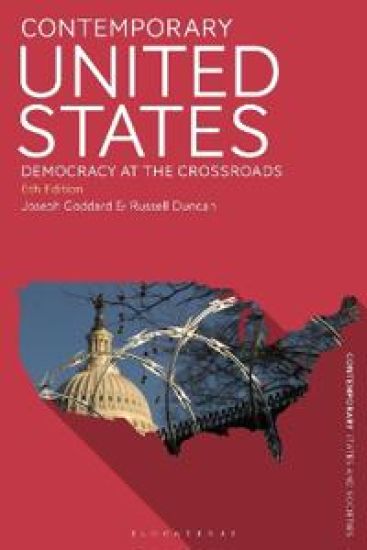
This sixth edition of a well-established introduction to life in the United States covers everything from US politics, society and culture, to the country’s history, economy and place on the world stage. With extensive use of empirical data and illustrative material, Contemporary United States offers readers critical commentary on key political developments and allows them to place this within a wider historical and cultural context. This new edition offers coverage of all of the latest domestic and international developments, including: -The continuing divide between rich and poor, addressing social, legal, economic, and political inequality -The domestic and international ramifications of the Covid-19-induced recession -The rise of China, the return of Putin and the complexity of problems in North Korea, Iraq, Syria, and Afghanistan -The #MeToo and the Black Lives Matter movements -The Biden administration to date. Contemporary United States takes a broad, balanced approach - considering conservative and liberal, pragmatic and idealistic perspectives in each chapter. It is essential reading for those taking modules on contemporary America across degree programmes in American studies and civilization, English studies, history, sociology and politics.
This sixth edition of a well-established introduction to life in the United States covers everything from US politics, society and culture, to the country’s history, economy and place on the world stage. With extensive use of empirical data and illustrative material, Contemporary United States offers readers critical commentary on key political developments and allows them to place this within a wider historical and cultural context. This new edition offers coverage of all of the latest domestic and international developments, including: -The continuing divide between rich and poor, addressing social, legal, economic, and political inequality -The domestic and international ramifications of the Covid-19-induced recession -The rise of China, the return of Putin and the complexity of problems in North Korea, Iraq, Syria, and Afghanistan -The #MeToo and the Black Lives Matter movements -The Biden administration to date. Contemporary United States takes a broad, balanced approach - considering conservative and liberal, pragmatic and idealistic perspectives in each chapter. It is essential reading for those taking modules on contemporary America across degree programmes in American studies and civilization, English studies, history, sociology and politics.
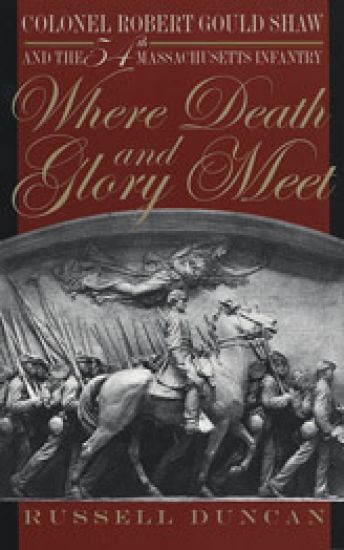
On July 18, 1863, the African American soldiers of the Fifty-Fourth Massachusetts Infantry led a courageous but ill-fated charge on Fort Wagner, a key bastion guarding Charleston harbor. Confederate defenders killed, wounded, or made prisoners of half the regiment. Only hours later, the body of Colonel Robert Gould Shaw, the regiment's white commander, was thrown into a mass grave with those of twenty of his men. The assault promoted the young colonel to the higher rank of martyr, ranking him alongside the legendary John Brown in the eyes of abolitionists.In this biography of Shaw, Russell Duncan presents a poignant portrait of an average young soldier, just past the cusp of manhood and still struggling against his mother's indomitable will, thrust unexpectedly into the national limelight. Using information gleaned from Shaw's letters home before and during the war, Duncan tells the story of the rebellious son of wealthy Boston abolitionists who never fully reconciled his own racial prejudices yet went on to head the North's vanguard black regiment and give his life to the cause of freedom. This thorough biography looks at Shaw from historical and psychological viewpoints and examines the complex family relationships that so strongly influenced him.
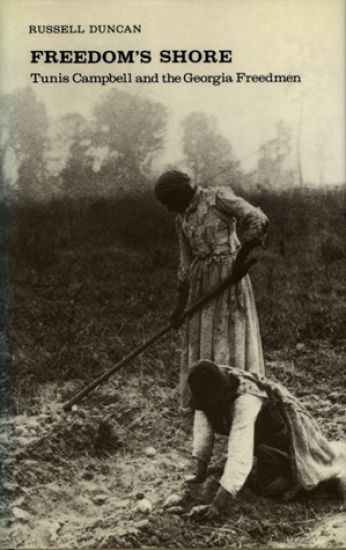
For the first time since the early years of the American republic, the period following emancipation held out the promise of a true colorblind democracy. The freed slaves hoped for forty acres and a mule by which they could work as small farmers, erect houses, establish families, and live free from the gaze of planter and overseer. In this first light of freedom, blacks needed help to learn how to function in a democracy and how to protect themselves from whites eager to find a new way to exploit their labor. In Freedom's Shore, Russell Duncan tells of the efforts of Tunis Campbell, a black carpetbagger and fellow abolitionist and friend of Frederick Douglass, to lift his race to equal participation in American society. Duncan focuses on Campbell's determined work to push radical reforms, draft a new constitution for Georgia, and pass laws designed to ensure equality for all citizens of the state. Campbell made significant contributions at the state level, but his true importance was in his home district of Liberty and McIntosh counties on the Georgia coast. There he forged the black majority into a powerful political machine that controlled county elections for years. He successfully protected black rights, always promoting freedom-in-fact, not merely freedom-by-law. Yet, as many black politicians throughout the South were discovering, radical strength at the local level was insufficient to stop the growing strength of reactionary white politics at the state level. After years of struggle, Campbell was finally defeated by the white Democrats. Charged with political corruption, he was removed from his state and local political offices; at the age of sixty-four, over the protests of President Grant among others, Campbell was sentenced to Georgia's hire-out convict labor program. The black machine in McIntosh County, however, was not destroyed in Campbell's defeat, but instead remained an active force in county politics for forty years, returning a black legislator to the General Assembly in every election, except for the decade of the 1890s, until 1907.Presenting the beginnings of the battle for civil rights in the South, Freedom's Shore tells of the tenacity and achievements of one black political figure, of the hopes and dreams of a legally free people amid the political and social realities of Reconstruction Georgia.