Kirjojen hintavertailu. Mukana 12 595 353 kirjaa ja 12 kauppaa.

Kirjailija

Russell E. Martin

Kirjat ja teokset yhdessä paikassa: 5 kirjaa, julkaisuja vuosilta 2012-2021, suosituimpien joukossa Konstantin Makovsky. Vertaile teosten hintoja ja tarkista saatavuus suomalaisista kirjakaupoista.

Mukana myös kirjoitusasut: Russell E Martin

5 kirjaa

Kirjojen julkaisuhaarukka 2012-2021.

Konstantin Makovsky

Konstantin Makovsky

Wendy Salmond; Wilfried Zeisler; Russell E Martin

D Giles Ltd
2015
sidottu
Monumental in scale and rich in detail, Konstantin Makovsky's stunning paintings epitomize the charm of Old Russia. His early career blossomed in late 19th-century St. Petersburg, where he became painter to the Tsar's court. His popularity soon spread far beyond Russia. He lived and worked in Paris and then America, where he and his paintings acquired celebrity status. This beautifully illustrated book, the first full survey of Makovsky's career in English, positions his work at the crossroads between late Imperial St. Petersburg, Belle-Epoque Paris and Gilded Age America. Three great canvases celebrating Russia's traditional aristocratic wedding customs unify this survey: A Boyar Wedding Feast (1883), Choosing the Bride (1887), and The Russian Bride's Attire (1889). All are explored through outstanding photography, including close-up details. Four essays trace the career of this Russian artist eager for international fame. Wendy Salmond begins by establishing the Russian milieu. Russell E. Martin highlights the historical sources, artefacts and costumes which Makovsky used to create his scenes of 17th-century life. Wilfried Zeisler reveals the artist's little-known Paris period, and also explores his paintings inspired by visits to the Middle East and North Africa. Finally Wendy Salmond investigates America's enthusiastic reception of Makovsky's paintings. AUTHOR: Wendy Salmond is professor of art and art history, Chapman University, Orange, CA Wilfried Zeisler is the associate curator of 19th-century art, Hillwood Estate, Museum & Gardens, Washington, DC Russell E. Martin is professor of history, Westminster College, New Wilmington, PA 130 colour illustrations
The Tsar's Happy Occasion

The Tsar's Happy Occasion

Russell E. Martin

Northern Illinois University Press
2021
sidottu
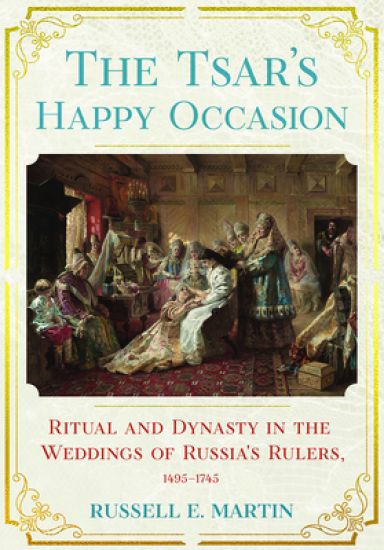
The Tsar's Happy Occasion shows how the vast, ornate affairs that were royal weddings in early modern Russia were choreographed to broadcast powerful images of monarchy and dynasty. Processions and speeches emphasized dynastic continuity and legitimacy. Fertility rites blended Christian and pre-Christian symbols to assure the birth of heirs. Gift exchanges created and affirmed social solidarity among the elite. The bride performed rituals that integrated herself and her family into the inner circle of the court. Using an array of archival sources, Russell E. Martin demonstrates how royal weddings reflected and shaped court politics during a time of dramatic cultural and dynastic change. As Martin shows, the rites of passage in these ceremonies were dazzling displays of monarchical power unlike any other ritual at the Muscovite court. And as dynasties came and went and the political culture evolved, so too did wedding rituals. Martin relates how Peter the Great first mocked, then remade wedding rituals to symbolize and empower his efforts to westernize Russia. After Peter, the two branches of the Romanov dynasty used weddings to solidify their claims to the throne. The Tsar's Happy Occasion offers a sweeping, yet penetrating cultural history of the power of rituals and the rituals of power in early modern Russia.
God, Tsar, and People

God, Tsar, and People

Daniel B. Rowland; Russell E. Martin

Northern Illinois University Press
2020
pokkari
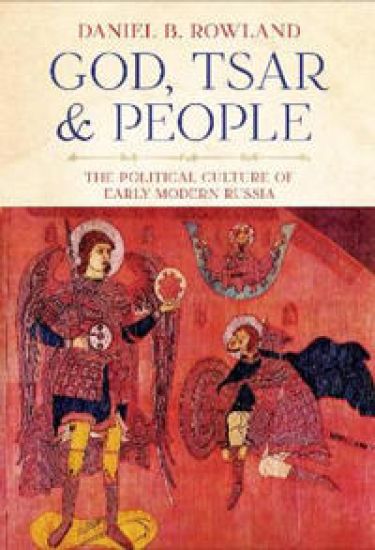
God, Tsar, and People brings together in one volume essays written over a period of fifty years, using a wide variety of evidence—texts, icons, architecture, and ritual—to reveal how early modern Russians (1450–1700) imagined their rapidly changing political world. This volume presents a more nuanced picture of Russian political thought during the two centuries before Peter the Great came to power than is typically available. The state was expanding at a dizzying rate, and atop Russia's traditional political structure sat a ruler who supposedly reflected God's will. The problem facing Russians was that actual rulers seldom—or never—exhibited the required perfection. Daniel Rowland argues that this contradictory set of ideas was far less autocratic in both theory and practice than modern stereotypes would have us believe. In comparing and contrasting Russian history with that of Western European states, Rowland is also questioning the notion that Russia has always been, and always viewed itself as, an authoritarian country. God, Tsar, and People explores how the Russian state in this period kept its vast lands and diverse subjects united in a common view of a Christian polity, defending its long frontier against powerful enemies from the East and from the West.
God, Tsar, and People

God, Tsar, and People

Daniel B. Rowland; Russell E. Martin

Northern Illinois University Press
2020
sidottu
God, Tsar, and People brings together in one volume essays written over a period of fifty years, using a wide variety of evidence—texts, icons, architecture, and ritual—to reveal how early modern Russians (1450–1700) imagined their rapidly changing political world. This volume presents a more nuanced picture of Russian political thought during the two centuries before Peter the Great came to power than is typically available. The state was expanding at a dizzying rate, and atop Russia's traditional political structure sat a ruler who supposedly reflected God's will. The problem facing Russians was that actual rulers seldom—or never—exhibited the required perfection. Daniel Rowland argues that this contradictory set of ideas was far less autocratic in both theory and practice than modern stereotypes would have us believe. In comparing and contrasting Russian history with that of Western European states, Rowland is also questioning the notion that Russia has always been, and always viewed itself as, an authoritarian country. God, Tsar, and People explores how the Russian state in this period kept its vast lands and diverse subjects united in a common view of a Christian polity, defending its long frontier against powerful enemies from the East and from the West.
A Bride for the Tsar

A Bride for the Tsar

Russell E. Martin

Northern Illinois University Press
2012
sidottu
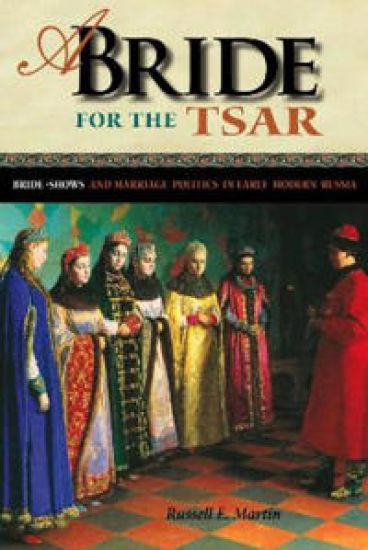
From 1505 to 1689, Russia's tsars chose their wives through an elaborate ritual: the bride-show. The realm's most beautiful young maidens—provided they hailed from the aristocracy—gathered in Moscow, where the tsar's trusted boyars reviewed their medical histories, evaluated their spiritual qualities, noted their physical appearances, and confirmed their virtue. Those who passed muster were presented to the tsar, who inspected the candidates one by one—usually without speaking to any of them—and chose one to be immediately escorted to the Kremlin to prepare for her wedding and new life as the tsar's consort. Alongside accounts of sordid boyar plots against brides, the multiple marriages of Ivan the Terrible, and the fascinating spectacle of the bride-show ritual, A Bride for the Tsar offers an analysis of the show's role in the complex politics of royal marriage in early modern Russia. Russell E. Martin argues that the nature of the rituals surrounding the selection of a bride for the tsar tells us much about the extent of his power, revealing it to be limited and collaborative, not autocratic. Extracting the bride-show from relative obscurity, Martin persuasively establishes it as an essential element of the tsarist political system.