Kirjailija
Russell T. McCutcheon
Kirjat ja teokset yhdessä paikassa: 37 kirjaa, julkaisuja vuosilta 1997-2026, suosituimpien joukossa Manufacturing Religion. Vertaile teosten hintoja ja tarkista saatavuus suomalaisista kirjakaupoista.
37 kirjaa
Kirjojen julkaisuhaarukka 1997-2026.
First published in 1997, Manufacturing Religion was a controversial book because it critiqued a widely adopted style of scholarship that presumes that religion is utterly unique, inexplicable, and therefore able only to be interpreted by privileged scholars. Claiming religion to be sui generis (or self-caused), this approach has undisclosed practical effects--institutional and geo-political--at a variety of sites, from the types of textbooks commonly used in introductory classes to the way that political events are often represented in the mass media. Russell McCutcheon documented the ubiquity of this approach and showed how harmful it was Updating its wide-ranging evidence and adding new chapters, this new edition demonstrates the impact of this critique while showing how little the field has generally moved in the past thirty years.
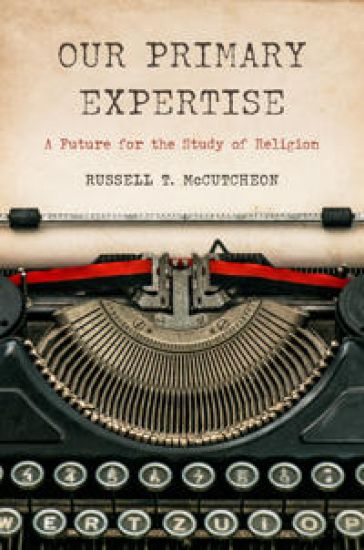
Our Primary Expertise: A Future for the Study of Religion brings the author full circle-from his first book in 1997, on how claims that religion was unique were used to establish the North America field to his present argument that its future is instead based on the degree to which its findings can be applied in a wide assortment of areas, both inside and outside of academia. Its previously uncollected essays, all with new introductions that frame this timely argument, make plain that longstanding critiques of how scholars go about their work have always been about the study of religion’s odd home in the humanities-a place that’s increasingly vulnerable in today’s university. Calling on members of the field not just to revise their research methods but also the ways that they train the next generation, Our Primary Expertise is the only work in the field taking seriously that scholars of religion can help to secure the future of their own field, if only they’re prepared to see “the life of the mind” as a rhetoric that they can no longer afford.
In its first edition, Religion and the Domestication of Dissent focused on the representations of Islam that circulated in the wake of the 9/11 attacks—representations that scholars, pundits, and politicians alike used either to essentialize and demonize it or, instead, to isolate specific aspects as apolitical and thus tolerable faith. This little book’s larger thesis therefore argued for how the classifications that we routinely use to identify and thereby negotiate our social worlds—notably such categories as “religion” or “faith”—are explicitly political.This new edition, which updates the first and adds a new closing chapter, continues to be relevant today—a time when assertions concerning supposedly authentic and homogenous identities (whether shared by “us” or “them”) continue to animate a variety of public debates where the stakes remain high. Thinking back on how Islam was often portrayed in scholarship and popular media in western Europe and North America offers lessons for how debates today unfold on such topics as Christian nationalism—a designation now prominent among pundits intent on identifying the proper and improper ways in which religion intersects with modern political life. But it is this very distinction (between religion and politics) that ought to be attracting our attention, if we are interested not in which way of being religious is right or reasonable but, instead, in determining why some social groups are known as religious in the first place. Seeing the latter question as linked to studying how socially formative categories function in liberal democracies, Religion and the Domestication of Dissent offers an anthropology of the present, when the longstanding mechanisms of liberal governance seem to be under threat.
Dialogues on Religion—and its Study creatively revives a time-honored genre by offering a series of new speeches on religion (its definition, description, comparison, and explanation) between two old friends who periodically meet throughout the year. Eventually working their way to examining why we tend to call part of our world and our experiences religious, nonspecialist readers can eavesdrop on their conversations, gaining entry to a series of timely, interesting, and sometimes surprisingly complex topics—which all begins with one of them coming across a curious news story on their phone.Treating these dialogues as if they were found objects, the book then also joins in a long tradition of critical editions by offering a scholarly introduction to the speeches along with a detailed commentary on both the technical items mentioned as well as the various cultural references that our speakers find to be familiar and then use to think through material that’s rather new—at the same time providing clues as to their identities and location. Written in the vernacular, with a helpful postface that some may wish to read first, Dialogues on Religion—and its Study is original, engaging, and at times funny while always meeting readers where they sometimes are: just a little intrigued by something they’ve discovered and wishing that they could discuss it with a good friend, maybe meeting for coffee or over breakfast at a diner.
The essays collected together in Critics Not Caretakers argue that the study of religion must be rethought as an ordinary aspect of social, historical existence, a stance that makes the scholar of religion a critic of cultural and historical practices rather than a caretaker of religious tradition or a font of timeless wisdom and deep meaning.The book begins with several essays that outline the basis of an alternative, sociorhetorical approach to studying religion, before moving on to a series of discrete dispatches from the ongoing theory wars, each of which uses the work of such writers as Karen Armstrong, Walter Burkert, Benson Saler, and Jacob Neusner as a point of entry into wider theoretical issues of importance to the field’s future. The author then examines the socio-political role of this brand of critical scholarship—a role that differs dramatically from the type of sympathetic caretaking generally associated with scholars of religion who feel compelled to “go public.” Concluding the work is a consideration of how scholars as teachers can address issues of theory, method, and critical thinking in a variety of undergraduate classrooms—the location where they have always been publicly accountable intellectuals.The new edition of this still read and, for some, controversial book preserves the original essays but includes a new opening chapter and new introductory commentaries across all of the chapters to demonstrate how little the field has changed since the volume was first published in 2001. Accordingly, the book continues to provide a viable alternative for those wanting to take a more critical approach to the study of religion.
On Making a Shift in the Study of Religion and Other Essays
Russell T. McCutcheon
De Gruyter
2022
isokokoinen pokkari
Although many would today argue that the onetime dominance of the phenomenology of religion has receded, and with it the traditional approach to studying religion as a unique and deeply-felt experience that defies explanation, the essays collected here take quite the opposite stand: that this approach has merely been re-branded and continues to characterize much work being done in the field today. Offering a different way forward—one that is based on experiences gained by the members of the Department of Religious Studies at the University of Alabama, a program that has successfully reinvented itself over the past 20 years—the book includes a variety of practical suggestions for how members of Religious Studies departments can revise their approach to studying and teaching about religion. Seeing religion instead as mundane but always exemplary of basic social elements found all across cultures, the volume argues that the way forward for this field lies not in the specialness of its object of study but, instead, the fact that thinking and acting as if something is special is itself an ordinary aspect of history and culture. Making just this shift helps the scholar of religion to contribute to wide, interdisciplinary conversations all across the Humanities and Social Sciences, demonstrating the practical relevance of their work.
Religion in 50 More Words: A Redescriptive Vocabulary provides a succinct historical, social, and political examination of some of the key words used in the modern study of religion. Differing from the first volume’s more theoretical focus, this volume analyzes more common first order descriptive terms that are used throughout the field, inviting readers to theorize their traditional vocabulary. Topics covered include:• Atheism/Theism• Conversion• Cult • Evil • Fundamentalism • Idol • Magic • Pilgrimage • Ritual • Sacrifice Religion in 50 More Words submits such terms to a critical interrogation and subsequent redescription. This paves the way for a collective and more critical reframing of the field. The volume, along with Religion in 50 Words, provides an indispensable resource for students and academics working in the field of religious studies and cognate disciplines.
Religion in 50 Words: A Critical Vocabulary is the first of a two-volume work that seeks to transform the study of religion by offering a radically critical perspective. It does so by providing a succinct and critical examination of the key words used in the modern study of religion. Arranged alphabetically, the book explores the historic roots, varied uses, and current significance and utility of the technical terms used within the current field of religious studies. These are the terms that both students and scholars routinely deploy to think about, describe, and analyze data—sometimes without realizing that they are themselves technical tools in need of attention.Among the topics covered: Belief Critical Culture Definition Environment GenderIdeologyLived religion Material religionOrthodoxy PoliticsRaceSacred/profaneSecularTheory This book submits all of its terms to a critical interrogation and subsequent re-description, thereby allowing a collective reframing of the field. This volume is an indispensable resource for students and academics working in religious studies.
On Making a Shift in the Study of Religion and Other Essays
Russell T. McCutcheon
De Gruyter
2021
sidottu
Although many would today argue that the onetime dominance of the phenomenology of religion has receded, and with it the traditional approach to studying religion as a unique and deeply-felt experience that defies explanation, the essays collected here take quite the opposite stand: that this approach has merely been re-branded and continues to characterize much work being done in the field today. Offering a different way forward—one that is based on experiences gained by the members of the Department of Religious Studies at the University of Alabama, a program that has successfully reinvented itself over the past 20 years—the book includes a variety of practical suggestions for how members of Religious Studies departments can revise their approach to studying and teaching about religion. Seeing religion instead as mundane but always exemplary of basic social elements found all across cultures, the volume argues that the way forward for this field lies not in the specialness of its object of study but, instead, the fact that thinking and acting as if something is special is itself an ordinary aspect of history and culture. Making just this shift helps the scholar of religion to contribute to wide, interdisciplinary conversations all across the Humanities and Social Sciences, demonstrating the practical relevance of their work.
The revised essays collected here, four of which are published for the first time, continue a longstanding argument made by McCutcheon and others: that the study of religion would benefit from self-conscious scrutiny of its tools, the interests that may drive them, and the effects that might follow their use. The chapters examine a variety of contemporary sites in the modern field where this thesis can be argued, whether involving the anachronistic use of of the category religion when studying the ancient world to current interest in so-called critical religion or critical realist approaches. Moreover – contrary to some past characterizations of such critiques – a constructive way forward for the field is once again recommended and, at several sites, exemplified in detail: redescribing not only religion as something ordinary but also our tendency to create the impression of exceptional and thus set-apart things, places, and people. Aimed at scholars and students alike, the book is an invitation to examine our own scholarly practices and thereby take a more active role in shaping the field in which we carry out our work as scholars of this thing we call religion.
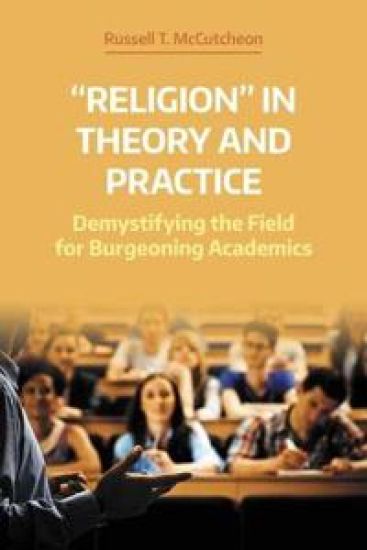
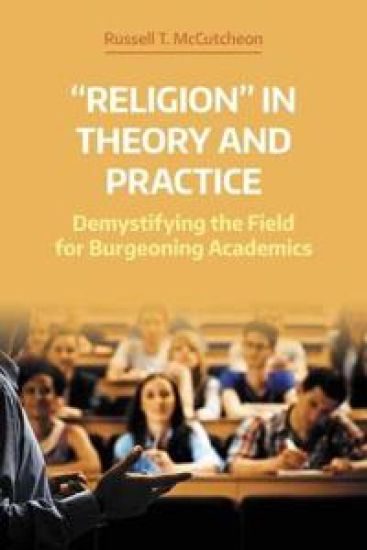
"Religion" in Theory and Practice follows on from McCutcheon's 2014 Equinox book Entanglements: Marking Place in the Field of Religion by offering both an overview of the current state of theory in the academic study of religion as well as examining a variety of practical sites where critical scholarship is implemented but also challenged. Although addressed to early career scholars--taking one reviewer of Entanglements seriously by adding to the meager genre of books directed toward these important readers--the volume should also be of interest to anyone curious about why many in the study of religion continue to assume that their object of study needs special attention. The first section outlines McCutcheon's broader and more recent thoughts on the current state of the field (such as the claims, by some, that the field is now "post-theory") while the second section applies the first at a variety of discrete sites within the profession. These include how we approach teaching the introductory course, the work carried out in professional associations and conferences, the ongoing problem of contingent labor and what faculty might be able to do about it, the challenge of talking about what a theoretically-engaged scholar of religion actually does, and the varied audiences and readers who we can now try to reach with our work. Drawing on previously published, but revised, material for four of the ten chapters, the volume invites readers to step back from their own individual, specialized work so as to consider some of the wider structures in which the wider field exists and where all of our work is carried out.
The revised essays collected here, four of which are published for the first time, continue a longstanding argument made by McCutcheon and others: that the study of religion would benefit from self-conscious scrutiny of its tools, the interests that may drive them, and the effects that might follow their use. The chapters examine a variety of contemporary sites in the modern field where this thesis can be argued, whether involving the anachronistic use of of the category religion when studying the ancient world to current interest in so-called critical religion or critical realist approaches. Moreover – contrary to some past characterizations of such critiques – a constructive way forward for the field is once again recommended and, at several sites, exemplified in detail: redescribing not only religion as something ordinary but also our tendency to create the impression of exceptional and thus set-apart things, places, and people. Aimed at scholars and students alike, the book is an invitation to examine our own scholarly practices and thereby take a more active role in shaping the field in which we carry out our work as scholars of this thing we call religion.