Kirjojen hintavertailu. Mukana 12 595 353 kirjaa ja 12 kauppaa.

Kirjailija

Ruth Barton

Kirjat ja teokset yhdessä paikassa: 11 kirjaa, julkaisuja vuosilta 2004-2019, suosituimpien joukossa Hedy Lamarr. Vertaile teosten hintoja ja tarkista saatavuus suomalaisista kirjakaupoista.

11 kirjaa

Kirjojen julkaisuhaarukka 2004-2019.

Irish Cinema in the Twenty-First Century

Irish Cinema in the Twenty-First Century

Ruth Barton

Manchester University Press
2019
sidottu
An accessible, comprehensive overview of contemporary Irish cinema, this book is intended for use as a third-level textbook and is designed to appeal to academics in the areas of film studies and Irish studies. Responding to changes in the Irish production environment, it includes chapters on new Irish genres such as creative documentary, animation and horror. It discusses shifting representations of the countryside and the city, always with a strong concern for gender representations, and looks at how Irish historical events, from the Civil War to the Troubles, and the treatment of the traumatic narrative of clerical sexual abuse have been portrayed in recent films. It covers works by established auteurs such as Neil Jordan and Jim Sheridan, as well as new arrivals, including the Academy Award-winning Lenny Abrahamson.

Irish Cinema in the Twenty-First Century

Irish Cinema in the Twenty-First Century

Ruth Barton

Manchester University Press
2019
nidottu
An accessible, comprehensive overview of contemporary Irish cinema, this book is intended for use as a third-level textbook and is designed to appeal to academics in the areas of film studies and Irish studies. Responding to changes in the Irish production environment, it includes chapters on new Irish genres such as creative documentary, animation and horror. It discusses shifting representations of the countryside and the city, always with a strong concern for gender representations, and looks at how Irish historical events, from the Civil War to the Troubles, and the treatment of the traumatic narrative of clerical sexual abuse have been portrayed in recent films. It covers works by established auteurs such as Neil Jordan and Jim Sheridan, as well as new arrivals, including the Academy Award-winning Lenny Abrahamson.
The X Club

The X Club

Ruth Barton

University of Chicago Press
2018
sidottu
In 1864, amid headline-grabbing heresy trials, members of the British Association for the Advancement of Science were asked to sign a declaration affirming that science and scripture were in agreement. Many criticized the new test of orthodoxy; nine decided that collaborative action was required. The X Club tells their story. These six ambitious professionals and three wealthy amateurs--J. D. Hooker, T. H. Huxley, John Tyndall, John Lubbock, William Spottiswoode, Edward Frankland, George Busk, T. A. Hirst, and Herbert Spencer--wanted to guide the development of science and public opinion on issues where science impinged on daily life, religious belief, and politics. They formed a private dining club, which they named the X Club, to discuss and further their plans. As Ruth Barton shows, they had a clear objective: they wanted to promote "scientific habits of mind," which they sought to do through lectures, journalism, and science education. They devoted enormous effort to the expansion of science education, with real, but mixed, success. For twenty years, the X Club was the most powerful network in Victorian science--the men succeeded each other in the presidency of the Royal Society for a dozen years. Barton's group biography traces the roots of their success and the lasting effects of their championing of science against those who attempted to limit or control it, along the way shedding light on the social organization of science, the interactions of science and the state, and the places of science and scientific men in elite culture in the Victorian era.
Rex Ingram

Rex Ingram

Ruth Barton

The University Press of Kentucky
2014
sidottu
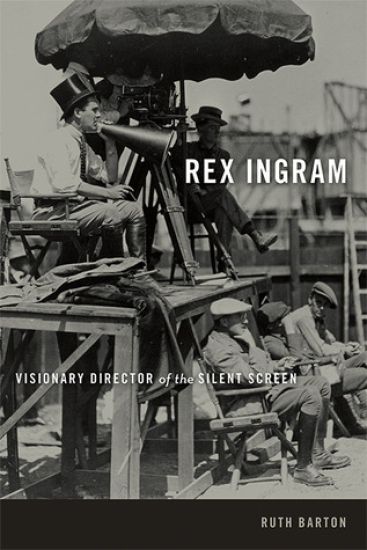
Noted for his charisma, talent, and striking good looks, director Rex Ingram (1893-1950) is ranked alongside D. W. Griffith, Marshall Neilan, and Erich von Stroheim as one of the greatest artists of the silent cinema. Ingram briefly studied sculpture at the Yale University School of Art after emigrating from Ireland to the United States in 1911; but he was soon seduced by the new medium of moving pictures and abandoned his studies for a series of jobs in the film industry. Over the next decade, he became one of the most popular directors in Hollywood, directing smash hits such as The Four Horsemen of the Apocalypse (1921), The Prisoner of Zenda (1922), and Scaramouche (1923).In Rex Ingram, Ruth Barton explores the life and legacy of the pioneering filmmaker, following him from his childhood in Dublin to his life at the top of early Hollywood's A-list and his eventual self-imposed exile on the French Riviera. Ingram excelled in bringing visions of adventure and fantasy to eager audiences, and his films made stars of actors like Rudolph Valentino, Ramón Novarro, and Alice Terry -- his second wife and leading lady. With his name a virtual guarantee of box office success, Ingram's career flourished in the 1920s despite the constraints of an increasingly regulated industry and the hostility of Louis B. Mayer, who regarded him as a dangerous maverick.Barton examines the virtuoso director's career and controversial personal life -- including his conversion to Islam, the rumors surrounding his ambiguous sexuality, and the circumstances of his untimely death. This definitive biography not only restores the visionary filmmaker to the spotlight but also provides an absorbing look at the daring and exhilarating days of silent-era Hollywood.
Hedy Lamarr

Hedy Lamarr

Ruth Barton

The University Press of Kentucky
2012
nidottu
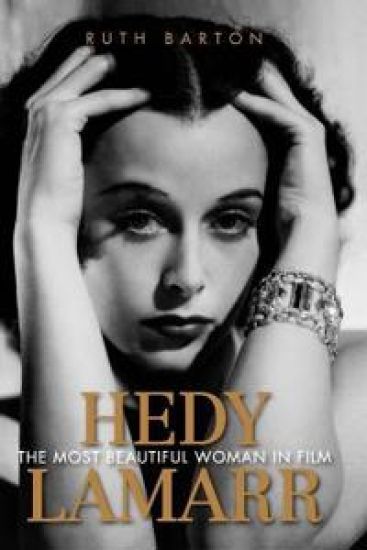
Hedy Lamarr's life was punctuated by salacious rumors and public scandal, but it was her stunning looks and classic Hollywood glamour that continuously captivated audiences. Born Hedwig Kiesler, she escaped an unhappy marriage with arms dealer Fritz Mandl in Austria to try her luck in Hollywood, where her striking appearance made her a screen legend. Her notorious nude role in the erotic Czech film Ecstasy (1933), as well as her work with Cecil B. DeMille ( Samson and Delilah, 1949), Walter Wanger ( Algiers, 1938), and studio executive Louis B. Mayer catapulted her alluring and provocative reputation as a high-profile sex symbol. In Hedy Lamarr: The Most Beautiful Woman in Film, Ruth Barton explores the many facets of the screen legend, including her life as an inventor. Working with avant-garde composer and film scorer George Antheil, Lamarr helped to develop and patent spread spectrum technology, which is still used in mobile phone communication. However, despite her screen persona and scientific success, Lamarr's personal life caused quite a scandal. A string of failed marriages, a lawsuit against her publisher regarding her sensational autobiography, and shoplifting charges made her infamous beyond her celebrity. Drawing on extensive research into both the recorded truths of Lamarr's life and the rumors that made her notorious, Barton recognizes Lamarr's contributions to both film and technology while revealing the controversial and conflicted woman underneath. Hedy Lamarr: The Most Beautiful Woman in Film illuminates the life of a classic Hollywood icon.
Hedy Lamarr

Hedy Lamarr

Ruth Barton

The University Press of Kentucky
2010
sidottu
Hedy Lamarr's life was punctuated by salacious rumors and public scandal, but it was her stunning looks and classic Hollywood glamour that continuously captivated audiences. Born Hedwig Kiesler, she escaped an unhappy marriage with arms dealer Fritz Mandl in Austria to try her luck in Hollywood, where her striking appearance made her a screen legend. Her notorious nude role in the erotic Czech film Ecstasy (1933), as well as her work with Cecil B. DeMille ( Samson and Delilah, 1949), Walter Wanger ( Algiers, 1938), and studio executive Louis B. Mayer catapulted her alluring and provocative reputation as a high-profile sex symbol. In Hedy Lamarr: The Most Beautiful Woman in Film, Ruth Barton explores the many facets of the screen legend, including her life as an inventor. Working with avant-garde composer and film scorer George Antheil, Lamarr helped to develop and patent spread spectrum technology, which is still used in mobile phone communication. However, despite her screen persona and scientific success, Lamarr's personal life caused quite a scandal. A string of failed marriages, a lawsuit against her publisher regarding her sensational autobiography, and shoplifting charges made her infamous beyond her celebrity. Drawing on extensive research into both the recorded truths of Lamarr's life and the rumors that made her notorious, Barton recognizes Lamarr's contributions to both film and technology while revealing the controversial and conflicted woman underneath. Hedy Lamarr: The Most Beautiful Woman in Film illuminates the life of a classic Hollywood icon.
Longing for more

Longing for more

Ruth Barton

Inter-Varsity Press
2007
nidottu
It used to be that a woman's choices were fairly simple: she went to school, got married, stayed married to the same man - for better or worse - and raised children. Standards of conduct and morality were widely accepted, and generally we knew what was expected. This is no longer the case. Today we can have a career, full-time or part-time, at home or away from home, or we can focus our energy and time solely on family and volunteer work. We can get married or stay single, have children - the 'regular way' or through adoption - or not. But choices do not necessarily make life easier - they often make life more difficult, because they produce guilt, self-doubt and stress. With compassion and insight Ruth Haley Barton identifies the pressure exerted on Christian women - by church, culture and from within - and the radical call of Christ to each of us to be free. Exploring eleven freedoms available in Jesus, she shows how Christian women can respond to the genuinely liberating call of Christ on their lives.
Irish National Cinema

Irish National Cinema

Ruth Barton

Routledge
2004
sidottu
From the international successes of Neil Jordan and Jim Sheridan, to the smaller productions of the new generation of Irish filmmakers, this book explores questions of nationalism, gender identities, the representation of the Troubles and of Irish history as well as cinema's response to the so-called Celtic Tiger and its aftermath.Irish National Cinema argues that in order to understand the unique position of filmmaking in Ireland and the inheritance on which contemporary filmmakers draw, definitions of the Irish culture and identity must take into account the so-called Irish diaspora and engage with its cinema.An invaluable resource for students of world cinema.
Irish National Cinema

Irish National Cinema

Ruth Barton

Routledge
2004
nidottu
From the international successes of Neil Jordan and Jim Sheridan, to the smaller productions of the new generation of Irish filmmakers, this book explores questions of nationalism, gender identities, the representation of the Troubles and of Irish history as well as cinema's response to the so-called Celtic Tiger and its aftermath.Irish National Cinema argues that in order to understand the unique position of filmmaking in Ireland and the inheritance on which contemporary filmmakers draw, definitions of the Irish culture and identity must take into account the so-called Irish diaspora and engage with its cinema.An invaluable resource for students of world cinema.