Kirjojen hintavertailu. Mukana 12 390 323 kirjaa ja 12 kauppaa.

Kirjailija

Ruth Bloch Rubin

Kirjat ja teokset yhdessä paikassa: 4 kirjaa, julkaisuja vuosilta 2017-2025, suosituimpien joukossa Building the Bloc. Vertaile teosten hintoja ja tarkista saatavuus suomalaisista kirjakaupoista.

4 kirjaa

Kirjojen julkaisuhaarukka 2017-2025.

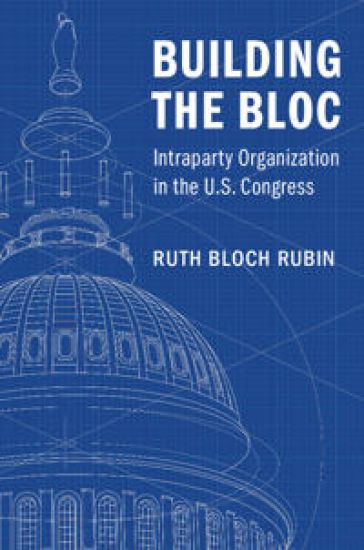
Divided Parties, Strong Leaders

Divided Parties, Strong Leaders

Ruth Bloch Rubin

THE UNIVERSITY OF CHICAGO PRESS
2025
sidottu
Drawing on nearly a century of legislative history, this careful account invites readers to think anew about when, why, and how leaders of divided parties wield power in Congress. For decades, legislative scholars have viewed party divisions as critical constraints on congressional leadership. The more a party’s rank and file disagree with one another, the weaker their leaders are predicted to be; as member preferences converge, leader power is thought to increase. In a powerful corrective to this prevailing view, Ruth Bloch Rubin argues that party divisions are not inherently limiting. Divided Parties, Strong Leaders highlights and examines variation in how members of party factions choose to work together. She shows that leaders of divided parties are well positioned to overcome, and even draw strength from, their divided ranks when the collaborative efforts of their coalitions’ competing factions are evenly matched. By contrast, their capacity to get what they want is more limited when one faction has out-collaborated its competition. Presenting detailed case studies of some of the most storied leaders of the postwar Congress, including Speakers Sam Rayburn and Nancy Pelosi, Bloch Rubin analyzes the factional configuration each leader encountered and explains why it mattered for their exercise of power.
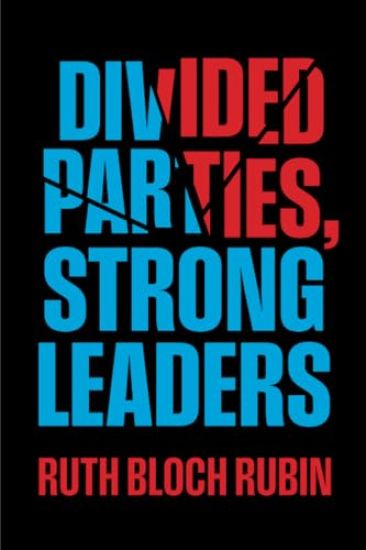
Divided Parties, Strong Leaders

Divided Parties, Strong Leaders

Ruth Bloch Rubin

THE UNIVERSITY OF CHICAGO PRESS
2025
nidottu
Drawing on nearly a century of legislative history, this careful account invites readers to think anew about when, why, and how leaders of divided parties wield power in Congress. For decades, legislative scholars have viewed party divisions as critical constraints on congressional leadership. The more a party’s rank and file disagree with one another, the weaker their leaders are predicted to be; as member preferences converge, leader power is thought to increase. In a powerful corrective to this prevailing view, Ruth Bloch Rubin argues that party divisions are not inherently limiting. Divided Parties, Strong Leaders highlights and examines variation in how members of party factions choose to work together. She shows that leaders of divided parties are well positioned to overcome, and even draw strength from, their divided ranks when the collaborative efforts of their coalitions’ competing factions are evenly matched. By contrast, their capacity to get what they want is more limited when one faction has out-collaborated its competition. Presenting detailed case studies of some of the most storied leaders of the postwar Congress, including Speakers Sam Rayburn and Nancy Pelosi, Bloch Rubin analyzes the factional configuration each leader encountered and explains why it mattered for their exercise of power.
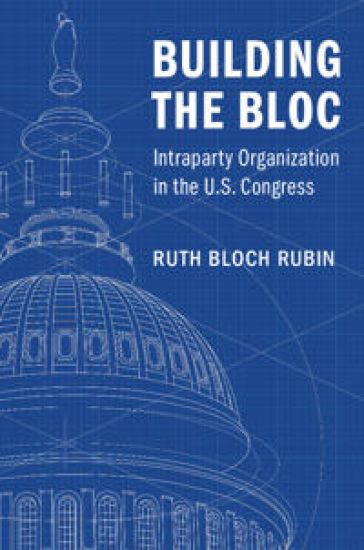
Building the Bloc

Building the Bloc

Ruth Bloch Rubin

Cambridge University Press
2017
sidottu
Traversing more than a century of American history, this book advances a new theory of congressional organization to explain why and how party dissidents rely on institutions of their own making, arguing that these intraparty organizations can radically shift the balance of power between party leaders and rank-and-file members. Intraparty organizations empower legislators of varying ideological stripes to achieve collective and coordinated action by providing selective incentives to cooperative members, transforming public-good policies into excludable accomplishments, and helping members to institute rules and procedures to promote group decision making. Drawing on rich archival evidence and interview data, the book details the challenges dissident lawmakers encounter when they face off against party leaders and their efforts to organize in response. Eight case studies complicate our understanding of landmark fights over rules reform, early twentieth-century economic struggles, mid-century battles over civil rights legislation, and contemporary debates over national health care and fiscal policy.
Building the Bloc

Building the Bloc

Ruth Bloch Rubin

Cambridge University Press
2017
pokkari
Traversing more than a century of American history, this book advances a new theory of congressional organization to explain why and how party dissidents rely on institutions of their own making, arguing that these intraparty organizations can radically shift the balance of power between party leaders and rank-and-file members. Intraparty organizations empower legislators of varying ideological stripes to achieve collective and coordinated action by providing selective incentives to cooperative members, transforming public-good policies into excludable accomplishments, and helping members to institute rules and procedures to promote group decision making. Drawing on rich archival evidence and interview data, the book details the challenges dissident lawmakers encounter when they face off against party leaders and their efforts to organize in response. Eight case studies complicate our understanding of landmark fights over rules reform, early twentieth-century economic struggles, mid-century battles over civil rights legislation, and contemporary debates over national health care and fiscal policy.