Kirjojen hintavertailu. Mukana 12 595 353 kirjaa ja 12 kauppaa.
Kirjailija
Ruth Kirk
Kirjat ja teokset yhdessä paikassa: 9 kirjaa, julkaisuja vuosilta 1992-2016, suosituimpien joukossa Steam Guides in App Development. Vertaile teosten hintoja ja tarkista saatavuus suomalaisista kirjakaupoista.
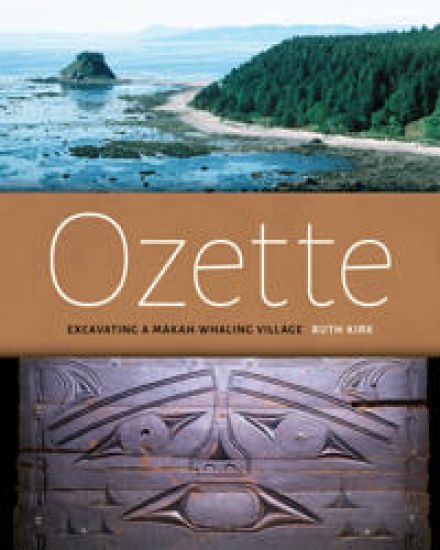
Makah families left the coastal village of Ozette in the 1920s to comply with the federal government's requirement that they send their children to school, and by doing so they ended nearly two thousand years of occupation at this strategic whale- and seal-hunting site on Washington's Olympic Peninsula. Archaeologist Richard Daugherty took note of the site in a survey of the coast in 1947 and later returned at the request of the Makah tribal chairman when storm waves began exposing both architecture and artifacts. Full-scale excavations from 1966 to 1981 revealed houses and their contents—including ordinarily perishable wood and basketry objects that had been buried in a mudflow well before the arrival of Europeans in the region. Led by Daugherty, with a team of graduate and undergraduate students and Makah tribal members, the work culminated in the creation of the Makah Museum in Neah Bay, where more than 55,000 Ozette artifacts are curated and displayed.Ozette: Excavating a Makah Whaling Village is a comprehensive and highly readable account of this world-famous archaeological site and the hydraulic excavation of the mudslide that both demolished the houses and protected the objects inside from decay. Ruth Kirk was present, documenting the archaeological work from its beginning, and her firsthand knowledge of the people and efforts involved enrich her compelling story of discovery, fieldwork, and deepen our understanding of Makah cultural heritage.
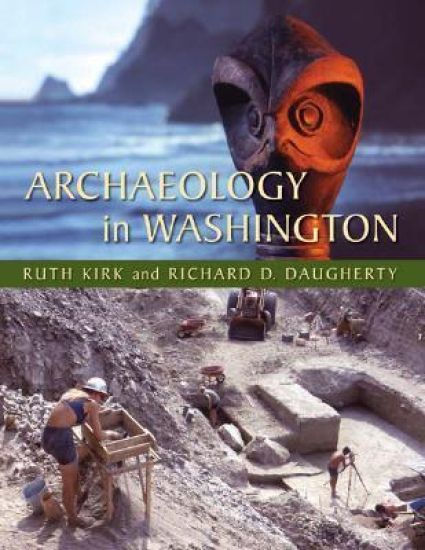
Archaeology--along with Native American traditions and memories--holds a key to understanding early chapters of the human story in Washington. This all-new book draws together and brings up to date much of what has been learned about the state's prehistory and the environments early people experienced. It presents a sample of sites representing Washington's geographic regions and touches on historical archaeology, including excavations at fur-trade forts and the Whitman mission, and Cathlapotle, a Columbia River village visited by Lewis and Clark.The authors portray the discovery of a mastodon butchered by hunters on the Olympic Peninsula 14,000 years ago; the nearly 13,000-year-old Clovis points in an East Wenatchee apple orchard; an 11,200-year-old "Marmes Man" in the Palouse; and the controversial "Kennewick Man," more than 9,000 years old, eroded out of the riverbank at Tri-Cities. They discuss a 5,000-year-old camas earth oven in the Pend Oreille country; 5,000 years of human habitation at Seattle's Metro sewage treatment site; the recovery at Hoko River near Neah Bay of a 3,200-year-old fishnet made of split spruce boughs and tiny stone knife blades still hafted in cedar handles; and the world-renowned coastal excavations at Ozette, where mudslides repeatedly swept into houses, burying and preserving them.The tale ranges from the earliest bands of hunters, fishers, and gatherers to the complex social organizations and highly developed technologies of native peoples at the time of their disruption by the arrival of Euro-American newcomers. Also included is a summary of the changing role, techniques, and perspectives of archaeology itself, from the surveys and salvage excavation barely ahead of dam construction on the Snake and among Columbia rivers to today's collaboration between archaeologists, Native Americans, private landowners, and public agencies. Color photographs, line drawings, and maps lavishly illustrate the text.
Archaeology--along with Native American traditions and memories--holds a key to understanding early chapters of the human story in Washington. This all-new book draws together and brings up to date much of what has been learned about the state's prehistory and the environments early people experienced. It presents a sample of sites representing Washington's geographic regions and touches on historical archaeology, including excavations at fur-trade forts and the Whitman mission, and Cathlapotle, a Columbia River village visited by Lewis and Clark.The authors portray the discovery of a mastodon butchered by hunters on the Olympic Peninsula 14,000 years ago; the nearly 13,000-year-old Clovis points in an East Wenatchee apple orchard; an 11,200-year-old "Marmes Man" in the Palouse; and the controversial "Kennewick Man," more than 9,000 years old, eroded out of the riverbank at Tri-Cities. They discuss a 5,000-year-old camas earth oven in the Pend Oreille country; 5,000 years of human habitation at Seattle's Metro sewage treatment site; the recovery at Hoko River near Neah Bay of a 3,200-year-old fishnet made of split spruce boughs and tiny stone knife blades still hafted in cedar handles; and the world-renowned coastal excavations at Ozette, where mudslides repeatedly swept into houses, burying and preserving them.The tale ranges from the earliest bands of hunters, fishers, and gatherers to the complex social organizations and highly developed technologies of native peoples at the time of their disruption by the arrival of Euro-American newcomers. Also included is a summary of the changing role, techniques, and perspectives of archaeology itself, from the surveys and salvage excavation barely ahead of dam construction on the Snake and among Columbia rivers to today's collaboration between archaeologists, Native Americans, private landowners, and public agencies. Color photographs, line drawings, and maps lavishly illustrate the text.
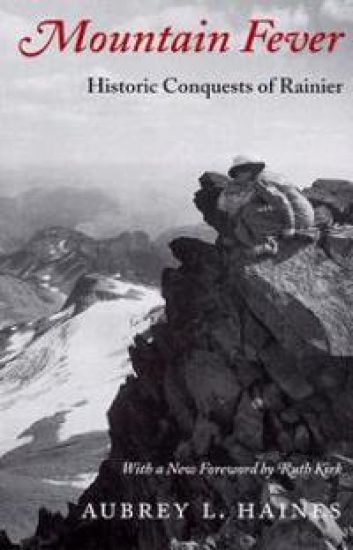
aEUROoeThe spirit of the pioneering mountaineer emanates from Mountain Fever, a superb account of the 19th century conquests of the highest and most imposing of Pacific Northwest mountains, Mt. Rainier. [This] is the history of organized mountaineering in the Northwest as well as of Mt. Rainier and those who accepted its challenge. It carries those stories to the turn of the century when Mt. Rainier achieved the status of a national park.aEURO - Portland Oregonian aEUROoeHainesaEURO(t) story begins with the day Capt. George Vancouver sighted the snowy mountain in 1792. The author sifted accounts of the first climbers, Dr. William F. Tolmie who went to the ridge above the forks of the Mowich River in 1833, the Bailey-Edgar-Ford party, which may have reached the summit in 1851, the unknown climbers guided by a Yakima Indian, Saluskin, in 1855 and the 1857 attempt of Lieut. August V. Kautz. These were the men who penetrated the wilderness without blazing a trail.aEURO - Seattle Times aEUROoeThis book - a collectoraEURO(t)s item - will be cherished by all who have set foot on the peak and who have been inspired by its distant views.aEURO - William O. Douglas Aubrey Haines is a retired historian for the National Park Service.
On clear days, the mammoth volcano Mount Rainier dominates the Seattle and Tacoma skylines and can be seen from Whidbey Island to Yakima and the central Washington wheat fields. "The Mountain's out!" is a cheerful local greeting, especially after a long spell of overcast weather. Sunrise to Paradise explores the rich history of this symbol of the Pacific Northwest and the national park that preserves it.Mount Rainier is the fifth highest peak in the United States outside Alaska, and it soars higher above its immediate base than does any other in the lower forty-eight. Sunrise to Paradise describes its geological and glacial origins and current ecological health, and the century-old stewardship of Mount Rainier National Park. Its stories include accounts by Native people such as Saluskin and Wapowety, climbers from John Muir and Fay Fuller to Willi Unsoeld and Lou Whittaker, and entrepreneurs from the Longmire family to Paul Sceva. Here, too, are the tales of scientists and tourists, park rangers and volunteers. Numerous illustrations span the decades. Some of the photographs were taken from albums of the 1912 and 1915 Mountaineers outings; others are by noted photographers of the past like Imogen Cunningham and Asahel Curtis and by contemporary photographers including Ira Spring. There are paintings by Abby Williams Hill and George Tsutakawa and a series specially created by Dee Molenaar.
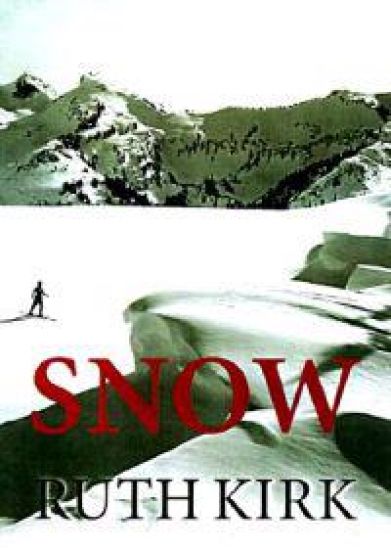
Snow has had an astonishing influence on the shape of the land and human history. Ruth Kirk writes perceptively of how animals and people survive in the snow; of glaciers, continental ice sheets, blizzards, and avalanches; and of the awesome hazards of Arctic and Antarctic exploration. She discusses both our battles against snow and our uses of it, showing its importance to agriculture, climate, and the future. Through scientific reports and interviews with experts in various fields—from Antarctic explorers to atmospheric physicists—Kirk surveys the scope of snow's influence.
Exploring Washington's Past tells the state's story in terms of where to go and what to see. With words, photographs, and maps, the authors evoke the cultural landscape and portray Washington's people and events from the days of the fur trade and pioneer settlement to the recent past. Capsule descriptions of small communities -- from Altoona to Zillah -- are interwoven with those of better known cities, and eastern and western Washington receive equal attention. More than two hundred photographs portray our historical landscape through images of today intermixed with a sampling of the past. This book will be an indispensable guide for residents, tourists, and armchair travelers.
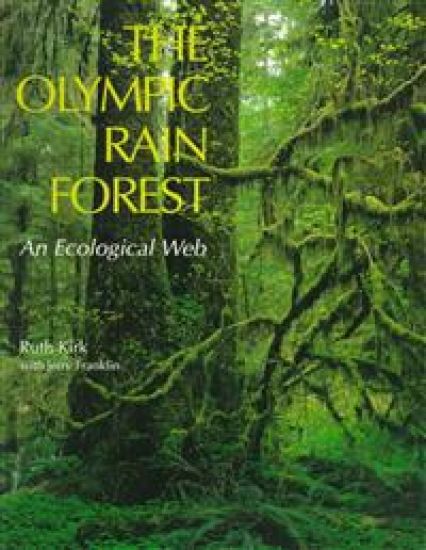
The forest of the northwest coast of North America accounts for two thirds of the world's temperate-zone rain forest, which is a fraction of the size of the more publicized tropical rain forest but is currently being lost at a comparable rate. Coming at a time of public concern and controversy regarding the future of the forest, this book provides a fresh examination of the natural dynamics that have produced the remarkably lush growth characterizing roughly two thousand miles of coast from Coos Bay, Oregon, to the gulf of Alaska--a stretch of greater north-south ecological sameness than exists anywhere else on earth. The rain forest valleys of Washington's Olympic Peninsula stand out as the showpiece of this region. Because the forest's productivity and sheer biomass per square mile are among the world's greatest, it is recognized as a National Park, a World Biosphere Reserve, and a World Heritage Site.Pointing out that ecology and economics share the same root (oikos, meaning "home"), this book evokes the forest's beauty and intricacy while summarizing scientific understanding of components and interactions. We learn that moldering logs produce their own moisture as a by-product of decay, and are virtual reservoirs as well as storehouses of nutrients--qualities that contribute to their role as the rain forest's famed nurse logs, which act as seedbeds for oncoming generations of spruce and hemlock. We also learn that fallen trees affect stream flow and crucially influence the well-being of aquatic organisms (including fish) and that, washed downriver, they modify both beach character and life in the ocean near river mouths.The unique ecological web of this ancient forest--which has existed for at least five thousand years--includes the peculiar above-ground rooting of maple trees, which actually feed from the mossy "upholstery" covering their trunks and branches; the role of elk as "landscape gardners" preventing the understory from becoming a thicket; and a newly discovered life community within the gravel zone of river bottoms and out under the forest floor."Many of the spruce and hemlock trees we walk among today were alive when men like Sir Francis Bacon and Johannes Kepler first recognized the value of objective data over mystical portents," write authors Ruth Kirk and Jerry Franklin. "They have been pushing their roots through the soil and wafting seeds into the air throughout the entire existence of science."This book will be welcomed by resident Northwesterners and travelers as well as by all who are interested in nature. Its prose is both broadly readable and scientifically sound. More than 100 color photographs catch the variety and grandeur of this magnificent forest.