Kirjojen hintavertailu. Mukana 12 473 963 kirjaa ja 12 kauppaa.

Kirjailija

Ruth Lupton

Kirjat ja teokset yhdessä paikassa: 6 kirjaa, julkaisuja vuosilta 2003-2021, suosituimpien joukossa Poverty Street. Vertaile teosten hintoja ja tarkista saatavuus suomalaisista kirjakaupoista.

6 kirjaa

Kirjojen julkaisuhaarukka 2003-2021.

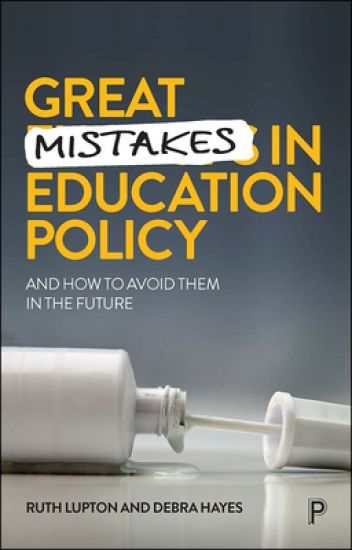
Great Mistakes in Education Policy

Great Mistakes in Education Policy

Ruth Lupton; Debra Hayes

Policy Press
2021
nidottu
Education policies should drive success and equity but in many countries they are failing to do so. Situating the cases of England and Australia within broader global policy trends, this book critically analyses what has gone wrong. The authors draw on extensive research in education to review the impact of multiple policies on students, teachers and schools, with a focus on communities where children and young people need education most. They issue a fundamental challenge to the policy orthodoxies of recent decades and set out a blueprint for making education both better and fairer.
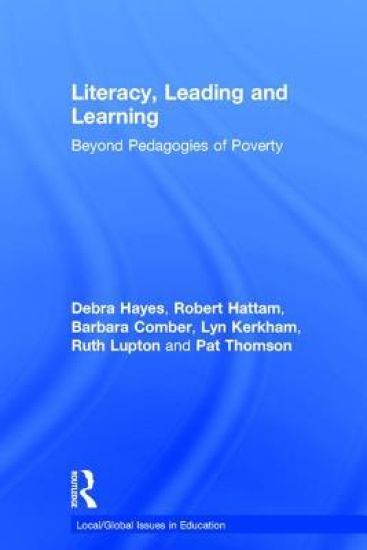
Literacy, Leading and Learning

Literacy, Leading and Learning

Debra Hayes; Robert Hattam; Barbara Comber; Lyn Kerkham; Ruth Lupton; Pat Thomson

Routledge
2017
sidottu
How might educational leaders and teachers improve literacy achievement in schools serving communities experiencing high levels of poverty? This question is the focus of this book. Drawing on long-term case studies of four primary schools located in these communities, this book describes the difference between what is commonly practiced and those practices that have a greater chance of supporting young people’s literacy learning. In this multi-layered analysis of the effects of policy on practice, the authors: discuss global concerns with literacy policy and testing in view of the growing gaps between rich and poor; examine the effects of the intensification of inequality and entrenched poverty, and the implications for schools; illustrate how deficit discourses pertaining to communities living in poverty are contested in schools; and describe the complexities of sustaining pedagogical and curriculum change to address the problem of unequal educational outcomes in literacy.This book grapples with some of the most debated questions regarding educational disadvantage, school change, leadership and literacy pedagogy that face educational researchers, policy-makers and practitioners internationally. As well as providing a critique of the risks of current policy rationales, it conveys some hopeful accounts of practice that provide leads for further development.
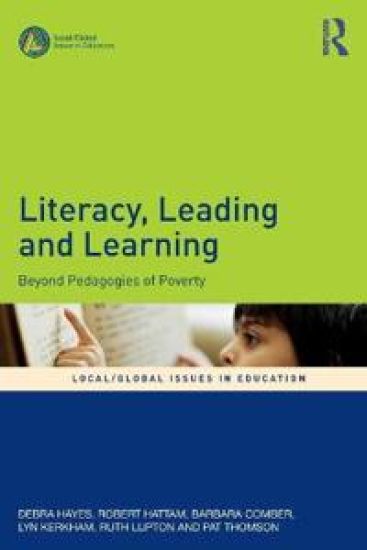
Literacy, Leading and Learning

Literacy, Leading and Learning

Debra Hayes; Robert Hattam; Barbara Comber; Lyn Kerkham; Ruth Lupton; Pat Thomson

Routledge
2017
nidottu
How might educational leaders and teachers improve literacy achievement in schools serving communities experiencing high levels of poverty? This question is the focus of this book. Drawing on long-term case studies of four primary schools located in these communities, this book describes the difference between what is commonly practiced and those practices that have a greater chance of supporting young people’s literacy learning. In this multi-layered analysis of the effects of policy on practice, the authors: discuss global concerns with literacy policy and testing in view of the growing gaps between rich and poor; examine the effects of the intensification of inequality and entrenched poverty, and the implications for schools; illustrate how deficit discourses pertaining to communities living in poverty are contested in schools; and describe the complexities of sustaining pedagogical and curriculum change to address the problem of unequal educational outcomes in literacy.This book grapples with some of the most debated questions regarding educational disadvantage, school change, leadership and literacy pedagogy that face educational researchers, policy-makers and practitioners internationally. As well as providing a critique of the risks of current policy rationales, it conveys some hopeful accounts of practice that provide leads for further development.
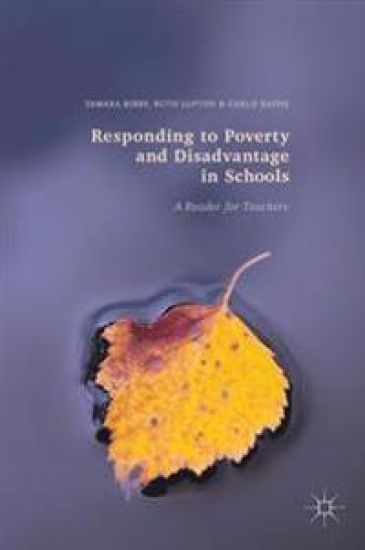
Responding to Poverty and Disadvantage in Schools

Responding to Poverty and Disadvantage in Schools

Tamara Bibby; Ruth Lupton; Carlo Raffo

Palgrave Macmillan
2017
sidottu
This book explores a range of challenges teachers face in dealing with situations of disadvantage, and explores different ways of thinking about these situations. Starting with a variety of incidents written by teachers in schools in disadvantaged settings, the book provides a range of ways of thinking about these - some more psychological, others more sociological - and chapters develop conversations between teachers and academics. These 'conversations' will help teachers reflect more deeply on the contexts in which they work, on what disadvantage means, and how disadvantage manifests in practice. It will also help teachers reflect upon the nature of their work; what it means to be a good and effective teacher; and the particular skills, approaches, relationships and competencies that may need to be developed in differing settings of educational disadvantage. The book explores the tensions between different ways of thinking about education and disadvantage; it will make compelling reading for students and teachers of education, education policy makers, and practising schoolteachers.
Poverty, wealth and place in Britain, 1968 to 2005

Poverty, wealth and place in Britain, 1968 to 2005

Daniel Dorling; Jan Rigby; Ben Wheeler; Dimitris Ballas; Bethan Thomas; Eldin Fahmy; David Gordon; Ruth Lupton

Policy Press
2007
nidottu
This is the first detailed study of the recent geographical distribution of poverty and wealth in Britain. It presents the most comprehensive estimates of the changing levels of poverty and wealth from the late 1960s. A wide range of secondary data is used, beginning with the first national Poverty in the UK survey of Peter Townsend and colleagues, and ending with data released during the middle of the current decade. The authors extend concepts of social exclusion to establish 5 household groupings: the 'exclusive wealthy' - able to exclude themselves from the norms of society; those who are rich but not exclusively so; those who are neither rich nor poor; the 'breadline poor'; and the 'core poor' - who experience a combination of severe income poverty, material deprivation and subjective poverty. Poverty and wealth statistics are mapped in detail to explore geographical patterns over the last four decades, and analysed to determine whether poverty and wealth have become more or less polarised.
Poverty Street

Poverty Street

Ruth Lupton

Policy Press
2003
nidottu
Poverty street addresses one of the UK's major social policy concerns: the gap between the poorest neighbourhoods and the rest of the country. It is an account of neighbourhood decline, a portrait of conditions in the most disadvantaged areas and an up-to-date analysis of the impact of the government's neighbourhood renewal policies. The book: · explores twelve of the most disadvantaged areas in England and Wales, from Newcastle in the north to Thanet in the south, providing the reader with a unique journey around the country's poverty map; · combines evidence from neighbourhood statistics, photographs and the accounts of local people with analysis of broader social and economic trends; · assesses the effect of government policies since 1997 and considers future prospects for reducing inequalities. CASE Studies on Poverty, Place and Policy series Series Editor: John Hills, Director of CASE at the London School of Economics and Political Science. Drawing on the findings of the ESRC Centre for Analysis of Social Exclusion's extensive research programme into communities, poverty and family life in Britain, this fascinating series: Provides a rich and detailed analysis of anti-poverty policy in action. Focuses on the individual and social factors that promote regeneration, recovery and renewal. For other titles in this series, please follow the series link from the main catalogue page.