Kirjojen hintavertailu. Mukana 12 582 490 kirjaa ja 12 kauppaa.

Kirjailija

Ruth Young

Kirjat ja teokset yhdessä paikassa: 13 kirjaa, julkaisuja vuosilta 2003-2023, suosituimpien joukossa Snapshots. Vertaile teosten hintoja ja tarkista saatavuus suomalaisista kirjakaupoista.

13 kirjaa

Kirjojen julkaisuhaarukka 2003-2023.

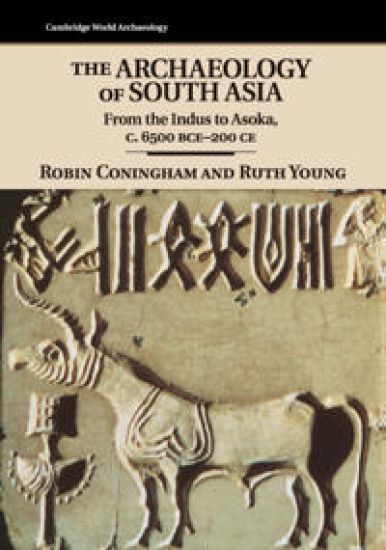
The Archaeology of South Asia

The Archaeology of South Asia

Robin Coningham; Ruth Young

Cambridge University Press
2023
pokkari
This book offers a critical synthesis of the archaeology of South Asia from the Neolithic period (c.6500 BCE), when domestication began, to the spread of Buddhism accompanying the Mauryan Emperor Asoka's reign (third century BCE). The authors examine the growth and character of the Indus civilisation, with its town planning, sophisticated drainage systems, vast cities and international trade. They also consider the strong cultural links between the Indus civilisation and the second, later period of South Asian urbanism which began in the first millennium BCE and developed through the early first millennium CE. In addition to examining the evidence for emerging urban complexity, this book gives equal weight to interactions between rural and urban communities across South Asia and considers the critical roles played by rural areas in social and economic development. The authors explore how narratives of continuity and transformation have been formulated in analyses of South Asia's Prehistoric and Early Historic archaeological record.
Footprints in Kpong

Footprints in Kpong

Edward Young; Ruth Young; Joana Okudzeto Biekro

Westbow Press
2021
sidottu
Footprints in Kpong, a little girl in Jackson Michigan had a dream to be a missionary to Africa through the inspiring stories she heard from missionaries who visited her grandmother. God, if you are willing, send me and I will go. Footprints in Kpong is the missionary journey of Ruth Young to Ghana, West Africa. The story started with Ruth Young yielding to the call of God on her life and God made it possible for so many people to support her to carry the gospel of Jesus Christ to Ghana. This book came into being because the author treasures the memories of all the people she encountered on the way and the amazing work God has done in her life. The support of church community, the love of a husband and the amazing grace of God are evident in Footprints in Kpong. My daughter my encourager, Joana inspired me once again to revise this book Footprints in Kpong and I hope it blesses you She is one of the evidences of my labor of love in Footprints in Kpong. Roy International School will be the light on the hilltop This is the doing of the Lord and it is marvelous in our sight.
Footprints in Kpong

Footprints in Kpong

Edward Young; Ruth Young; Joana Okudzeto Biekro

Westbow Press
2021
pokkari
Footprints in Kpong, a little girl in Jackson Michigan had a dream to be a missionary to Africa through the inspiring stories she heard from missionaries who visited her grandmother. God, if you are willing, send me and I will go. Footprints in Kpong is the missionary journey of Ruth Young to Ghana, West Africa. The story started with Ruth Young yielding to the call of God on her life and God made it possible for so many people to support her to carry the gospel of Jesus Christ to Ghana. This book came into being because the author treasures the memories of all the people she encountered on the way and the amazing work God has done in her life. The support of church community, the love of a husband and the amazing grace of God are evident in Footprints in Kpong. My daughter my encourager, Joana inspired me once again to revise this book Footprints in Kpong and I hope it blesses you She is one of the evidences of my labor of love in Footprints in Kpong. Roy International School will be the light on the hilltop This is the doing of the Lord and it is marvelous in our sight.
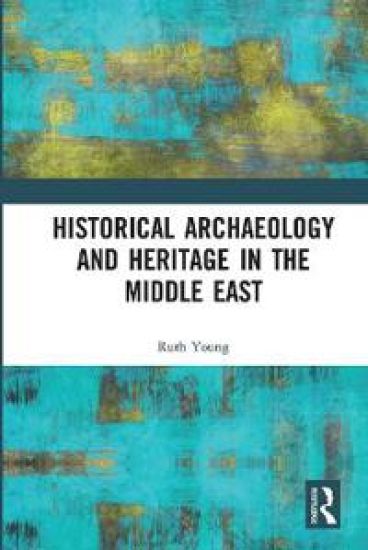
Historical Archaeology and Heritage in the Middle East
Landlord villages dominated Iranian land tenure for hundreds of years, whereby one powerful landlord owned the village structures, surrounding farmland, and to all intents and purposes, the village occupants themselves, a system that in some cases remained in place up to the 1979 Islamic Revolution. In Oman, mud-brick oases were home to most of the rural population right up until Sultan Qaboos came to power in 1970, and required inhabitants of mud-brick houses to relocate into new concrete block buildings. Historical Archaeology and Heritage in the Middle East explores these everyday, rural communities in Iran and Oman in the 19th and 20th centuries, through a combination of building analysis, excavation, artefact analysis and ethnographic interviews. Drawing on the results of original field projects, the book considers new ways of exploring traditional lifeways, giving voice to hitherto largely ignored sections of the population, and offers new and different ways of thinking about how these people lived and what shaped their lives and the impact of major political and social changes on them. Place, memory and belonging are considered through the lens of material culture within these villages.The first of its kind, the book brings together methodologies, research questions, and themes that have never been used or addressed in the Middle East. Helping to establish historical archaeology in the Middle East and providing new ways in which the memorable, quotidian past can be exploited for its social and economic value in contemporary community and heritage developments, it is an ideal resource for students, scholars and practitioners of historical archaeology and heritage of and in the Middle East.
The Palais Theatre

The Palais Theatre

Ruth Young

Ashwood Publishing
2020
pokkari
Franklin Hall, now the Palais Theatre, was built in the centre of the small riverside town of Franklin, in southern Tasmania, to hold 560 people. The arresting presence of the Theatre raises immediate questions in the mind of a thoughtful visitor: Why was it built? Why is it so large? What is its present purpose? How has it survived? This book, written to celebrate the Theatre's centenary, aims to provide some of the answers. It explores the origin of Franklin Town Hall as the successor to the Huon Mechanics' Institute of 1858, the enduring connections between the two buildings, the part both buildings on the same site have played in the lives of the local community, the ways in which the fortunes of the buildings have reflected the priorities and the aspirations of the people they served, the reasons for the survival of the building through a century of momentous change, and why it still fulfils the original purposes for which it was built.
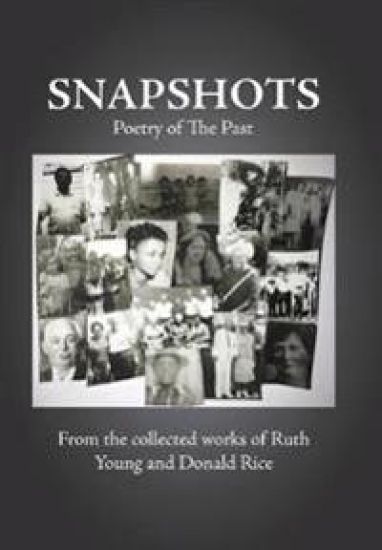
Snapshots

Snapshots

Ruth Young; Donald Rice

Xlibris Us
2019
sidottu
In "Snapshots " as in her other work, Ruth explores the depths and dimensions of life's relationships...while Don continues to examine human nature from a more philosophical or spiritual perspective.
Snapshots

Snapshots

Ruth Young; Donald Rice

Xlibris Us
2019
pokkari
In "Snapshots " as in her other work, Ruth explores the depths and dimensions of life's relationships...while Don continues to examine human nature from a more philosophical or spiritual perspective.
Historical Archaeology and Heritage in the Middle East
Landlord villages dominated Iranian land tenure for hundreds of years, whereby one powerful landlord owned the village structures, surrounding farmland, and to all intents and purposes, the village occupants themselves, a system that in some cases remained in place up to the 1979 Islamic Revolution. In Oman, mud-brick oases were home to most of the rural population right up until Sultan Qaboos came to power in 1970, and required inhabitants of mud-brick houses to relocate into new concrete block buildings. Historical Archaeology and Heritage in the Middle East explores these everyday, rural communities in Iran and Oman in the 19th and 20th centuries, through a combination of building analysis, excavation, artefact analysis and ethnographic interviews. Drawing on the results of original field projects, the book considers new ways of exploring traditional lifeways, giving voice to hitherto largely ignored sections of the population, and offers new and different ways of thinking about how these people lived and what shaped their lives and the impact of major political and social changes on them. Place, memory and belonging are considered through the lens of material culture within these villages.The first of its kind, the book brings together methodologies, research questions, and themes that have never been used or addressed in the Middle East. Helping to establish historical archaeology in the Middle East and providing new ways in which the memorable, quotidian past can be exploited for its social and economic value in contemporary community and heritage developments, it is an ideal resource for students, scholars and practitioners of historical archaeology and heritage of and in the Middle East.
Aunty Marmalade

Aunty Marmalade

Ruth Young

Strategic Book Publishing Rights Agency, LLC
2009
pokkari
While staying at her godmother's cottage by the sea, ten-year-old Florence finds a secret passageway into the attic where she learns some surprising family secrets - about herself! Why did her mum keep these secrets from her? Who is Florence's real father? And what is the reason her godmother and mum don't get along? Shortly after her discovery, Florence begins having unexplained and scary experiences. Her belongings are mysteriously moved around. She is rescued from sea, but where is her rescuer? And most unnerving of all, Florence has the constant feeling that she is being watched! Join Florence as she learns more about her family and the mysterious things that are happening to her in Ruth Young's new book, Aunty Marmalade.
Agriculture and Pastoralism in the Late Bronze and Iron Age North West Frontier Province Pakistan
An integrated study of the archaeological plant and animal remains from rural and urban sites, using modern ethnographic information to develop a model of economic organisation and contactBradford Monographs in the Archaeology of Southern Asia 1This study compares two environmentally very different regions in The North West Frontier Province of Pakistan, during the Late Bronze and Early Iron Age, in order to better understand their contrasting subsistence strategies. The two regions under study are the valleys of Dir and Swat in the North, and the Charsadda District in the Vale of Peshawar, and these areas represent very different cultural inhabitants during this period. The study deals primarily with the period of settlement stretching from 1700-1000 BC, and this comes between the final stages of the Harappan Civilisation and the beginning of the early historic cities of Charsadda and Taxila. This is a period that has been traditionally considered one of cultural unrest, and this book looks at archaeological and environmental evidence from both old and new sources in order to gain a better perspective on this apparent period of discontinuity in these two regions. Particular attention is paid to the analysis of plant and animal remains in order to understand the development of subsistence strategies over time. Ethnographic studies were also carried out in order to gain a model of subsistence land use in these areas, and these are compared to the archaeological evidence, some of which is new, some of which is a re-examination of previous studies. This allows conclusions to be formed over how important certain factors are on subsistence strategies in the regions in question, contrasting between geographical and environmental situations on one side, and other factors such as culture, race and religious beliefs.