Kirjojen hintavertailu. Mukana 12 595 353 kirjaa ja 12 kauppaa.

Kirjailija

Ruthellen Josselson

Kirjat ja teokset yhdessä paikassa: 9 kirjaa, julkaisuja vuosilta 1998-2022, suosituimpien joukossa Paths to Fulfillment. Vertaile teosten hintoja ja tarkista saatavuus suomalaisista kirjakaupoista.

9 kirjaa

Kirjojen julkaisuhaarukka 1998-2022.

Narrative and Cultural Humility

Narrative and Cultural Humility

Ruthellen Josselson

OXFORD UNIVERSITY PRESS INC
2022
nidottu
People from Eastern and Western cultures have differences in their perception and understanding of the world that are not well represented by a collectivist/individualist distinction. Differences in worldview are inscribed in personal relationships and the ways in which people try to understand the "other" in relation to themselves. When people from the East and West encounter one another, these differences are brought to the fore in jarring moments of culture clash. Such encounters, seen through a contextualized narrative lens can offer insights for deeper cross-cultural knowing. In Narrative and Cultural Humility Ruthellen Josselson recounts her time teaching group therapy to Chinese therapists over the course of ten years and illustrates her own profound experience of cultural dissonance. For example, many of her students regarded her as what they termed "a good witch" seeing her as a transformative healer purveying something magical rather than a teacher of psychotherapy with theories and techniques that could be learned. At the same time, she was often mystified by their learning styles and organizational processes which were so different from her own experiences. In these instances, along with others chronicled in the book, Josselson confronts the foundational (and often unconscious) assumptions embedded in cultural worldviews (on both sides) that are manifest in nearly every interaction. This re-telling underscores the need for cultural humility when narrating one's experiences and the experiences of different relational cultures. While narrative is always rooted in culture-bound worldviews, it can also be a way of bridging them. Narrative and Cultural Humility ultimately tells the story of what it means to recognize our own unspoken assumptions to better connect with people of another culture. It also highlights the values and needs that are universally human.
Essentials of Narrative Analysis

Essentials of Narrative Analysis

Ruthellen Josselson; Phillip L. Hammack

American Psychological Association
2021
pokkari
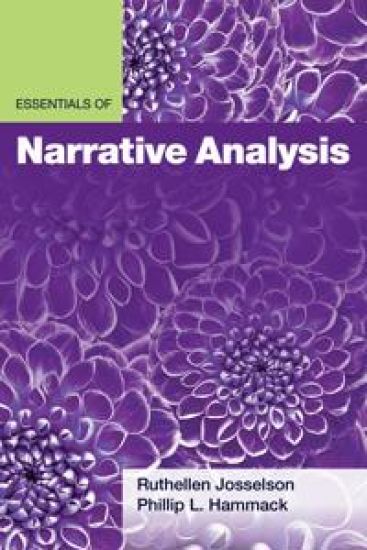
The brief, practical texts in the Essentials of Qualitative Methods series introduce social science and psychology researchers to key approaches to qualitative methods, offering exciting opportunities to gather in-depth qualitative data and to develop rich and useful findings. In this book, Ruthellen Josselson and Phillip L. Hammack introduce readers to Narrative Analysis, a qualitative method that investigates how people make meaning of their lives and experiences in both social and cultural contexts. This method offers researchers a window into how individuals' stories are shaped by the categories they inhabit, such as gender, race, class, and sexual identity, and it preserves the voice of the individual through a close textual analysis of their storytelling.About the Essentials of Qualitative Methods book series: Even for experienced researchers, selecting and correctly applying the right method can be challenging. In this groundbreaking series, leading experts in qualitative methods provide clear, crisp, and comprehensive descriptions of their approach, including its methodological integrity, and its benefits and limitations. Each book includes numerous examples to enable readers to quickly and thoroughly grasp how to leverage these valuable methods.
Narrative and Cultural Humility

Narrative and Cultural Humility

Ruthellen Josselson

Oxford University Press Inc
2020
sidottu
People from Eastern and Western cultures have differences in their perception and understanding of the world that are not well represented by a collectivist/individualist distinction. Differences in worldview are inscribed in personal relationships and the ways in which people try to understand the "other" in relation to themselves. When people from the East and West encounter one another, these differences are brought to the fore in jarring moments of culture clash. Such encounters, seen through a contextualized narrative lens can offer insights for deeper cross-cultural knowing. In Narrative and Cultural Humility Ruthellen Josselson recounts her time teaching group therapy to Chinese therapists over the course of ten years and illustrates her own profound experience of cultural dissonance. For example, many of her students regarded her as what they termed "a good witch" seeing her as a transformative healer purveying something magical rather than a teacher of psychotherapy with theories and techniques that could be learned. At the same time, she was often mystified by their learning styles and organizational processes which were so different from her own experiences. In these instances, along with others chronicled in the book, Josselson confronts the foundational (and often unconscious) assumptions embedded in cultural worldviews (on both sides) that are manifest in nearly every interaction. This re-telling underscores the need for cultural humility when narrating one's experiences and the experiences of different relational cultures. While narrative is always rooted in culture-bound worldviews, it can also be a way of bridging them. Narrative and Cultural Humility ultimately tells the story of what it means to recognize our own unspoken assumptions to better connect with people of another culture. It also highlights the values and needs that are universally human.
Paths to Fulfillment

Paths to Fulfillment

Ruthellen Josselson

Oxford University Press Inc
2017
sidottu
How do women create fulfilling lives? How does the identity they choose (or not choose) by the end of their college career affect how their lives unfold? For 35 years, Ruthellen Josselson has followed 26 randomly selected women who graduated from college in the early 1970s. Because these women came of age at this particular time in history, they were the trailblazers in creating new possibilities for women's lives and were among the first of the Women's Liberation Movement to take on meaningful roles in the work world. These "real" women, in contrast to the pervasive media stereotypes of the time, took on the challenge in very different ways and championed very different lives for themselves. In Paths to Fulfillment: Women's Search for Meaning and Identity, Josselson traces the stages of these women's lives and the ways in which identity, intimacy, and care for others over time leads to fulfillment, or in some cases, a lack of fulfillment. She examines the complexity of the relationship between a woman's roots, her efforts to create a unique life for herself, and how others become part of the self altogether. Josselson examines individual lives in depth for clues to understanding the strengths that help a woman to find fulfillment, and how a focus on raising the younger generation plays a role in creating this identity. With remarkable clarity and insight, Josselson challenges the common stereotypes of women, and shows how work, love, and care are all intertwined in a woman's feeling of identity.
Interviewing for Qualitative Inquiry

Interviewing for Qualitative Inquiry

Ruthellen Josselson

Guilford Press
2013
nidottu
Engagingly written, this book builds the reader's skills for conducting in-depth interviews designed to address a particular research question. With an emphasis on the dynamics of the research relationship, Ruthellen Josselson artfully demonstrates the steps of a successful interview. Each step is illustrated with excerpts from interviews on diverse topics. The book describes how to structure interviews effectively, develop questions that elicit meaningful narratives, cultivate skills for empathic listening and responding, avoid common pitfalls, and deal with problems that develop in an interview. Pedagogical Features *Practice exercises adapted from Josselson's popular workshops. *Annotated examples of "good" and "bad" interviews. *A chapter on interviewing dos and don'ts. *Appendices with interview aids, sample follow-up questions, and a sample consent form.
Playing Pygmalion

Playing Pygmalion

Ruthellen Josselson

Jason Aronson Inc. Publishers
2007
nidottu
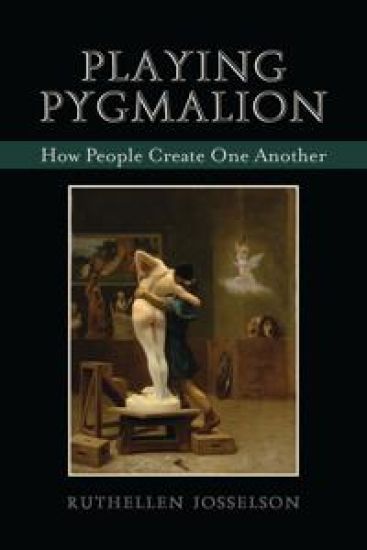
Like Pygmalion with his Galatea, we create the characters of people in our lives. Although others appear to us to be who they just 'are', there are complicated psychological processes, outside of our awareness, that lead us to experience people in ways that we ourselves construct. Psychoanalytic theory offers a wealth of understanding of how people unconsciously create what they both need and dread. But these processes are not well understood by most therapists. Too often, therapists join their patients in overlooking their own role in creating the relationships in their lives, such that it seems that patients were simply unfortunate to 'have' an un-giving mother or to 'find' an unloving spouse. Because processes of creation in relationship are largely unconscious, they are much harder to see. As a result, most theorists of relationships acknowledge that they exist, but offer little language or explication for how they unfold or manifest themselves. Playing Pygmalion is an effort to trace in psychological terms the subtle interplay by which people create the other. This book adapts the psychoanalytic concepts of transitional object usage and projective identification to show their importance and applicability beyond the therapeutic situation to the understanding of people's relational lives. Using examples from literature, film and clinical work to illustrate the theory, the book goes on to consider in depth the relationship narratives of four pairs of ordinary people to demonstrate how people unconsciously 'create' one another. The stories demonstrate that the 'other' is always more than one conceives him or her to be. Readers inevitably rethink some of their important relationships in terms of how they are creating people or being created by them. This may lead them to take in other aspects of the person, to see how they are looking very selectively at a human being who exists beyond their relationship. These stories also provide cautionary tales to therapists who begin to believe in the simple reality of their patients' constructions of important people in their lives.
Playing Pygmalion

Playing Pygmalion

Ruthellen Josselson

Jason Aronson Inc. Publishers
2007
sidottu
Like Pygmalion with his Galatea, we create the characters of people in our lives. Although others appear to us to be who they just "are", there are complicated psychological processes, outside of our awareness, that lead us to experience people in ways that we ourselves construct. Psychoanalytic theory offers a wealth of understanding of how people unconsciously create what they both need and dread. But these processes are not well understood by most therapists. Too often, therapists join their patients in overlooking their own role in creating the relationships in their lives, such that it seems that patients were simply unfortunate to "have" an un-giving mother or to "find" an unloving spouse. Because processes of creation in relationship are largely unconscious, they are much harder to see. As a result, most theorists of relationships acknowledge that they exist, but offer little language or explication for how they unfold or manifest themselves. Playing Pygmalion is an effort to trace in psychological terms the subtle interplay by which people create the other. This book adapts the psychoanalytic concepts of transitional object usage and projective identification to show their importance and applicability beyond the therapeutic situation to the understanding of people's relational lives. Using examples from literature, film and clinical work to illustrate the theory, the book goes on to consider in depth the relationship narratives of four pairs of ordinary people to demonstrate how people unconsciously "create" one another. The stories demonstrate that the "other" is always more than one conceives him or her to be. Readers inevitably rethink some of their important relationships in terms of how they are creating people or being created by them. This may lead them to take in other aspects of the person, to see how they are looking very selectively at a human being who exists beyond their relationship. These stories also provide cautionary tales to therapists who begin to believe in the simpl
Best Friends

Best Friends

Terri Apter; Ruthellen Josselson

Crown Publications
1999
pokkari
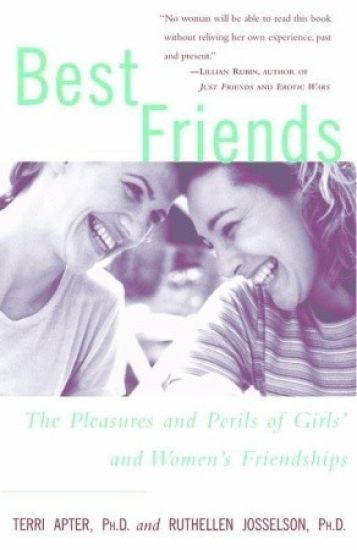
Best Friends provides the missing link to understanding and recognizing the impact of some of the most important relationships in girls' and women's lives. Every woman remembers the sting of betrayal of a girlfriend, and every parent of a daughter has seen her come home from school in tears because a girl she thought was her best friend suddenly and inexplicably became her enemy. While boys hash out differences with fists and kicks, girls' societies are marked by secrets and whispers and shifting affection. The lessons learned as an adolescent girl are often carried into adulthood, making women fear confrontation--especially with other women. But the intensity of the struggles reflects the support and healing to be found within these friendships. Girls find themselves in the mirror of other girls, hence the power each has to influence the other. Ruthellen Josselson and Terri Apter's many years of working with hundreds of girls and women have given them insight into the emotionally important relationships that are integral to a girl's self-image. Best Friends explores the bonds of friendship between girls and between women and the sorrows and joys they experience together, from early adolescence and throughout their lives. "[Apter and Josselson] argue in this breakthrough study, [that] the enormous formative impact of women's friendships outweighs most other influences--even that of parents. . . . Like its subjects, Best Friends is an illuminating experience."--Book of the Month Club"Both the joy and pain of friendship between adolescent girls and women are scrutinized in this interesting and accessible analysis."--Publishers Weekly"As Apter and Josselson trigger strong memories, they shed much-needed light on the profound influence young women have on each other." --Booklist "This book should become the constant companion of girls and women as they grow and change." --Judith Michael, author of A Certain Smile"Best Friends is a rich and engaging book that women from their teen years into adulthood will find revealing and helpful. The authors have found a deep truth in their descriptions of the lifelong emotional importance of friendship for girls and women." --Nancy J. Chodorow, psychoanalyst and author of Femininities, Masculinities, Sexualities"Best Friends is breathtaking in its promise of understanding what is compelling about female friendships." --Annie G. Rogers, associate professor, Harvard Graduate School of Education"No woman will be able to read this book without reliving her own experience, past and present." --Lillian Rubin, author of Just Friends and Erotic Wars
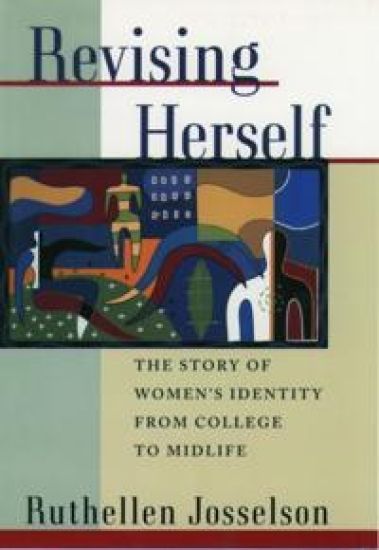
Revising Herself: The Story of Women's Identity from College to Midlife
In 1972, Ruthellen Josselson was a young psychologist fascinated by the riddle of how a woman creates an identity and chooses one path over another in life--particularly in the face of the nascent feminist movement, which challenged as never before the traditional role models of earlier generations. Selecting at random thirty young women in their last year of college, Josselson undertook a ground-breaking study that would follow these women's personal odysseys over the next twenty-two years, from graduation to midlife. What she learned about the ways women reinvent themselves in an ever-changing world is the subject of Revising Herself, a myth-shattering look at both a unique generation of American women on the front lines of wrenching social change, and at the conflicts and compromises facing women today. With stunning candor and hard-won insight, the "ordinary" (and anonymous) women in Josselson's study reveal how much more complex and interesting real women's lives are than the one-dimensional stereotypes often portrayed in the media. Dismissing a traditional "stage theory" of development as overly simplistic, Josselson identifies four trajectories that women take from adolescence to adulthood. Guardians are the "good girls"--high achieving and committed to fulfilling their family's expectations, but rigid in outlook and resistant to change. Pathmakers are not afraid of risk or commitment, striving to balance their own needs with others'. The often idealistic Searchers are overwhelmed by choice and unable to make commitments, while Drifters live only for the moment, avoiding choice and an exploration of identity. Reflecting the degree to which women take risks, make choices, and form commitments, these paths form a foundation for adulthood--but they also lead to surprises: at midlife, Guardians seem strikingly able to "cut loose" from earlier traditional patterns, while many Drifters have "found themselves," sometimes in quite traditional ways. And coming of age just as the feminist movement gathered momentum, the women in Josselson's study were the first to confront many contemporary issues not faced by their mothers, or their mothers' mothers: How does an Irish Catholic contemplate an abortion? How does a woman whose parents believe education is wasted on a daughter find the will to apply to medical school? In examining these questions and others, Josselson shows that the forging of a woman's identity--whatever her "path"--is ongoing, a balancing of the need for self-assertion against the equally compelling need for relationships. Women create their identities along the seams of both competence and connection and continually revise what they have made. Allowing women to define themselves in their own terms, Revising Herself holds up a provocative mirror in which readers can reflect upon their own life choices. Whether a Guardian, Pathmaker, Searcher, or Drifter, readers will recognize themselves in these women's experiences and gain new insight into how we construct our identities over a lifetime.