

Kirjailija
Ryan Clarke
Kirjat ja teokset yhdessä paikassa: 5 kirjaa, julkaisuja vuosilta 2011-2025, suosituimpien joukossa The Wizard. Vertaile teosten hintoja ja tarkista saatavuus suomalaisista kirjakaupoista.
5 kirjaa
Kirjojen julkaisuhaarukka 2011-2025.

Daniel Bishop and Andre Gibson are best friends leading a life of crime in Las Vegas. After nearly a decade of robbing, gambling and hustling their way through the bowels of Sin City, they plan one final job to get out of the game for good: rob hotel and casino magnate Richard Reynolds. What they discover in pursuit of this big score is far more sinister than anticipated, placing them in the crosshairs of an ancient demon that feeds on human flesh and suffering.After they first encounter the shapeshifting demon known as the Wendigo, Daniel and Andre travel to the Native American reservation north of town and meet Soaring Eagle, an elder in the Paiute tribe whose supernatural visions portend a dark future. His tribe's knowledge of the Wendigo proves crucial, as does the perspective of Soaring Eagle's daughter, Jennifer, the tribe's medical doctor.What follows is an introspective journey for all involved; a reflection on class, criminality and corruption that leaves behind a trail of blood and shell casings.
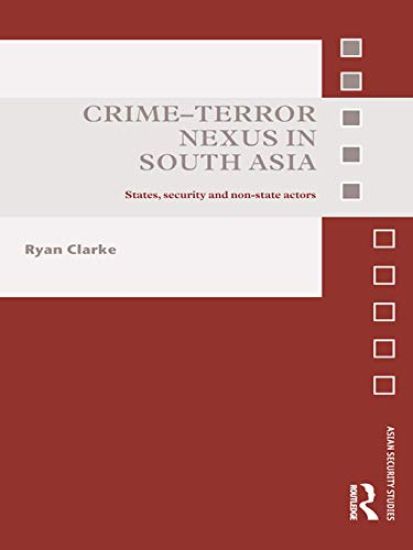
This book examines the crime-terror nexus in South Asia, focusing in particular on the activities of non-state actors that operate out of Pakistan, and challenges the conventional wisdom that the Pakistan Taleban (TTP) and Al-Qaeda are Pakistan’s most serious security threats.Much research has focused on the policies of India and Pakistan towards Kashmir. But surprisingly little attention has been paid to several notable Pakistan-based non-state actors who are increasingly operating on their own, and who have the potential to greatly inhibit, if not derail, the peace process there. These groups blur the line between terrorism and organized crime with serious implications for policy in the region. India and Pakistan can engage in confidence-building measures, but if criminal actors such as Lashkar-i-Taiba (LeT) and D-Company cannot effectively be controlled, a lack of trust between both sides will remain. Although the role of regular military forces is not to be discounted, many of the non-state actors in Indian-Held Kashmir, such as LeT, are not confined by the same restraints as state forces, thus allowing them engage in more violent actions without fear of reprisal. In order for lawmakers, security personnel, and others to develop sound, comprehensive policies, these forces and their potential to undermine political initiatives must be fully appreciated. This book explores the dynamics of the relationship between Pakistan, D-Company, and LeT and how it affects strategic thought, decision-making, and security interests in the region and explains the triangular relationships between states, terrorist groups, and organized criminal syndicates in general, and in India and Pakistan in particular. This book will of much interest to students of South Asian politics, terrorism, organised crime, war and conflict studies, and Security Studies in general.

This book examines the crime-terror nexus in South Asia, focusing in particular on the activities of non-state actors that operate out of Pakistan, and challenges the conventional wisdom that the Pakistan Taleban (TTP) and Al-Qaeda are Pakistan’s most serious security threats.Much research has focused on the policies of India and Pakistan towards Kashmir. But surprisingly little attention has been paid to several notable Pakistan-based non-state actors who are increasingly operating on their own, and who have the potential to greatly inhibit, if not derail, the peace process there. These groups blur the line between terrorism and organized crime with serious implications for policy in the region. India and Pakistan can engage in confidence-building measures, but if criminal actors such as Lashkar-i-Taiba (LeT) and D-Company cannot effectively be controlled, a lack of trust between both sides will remain. Although the role of regular military forces is not to be discounted, many of the non-state actors in Indian-Held Kashmir, such as LeT, are not confined by the same restraints as state forces, thus allowing them engage in more violent actions without fear of reprisal. In order for lawmakers, security personnel, and others to develop sound, comprehensive policies, these forces and their potential to undermine political initiatives must be fully appreciated. This book explores the dynamics of the relationship between Pakistan, D-Company, and LeT and how it affects strategic thought, decision-making, and security interests in the region and explains the triangular relationships between states, terrorist groups, and organized criminal syndicates in general, and in India and Pakistan in particular. This book will of much interest to students of South Asian politics, terrorism, organised crime, war and conflict studies, and Security Studies in general.