Kirjojen hintavertailu. Mukana 12 390 323 kirjaa ja 12 kauppaa.

Kirjailija

Ryan Nichols

Kirjat ja teokset yhdessä paikassa: 4 kirjaa, julkaisuja vuosilta 2007-2026, suosituimpien joukossa Philosophy Through Science Fiction. Vertaile teosten hintoja ja tarkista saatavuus suomalaisista kirjakaupoista.

4 kirjaa

Kirjojen julkaisuhaarukka 2007-2026.

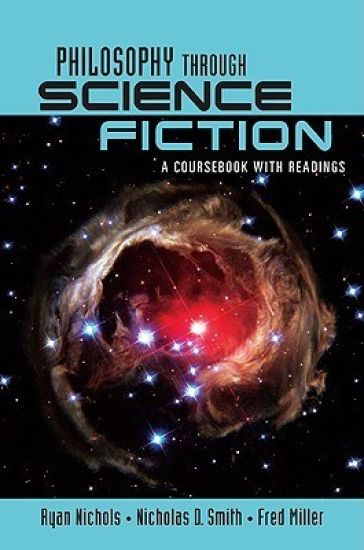
Philosophy Through Science Fiction

Philosophy Through Science Fiction

Ryan Nichols; Nicholas D. Smith; Fred Miller

Routledge
2008
sidottu
Philosophy Through Science Fiction offers a fun, challenging, and accessible way in to the issues of philosophy through the genre of science fiction. Tackling problems such as the possibility of time travel, or what makes someone the same person over time, the authors take a four-pronged approach to each issue, providing· a clear and concise introduction to each subject · a science fiction story that exemplifies a feature of the philosophical discussion· historical and contemporary philosophical texts that investigate the issue with rigor, and· glossary, plot profiles of pertinent science fiction stories and films, and questions for further reflection.Philosophy Through Science Fiction includes stories from contemporary science fiction writers including Greg Egan and Mike Resnick, as well as from classic authors like Philip K. Dick and Robert Heinlein. Philosophy readings include historical pieces by René Descartes and David Hume, and contemporary pieces by John Searle and Mary Midgley.

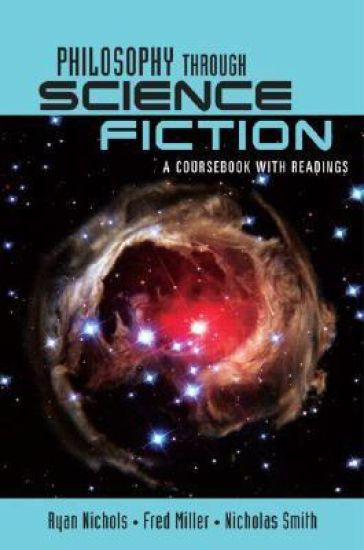
Philosophy Through Science Fiction

Philosophy Through Science Fiction

Ryan Nichols; Nicholas D. Smith; Fred Miller

Routledge
2008
nidottu
Philosophy Through Science Fiction offers a fun, challenging, and accessible way in to the issues of philosophy through the genre of science fiction. Tackling problems such as the possibility of time travel, or what makes someone the same person over time, the authors take a four-pronged approach to each issue, providing· a clear and concise introduction to each subject · a science fiction story that exemplifies a feature of the philosophical discussion· historical and contemporary philosophical texts that investigate the issue with rigor, and· glossary, plot profiles of pertinent science fiction stories and films, and questions for further reflection.Philosophy Through Science Fiction includes stories from contemporary science fiction writers including Greg Egan and Mike Resnick, as well as from classic authors like Philip K. Dick and Robert Heinlein. Philosophy readings include historical pieces by René Descartes and David Hume, and contemporary pieces by John Searle and Mary Midgley.
Thomas Reid's Theory of Perception

Thomas Reid's Theory of Perception

Ryan Nichols

Clarendon Press
2007
sidottu
The thesis that the mind cannot directly apprehend features of the physical world - what Reid calls the Way of Ideas - is a staple of Early Modern philosophical tradition. This commitment to the direct awareness of, and only of, mental representations unifies the otherwise divergent philosophical systems of Rationalists and Empiricists. Thomas Reid battles against this thesis on many fronts, in particular over the nature of perception. Ryan Nichols lays the groundwork for Reid's theory of perception by developing Reid's unheralded argument against a representational theory of thought, which Nichols applies to his discussion of the intentionality of perceptual states and Reid's appeal to 'signs'. Reid's efforts to preserve common sense epistemic commitments also lead him to adopt unique theories about our concepts of primary and secondary qualities, and about original and acquired perceptions. About the latter pair, Nichols argues that most perceptual beliefs depend for their justification upon inferences. The Way of Ideas holds that sensations are objects of awareness and that our senses are not robustly unified. Nichols develops Reid's counter-proposals by examining his discussion of the evolutionary purpose of sensations, and the nature of our awareness of sensations, as well as his intriguing affirmative answer to Molyneux's questions. Nichols brings to the writing of this book a consummate knowledge of Reid's texts, published and unpublished, and a keen appreciation for Reid's responses to his predecessors. He frequently reconstructs arguments in premise/conclusion form, thereby clarifying disputes that have frustrated previous Reid scholarship. This clarification, his lively examples, and his plainspoken style make this book especially readable. Reid's theory of perception is by far the most important feature of Reid's philosophical system, and Nichols offers what will be, for a long time to come, the definitive analysis of this theory.