Kirjojen hintavertailu. Mukana 12 559 180 kirjaa ja 12 kauppaa.

Kirjailija

Ryan P. Harrod

Kirjat ja teokset yhdessä paikassa: 5 kirjaa, julkaisuja vuosilta 2013-2018, suosituimpien joukossa Bioarchaeology. Vertaile teosten hintoja ja tarkista saatavuus suomalaisista kirjakaupoista.

5 kirjaa

Kirjojen julkaisuhaarukka 2013-2018.

The Bioarchaeology of Social Control

The Bioarchaeology of Social Control

Ryan P. Harrod

Springer International Publishing AG
2018
nidottu
Taking a bioarchaeological approach, this book examines the Ancestral Pueblo culture living in the Four Corners region of the United States during the late Pueblo I through the end of the Pueblo III period (AD 850-1300). During this time, a vast system of pueblo villages spread throughout the region creating what has been called the Chaco Phenomenon, named after the large great houses in Chaco Canyon that are thought to have been centers of control. Through a bioarchaeological analysis of the human skeletal remains, this volume provides evidence that key individuals within the hierarchical social structure used a variety of methods of social control, including structural violence, to maintain their power over the interconnected communities.
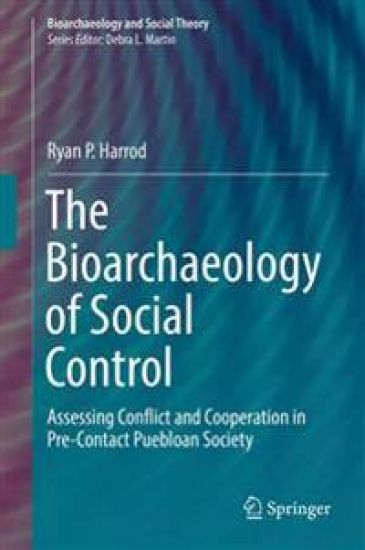
The Bioarchaeology of Social Control

The Bioarchaeology of Social Control

Ryan P. Harrod

Springer International Publishing AG
2017
sidottu
Taking a bioarchaeological approach, this book examines the Ancestral Pueblo culture living in the Four Corners region of the United States during the late Pueblo I through the end of the Pueblo III period (AD 850-1300). During this time, a vast system of pueblo villages spread throughout the region creating what has been called the Chaco Phenomenon, named after the large great houses in Chaco Canyon that are thought to have been centers of control. Through a bioarchaeological analysis of the human skeletal remains, this volume provides evidence that key individuals within the hierarchical social structure used a variety of methods of social control, including structural violence, to maintain their power over the interconnected communities.
Bioarchaeology

Bioarchaeology

Debra L. Martin; Ryan P. Harrod; Ventura R. Pérez

Springer-Verlag New York Inc.
2014
nidottu
Bioarchaeology is the analysis of human remains within an interpretative framework that includes contextual information. This comprehensive and much-needed manual provides both a starting point and a reference for archaeologists, bioarchaeologists and others working in this integrative field. The authors cover a range of bioarchaeological methods and theory including:Ethical issues involved in dealing with human remainsTheoretical approaches in bioarchaeologyTechniques in taphonomy and bone analysisLab and forensic techniques for skeletal analysisBest practices for excavation techniquesSpecial applications in bioarchaeologyWith case studies from bioarchaeological research, the authors integrate theoretical and methodological discussion with a wide range of field studies from different geographic areas, time periods, and data types, to demonstrate the full scope of this important field of study.
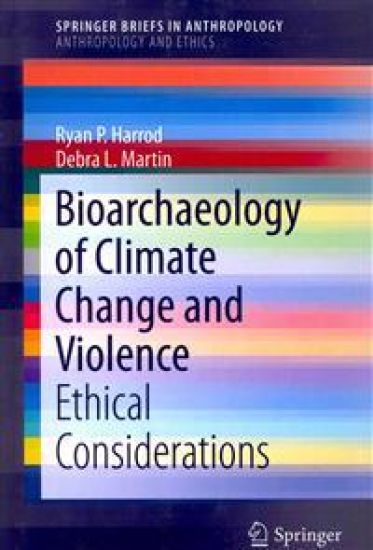
Bioarchaeology of Climate Change and Violence

Bioarchaeology of Climate Change and Violence

Ryan P. Harrod; Debra L. Martin

Springer-Verlag New York Inc.
2013
nidottu
The goal of this monograph is to emphasize with empirical data the complexity of the relationship between climate change and violence. Bioarchaeology is the integration of human skeletal remains from ancient societies with the cultural and environmental context. Information on mortality, disease, diet and other factors provide important data to examine long chronologies of human existence, particularly during periods of droughts and life-threatening climate changes. Case studies are used to reconstruct the responses and short and long-term adaptations made by groups before, during and after dramatic changes in weather and climate. Interpersonal and group violence is also analyzed. The authors find that while in some cases there is an increase in trauma and violence, in other cases there is not. Human groups are capable of avoiding violent altercations and increasing broad networks of cooperation that help to mitigate the effects of climate change. A case study from the U.S. Southwest is provided that shows the variable and surprising ways that ancient farmers in the past dealt with long term droughts.
Bioarchaeology

Bioarchaeology

Debra L. Martin; Ryan P. Harrod; Ventura R. Pérez

Springer-Verlag New York Inc.
2013
sidottu
Bioarchaeology is the analysis of human remains within an interpretative framework that includes contextual information. This comprehensive and much-needed manual provides both a starting point and a reference for archaeologists, bioarchaeologists and others working in this integrative field. The authors cover a range of bioarchaeological methods and theory including:Ethical issues involved in dealing with human remainsTheoretical approaches in bioarchaeologyTechniques in taphonomy and bone analysisLab and forensic techniques for skeletal analysisBest practices for excavation techniquesSpecial applications in bioarchaeologyWith case studies from bioarchaeological research, the authors integrate theoretical and methodological discussion with a wide range of field studies from different geographic areas, time periods, and data types, to demonstrate the full scope of this important field of study.