Kirjojen hintavertailu. Mukana 12 315 366 kirjaa ja 12 kauppaa.
Kirjailija
S Bradley
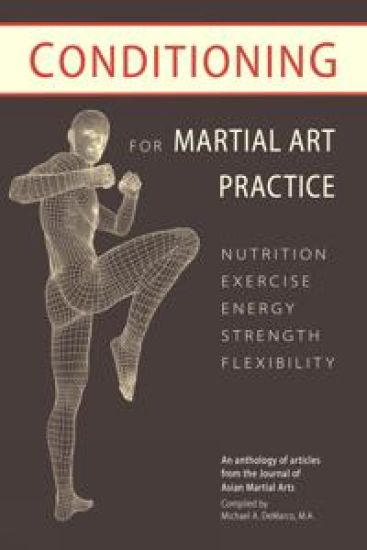
Kirjat ja teokset yhdessä paikassa: 4 kirjaa, julkaisuja vuosilta 2017-2023, suosituimpien joukossa Conditioning for Martial Art Practice. Vertaile teosten hintoja ja tarkista saatavuus suomalaisista kirjakaupoista.
If you are interested in practicing a martial art for health, this anthology is highly practical for this purpose. The content will inspire readers to adapt ways to enrich their martial art practice to reach a higher standard of health. Whenever considering health, one's diet should be a priority. The chapter by Roberto Nurchis shows how the kind of foods ingested have a negative or a positive influence on martial performance. General conditioning exercise are illustrated in Oga-Baldwin's chapter. These exercise are in line with traditional qigong/stretching exercises. Netherton and Durstine's chapter addresses the sports-medicine views of the physiology of warm-up exercises. The authors examine changes in blood flow and body temperature and the impact of these changes on muscle tissue as an individual goes through the warm-up process. Porta and McCabe show a number of supplementary weight training practices derived from Miyagi Chojun in Okinawa. These exercises are designed to strengthen bodies and maintain overall flexibility to properly perform the techniques. Julio Anta looks to ancient Shaolin Temple physical conditioning traditions for inspiration. His chapter introduces iron ring and hard qigong exercises that are based on fundamental principles also found in modern training methods, such as weightlifting. The chapters by Smith, Bradley, and Mancuso all deal with a variety of breathing techniques necessary for energy and stamina. Some breathing methods are definitely more appropriate for the fighting arts, while other methods are more applicable as adjuncts to various physical and mental disciplines. While Bradley looks to a particular Korean system and Mancuso has a focus on Chinese practices, Smith utilizes an in depth multi-cultural approach. Niiler's chapter concerns the potential for leg injuries from jumping kicks. He uses examples of Chinese wushu flying kicks, but the scientific information and advice he provides will benefit anyone who practices jumping maneuvers. Last but not least are two very valuable chapters by Allen Pittman, one chapter dealing with the legs and the other with the trunk. The cross-cultural and scientific points of view he presents are extremely insightful. They are not only conducive for superb body conditioning, but will certainly lead to improved combative technique. Pittman's chapters along with the other authors are useful and effective for modern practitioners of martial arts.
A lady suddenly finds herself alone with a broken heart and a baby on the way. A cloud settles over her and it keeps raining. What if it makes the baby sad too? A simple story of love, loss and hope.
Most of what are referred to as Korean martial art styles are actually derived from Japanese/Okinawan karate systems or find their roots in Chinese boxing. The Korean peninsula has existed as a fragile territory between China and Japan and thus shared many cultural elements from their neighbors. To what degree has the Japanese and Chinese arts influenced those practiced in Korea over the centuries? Can we distinguish any original Korean martial art style? Chapters in this anthology are derived from the Journal of Asian Martial Arts specifically in response to such questions as asked above. The authors provide great detail on the military/martial manuals that recorded both battlefield arts and personal combative arts and use these sources to give a picture of the martial traditions practiced in Korea for hundreds of years. In chapter one, Stanley Henning provides an excellent overview of martial arts in Koreas since the earliest dynasties. These include bare-hand arts as well as those with weaponry. His overview illuminates the time and place of highly influential military manuals as discussed in the chapter by Manuel Adrogue. John Della Pia's two chapters focus on a particular manual-the Muye Dobo Tongji (1790)-providing details of open-hand and weapons training, in particular with the unique Korean "native sword." Two chapters provide the theory and practice of qigong methods for health and martial effectiveness. Dr. Patrick Massey et al. offer results on the use of breathing methods affecting lung capacity. Sean Bradley's chapter goes deeply into the medical theories that parallel the practice of Sinmoo Hapkido's qigong methods. The final two chapters focus on practical fighting applications from Hapkido. Marc Tedeschi's chapter provides sound advice for self-defense agains multiple opponents. In addition to detailing principles that give any defender a helpful advantage, Tedeschi shows nineteen examples of techniques against two, three, and four opponents that include pressure point striking, throws, arm bars, locks, and a variety of kicks. In the closing chapter, Sean Bradley discusses a few of his favorite techniques, where he learned them, and why they are memorable. Rich in historical details and practical advice, this anthology will prove to be a prized reference work to all interested in the Korean martial traditions.