Kirjojen hintavertailu. Mukana 12 325 928 kirjaa ja 12 kauppaa.

Kirjailija

S. Craig Moore

Kirjat ja teokset yhdessä paikassa: 5 kirjaa, julkaisuja vuosilta 2002-2014, suosituimpien joukossa Suitability of Missions for the Air Force Reserve Components. Vertaile teosten hintoja ja tarkista saatavuus suomalaisista kirjakaupoista.

5 kirjaa

Kirjojen julkaisuhaarukka 2002-2014.

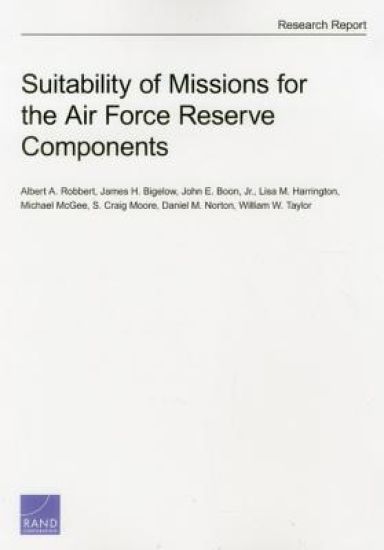
Suitability of Missions for the Air Force Reserve Components

Suitability of Missions for the Air Force Reserve Components

Albert A. Robbert; James H. Bigelow; John E. Boon; Lisa M. Harrington; Michael McGee; S. Craig Moore; Daniel M. Norton; William W. Taylor

RAND
2014
pokkari
The composition of Air Force active and reserve forces is often contentious, especially during a force drawdown. This document seeks to inform force composition decisions by clarifying issues that affect the suitability of missions for assignment to the reserve components.
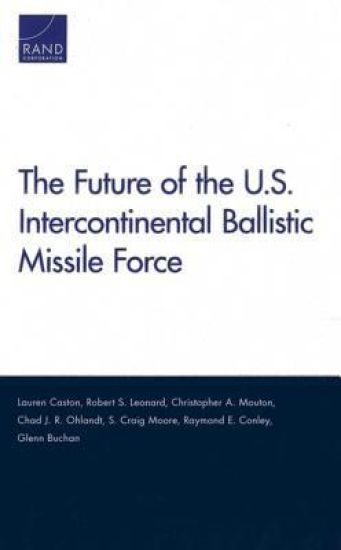
The Future of the U.S. Intercontinental Ballistic Missile Force

The Future of the U.S. Intercontinental Ballistic Missile Force

Lauren Caston; Robert S. Leonard; Christopher A. Mouton; Chad J. R. Ohlandt; S. Craig Moore; Raymond E. Conley; Glenn Buchan

RAND
2014
pokkari
The authors assess alternatives for a next-generation intercontinental ballistic missile (ICBM) across a broad set of potential characteristics and situations. They use the current Minuteman III as a baseline to develop a framework to characterize alternative classes of ICBMs, assess the survivability and effectiveness of possible alternatives, and weigh those alternatives against their cost.
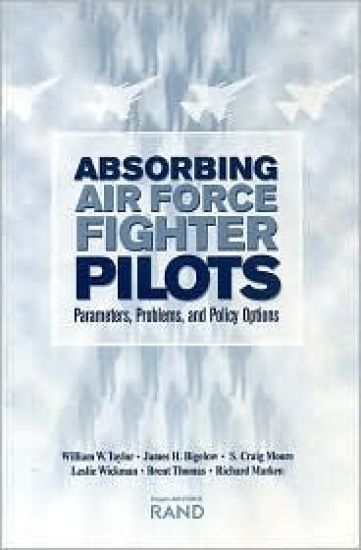
Absorbing Air Force Fighter Pilots

Absorbing Air Force Fighter Pilots

William W. Taylor; James H. Bigelow; S. Craig Moore

RAND
2002
pokkari
A thorough analysis of the Air Force's ability to adequately train and absorb new fighter pilots into its operational units. The U.S. Air Force currently faces unprecedented problems in its efforts to provide adequate training for new and inexperienced pilots in its operational fighter units. On the one hand, there are too few fighter pilots in the active component to meet current and anticipated demands. On the other hand, the number of new fighter pilots entering operational units currently exceeds these units' absorption capacity, yielding a degraded training environment that ultimately threatens to compromise military readiness. This report assesses the Air Force's training dilemma with a view toward finding ways to remedy it in both the short and long term. Toward this goal, it defines the key parameters that influence a unit's absorption capacity, presents a best-case scenario on which to base numerical analyses, and offers several options decisionmakers can exercise.Although there is no simple resolution to the Air Force's training problem, a thorough understanding of the dynamic processes involved in aircrew management, together with a comprehensive analytic framework, promises to greatly aid decisionmakers in their efforts to address this issue. [AF] The U.S. Air Force is currently facing a critical dilemma in its efforts to train new and inexperienced fighter pilots. Although the number of fighter pilots in the active component currently falls short of meeting the Air Force's needs, operational units are unable to absorb the inflow of newly assigned pilots to a sufficient extent to address those needs. This report evaluates key factors that affect the Air Force's absorption problems and offers several options decisionmakers can exercise to remedy them. [AF]
Air Force-Wide Needs for Science, Technology, Engineering, and Mathematics (Stem) Academic Degrees

Air Force-Wide Needs for Science, Technology, Engineering, and Mathematics (Stem) Academic Degrees

Lisa M. Harrington; Lindsay Daugherty; S. Craig Moore; Tara L. Terry

RAND
2014
pokkari
Understating the needs for officers and civilians with science, technology, engineering, and mathematics degrees can diminish the Air Force s ability to maintain vital technical skills. RAND researchers defined which degrees were STEM and asked career field managers and senior authorities to identify those necessary now and in future. The results point to specific areas that the Air Force should review for current and emerging needs."