Kirjailija
S. T. Joshi
Kirjat ja teokset yhdessä paikassa: 92 kirjaa, julkaisuja vuosilta 1990-2025, suosituimpien joukossa Ambrose Bierce. Vertaile teosten hintoja ja tarkista saatavuus suomalaisista kirjakaupoista.
Mukana myös kirjoitusasut: S T Joshi, S.T. Joshi
92 kirjaa
Kirjojen julkaisuhaarukka 1990-2025.
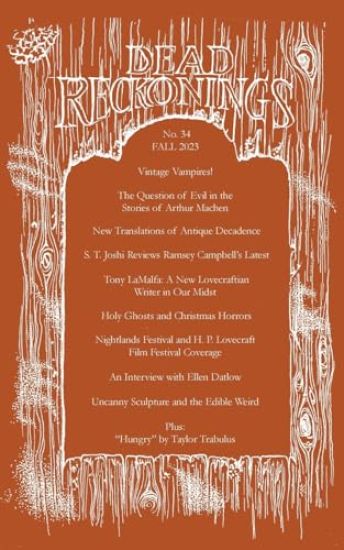
Table of ContentsA Weird Gourmand's Delight ........... Daniel PietersenZara-Louise Stubbs, ed., The Uncanny Gastronomic: Strange Tales of the Edible Weird.The Subtle Aroma of Antiquity: Two Translations by Shawn Garrett ........... Karen Joan KohoutekJean Printemps, Whimsical Tales and Froylan Turcios, The Vampire; both tr. Shawn Garrett.Night's Black Promises ........... G za A. G. ReillyDaniel Corrick, ed., Night's Black Agents: An Anthology of Vampire Fiction.Nightlands Festival, Hammonton, NJ: Kathedral Event Center 2-3 June 2023 ........... The joey ZoneHumor at Its Darkest ........... Darrell SchweitzerPablo Larrain, dir., El Conde. Ramsey's Rant: Watch Their Language ........... Ramsey CampbellWonder and Epiphany: The Question of Evil in the Stories of Arthur Machen ........... Katherine KerestmanArthur Machen. Collected Fiction (three volumes), ed. by S. T. Joshi.A New Lovecraftian Writer in Our Midst ........... Michael D. MillerTony LaMalfa, Forbidden Knowledge.Half Sunk a Shattered Visage Lies ........... Daniel PietersenHenry Bartholomew, ed., The Living Stone: Stories of Uncanny Sculpture, 1858-1943.Covid Horrors ........... S. T. JoshiRamsey Campbell, The Lonely Lands.Hungry ........... Taylor TrabulusCultists Descend upon Portland: The H. P. Lovecraft Film Festival ........... Katherine KerestmanAn Interview with Ellen Datlow ........... Darrell SchweitzerSacred Scares ........... G za A. G. ReillyFiona Snailham, ed., Holy Ghosts: Classic Tales of the Ecclesiastical Uncanny.Crossing the Void ........... Michael D. MillerMatt Cardin, Journals, Volume II: 2002-2022.New Ways to Dread the Holidays ........... Dave FeltonEllen Datlow, ed., Christmas and Other Horrors: A Winter Solstice Anthology.About the Contributors
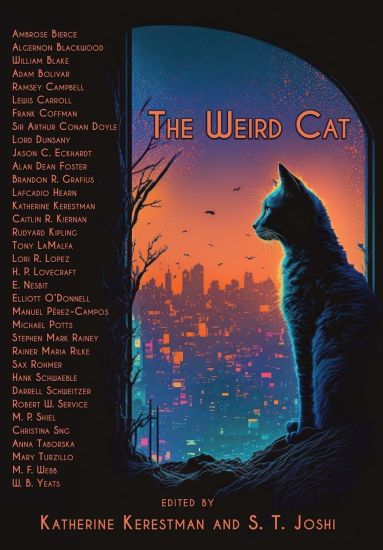
A well-told horror story has much in common with your own cherished puss. Kitty jumps upon your lap and purrs, and you turn the page of your book.Pray, take heed Some dire thing is afoot On your lap, Kitty stirs, her ears lifting into two small velvet tents. She raises her chin, stares expectantly into the gloom beyond the aura of the reading lamp, gazes at something which you cannot see Her silken hairs begin to fluff, signaling her unease. Swiftly, Kitty moves from your lap onto the arm of your chair, where, channeling Bastet, she strikes an Egyptian-cat pose, her expectant stance and twitching whiskers communicating unseen peril.The hairs on your neck begin to rise in sympathy. As you doggedly continue reading your book, you cast frequent glances at your cat: Kitty provides you with a sixth sense which you lack, a window into the unseen and the uncanny. You are mindful that cats dwell in a larger world than our own, the gulfs and abysses of which we can obtain but a shadowy glimpse, through their eyes.In The Weird Cat you delve into that larger realm through more than three dozen classic and contemporary short stories, poems, and essays by masters of the craft including Sir Arthur Conan Doyle, Rudyard Kipling, H.P. Lovecraft, Mary A. Turzillo, Christina Sng, Darrell Schweitzer, and others. Edited by Katherine Kerestman and S. T. Joshi.
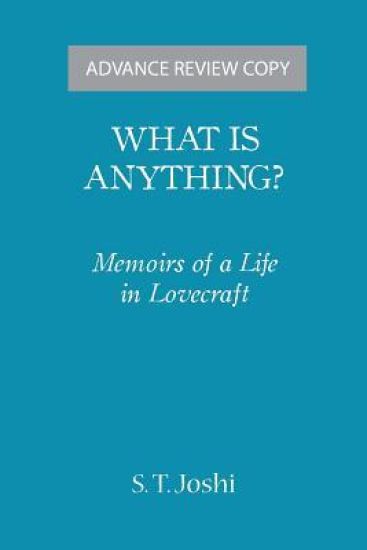
For more than forty years, S. T. Joshi has been a presence in the weird fiction community. In this expansive and elegantly written memoir, Joshi reflects on the major facets of his life. Born in India in 1958, he came with his family to the United States in 1963, settling in the Midwest. He hit his stride in an Indiana high school, where he first read Lovecraft's books from the public library. He was accepted as an undergraduate at Brown University, where he not only learned Greek and Latin but explored the vast resources of the Lovecraft Collection at the John Hay Library. By 1982, Joshi was already recognized as a leading authority on Lovecraft, and his preparation of corrected texts of Lovecraft's fiction for Arkham House helped to launch a revolution in the study of the dreamer from Providence. In the decades that have followed, Joshi has expanded his range to cover the entire history of weird fiction, as well as such fields as atheism and left-wing politics. Among his nearly 400 books are bibliographies of leading weird writers, monographs, histories and biographies, and even a few works of fiction. What Is Anything? speaks frankly of Joshi's relations with friends and colleagues (among them Ramsey Campbell, T.E.D. Klein, Marc Michaud, Robert M. Price, and David E. Schultz), as well as his two wives. This memoir, enlivened with many photographs of Joshi and his friends and family, provides unprecedented insights into the worlds of Lovecraft scholarship and many other related subjects. For this paperback edition, Joshi has added a lively chapter covering the eventful years of 2018-22.
HALLOWEEN HEARTS: POETRY INSPIRED BY RAY BRADBURY AND EDGAR ALLAN POEAdele Gardner's Halloween Hearts is a welcome celebration of all things Halloween, whether they take place on October 31st or not. Disciples of All Hallows' Eve, enter of your own free will . . . haunted houses, trick-or-treaters, vampires, demonic foxes, witches and their familiars, revenants both longed-for and uninvited, and the creeping mists of autumn all have their place in these pages.Ray Bradbury and Edgar Allan Poe-icons of the American imagination, pilgrims of the nightside territories of the mind-have a special place in Gardner's works. The poetry in this volume is inspired by much of what makes each of these authors special to so many readers: Poe's sensitivity to loss and melancholia, and to horror and terror, and Bradbury's enthusiastic embrace of Halloween and other dark aspects of Americana, along with his refusal to allow death to be the final word in our relationship with our loved ones. With "Eureka" "Nevermore," "Poe's Prophets," and other poems, Gardner explores Poe's hallowed place in our haunted hearts. And in the title poem, which opens the book, Gardner lovingly celebrates Ray Bradbury and his unique alchemy of nostalgia, dread, and Halloween eternal.". . . this book has been a long time coming, with its black cats and witches, ghosts and the grave, vampires and writers that haunt the night. Whether their subjects are traditional to Halloween or on tangential themes, all these poems are Halloween to me-that season so melancholy and elegiac, yet also fierce, with shining teeth, pointy grins, and a cat's fang-filled mischief." -Adele Gardner, from the introductionWith a foreword by S. T. Joshi and an introduction by the authorIllustrated - Featuring art by Gustave Dor and Dan Sauer
In 1962, Arthur S. Koki (1937-1989) wrote a master's thesis on Lovecraft at Columbia University. It is one of the most impressive and substantive academic papers on Lovecraft ever written. Expanding upon an honors thesis on the same subject written at Clark University in 1960, Koki's paper is the first detailed account of Lovecraft's life, written more than a decade before L. Sprague de Camp's Lovecraft: A Biography (1975). De Camp has acknowledged drawing upon Koki's thesis for much of his own work. Koki is of interest in his own right. Born of Albanian-born parents, he studied with John Unterecker (a leading authority on Hart Crane) at Columbia and went on to become a longtime professor at Kutztown University in Pennsylvania. In his thesis, he conducted extensive original research, drawing upon primary documents and also conducting interviews with major figures associated with Lovecraft, including Ethel Phillips Morrish (Lovecraft's second cousin), Wilfred B. Talman, Donald Wandrei, and many others. The result is an illuminating biography that sheds much light on Lovecraft's childhood and adolescence and speaks judiciously of his character, philosophy, and literary output. As such, it retains value even after the passage of sixty years, when so much work on Lovecraft has been done. Arthur S. Koki is a pioneer in Lovecraft studies, and his thesis deserves to be read by all devotees of the dreamer from Providence.
For more than fifty years, Ken Faig, Jr. has been a leading scholar and researcher on the life and work of H. P. Lovecraft. Over the decades he has made landmark discoveries that have clarified many aspects of Lovecraft's life, ancestry, and the influence of his personal experiences upon his weird fiction. In this new volume of essays, Faig continues his pioneering work in illuminating the obscurer corners of the people and places associated with the writer from Providence, R.I. A long piece on Lovecraft's English ancestry-his paternal forbears came from the county of Devonshire, in the southwest corner of England-traces the Lovecraft or Lovecroft name back to the 15th century. An essay on Lovecraft's uncle by marriage, Edward F. Gamwell, clarifies how this figure influenced his nephew's early writing. Faig also writes detailed histories of Lovecraft's first two residences in Providence, 454 and 598 Angell Street. Amateur journalism was a lifelong hobby of Lovecraft's, and Faig has done extensive research on the members of the Providence Amateur Press Club and on his occasional nemesis, the literary radical Elsie Alice Gidlow. Faig also directs attention to the interplay between Lovecraft's life and work as exhibited in such tales as The Case of Charles Dexter Ward and "The Dreams in the Witch House." Ken Faig, Jr. uses all the research tools at his disposal-from early maps of Providence to census records to tidbits found in Lovecraft's extant letters-to paint a fuller portrait of Lovecraft and his world, enriching our understanding of the man and his work.
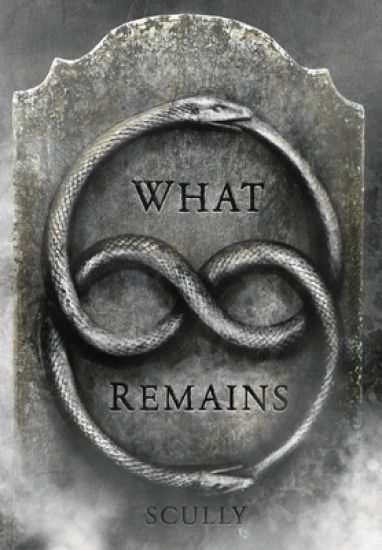
Human beings comprise earth's only death cult. Unique in our intellectual capabilities, we regard our dead with love, fear, sorrow, and awe. From the earthly corpse to the cosmic soul, we seek to speak with the dead, engage with them, and keep some essential part of them with us. Most of all, we hope not for their finite decay, but for its opposite: that those we love will live on after death, and that we will, too. Since the beginning of recorded history, artists, spiritualists, philosophers, and seekers of all kinds have taken the leap into the great mysteries of existence and the even greater possibilities of immortality. Fortunately for us, most of them lived to tell a tale or two. In Firbolg Publishing's second grimoire collection, we bring together an eclectic mix of fiction, poetry, essays and reflections, artwork, historical documents, and odd ephemera to explore centuries' worth of attitudes, expressions, and eccentricities regarding life, death, the afterlife, and the extraordinary spaces in between. Featuring artists both past and present, we take readers on a deep dive into the uniquely human way of exploring, experiencing, and expressing both the many blessings and profound tragedies of life, death, and what remains.Fully illustrated in color/black and white artwork and photography from both modern and historical artists and sources.
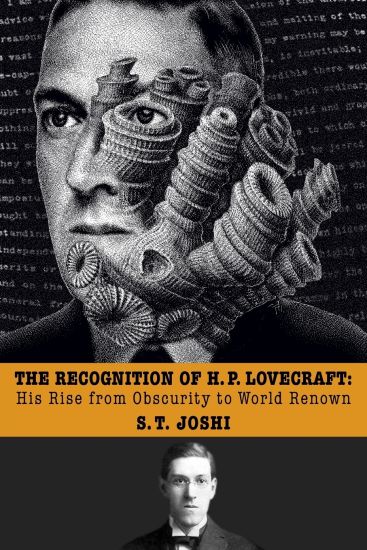
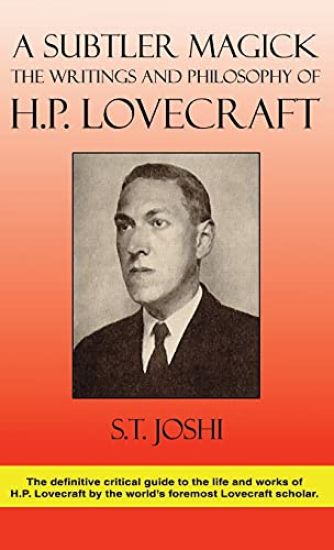
During his lifetime, H. P. Lovecraft did not have a single book of his stories published. When he died in 1937, he probably envisioned the oblivion that would overtake his entire literary output. But in the decades that have followed, Lovecraft's fiction, essays, poetry, and letters have catapulted him to worldwide celebrity-a result unprecedented in the history of literature. S. T. Joshi, a leading Lovecraft scholar and biographer, has traced the publication of Lovecraft's works from the amateur press to the pulp magazines and then, after his death, in book form by Arkham House and many other publishers, including hundreds of translations in more than thirty languages. Joshi also charts the development of criticism and scholarship on Lovecraft, from the fan magazines of the 1930s onward. The 1970s effected a revolution in Lovecraft scholarship, and that work continues today with critics around the world studying Lovecraft's life and oeuvre in a multitude of ways. This volume is an essential guide to the posthumous success of one of the most compelling writers in American and world literature.
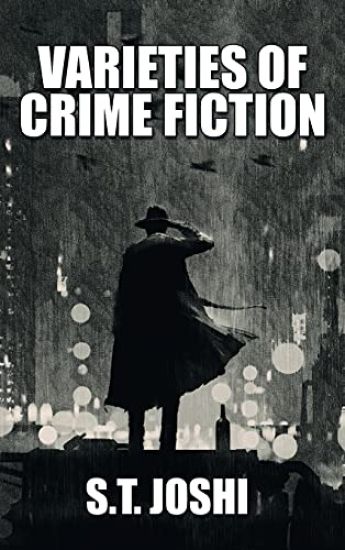
Leading critic S.T. Joshi reviews surveys the work of 13 mystery and crime writers, ranging from the Golden Age, Hardboiled school, the Psychological Mystery, and Contemporary Writers.The Golden AgeDorothy L. Sayers: Lords and Servants John Dickson Carr: Puzzlemeister Margery Allingham: Murder, Gangs, and Spies Philip MacDonald: Expanding the "Cosy" MysteryII. The Hard-Boiled School Dashiell Hammett: Sam Spade and Others Raymond Chandler: Mean Streets Ross Macdonald: Family Affairs III. The Psychological MysteryMargaret Millar: Scars of the Psyche Patricia Highsmith: Guilt and Innocence L. P. Davies: The Workings of the MindSome Contemporaries P. D. James: The Empress's New Clothes Ruth Rendell: The Psychology of Murder Sue Grafton: Hard-Boiled Female
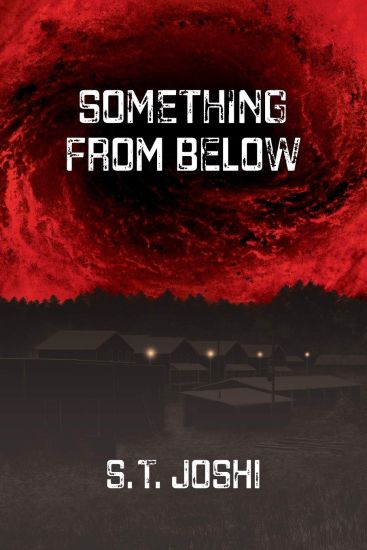
When 22-year-old Alison Mannering returns to her home in northeastern Pennsylvania after college, she finds a troubling situation. Her father, Guy Mannering, a longtime coal miner, has died recently under suspicious circumstances, and her mother refuses to provide any details of his passing. Alison feels she has no option but to investigate the matter herself, enlisting her high school sweetheart, Randy Kroeber, as well as Randy's twin sister, Andrea called Andy, to assist her. In the process, Alison and her cohorts become enmeshed in an inconceivable horror that goes back a century or more and is somehow involved with the coal mine, now controlled by the remote and enigmatic Conrad Brashear. Beyond the possibility of danger or death to herself and her friends, Alison comes to realise that what is lurking in and below the mine poses a mortal threat to the safety of the planet.
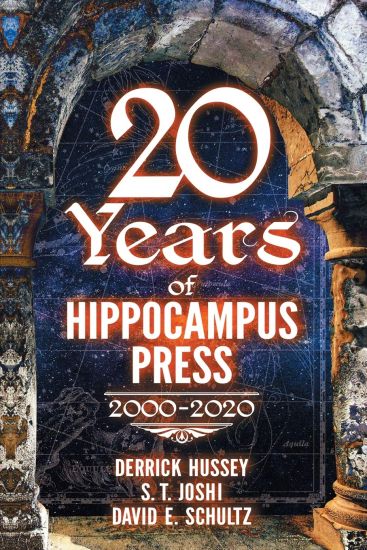
Twenty Years of Hippocampus Press
Derrick Hussey; S T Joshi; David E Schultz
Hippocampus Press
2020
pokkari
Over the past two decades, Hippocampus Press has emerged as the leading publisher of works relating to H. P. Lovecraft. It has, in fact, published the entirety of Lovecraft's work in definitive editions-fiction, poetry, essays, and letters. In addition, it has published numerous volumes of criticism and biography, from S. T. Joshi's I Am Providence to the scholarship of Kenneth W. Faig, Jr., Donald R. Burleson, Steven J. Mariconda, and many others, and many scintillating volumes of modern Lovecraftian fiction. But there is far more to Hippocampus Press than this. It has also published the collected poetry of Clark Ashton Smith along with several volumes of Smith's letters. Its Classics of Gothic Horror series has brought back into print many leading authors of weird fiction from a century or more ago. Poetry, both old and new, has been a special focus of the press, including classic poets (George Sterling, Donald Wandrei, Leah Bodine Drake) and such leading contemporary poets as Ann K. Schwader, Adam Bolivar, K. A. Opperman, and Ashley Dioses. Hippocampus has issued several important journals in the field, from the Lovecraft Annual to Dead Reckonings to Spectral Realms to the newly established Penumbra. This volume chronicles in meticulous detail all the publications of Hippocampus Press since its founding in 2000. Complete lists of contents are provided, and notes on the compilation of the books are provided by the publisher and in-house editor. All in all, this compilation is a complete guide to a pioneering small press in the weird fiction field.
This volume contains the weird stories of May Sinclair (1863-1946), a British writer whose many novels and tales established her as a leading figure in English literature in her time. Her two collections of weird tales, Uncanny Stories (1923) and The Intercessor and Other Stories (1931), contain a number of works that feature her central literary concerns: an emphasis on interpersonal relationships and an intense focus on the shifting psychological states of her characters. Sinclair utilized such central weird motifs as the ghost, the revenant, and psychic transference to underscore her keen insight into human frailty. The Classics of Gothic Horror series seeks to reprint novels and stories from the leading writers of weird fiction over the past two centuries or more. Ever since the Gothic novels of the late 18th century, weird fiction has been a slender but provocative contribution to weird fiction. Edgar Allan Poe, Ambrose Bierce, the Victorian ghost story writers, the "titans" of the early twentieth century (Arthur Machen, Algernon Blackwood, Lord Dunsany, M. R. James, H. P. Lovecraft), the Weird Tales writers, and many others contributed to the development and enrichment of weird fiction as a literary genre, and their work deserves to be enshrined in comprehensive, textually accurate editions.
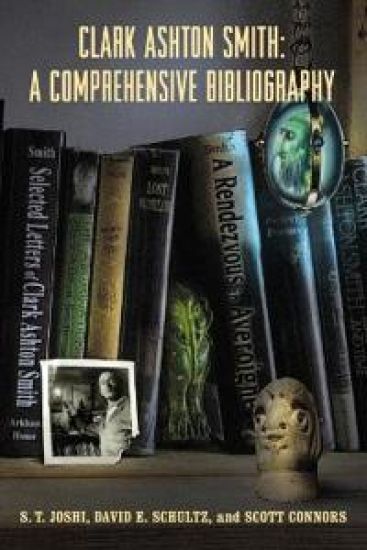
In 1978, Donald Sidney-Fryer published the first full-scale bibliography of Clark Ashton Smith, Emperor of Dreams. In the more than forty years since that book's appearance, the publication and study of Smith's work have increased exponentially, and a new, more exhaustive bibliography is long overdue. The three compilers of this volume, all leading authorities on Smith, have now achieved this monumental feat. Smith created a sensation when he published The Star-Treader and Other Poems (1912) at the age of 19. He issued several other poetry collections before moving on to writing tales of horror, fantasy, and science fiction for a wide variety of pulp magazines. He later resumed the writing of poetry, publishing numerous poems in English, French, and Spanish in little magazines, while his stories appeared in several volumes issued by Arkham House. This volume details the totality of Smith's writings, from rare pamphlets to all his appearances in magazines to translations of his work into a dozen or more languages. It also chronicles the burgeoning field of Smith criticism, from books and pamphlets about Smith to newspaper articles from local papers to analyses in academic journals. A section on adaptations of Smith's work into various media--films, television shows, comic books, musical settings, and spoken-word recordings--is also included. This volume is an essential work for any devotee or scholar of Clark Ashton Smith, charting the widespread dissemination of his tales, poems, and other writings throughout the world.
Creator of Gods and Men: Lord Dunsany and Fantasy Fiction
S. T. Joshi
Independently Published
2019
nidottu
The Anglo-Irish writer Lord Dunsany (1878-1957) was a pioneering author of fantasy fiction. In his first book, The Gods of Pegāna (1905), he introduced an entire cosmogony of gods, demigods, and worshippers in an imaginary land. Subsequent volumes, such as A Dreamer's Tales (1910) and The Book of Wonder (1912), made Dunsany one of the most acclaimed writers of his time. He also attained celebrity for his plays, staged both at the Abbey Theatre in Dublin and in London and New York. In the 1920s he began writing novels, including The King of Elfland's Daughter (1924). In the 1930s he wrote several poignant novels about Ireland, including The Curse of the Wise Woman (1933) and The Story of Mona Sheehy (1939). Dunsany continued to write prolifically for decades, and his output includes short stories, novels, plays, essays, and poetry. S. T. Joshi, one of the leading authorities on weird fiction, has written a comprehensive study of Dunsany's entire work, identifying reunification with the natural world as the central theme that shapes nearly the totality of his writing. Joshi's analysis reveals the depth and richness of an author whose work has influenced J. R. R. Tolkien, Ursula K. Le Guin, and many other writers of fantasy fiction.
Leading critic S.T. Joshi reviews surveys the work of 13 mystery and crime writers, ranging from the Golden Age, Hardboiled school, the Psychological Mystery, and Contemporary Writers.The Golden AgeDorothy L. Sayers: Lords and Servants John Dickson Carr: Puzzlemeister Margery Allingham: Murder, Gangs, and Spies Philip MacDonald: Expanding the "Cosy" MysteryII. The Hard-Boiled School Dashiell Hammett: Sam Spade and Others Raymond Chandler: Mean Streets Ross Macdonald: Family Affairs III. The Psychological MysteryMargaret Millar: Scars of the Psyche Patricia Highsmith: Guilt and Innocence L. P. Davies: The Workings of the MindSome Contemporaries P. D. James: The Empress's New Clothes Ruth Rendell: The Psychology of Murder Sue Grafton: Hard-Boiled Female
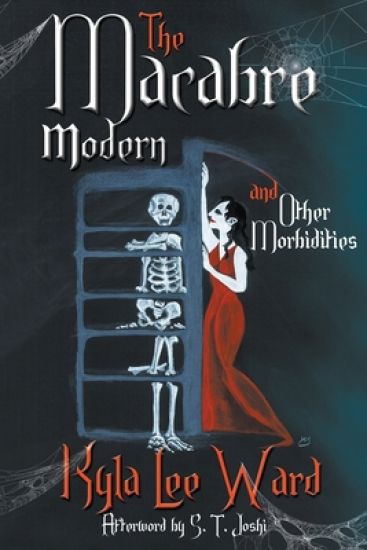
Award-winning poet Kyla Lee Ward invites you to whistle past the graveyard and get on your dancing shoes Inspired by the fourteenth century "Danse Macabre" (the Dance of Death), The Macabre Modern transcends time and updates for contemporary readers the allegorical, medieval concept of the universality of death. Defy death with the doctor. Mourn with the soldier. Indulge in the rich, weird traditions of Ancient Egypt and the Victorians, as you trip over the unspeakable at your own front door. Chuckle at the grotesque and the fallible but remember--the last laugh will be on you With a sharp wit, compelling satire, and fervent, feverish imagination, Ward generates fiendishly compelling vignettes of the human drama, and offers a profound reflection on life. "Have your absinthe glass and your favourite memento mori at hand as you savour this, Ward's breathtaking new volume of vers fantastique." Leigh Blackmore, editor Terror Australis. "What a great collection, fantastically illustrated by the author." Marge Simon, Science Fiction Poetry Association (SFPA) Grand Master. "Kyla Ward's poetry is accessible, immediate, gripping. And she is bold enough to use traditional rhyme." Peter Cannon, Senior Reviews Editor Publishers Weekly (New York). "Kyla Lee Ward puts satisfying meat on the Gothic's bones. A must for aficionados of literary dark verse." Ann K. Schwader, SFPA Grand Master, Rhysling winner, and HWA Bram Stoker finalist. "With each new work she produces, Kyla Lee Ward makes clear why she should be regarded as one of the preeminent exemplars of contemporary weird poetry." S. T. Joshi, multiple award-winning literary critic, author I Am Providence, and editor Supernatural Literature of the World.