Kirjojen hintavertailu. Mukana 12 390 323 kirjaa ja 12 kauppaa.

Kirjailija

S T Kimbrough

Kirjat ja teokset yhdessä paikassa: 51 kirjaa, julkaisuja vuosilta 2007-2023, suosituimpien joukossa The Manuscript Journal of the Reverend Charles Wesley MA. Vertaile teosten hintoja ja tarkista saatavuus suomalaisista kirjakaupoista.

Mukana myös kirjoitusasut: S. T. Kimbrough, S.T. Kimbrough

51 kirjaa

Kirjojen julkaisuhaarukka 2007-2023.

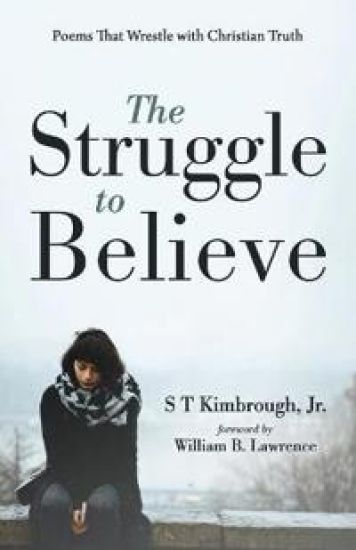
The Struggle to Believe

The Struggle to Believe

S T Kimbrough; William B Lawrence

Resource Publications (CA)
2022
pokkari
Many people of faith struggle with aspects of their beliefs. These poems do not seek to propose resolutions to all faith struggles. They do seek to help one toward self-examination, to be honest about these struggles, and to know that to confront them does not mean loss of faith. The study of the biblical languages of Hebrew, Greek, and Aramaic makes clear that there are not always simple solutions to many difficult linguistic problems in the Bible. Is faith our last resort when all else seems lost? What of helplessness and hopelessness? Can they open a window to faith understanding? Can we believe for the wrong reasons? What are some of the questions we should ask about the meaning of grace, forgiveness, and destiny, subjects with which many people struggle every day? How shall we understand the incarnation of Jesus, his ministry, the events of the Passion Week, and his resurrection? How shall we understand the holy days that celebrate these events and others in the life of the Jesus? And especially, what is the meaning of Holy Communion in the life of the church? And how shall we understand the church itself? If the poetry in these pages provides the opportunity for others to share in these struggles openly and honestly, then the words will have been wisely spent.
The Struggle to Believe

The Struggle to Believe

S T Kimbrough; William B Lawrence

Resource Publications (CA)
2022
sidottu
Many people of faith struggle with aspects of their beliefs. These poems do not seek to propose resolutions to all faith struggles. They do seek to help one toward self-examination, to be honest about these struggles, and to know that to confront them does not mean loss of faith. The study of the biblical languages of Hebrew, Greek, and Aramaic makes clear that there are not always simple solutions to many difficult linguistic problems in the Bible. Is faith our last resort when all else seems lost? What of helplessness and hopelessness? Can they open a window to faith understanding? Can we believe for the wrong reasons? What are some of the questions we should ask about the meaning of grace, forgiveness, and destiny, subjects with which many people struggle every day? How shall we understand the incarnation of Jesus, his ministry, the events of the Passion Week, and his resurrection? How shall we understand the holy days that celebrate these events and others in the life of the Jesus? And especially, what is the meaning of Holy Communion in the life of the church? And how shall we understand the church itself? If the poetry in these pages provides the opportunity for others to share in these struggles openly and honestly, then the words will have been wisely spent.
We Need Mountains

We Need Mountains

S T Kimbrough; Will Willimon

Resource Publications (CA)
2021
sidottu
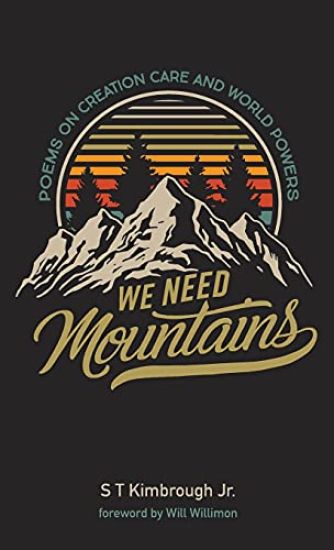
About three-fourths of the poems in this book are concerned with the world around us, which we need to protect and preserve. They are the necessary prelude to the importance of creation care, which is addressed specifically in the concluding poems. The mountains and valleys are a source of sustenance for human beings, as well as for their animal population. The season cycles in the mountains are a delight with the tree leaves changing color. Riverbeds become almost dry from lack of rain, but in late spring they flow with the waters of melting snow. With each change of season, the sun circles the earth and sheds its light on places passed over in a previous season. This is experienced particularly in the mountain ranges of North America. They provide an amazing diversity of landscape, flora, and fauna, and options for the human food chain. Global warming, however, threatens the seasons, the life of the mountains' flora and fauna, and even the ozone layer of the heavens. Hence, there is a call for creation care. Unless world powers step up and commit to preserving nature, forthcoming catastrophes can be clearly foreseen through careful scientific analysis. The responsibility is in the hands of the world's most powerful nations.
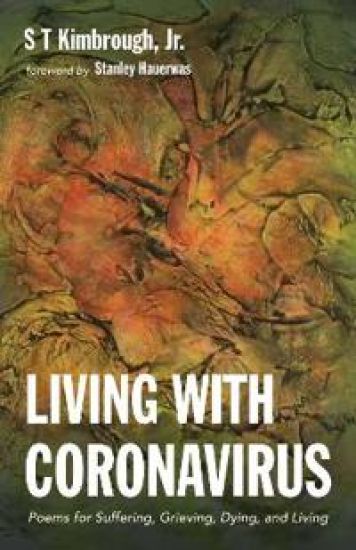
Living with Coronavirus

Living with Coronavirus

S T Kimbrough; Stanley Hauerwas

Resource Publications (CA)
2020
sidottu
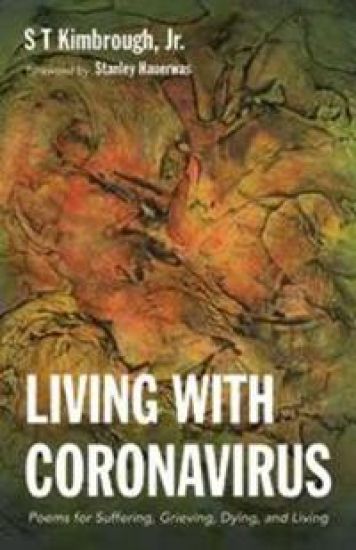
This volume of poems addresses the human effects of the coronavirus pandemic including: prolonged illnesses, death, disruption of society, families, the work force, and economy. There are the accompanying emotional effects of grief, distressed orphaned children, over-stressed hospital staffs, anxieties over the shortage of health workers, medication, and other medical needs. There are also increased incidents of suicide and numerous other emotional entanglements and physical conditions for which a country, city, village, and family are often not prepared. At times such as these, language becomes extremely important in how we communicate with one another. How we face the realism and facts of the moment is vital for the health of a person and a nation. One notes especially the importance of the language of political leaders at a time of national and global suffering. The poems also address issues the pandemic has brought into the open, such as racism, the vulnerability of the poor, and the importance of governmental leadership in a national and worldwide crisis. People of faith emphasize the importance of a faith response to our common humanity amid suffering. Among many other questions, they ask: How shall we live with the enduring problem of pandemics that require changing of attitudes and an ongoing concern for others?
Living with Coronavirus

Living with Coronavirus

S T Kimbrough; Stanley Hauerwas

Resource Publications (CA)
2020
pokkari
This volume of poems addresses the human effects of the coronavirus pandemic including: prolonged illnesses, death, disruption of society, families, the work force, and economy. There are the accompanying emotional effects of grief, distressed orphaned children, over-stressed hospital staffs, anxieties over the shortage of health workers, medication, and other medical needs. There are also increased incidents of suicide and numerous other emotional entanglements and physical conditions for which a country, city, village, and family are often not prepared. At times such as these, language becomes extremely important in how we communicate with one another. How we face the realism and facts of the moment is vital for the health of a person and a nation. One notes especially the importance of the language of political leaders at a time of national and global suffering. The poems also address issues the pandemic has brought into the open, such as racism, the vulnerability of the poor, and the importance of governmental leadership in a national and worldwide crisis. People of faith emphasize the importance of a faith response to our common humanity amid suffering. Among many other questions, they ask: How shall we live with the enduring problem of pandemics that require changing of attitudes and an ongoing concern for others?
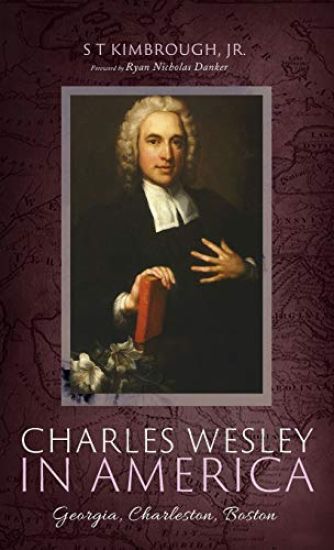
Charles Wesley in America

Charles Wesley in America

S T Kimbrough; Ryan Nicholas Danker

Pickwick Publications
2020
sidottu
This is the first comprehensive treatment of Charles Wesley's sojourn in the American colonies from March to October 1736. He went to the Colony of Georgia as a missionary of the Church of England, as Colonel Oglethorpe's personal aid, and secretary of Indian Affairs. His stay in Georgia was filled with discord and conflict. This volume provides the first explanation of why Wesley remained silent in a dispute with two women who had accused him and Oglethorpe of moral impropriety. One of Wesley's shorthand passages deciphered here discloses the reason he refused to be publicly exonerated. The volume also provides a view of a newly ordained Anglican priest struggling with the responsibilities of his office. Yet one discovers why this very young priest was treated with such open arms by the Anglican clergy of Boston, even being invited to preach in one of the important New England Anglican churches immediately upon arrival. In some of Wesley's own poetry one encounters his strong negative attitudes toward the Revolutionary War, the colonies' desire to break its ties with England, and toward the British military leadership that lost the war. In Charles's stay in America, the seeds were sown for a lifetime of opposition to slavery. A rare letter exchange with two former slaves whom he befriended in Bristol provides fascinating insight into their eagerness to learn to read and write and about the Christian faith.
Charles Wesley in America

Charles Wesley in America

S T Kimbrough; Ryan Nicholas Danker

Pickwick Publications
2020
pokkari
This is the first comprehensive treatment of Charles Wesley's sojourn in the American colonies from March to October 1736. He went to the Colony of Georgia as a missionary of the Church of England, as Colonel Oglethorpe's personal aid, and secretary of Indian Affairs. His stay in Georgia was filled with discord and conflict. This volume provides the first explanation of why Wesley remained silent in a dispute with two women who had accused him and Oglethorpe of moral impropriety. One of Wesley's shorthand passages deciphered here discloses the reason he refused to be publicly exonerated. The volume also provides a view of a newly ordained Anglican priest struggling with the responsibilities of his office. Yet one discovers why this very young priest was treated with such open arms by the Anglican clergy of Boston, even being invited to preach in one of the important New England Anglican churches immediately upon arrival. In some of Wesley's own poetry one encounters his strong negative attitudes toward the Revolutionary War, the colonies' desire to break its ties with England, and toward the British military leadership that lost the war. In Charles's stay in America, the seeds were sown for a lifetime of opposition to slavery. A rare letter exchange with two former slaves whom he befriended in Bristol provides fascinating insight into their eagerness to learn to read and write and about the Christian faith.
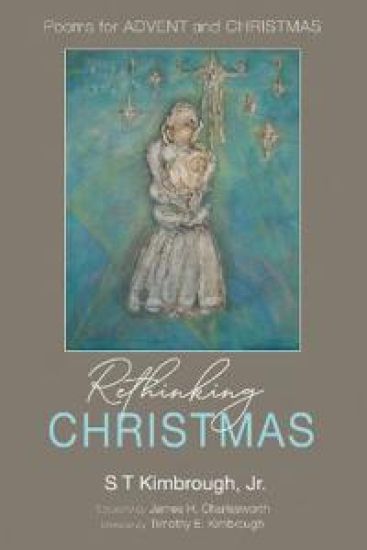
Rethinking Christmas

Rethinking Christmas

S T Kimbrough; James H Charlesworth

Resource Publications (CA)
2020
pokkari
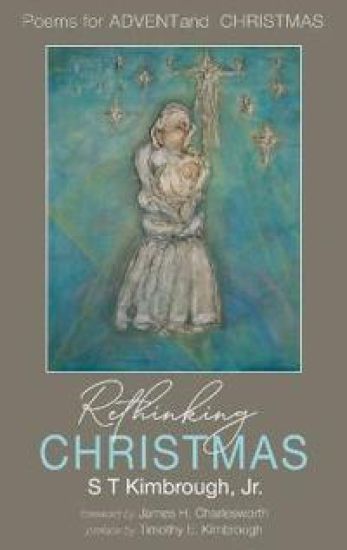
In the poems that appear here imagination plays a significant role. We do not know exactly what people expect or anticipate at Advent, but we know it can be radically different, depending on one's situation in life: the poor, the homeless, those enveloped in war, the wealthy, the desperately ill or injured. What one awaits does not change the nature of Christ's coming, but it greatly influences how Christ is received. One thing is quite clear: it is the love of God that descends to earth in this child, a child of peace and goodwill. If one is not awaiting these things, one's celebration may be well-meaning but very wrong-headed. These poems imagine what Advent and Christmas are not and what they might be. How might they be seen through the eyes of the poor and marginalized? How might they be viewed by a business concern? How are they misunderstood? What does Christmas mean, when a bell rings on Christmas Day, and a church building has been destroyed and all that remains is the bell tower?
Rethinking Christmas

Rethinking Christmas

S T Kimbrough; James H Charlesworth

Resource Publications (CA)
2020
sidottu
In the poems that appear here imagination plays a significant role. We do not know exactly what people expect or anticipate at Advent, but we know it can be radically different, depending on one's situation in life: the poor, the homeless, those enveloped in war, the wealthy, the desperately ill or injured. What one awaits does not change the nature of Christ's coming, but it greatly influences how Christ is received. One thing is quite clear: it is the love of God that descends to earth in this child, a child of peace and goodwill. If one is not awaiting these things, one's celebration may be well-meaning but very wrong-headed. These poems imagine what Advent and Christmas are not and what they might be. How might they be seen through the eyes of the poor and marginalized? How might they be viewed by a business concern? How are they misunderstood? What does Christmas mean, when a bell rings on Christmas Day, and a church building has been destroyed and all that remains is the bell tower?
May She Have a Word with You?

May She Have a Word with You?

S T Kimbrough; Laceye C Warner

Cascade Books
2019
sidottu
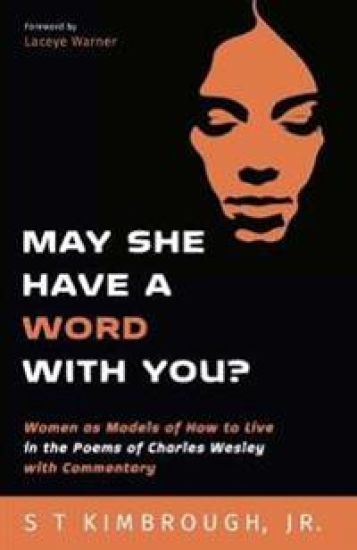
Perhaps Charles Wesley's two volumes of Funeral Hymns (1746 and 1759), plus a few poems left in manuscript form, are the least known of his poetical corpus. They are a treasury, however, of his views on the importance of women in eighteenth-century England as examples of how to live the Christian life. Entries in his MS Journal indicate an extremely positive relationship with women who are his coequals in mission and in the Methodist societies, and much of the work depended on them. Furthermore, Charles wrote numerous poems about women, often occasioned by death, which lift up individual women as models for the community at large and the church. The intent of this volume is not to present a historical survey of these women or their historical place per se in the early Methodist movement, rather the primary goal is to discover a literature that helps us to see the values which women had in the early Methodist movement and how those values were acknowledged, recorded, and fostered or encouraged by Charles Wesley, particularly in his poetry. The title, May She Have a Word with You, suggests there is a need today to hear of these women's exemplary words, deeds, and lives as a whole.
May She Have a Word with You?

May She Have a Word with You?

S T Kimbrough; Laceye C Warner

Cascade Books
2019
pokkari
Perhaps Charles Wesley's two volumes of Funeral Hymns (1746 and 1759), plus a few poems left in manuscript form, are the least known of his poetical corpus. They are a treasury, however, of his views on the importance of women in eighteenth-century England as examples of how to live the Christian life. Entries in his MS Journal indicate an extremely positive relationship with women who are his coequals in mission and in the Methodist societies, and much of the work depended on them. Furthermore, Charles wrote numerous poems about women, often occasioned by death, which lift up individual women as models for the community at large and the church. The intent of this volume is not to present a historical survey of these women or their historical place per se in the early Methodist movement, rather the primary goal is to discover a literature that helps us to see the values which women had in the early Methodist movement and how those values were acknowledged, recorded, and fostered or encouraged by Charles Wesley, particularly in his poetry. The title, May She Have a Word with You, suggests there is a need today to hear of these women's exemplary words, deeds, and lives as a whole.
A Seagull Lunch and Other Nature Poems

A Seagull Lunch and Other Nature Poems

S T Kimbrough

Resource Publications (CA)
2019
pokkari
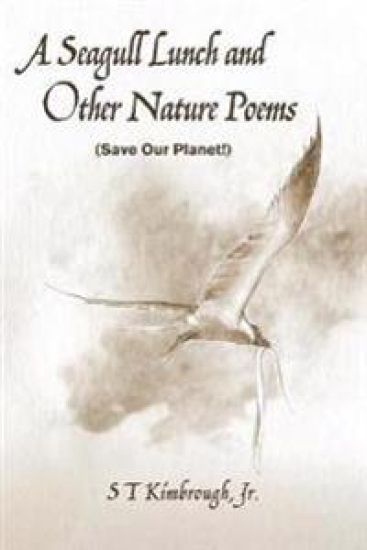
Many poems in this book are simple descriptions of the wonders of nature. Some address the tragedy of nature's suffering caused by human thoughtlessness and negligence. Others are a response to the magical change of seasons, a cycle that transforms the colors of the earth's foliage, bringing the advent of animals' change of habitats, along with hurricanes, monsoons, and other storms. From one season to the next, the earth bears fruit, yields crops, and its meadows bloom. Many of the poems are from real-life experience, while others are products of imagination peaked by nature's numerous and precious gifts for enjoyment, sustenance, and preservation. Some of these poems offer words of caution about human carelessness in preserving nature and its wonders. Does one ever pause to consider what it would be like without the advent of autumn, or any other season? Yet, the truth is that in some parts of the world seasons are already disappearing. These poems stress that we cannot stand idly by when there is proven scientific evidence that destructive climate change is a reality: disappearance of some island nations, loss of farm land, steady crumbling of glaciers and ice caps, and the demise of sea life. They plead: Save our planet ""These delightful poems are fresh, joyful, and wise. You won't look out your window upon a robin or take a walk in the woods in the same way after an encounter with these poems."" --Will Willimon, Professor of the Practice of Christian Ministry, Duke Divinity School, Durham, NC ""S T Kimbrough, Jr. is a remarkable observer. . . . He also loves to celebrate the unexpected side of nature, the quirky and sometimes comic side of animal behavior. Above all, however, his urge to write nature poetry comes from a passionate desire to counter the effects of climate change, of what he calls in one section 'Nature's Demise.'"" --Richard Watson, Emeritus Professor of English, University of Durham, UK ""Like the psalmist, S T praises God and expresses gratitude for the gifts of creation available for the nourishment of body and soul with beautiful descriptions that appeal to all human senses. At the same time he emphasizes the responsibilities of humans in the 'need for rebirth' of God's great gift."" --Joyce D. Sohl, Laywoman in Residence, Scarritt Bennett Center, Nashville, TN S T Kimbrough, Jr. holds a PhD from Princeton Theological Seminary and is currently a research fellow of the Center for Studies in the Wesleyan Tradition at Duke Divinity School in Durham, North Carolina. He is author of the following books by Wipf & Stock: The Lyrical Theology of Charles Wesley; Radical Grace: Justice for the Poor and Marginalized; Partakers of the Life Divine: Participation in the Divine Nature in the Writings of Charles Wesley; May She Have a Word with You: Women as Models of How to Live in the Poems of Charles Wesley; and two books of poetry: Why Should a Child Be Born? Poems for Peace and Justice in the Middle East and Of Death and Grief: Poems for Healing and Renewal. He has also published poetry in Theology Today.
A Seagull Lunch and Other Nature Poems

A Seagull Lunch and Other Nature Poems

S T Kimbrough

Resource Publications (CA)
2019
sidottu
Many poems in this book are simple descriptions of the wonders of nature. Some address the tragedy of nature's suffering caused by human thoughtlessness and negligence. Others are a response to the magical change of seasons, a cycle that transforms the colors of the earth's foliage, bringing the advent of animals' change of habitats, along with hurricanes, monsoons, and other storms. From one season to the next, the earth bears fruit, yields crops, and its meadows bloom.Many of the poems are from real-life experience, while others are products of imagination peaked by nature's numerous and precious gifts for enjoyment, sustenance, and preservation. Some of these poems offer words of caution about human carelessness in preserving nature and its wonders. Does one ever pause to consider what it would be like without the advent of autumn, or any other season? Yet, the truth is that in some parts of the world seasons are already disappearing. These poems stress that we cannot stand idly by when there is proven scientific evidence that destructive climate change is a reality: disappearance of some island nations, loss of farm land, steady crumbling of glaciers and ice caps, and the demise of sea life. They plead: Save our planet