Kirjojen hintavertailu. Mukana 12 231 446 kirjaa ja 12 kauppaa.

Kirjailija

Sabine Fischer

Kirjat ja teokset yhdessä paikassa: 11 kirjaa, julkaisuja vuosilta 2009-2025, suosituimpien joukossa Die chauvinistische Bedrohung. Vertaile teosten hintoja ja tarkista saatavuus suomalaisista kirjakaupoista.

11 kirjaa

Kirjojen julkaisuhaarukka 2009-2025.

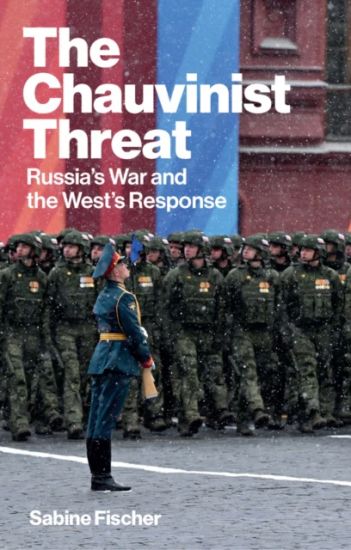
The Chauvinist Threat

The Chauvinist Threat

Sabine Fischer

JOHN WILEY AND SONS LTD
2025
sidottu
Many attempts have been made to explain Russia’s fateful decision to invade Ukraine, but the argument of the distinguished political scientist Sabine Fischer is that we can fully understand Russia’s foreign policy and its aggressive war of annihilation against Ukraine only by putting Russian chauvinism at the heart of our analysis. Fischer argues that Putin’s regime has long been driven by a mixture of aggressive nationalism, sexism and autocracy: taken together, these three elements constitute the chauvinist threat that stems from Moscow and that led to Russia’s invasion of Ukraine. An internationally renowned expert on Russia and Eastern Europe with decades of experience in EU-Russia relations, Fischer enriches her analysis with observations and conversations conducted in Russia and Eastern Europe over the past thirty years, including conversations with senior Russian politicians and colleagues in the run-up to and aftermath of the invasion. She also shows that the chauvinist threat stemming from Moscow is a threat not just to Ukraine but also to liberal democracies and to the liberal, rules-based world order, and she outlines steps that liberal democracies should take to counter the chauvinist threat. By bringing into sharp focus the sexism of Putin’s regime and its explosive blending together with nationalism and autocracy, this book makes an important contribution to understanding both the brutal war in Ukraine and the serious threats faced by all liberal democracies today.

Civil Society in Central and Eastern Europe

Civil Society in Central and Eastern Europe

Heiko Pleines; Sabine Fischer

ibidem-Verlag, Jessica Haunschild u Christian Schon
2021
nidottu
Utilising a wide range of empirical cases, the contributions in this edited volume highlight the different aspects of the role, development and societal background of civil society in Central and Eastern Europe. The first part of the book deals with dissent under socialism. The second part of the book looks at the role of civil society in the Western Balkans in the context of the break-up of the former Yugoslavia and the related ethnic conflicts. The third part goes on to examine the role of civil society in the post-Soviet region, which is marked by authoritarian tendencies. The fourth part returns to Central Eastern Europe with an analysis of the impact of EU accession on the role of civil society and considers the underlying aspects of a 'common European memory'. The final section of the book looks at two cases - one from Central Eastern Europe, one from the CIS region -- of political participation and lobbying by civil society organisations. This book presents a selection of the papers diskussed at the Changing Europe Summer School on 'Civil Society in Central and Eastern Europe' held at the National University of 'Kyiv-Mohyla Academy' (NAUKMA), Ukraine, in July 2009.
The EU and Central & Eastern Europe

The EU and Central & Eastern Europe

Sabine Fischer

Ibidem Press
2009
nidottu
The changes in post-socialist Central and Eastern European countries have been affected by external influences more than any preceding wave of democratization. The contributions in this volume reflect the wide variety of Europeanization processes taking place in Central and Eastern Europe. They not only serve to illustrate the significant differences among post-socialist transformations, but also highlight the variety of theoretical concepts and methodological approaches at our disposal to research different aspects of Europeanization in the broader context of globalization and identity changes. The first part of the book deals with Europeanization 'from above', i.e. with the European Commission's deliberate promotion of specific rules and related policies during the integration process. In the second part of the book, the perspective shifts to Europeanization as a process of changing perceptions, values and identities. The third and final part of this book goes beyond the Europeanization approach. It places Europeanization in the context of the various globalization pressures on civil society. This book presents some of the best papers of the Changing Europe Summer School on "Central and Eastern Europe in a globalized world," held at the University of Bremen, Germany in July/August 2008.